


MCP Server vs MCP Gateway: What's the Difference?
An MCP server gives AI agents tools. An MCP gateway decides which agents can use which tools, with whose credentials, and records what happened. This guide compares the two side by side, shows the request flow, and explains when one server is enough and when you need a gateway in front.

TL;DR:
What is the difference between an MCP server and an MCP gateway?
In MCP gateway vs MCP server, the server is the capability provider and the gateway is the control point. An MCP server exposes tools, resources and prompts from one system to AI agents.
An MCP gateway sits in front of many MCP servers and handles authentication, policy, routing and audit for all of them. You always need servers. You need a gateway once several agents, teams or servers share them.
Your team ships an MCP server for the CRM. It works. Then finance wants one for billing, support wants one for tickets, and a partner wants their agent to call yours. Six months later you have 14 MCP servers, each with its own auth setup, its own logs and its own idea of who is allowed to call delete_customer. Nobody can answer "which agents touched payment data last week?"
That is the real MCP gateway vs MCP server question. It is not which one to pick. A gateway does not replace servers; it governs them. The question is when direct connections from agents to servers stop being safe enough to run.
This guide defines both using the Model Context Protocol specification, compares them side by side, walks through a request from agent to gateway to server, and gives clear signals for when one server is enough and when you need a gateway in front.
What is the difference between an MCP server and an MCP gateway?
An MCP server provides capabilities. An MCP gateway controls access to capabilities. The server answers "what can an agent do here?" The gateway answers "which agent may do it, with which credentials, and was it logged?"
The MCP architecture defines three roles: the MCP host (the AI application, such as an IDE or chat app), the MCP client (a connector inside the host, with a 1:1 connection to one server) and the MCP server. "Gateway" is not one of those roles. It is a deployment pattern: a component that presents itself to clients as an MCP server, and connects to real MCP servers behind it.
That detail matters later. Because a gateway looks like an MCP server to every client, the spec's server rules, including the authorization rules, apply to the gateway too.
What is an MCP server?
An MCP server is a service that exposes one system's capabilities to AI applications through the Model Context Protocol. It wraps an API, database or tool so an agent can discover and call it in a standard way.
A few facts from the spec shape how servers behave in production:
- Two standard transports. stdio for a local subprocess the client launches, and Streamable HTTP for remote servers, where every message is an HTTP POST to a single MCP endpoint.
- Stateless requests. As of the 2026-07-28 revision, MCP is stateless: each request carries its own protocol version and capabilities, and protocol-level sessions were removed from Streamable HTTP.
- Isolation by design. The spec says servers "should not be able to read the whole conversation, nor 'see into' other servers." Each server stays focused on one domain.
- Server-level auth is optional but defined. When a remote server is protected, it acts as an OAuth 2.1 resource server under the MCP authorization specification.
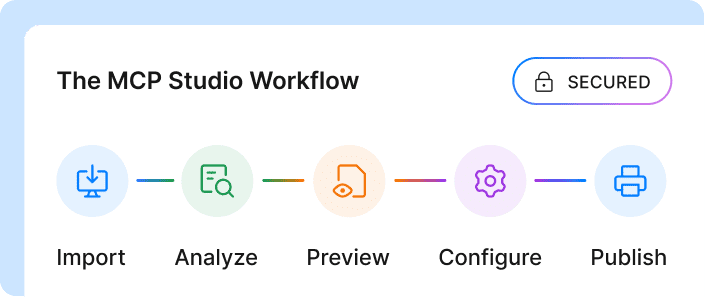
The spec's design goal is that "servers should be extremely easy to build." That is exactly why they multiply. Tools such as DigitalAPI MCP Studio turn an OpenAPI spec, Postman collection or GitHub repo into a hosted MCP server without hand-written wrappers. For the full build process, see the MCP server guide and how to convert OpenAPI specs into an MCP server.
What is an MCP gateway?
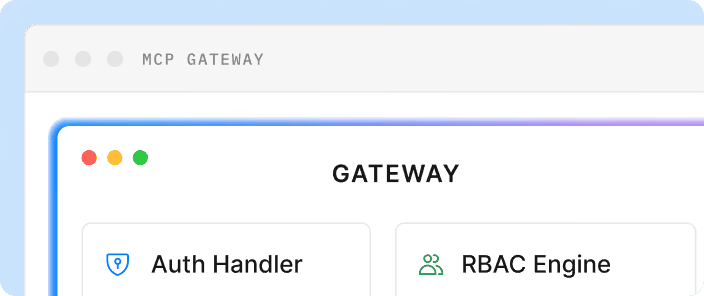
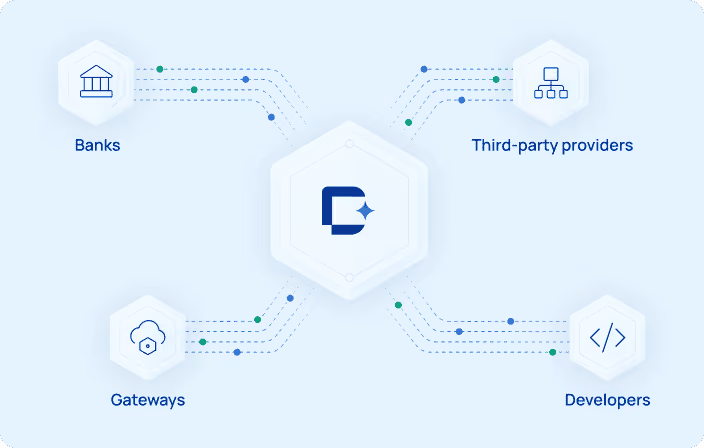
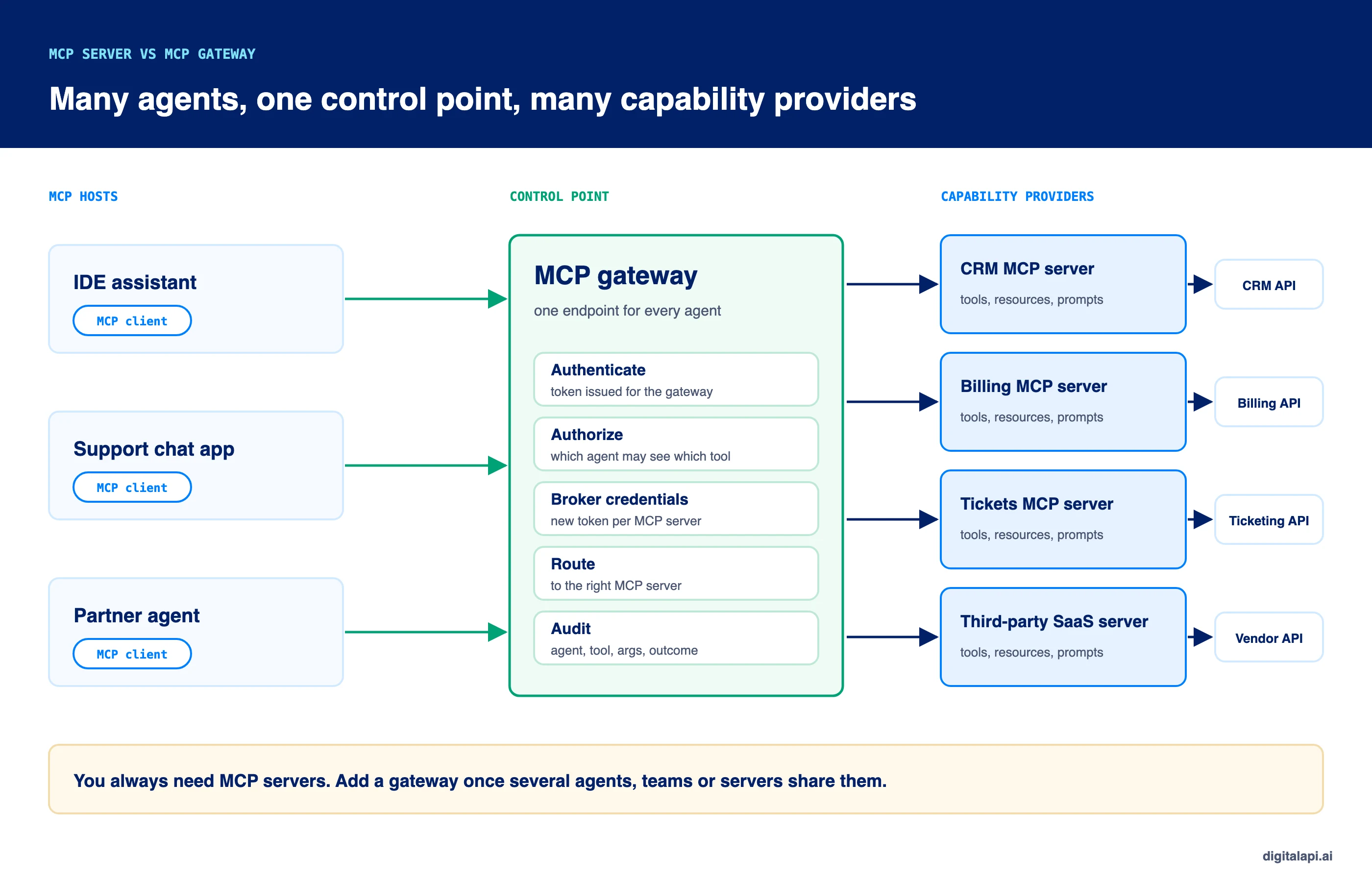
An MCP gateway is a single governed entry point that sits between MCP clients and many MCP servers, and applies identity, policy, routing and observability to every call. Agents connect to one endpoint instead of to each server.
A typical MCP gateway does five jobs:
- Authentication. Verifies the agent or user once, using OAuth 2.1 tokens, API keys or mTLS, instead of every server doing it differently.
- Authorization and tool policy. Filters
tools/listso each agent only sees allowed tools, and blockstools/callon anything outside its scope. Default deny is the safe setting. - Credential brokering. Holds or obtains the credentials each upstream server needs, so agents never see backend secrets.
- Routing and aggregation. Sends each call to the right server, and can present several servers as one curated toolset.
- Audit, metering and rate limits. Logs who called which tool, with what result, and caps how fast an agent can act.
The 2026-07-28 spec makes gateways easier to build. Streamable HTTP now mirrors key body fields into HTTP headers "so that intermediaries (load balancers, gateways, observability tooling) can route and inspect requests without parsing the body" (Streamable HTTP transport):
A gateway can allow, deny, rate limit or route on Mcp-Method and Mcp-Name before it reads the JSON body. One caution from the spec: intermediaries that enforce policy on these headers SHOULD check that MCP-Protocol-Version is a version that requires header and body validation, and reject older or missing versions rather than trust unvalidated headers.
For the deeper design, see MCP gateway architecture and the MCP gateway pillar guide.
MCP gateway vs MCP server: side-by-side comparison
The server owns the capability; the gateway owns the rules around it. The table compares them on the points that matter when you run MCP for more than one team.
How does a request flow from agent to gateway to MCP server?
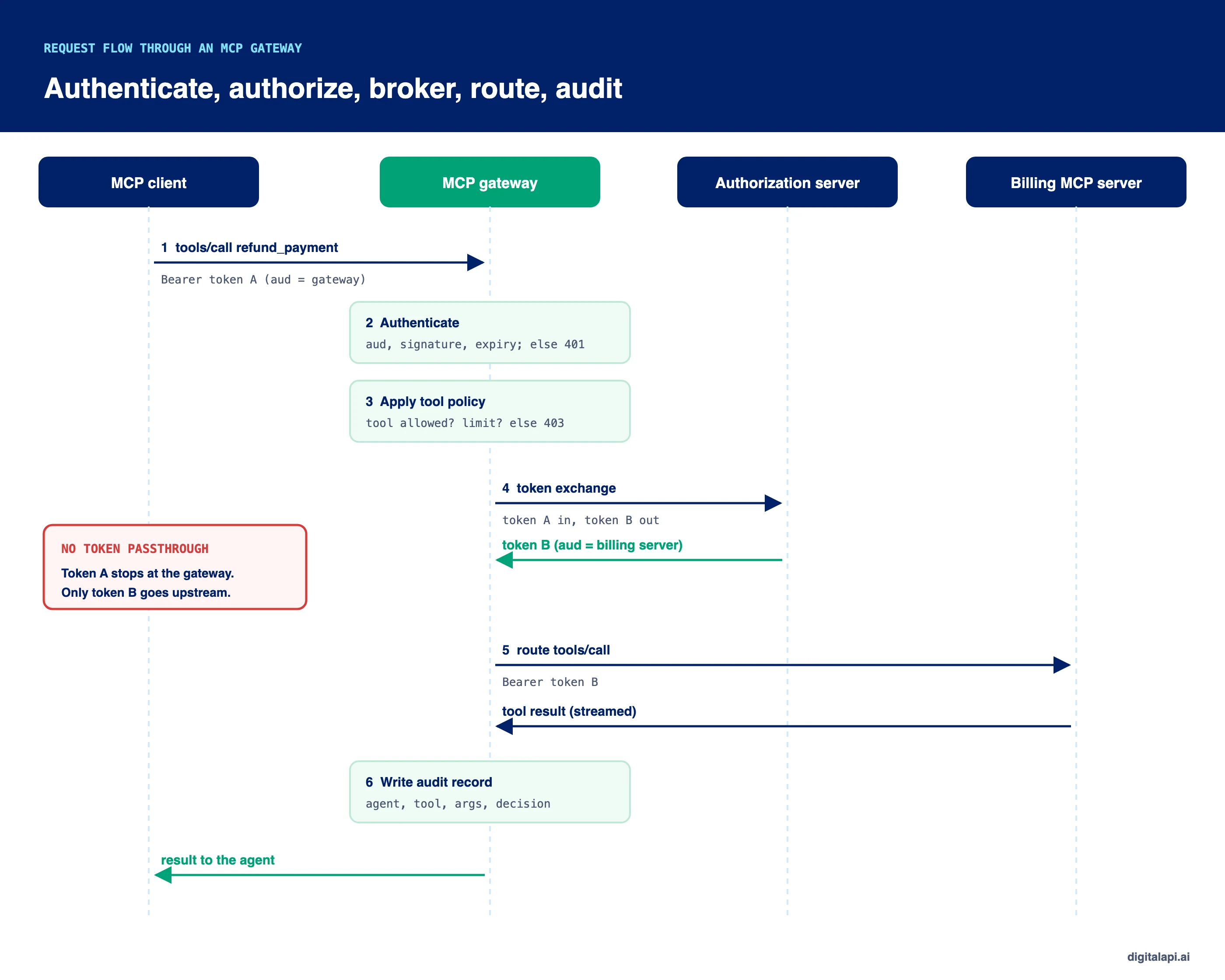
The agent calls the gateway, the gateway checks identity and policy, then calls the right MCP server with its own credentials and logs the result. The upstream server never sees the agent's original token.
Here is the flow for an agent asking a billing MCP server to issue a refund:
- The MCP host (say, a support chat app) decides to call a tool, and its MCP client sends
tools/callforrefund_paymentto the gateway's MCP endpoint. - The gateway authenticates the request. Under the MCP authorization spec, the token must have been issued for the gateway as its audience (RFC 8707). If it is missing or invalid, the gateway returns
401with a pointer to its Protected Resource Metadata (RFC 9728). - The gateway applies policy. Is this agent allowed to see
refund_payment? Is the amount within its limit? Does this tool need human approval? If the token lacks a scope, the gateway returns403withinsufficient_scope, as the spec describes for step-up authorization. - The gateway brokers credentials. It obtains a token issued for the billing MCP server (or a backend credential it holds), never forwarding the agent's token.
- The gateway routes the call to the billing MCP server and streams the result back.
- The gateway records the agent identity, tool, arguments, policy decision and outcome in one audit log.
Why can't a gateway just pass the agent's token through?
Because the MCP authorization spec forbids it. It says MCP servers "MUST only accept tokens that are valid for use with their own resources" and "MUST NOT accept or transit any other tokens." A gateway presents itself as an MCP server, so the rule applies to it.
The spec's security best practices call this anti-pattern "token passthrough." It breaks audience checks, makes audit trails show the wrong caller, and lets a stolen token move across services. The same page describes the "confused deputy" attack on MCP proxy servers that use one static OAuth client ID for many MCP clients, and requires per-client consent to prevent it. A well-built gateway handles both: one token per audience, and consent tracked per client. For implementation detail, see securing MCP endpoints.
When is a single MCP server enough?
A single MCP server, connected directly, is enough when one team owns the server, one or a few known clients use it, and the data is low risk. Adding a gateway too early adds a hop and another system to run.
Direct connections are fine when:
- You are prototyping or running a local stdio server on a developer's machine. The spec says stdio servers should take credentials from the environment, not use the OAuth flow.
- One team builds and uses the server, so the people setting policy are the people calling it.
- Tools are read-only and the data isn't sensitive.
- You have one or two servers and can review their logs by hand.
Even then, follow the spec's server rules: validate the Origin header on Streamable HTTP, bind local servers to 127.0.0.1, and validate that every token was issued for your server.
When do you need an MCP gateway?
You need an MCP gateway when MCP servers are shared across agents, teams or companies, or when tools can change data that matters. At that point, per-server security drifts and nobody has one view of what agents are doing.
Signs you have outgrown direct connections:
If three or more of these apply, a gateway usually costs less to run than the per-server workarounds. To compare products, see best MCP gateways in 2026.
This is the problem DigitalAPI MCP Gateway is built for. It applies a default-deny policy and records every decision, scopes access per agent, per tool and per partner, maps MCP client identity to your existing OAuth 2.1, API key or mTLS setup, and brokers credentials so secrets never reach the agent. It connects alongside the Apigee, Kong, AWS and Azure gateways you already run, so MCP calls get the same audit and metering as your HTTP API traffic.
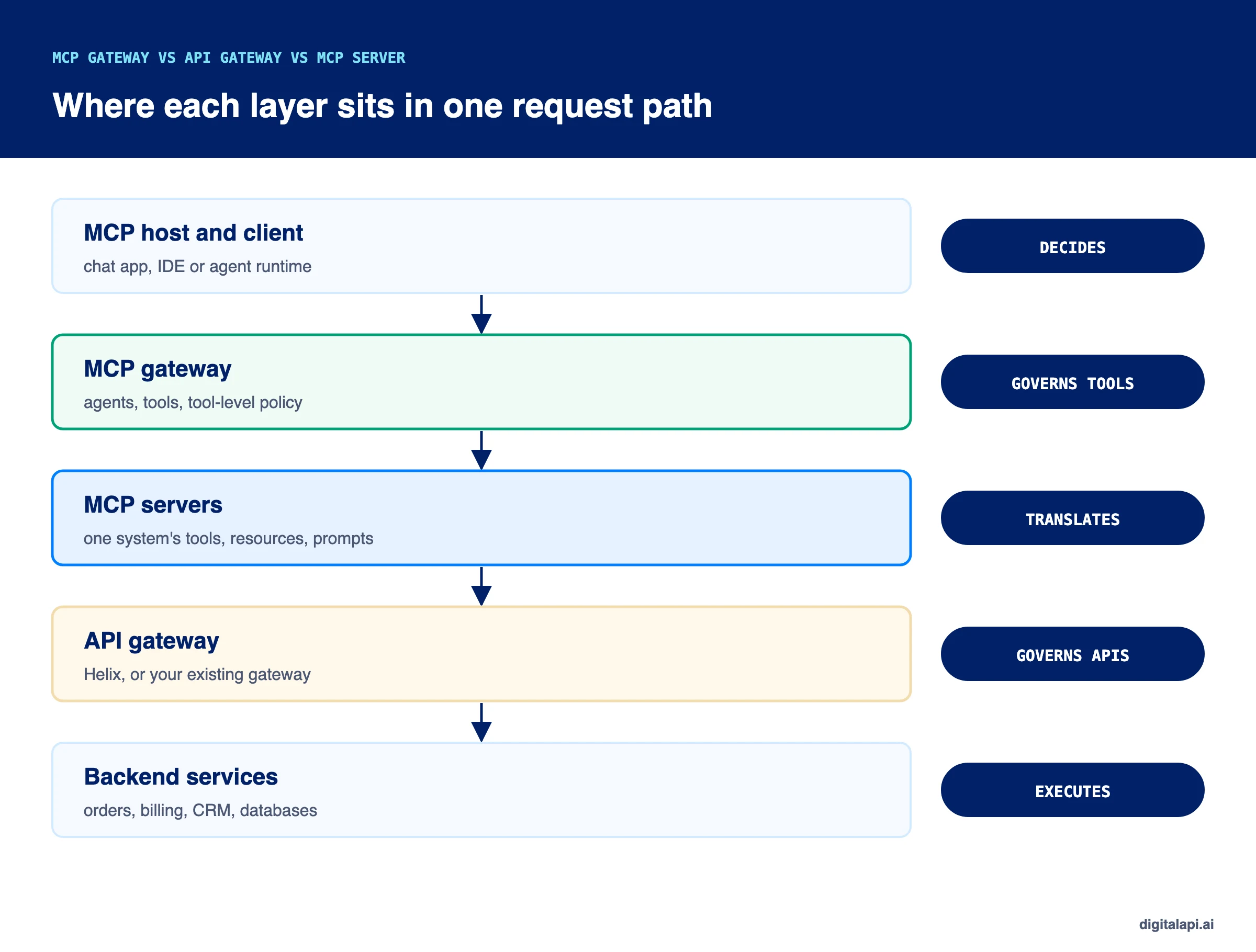
MCP gateway vs API gateway vs MCP server: where does each sit?
The MCP server translates a system into agent tools, the MCP gateway governs agent-to-tool traffic, and the API gateway governs HTTP traffic to the APIs underneath. In most enterprises, all three sit in the same request path.
A common question in MCP server vs API gateway comparisons is whether one replaces the other. It doesn't: an MCP server usually calls APIs that an API gateway already protects. And in MCP gateway vs API gateway terms, a traditional API gateway sees HTTP routes, not which tool an agent picked or why. Some API gateways now add MCP-aware features. For the full breakdown, read MCP vs API gateway.
Key takeaways
- MCP server vs MCP gateway is capability vs control: servers expose tools, resources and prompts; gateways decide who may use them.
- The MCP specification defines hosts, clients and servers, not gateways. A gateway is a pattern that acts as a server to clients, so the spec's server and authorization rules apply to it.
- Never pass tokens through. The MCP authorization spec requires tokens to be issued for the server that receives them, so a gateway must broker its own credentials upstream.
- One server with one team is fine direct. Shared servers, write tools, partners or audit needs are the signals to add a gateway.
- MCP gateways and API gateways work together: one governs tool calls, the other governs the HTTP calls underneath.
Frequently asked questions
1. Do I need an MCP gateway?
You need an MCP gateway once MCP servers are shared by several agents, teams or external partners, or when tools can write, pay or delete. A gateway gives you one place for authentication, per-tool policy, credential brokering and audit. If one team runs one or two read-only servers for its own agents, direct connections are usually enough for now.
2. What is the difference between an MCP gateway and an MCP server?
In MCP gateway vs MCP server terms, the server is the capability provider and the gateway is the control point. An MCP server exposes one system's tools, resources and prompts. An MCP gateway sits in front of many servers, authenticates agents, filters which tools each agent can see and call, brokers backend credentials, routes requests and keeps one audit trail.
3. Can an API gateway act as an MCP gateway?
Partly. A traditional API gateway can authenticate, rate limit and route the HTTP requests that carry MCP traffic, and the 2026-07-28 spec's Mcp-Method and Mcp-Name headers make basic routing easier. But it doesn't natively filter tools/list per agent, apply tool-level policy, or understand MCP authorization discovery. Some API gateways add MCP plugins; check what they cover.
4. Is an MCP gateway the same as an MCP proxy?
Not quite. A proxy mainly forwards traffic, for example bridging stdio to HTTP or aggregating servers. A gateway adds identity, policy, credential brokering and audit on top. The MCP security best practices use "MCP proxy server" for a server that fronts third-party APIs with a single OAuth client, and warn that such proxies MUST implement per-client consent to avoid confused deputy attacks.
5. Is an MCP gateway part of the MCP specification?
No. The MCP specification defines three roles: hosts, clients and servers. An MCP gateway is an architectural pattern. To clients it behaves as an MCP server, so it must follow the server rules, including validating that tokens were issued for it. To upstream servers it behaves as an MCP client, using its own credentials for each server.
6. Does an MCP gateway replace security on each MCP server?
No. A gateway centralizes authentication and policy, but each server should still validate the tokens it receives, check object-level access for its own data, and validate the Origin header on Streamable HTTP. Treat the gateway as the first enforcement point, not the only one. Defense in depth matters because agents act fast and unattended.
7. Can an MCP gateway forward the user's access token to MCP servers?
It shouldn't. The MCP authorization spec says servers MUST NOT accept or transit tokens that weren't issued for them, and the security best practices call this "token passthrough." A gateway should validate the token issued to it, then obtain a separate token or credential scoped to each upstream server, so audit trails and audience checks stay correct.
8. Does an MCP gateway add latency?
Yes, any extra network hop adds some latency, and the amount depends on the gateway, its policy checks and where it runs. Teams usually accept it for central auth, policy and audit. Keep the gateway close to the MCP servers, cache token validation, and route on MCP headers where possible to avoid parsing every body.
Conclusion
The MCP gateway vs MCP server choice is not either-or. MCP servers are how agents get capabilities, and the spec makes them easy to build, which is why they multiply. An MCP gateway is how you keep that growth safe: one endpoint, one identity check, one policy model, credentials that never reach the agent, and one audit trail.
Start by counting your MCP servers and asking who can call each tool today. If the answer is "anyone with a valid token," put a gateway in front before an agent finds out first.
Put every MCP server behind one governed endpoint, with per-agent policy, brokered credentials and a full audit trail. Try DigitalAPI MCP Gateway
Prefer a walkthrough? Book a Demo
Dhayalan Subramanian is Associate Director, Product Growth at DigitalAPI, where he leads go-to-market and product growth for the company’s multi-gateway API management platform. His work focuses on helping large enterprises and mid-market cloud companies consolidate APIs across AWS, Azure, Apigee, Kong, MuleSoft, and other gateways into a single control plane for governance, discovery, monetization, and agent consumption.
Dhayalan brings 14+ years of experience across product strategy, enterprise architecture, and engineering leadership. Earlier in his career, he held senior roles at Encora (as Associate Architect and Technical Manager), Mindtree (Technology Lead), Tech Mahindra (Technical Lead), and Primus Analytics, where he designed integration frameworks and delivered enterprise-grade digital platforms for global customers.
At DigitalAPI, he works directly with platform, integration, and developer experience leaders at Fortune 500 organizations to operationalize unified API catalogs, developer portals, and MCP-ready APIs. He writes regularly on API developer experience, API governance, and AI agent architectures.
One email a fortnight. Worth opening.
A short digest of what we're writing, what we're learning from customers, and the handful of links you'd actually want from us. No tracking pixels.