




API Governance
API Governance Platform
Keep every API aligned to your policies through one governance layer that enforces schema validation, RBAC, versioning, and audit across every gateway including Apigee, Kong, AWS, and Azure without slowing developers down.
ISO 27001 certified
SOC 2 and ISO 27001 aligned controls







Definition
What is API governance?
API governance is the practice of defining and enforcing the policies, standards, and controls that decide how APIs are designed, secured, versioned, and retired across an organization. It keeps APIs consistent, compliant, and discoverable as they scale across teams and gateways, and it catches risk before it reaches production.
An API governance platform is the software that makes this enforceable: it applies rules automatically across every gateway, flags violations and ungoverned APIs, and gives you one audit trail instead of a separate policy silo per gateway.
%20(1).png)

Governance
The rules: The policies and standards that decide how every API should be built, secured, and versioned.

Management
The implementation: Designing, deploying, and operating APIs day to day within those rules.

Security
The protection: Auth, RBAC, and threat controls that governance policies require and management applies.
Governance sets the standards. Management runs the APIs. Security protects them. DigitalAPI gives you all three in one layer.
How it works
How does API governance work with DigitalAPI?
You move from scattered, inconsistent APIs to one governed estate in four steps, across every gateway and without slowing teams down.
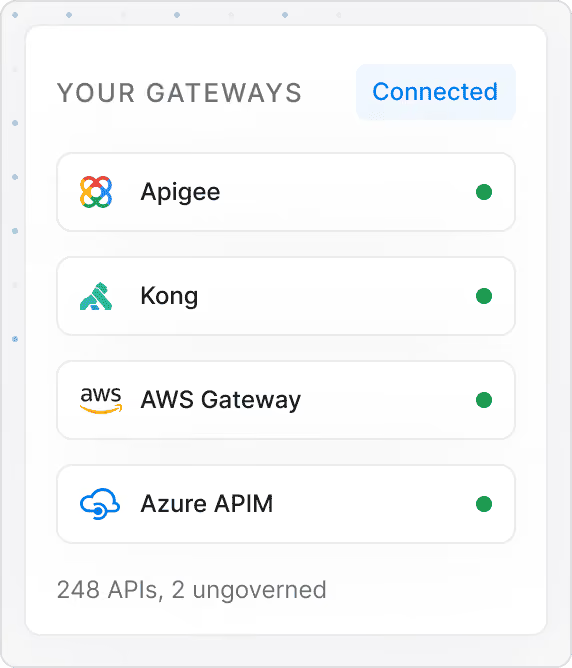
Connect and discover every API
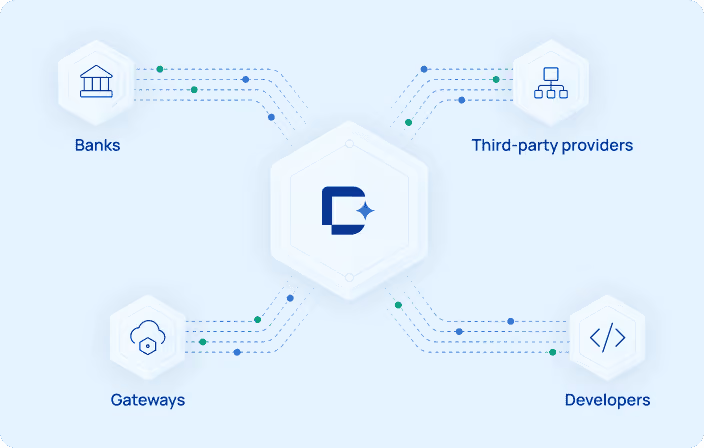
Link Apigee, Kong, AWS, and Azure with read-only credentials. DigitalAPI catalogs every API across all of them and surfaces shadow and ungoverned ones you did not know existed.
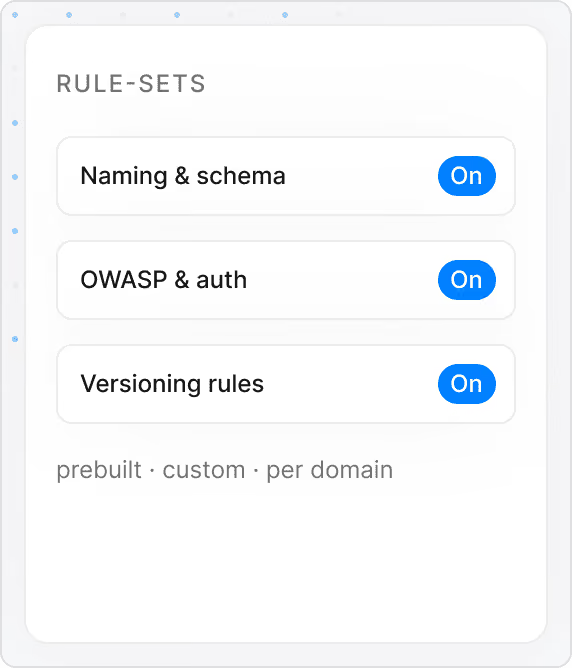
Define policies and rulesets
Set design, security, and versioning standards once, using prebuilt or custom rulesets. Apply them per team, domain, or the whole estate, no per-gateway rework.
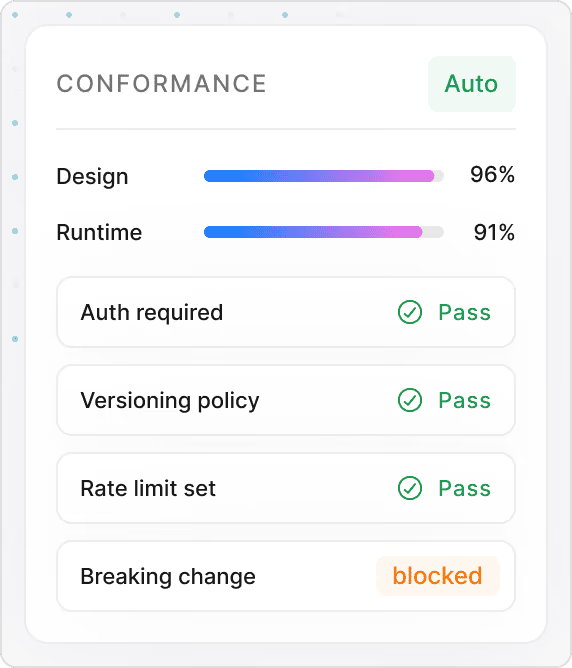
Enforce automatically across gateways
DigitalAPI checks every API against your rules at design time and runtime, blocks breaking changes, and keeps policy consistent across teams and gateways.
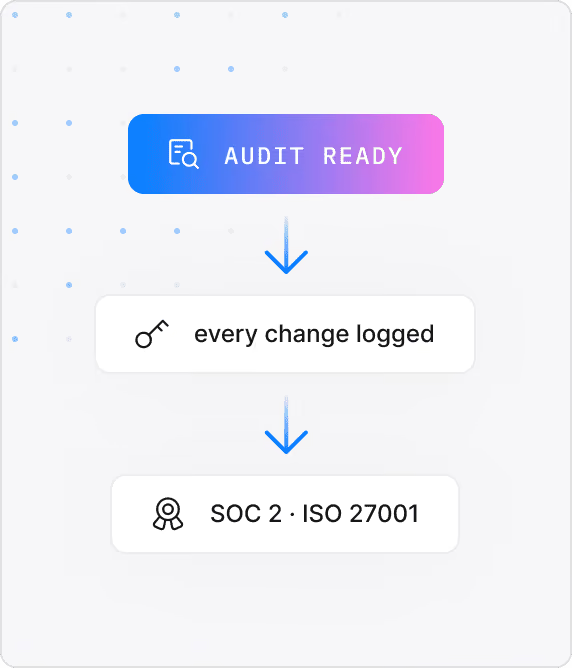
Monitor, audit, and prove compliance
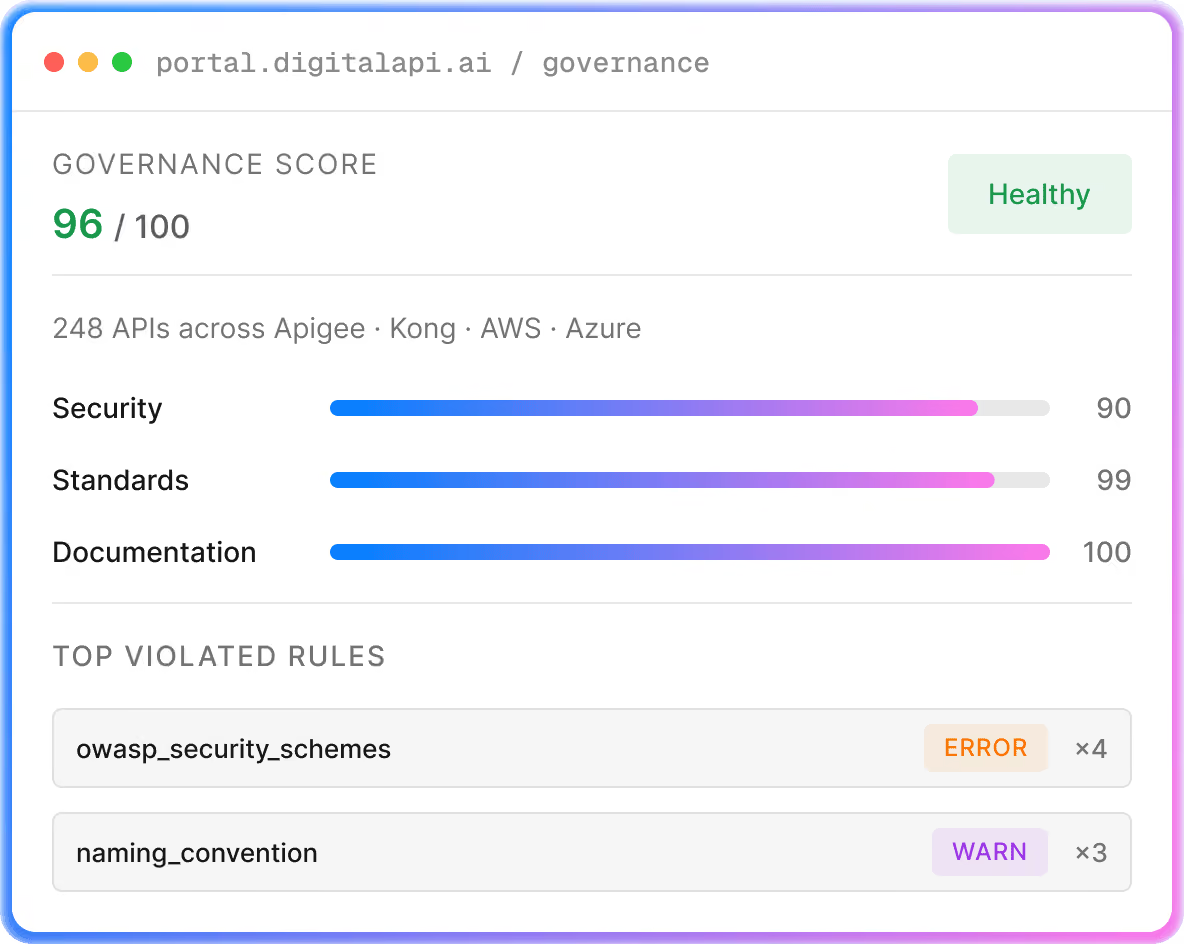
Track violations and usage in real time, keep one audit trail across every gateway, and produce the evidence auditors ask for without a manual scramble.
The pillars
What does
API governance cover?
Strong API governance rests on a few pillars: clear standards, consistent enforcement, and full visibility. DigitalAPI builds all of them in and applies them across every gateway, so governance stays consistent without becoming a bottleneck.

Design & schema standards
Design and schema standards enforce naming conventions and OpenAPI rules on every spec.

Security policies
Security policies apply OWASP checks, auth standards, and sensitive-operation rules consistently.

Access control (RBAC)
Access control (RBAC) governs role-based access for internal, partner, and public APIs across teams.

Versioning & lifecycle
Versioning and lifecycle management standardizes API versions and deprecation flows that prevent surprises.

Breaking-change control
Breaking-change control detects and blocks breaking changes before they reach production.

Documentation standards
Documentation standards keep every API documented to the same format, generated automatically.

Monitoring & audit
Monitoring and audit give real-time visibility into policy violations, usage, and a full audit trail.

Compliance mapping
Compliance mapping links API policies to SOC 2, ISO 27001, PCI DSS, and HIPAA controls.
Why DigitalAPI
Why choose DigitalAPI for API governance?
Every gateway governs only its own APIs. DigitalAPI sits above all of them and enforces one consistent set of policies, so governance stops being a separate silo per gateway and starts being one control layer.
.svg)
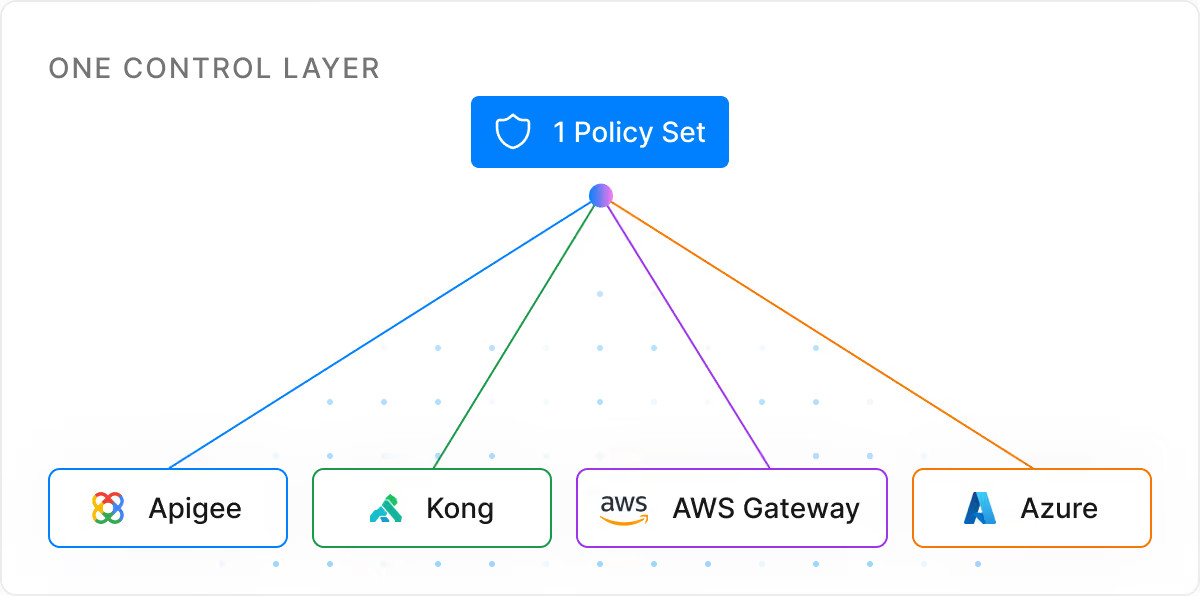
One policy layer across every gateway
Define a policy once and enforce it everywhere, instead of recreating and reconciling rules separately in each gateway.
.svg)
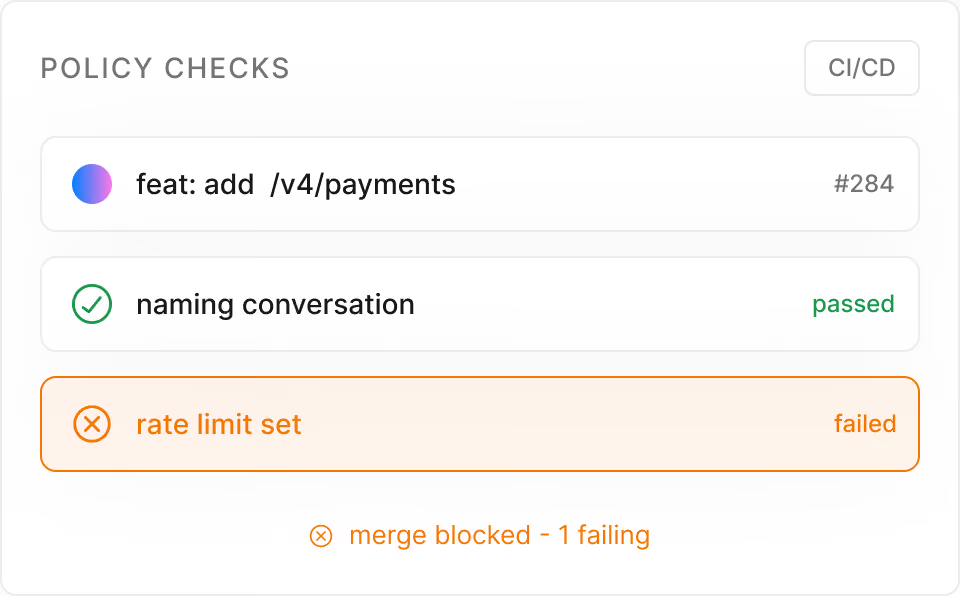
Automated policy enforcement
Replace manual reviews with automated checks at design time and in CI/CD, so standards hold without slowing teams down.
.avif)
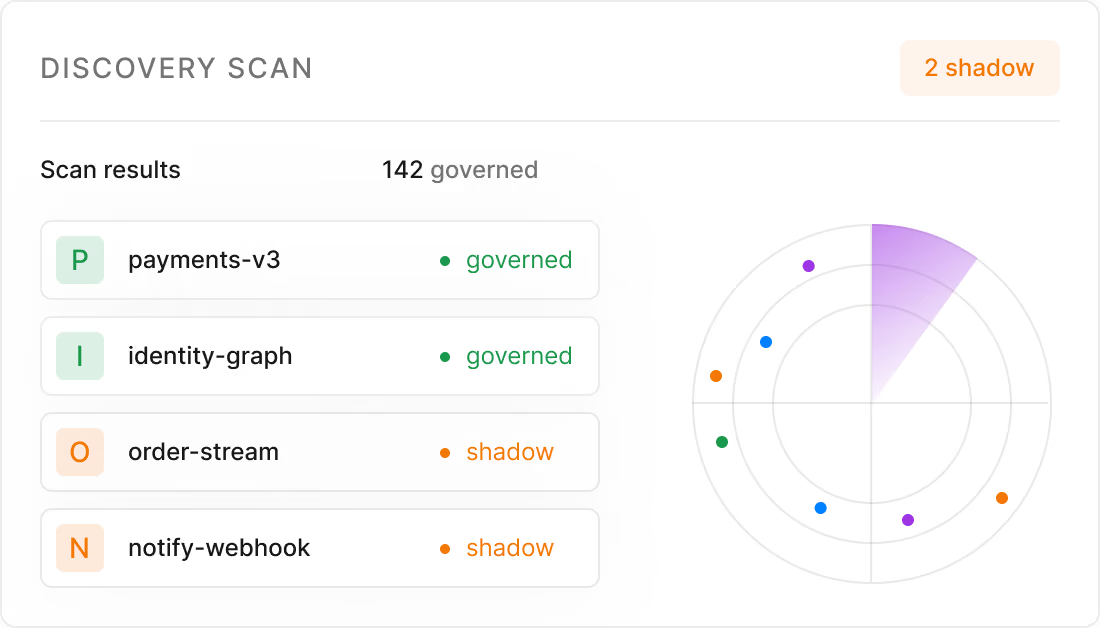
Shadow and ungoverned API discovery
Surface every API across teams and gateways, including the ones no one registered, and bring them under policy before they become risk.
.svg)
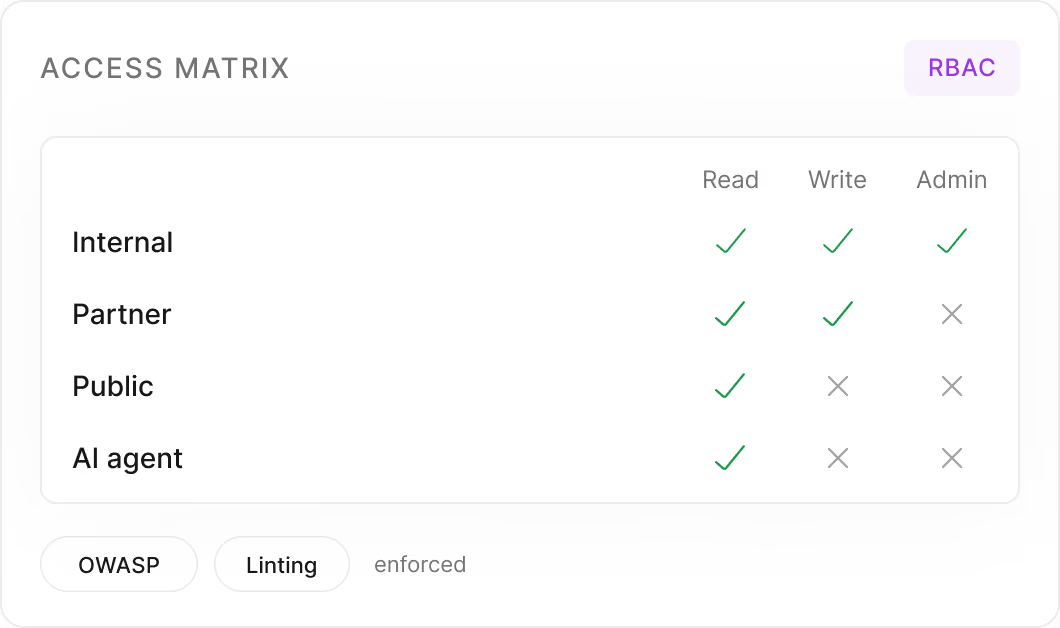
Security and access control
Apply unified authentication, RBAC, and sensitive-operation policies across every API, with OWASP checks and linting built in.
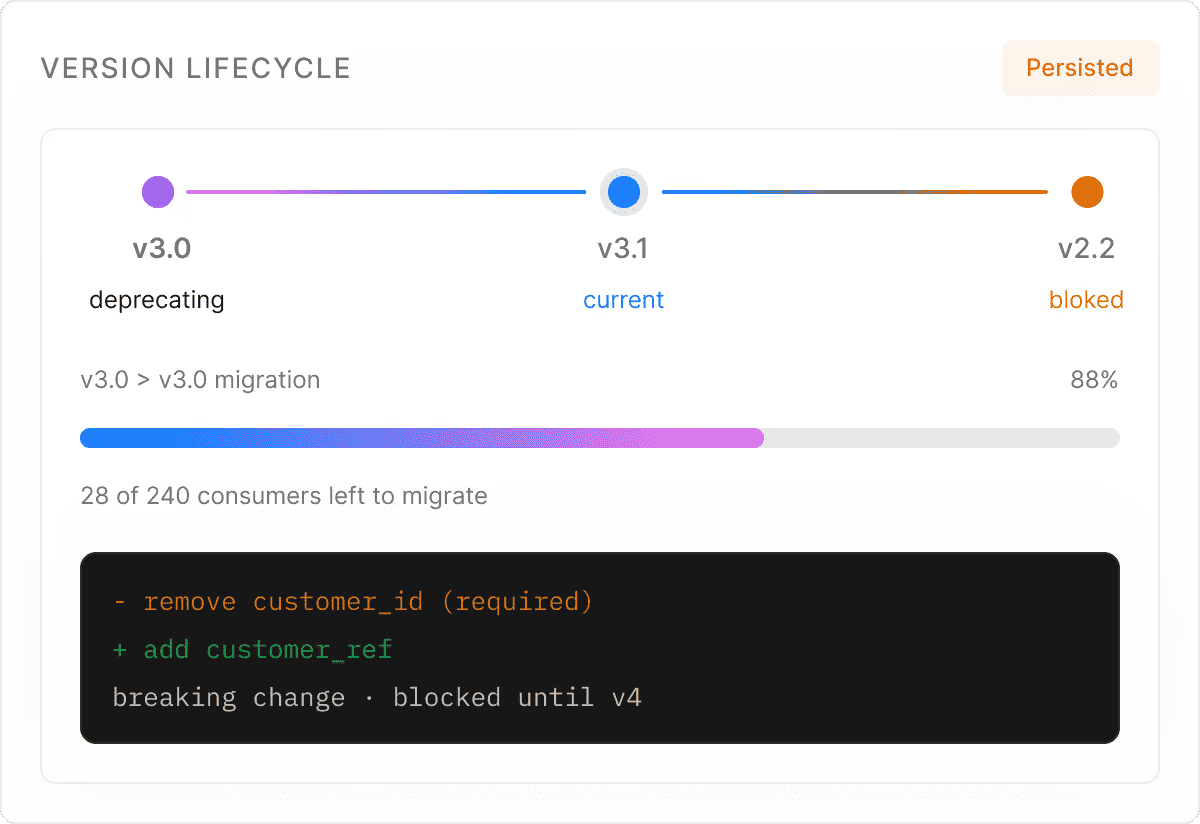
Versioning and change management
Standard versioning and clean deprecation flows catch breaking changes before release and keep consumers stable.
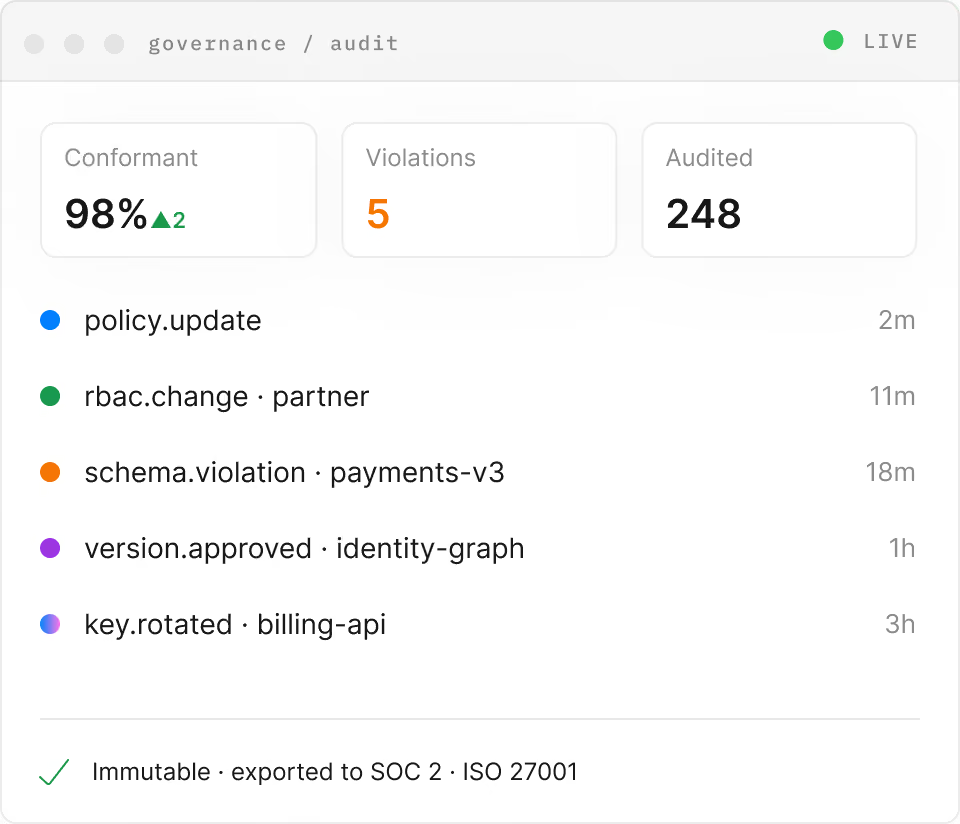
Monitoring, analytics, and audit trail
Get real-time visibility into violations and usage, plus one immutable audit trail across every gateway for compliance.
Compliance
Govern for compliance, and prove it
Regulated teams cannot just say they are compliant, they have to show it. Map a policy to a framework once, enforce it across every gateway, and produce the audit trail when reviewers ask. One control layer, evidence included.

SOC 2
Trust & security controls
Map access, change, and audit policies to SOC 2 criteria and keep the evidence.

ISO 27001
Information security
Align governance controls with ISO 27001 and demonstrate them on demand.

PCI DSS
Payments
Enforce auth, encryption, and access rules required for cardholder-data APIs.

HIPAA
Healthcare
Govern access and audit for APIs that touch protected health information.

GDPR
Data privacy
Control who can access personal-data APIs and prove it in a review.

PSD2 / Open Banking
Financial services
Apply the standards regulated banking and open-banking APIs are held to.
DigitalAPI provides controls and audit evidence that support these frameworks. It does not replace your own certification or legal review.
Agent-era GOVERNANCE
New
Govern AI agents and MCP traffic, not just APIs
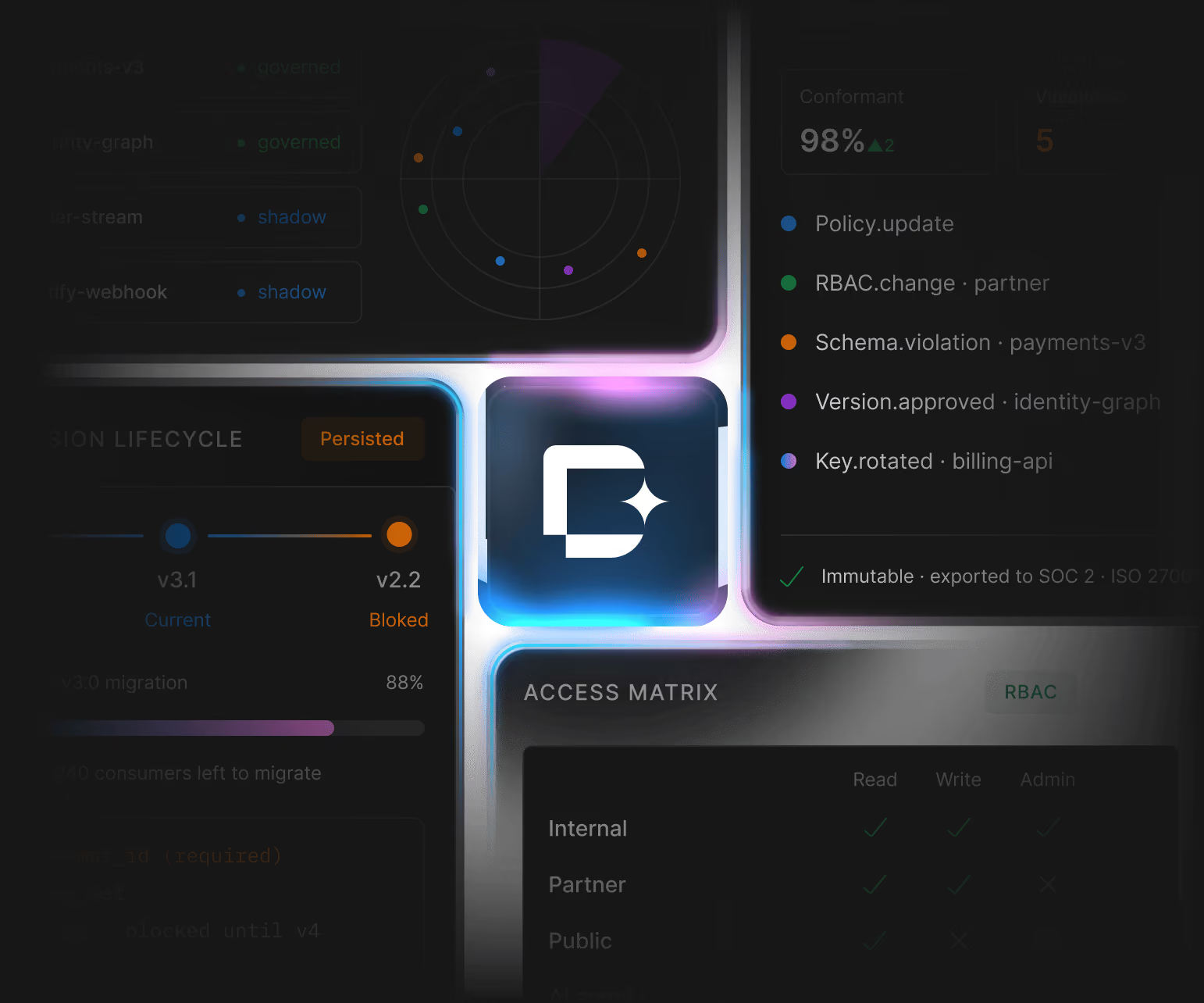
AI agents are becoming first-class API consumers. DigitalAPI extends the same policies to MCP and agent traffic: agent-grade credentials instead of user tokens, per-agent scopes and quotas, and a full audit trail of every tool call.
Agent-grade credentials, never end-user tokens
Per-agent scopes, quotas, and rate limits
Every agent tool call attributed and replayable in the audit log
How we compare
How does DigitalAPI
compare to other API governance approaches?
Governance tools fall into two camps: gateway-native governance that only governs its own estate, and spec-level tools that lint the design but not the live runtime. DigitalAPI governs across every gateway, at design time and runtime, and extends to AI agents.
Capability
%20(1).svg)
Gateway-native governance
Spec-level tools
Works across multiple gateways
Yes, every gateway
Single gateway
Gateway-agnostic
Design-time and runtime enforcement
Both
Runtime, own stack
Design-time only
Shadow / ungoverned API discovery
Across all gateways
Own estate only
Breaking-change detection
Blocked pre-release
Varies
Spec diff
RBAC across gateways
Unified
Per gateway
Limited
Compliance mapping and evidence
Partial
Partial
Unified audit trail
One trail, all gateways
Per gateway
Governs AI agents / MCP traffic
MCP-native
Emerging
Works across multiple gateways
Yes, every gateway
Gateway-native governance
Single gateway
Spec-level tools
Gateway-agnostic
Design-time and runtime enforcement
Both
Gateway-native governance
Runtime, own stack
Spec-level tools
Design-time only
Shadow / ungoverned API discovery
Across all gateways
Gateway-native governance
Own estate only
Spec-level tools
Breaking-change detection
Blocked pre-release
Gateway-native governance
Varies
Spec-level tools
Spec diff
RBAC across gateways
Unified
Gateway-native governance
Per gateway
Spec-level tools
Limited
Compliance mapping and evidence
Gateway-native governance
Partial
Spec-level tools
Partial
Unified audit trail
One trail, all gateways
Gateway-native governance
Per gateway
Spec-level tools
Governs AI agents / MCP traffic
MCP-native
Gateway-native governance
Emerging
Spec-level tools
Outcomes
What results can you expect?
%20(1).avif)
%20(1).avif)
95%
Decrease in API duplication across the estate.
98%
Consistency achieved across API policies and compliance.
1
Audit trail across every gateway, not one per silo.
0
Breaking changes shipped once policies are enforced.
Frequently asked questions
API governance FAQs
What is API governance?
API governance is the practice of defining and enforcing the policies and standards that decide how APIs are designed, secured, versioned, and retired. It keeps APIs consistent and compliant as they scale across teams and gateways.
How do you enforce governance across multiple gateways?
DigitalAPI connects to Apigee, Kong, AWS Gateway, and Azure APIM with read-only credentials and applies one set of policies across all of them, so you do not recreate and reconcile rules separately in each gateway.
Which compliance frameworks does it support?
DigitalAPI provides controls and audit evidence that support frameworks like SOC 2, ISO 27001, PCI DSS, HIPAA, GDPR, and PSD2. It supplies the enforcement and evidence, not a replacement for your own certification.
Can you govern AI agents and MCP traffic?
Yes. DigitalAPI is MCP-native and extends the same policies to agents: agent-grade credentials, per-agent scopes and quotas, and a full audit trail of every tool call.
What is the difference between API governance and API management?
Governance sets the rules: the policies and standards APIs must follow. Management is the day-to-day work of designing, deploying, and operating APIs within those rules. Governance defines the standard, management runs the APIs, and security protects them.
What about shadow or ungoverned APIs?
DigitalAPI discovers every API across your gateways and teams, including ones that were never registered, flags the ungoverned ones, and brings them under policy before they become a security or compliance risk.
Does API governance slow developers down?
It should not. DigitalAPI automates checks at design time and in CI/CD instead of relying on manual reviews, so standards are enforced in the background and teams keep shipping.

.avif)