








Definition
What Are API Gateway Connectors?
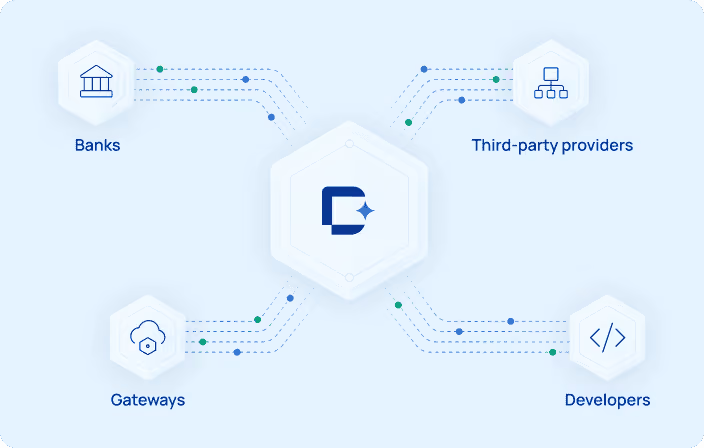
An API gateway connector is a plugin inside the DigitalAPI API Marketplace that reads one type of gateway through its management API. It imports the APIs, products, plans and specs that gateway already holds into one governed catalogue, so developers, partners and AI agents find everything in one place.
Imports read each gateway in place, so nothing is migrated. Runtime traffic stays on the gateway, and keys are issued by the gateway when a consumer subscribes.

The CHALLENGE
The Problem With Running Multiple Gateways, and How Do You Fix It?
When you run more than one gateway, each one brings its own portal, keys and usage reports with nothing connecting them. Four things slow teams down, and each card shows the stall and how a gateway connector removes it.
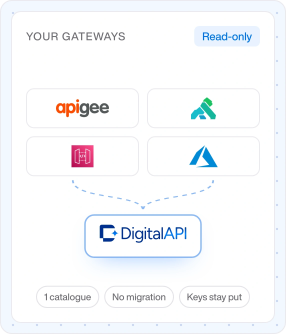
Every Gateway Has Its Own Portal
Developers need a separate portal, account and key for each one. One catalogue across every gateway, with nothing migrated.
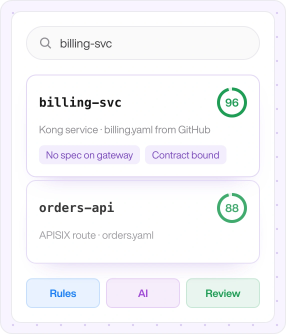
Gateway APIs Arrive Without a Spec
Kong, kgateway and APISIX routes carry no OpenAPI contract. Contracts are matched from your repositories: rules first, then AI.
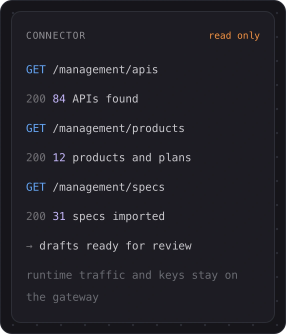
Consolidating Means Moving Every API
Re-pointing clients and re-issuing credentials is a project of its own. Connectors read the management API, so traffic and keys stay put.
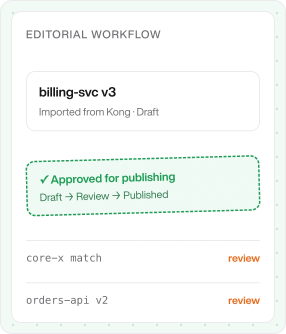
Bulk Imports Publish Without a Review
Listings reach the catalogue exactly as the gateway holds them. Every import lands as a draft and is published only when approved.
The connector lifecycle
What Does Each DigitalAPI Gateway Connector Cover?
Every DigitalAPI gateway connector follows the same six operations, from first connection to usage, so every gateway you connect behaves the same way in your DigitalAPI API Marketplace catalogue.

Connect and test
An organisation adds a connection to a gateway. Its credentials are checked first, before anything is imported.

Import APIs
Batch import, with each listing updated in place when you re-import.

Import products
API products, plans and their quotas come across with the APIs.

Map contracts
Where a gateway holds no specification, contracts are matched from repositories or uploads.

Issue keys
When a consumer subscribes, the app and credentials are created on the gateway itself.

Collect usage
Pulled from each gateway's own analytics, or brought in by Splunk search, signed webhook or file upload.
Benefits
What Are the Benefits of API Gateway Connectors?
Bring every gateway into one catalogue and keep the control, credentials and traffic exactly where they are today.

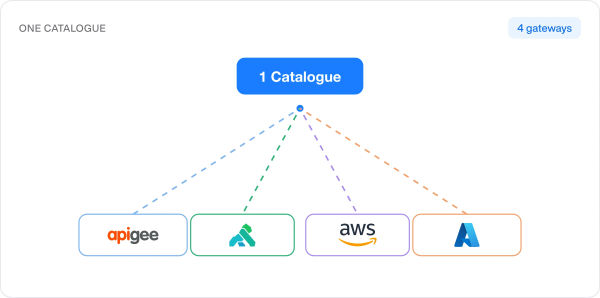
One catalogue for every gateway
Developers, partners and AI agents find every API from every connected gateway in one place, instead of learning a portal per gateway.

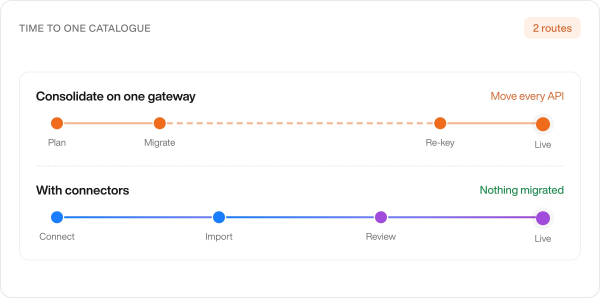
No migration project
Connectors read each gateway's management API, so nothing is moved, no client is re-pointed and no credential is re-issued.

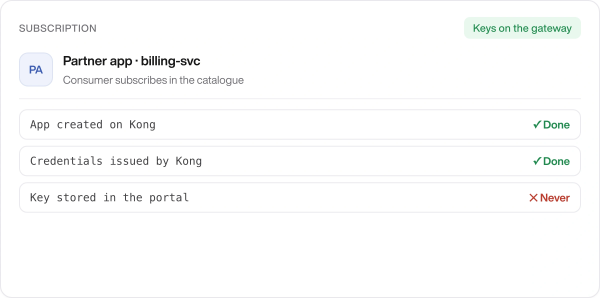
Credentials stay on the gateway
Keys are issued by the gateway that runs the API when a consumer subscribes, and are never stored in the portal.

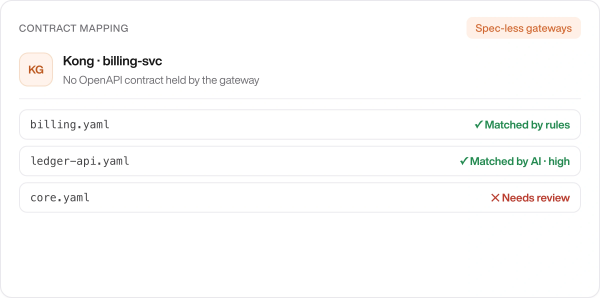
Real contracts for spec-less APIs
Rules first, then AI, match Kong, kgateway and APISIX routes to contracts. A person reviews anything uncertain.
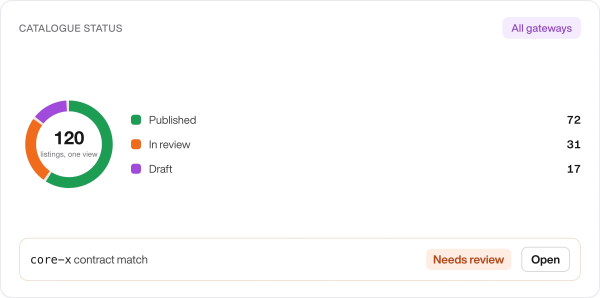
Governed before it is published
Every import lands as a draft and is published only after review, so nothing reaches the catalogue unchecked.
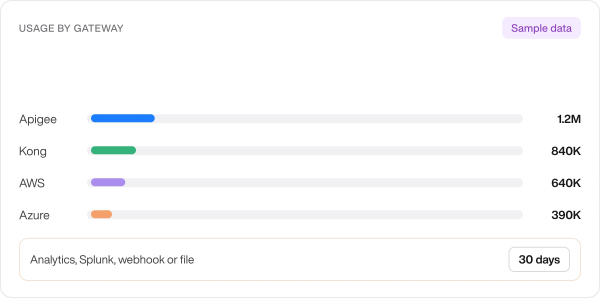
Usage in one place
Usage is pulled from each gateway's own analytics, or brought in by Splunk search, signed webhook or file upload, so it can be seen across gateways.
Then, AI agents
Opt-in
Once Connected, Your Gateway APIs Can Reach AI Agents
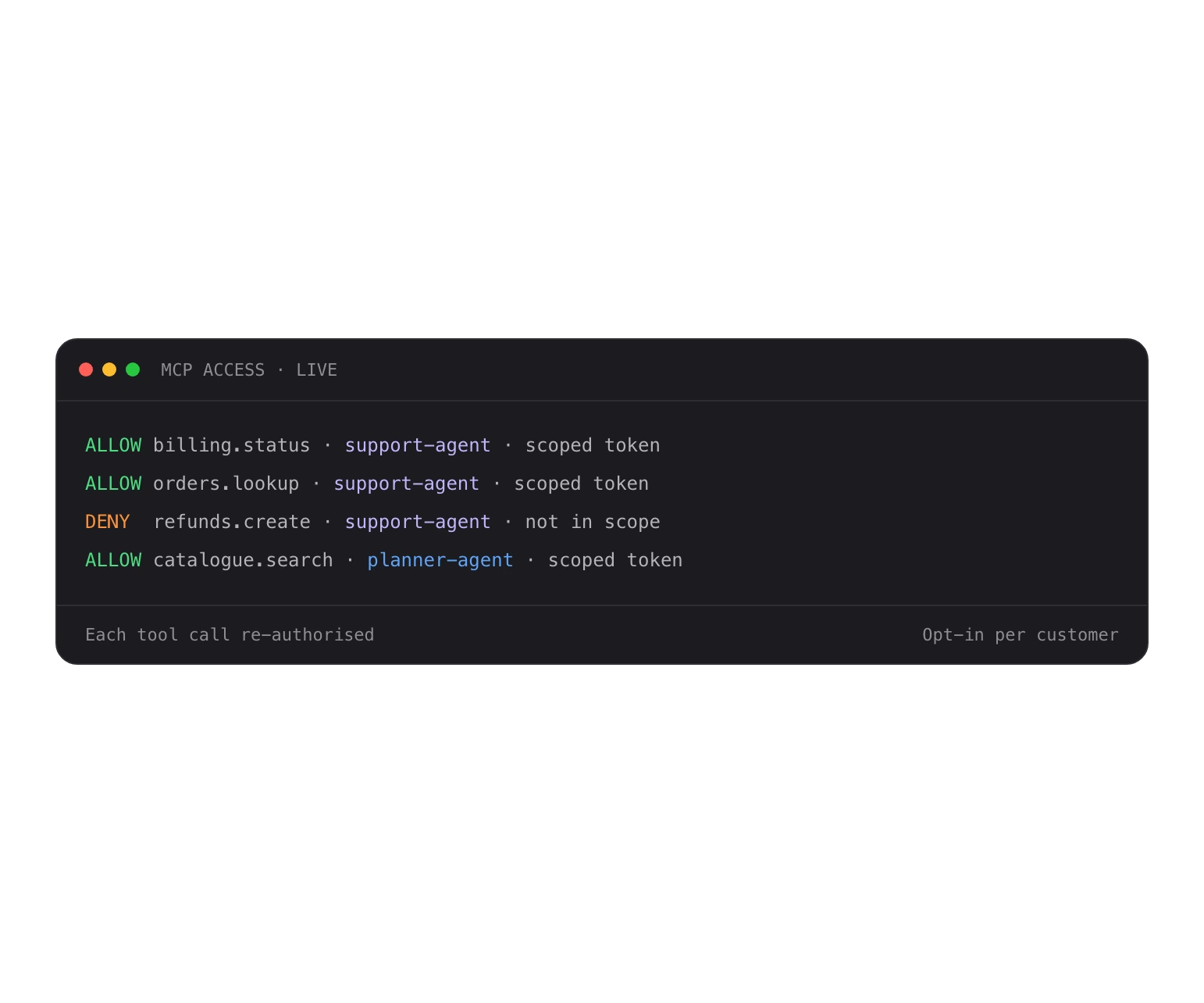
The catalogue your connectors fill is also the source for agent access over MCP. Agents get scoped tokens, and every tool call is authorised again when it runs. Each customer switches this on.
A registry of MCP servers and agent skills
Scoped tokens for every agent
Every tool call re-authorised at run time
How we compare
How Do Gateway Connectors Compare to the Alternatives?
Teams with several gateways usually choose between separate vendor portals and consolidating onto one gateway. Connectors unify the catalogue without either.
Capability

Separate vendor portals
Consolidate on one gateway
Works across multiple gateways
Yes, 11 gateways
One gateway each
Only after migrating
Migration required
None
None
Every API moved
Client and credential changes
None, keys stay on the gateway
None
Re-point clients, re-issue credentials
One catalogue and one set of rules
Yes, one catalogue
Separate per gateway
Yes, once migrated
Coverage beyond documentation
Catalogue, governance, keys, usage
Stops at documentation
Depends on the portal
Works across multiple gateways
Yes, 11 gateways
Separate vendor portals
One gateway each
Consolidate on one gateway
Only after migrating
Migration required
None
Separate vendor portals
None
Consolidate on one gateway
Every API moved
Client and credential changes
None, keys stay on the gateway
Separate vendor portals
None
Consolidate on one gateway
Re-point clients, re-issue credentials
One catalogue and one set of rules
Yes, one catalogue
Separate vendor portals
Separate per gateway
Consolidate on one gateway
Yes, once migrated
Coverage beyond documentation
Catalogue, governance, keys, usage
Separate vendor portals
Stops at documentation
Consolidate on one gateway
Depends on the portal
Outcomes
What Results Can You Expect?


300+
APIs unified across 6+ API gateways.
0
Gateways you have to rip out and replace.
5x
Faster partner onboarding than stitching gateway portals.
70%
Increase in API discovery across teams.
Frequently asked questions
Gateway Connector FAQs
What are API gateway connectors?
API gateway connectors are plugins inside the DigitalAPI API Marketplace that read one type of API gateway through its management API. Each one imports the gateway's APIs, products, plans and specs into one governed catalogue, so developers, partners and AI agents find every API in one place. Eleven connectors are available today, and runtime traffic and keys stay on the gateway.
Do we need to migrate off our existing gateways?
No. Connectors read each gateway in place. Nothing is migrated, clients are not re-pointed and credentials are not re-issued. The catalogue and rules are unified while traffic and keys stay where they are.
Why not standardise on one API gateway instead?
Consolidating means moving every API, re-pointing clients and re-issuing credentials, which is a project in itself. Connectors give you one catalogue and one set of rules across the gateways you already run without that work.
Which API gateways are supported today?
Apigee Edge, Apigee X, AWS API Gateway, Azure API Management, IBM API Connect, Kong (self-managed Gateway and Konnect), MuleSoft Anypoint, Tyk, Apache APISIX, kgateway and DigitalAPI's own Helix gateway.
What happens when we re-import from a gateway?
Imports run in batches. Re-importing updates each listing in place, and every import lands as a draft for review before it is published.
How are APIs matched to contracts when the gateway holds no specification?
Gateways such as Kong, kgateway and APISIX route traffic without holding an OpenAPI contract. DigitalAPI matches each route to a contract from your repositories (GitHub, Bitbucket or Azure Repos), Postman workspaces, SwaggerHub or an uploaded zip. Rules score routes and names first, and AI only reads the leftovers. Confident pairs are bound on import and the rest wait for review.
Could AI attach the wrong contract to an API?
Not unattended. AI must state its confidence and reason for every pairing, and anything below the confidence bar waits on a review screen for a person to decide.
Where do API keys live?
On the gateway that runs the API. When a consumer subscribes, the app and credentials are created on that gateway, and keys are never stored in the portal.
We run a gateway that is not listed. What then?
The connector framework is built for new gateways: one plugin interface per gateway, so supporting another means adding a connector. We scope it with you in discovery. Where a gateway does not yet expose a step we need, the team extends that connector during onboarding.