



API Sandboxing
API Sandbox Environment
Spin up safe, isolated API sandbox environments for any API in minutes. Let developers and partners test against realistic, synthetic data across Apigee, Kong, AWS, and Azure, with production-like auth and rate limits, and nothing ever touches production.
ISO 27001 certified
Mock or live testing, any language


Trusted by 240+ API teams
From cloud-first banks to global telcos
.avif)









Definition
What is an API sandbox?
An API sandbox is a controlled, isolated environment where developers test and interact with an API without affecting production data or systems. It behaves like the real API, using synthetic data and configurable responses, so teams can validate integrations, simulate errors, and onboard partners safely before going live.
A good sandbox does more than return canned responses. It mirrors production routing, auth, and rate limits, and stays isolated so nothing a developer does in testing can ever reach real users.
Mock server
Fast, spec-generated responses for early testing. Great before a backend exists, but stateless and not real integration.
Sandbox
An isolated, production-like environment for real integration: stateful, with auth, rate limits, and synthetic data. DigitalAPI gives you both.
How it works
How does API sandboxing work with DigitalAPI?
You go from an API spec to a safe, self-serve test environment in four steps, with no separate infrastructure to build and no risk to production.
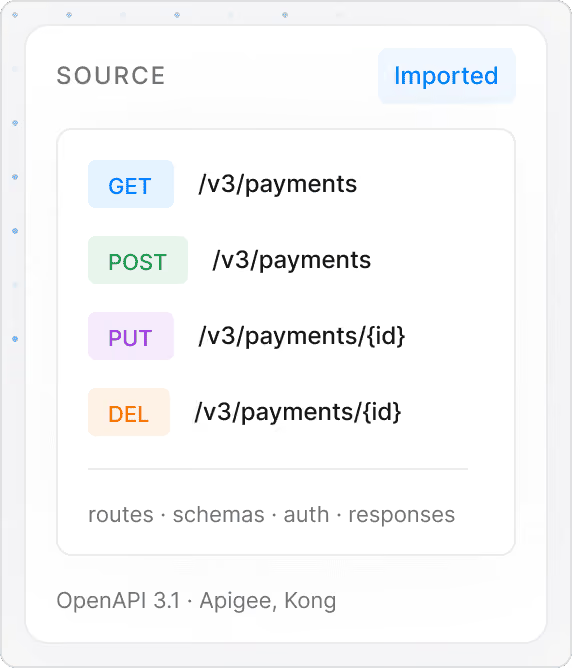
Import a spec or connect a gateway
Bring in an OpenAPI spec or connect Apigee, Kong, AWS, or Azure. DigitalAPI reads the contract: routes, schemas, auth, and expected responses.
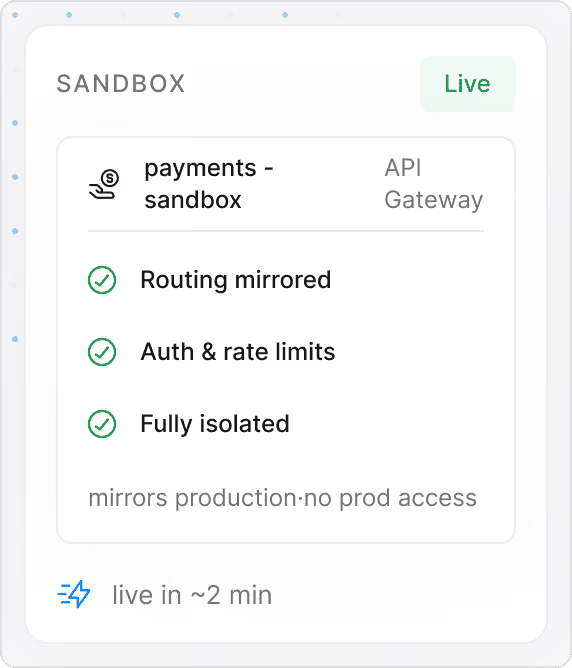
Spin up an isolated sandbox
Generate a sandbox in minutes with API Gateway, mirroring production routing, auth, and rate limits, fully isolated so nothing touches live systems.
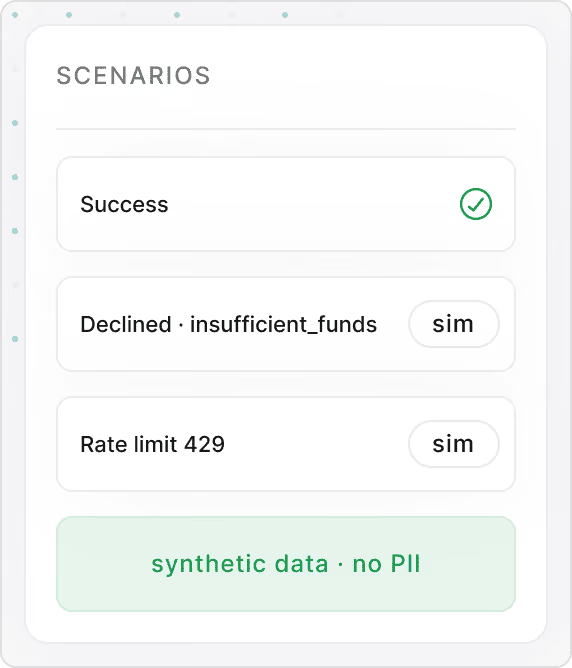
Load test data and simulate scenarios
Use synthetic, production-like data with no PII, and configure responses: success, declines, errors, timeouts, and rate limits, to test every edge case.
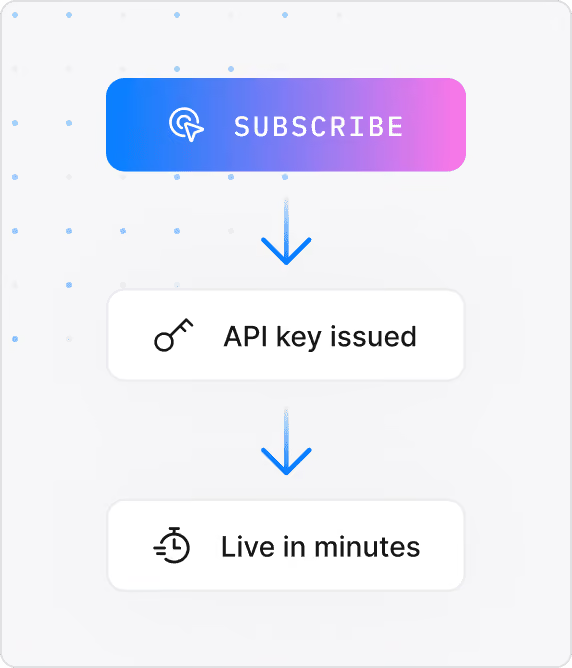
Share self-serve with developers and partners
Publish the sandbox in your portal with self-serve test keys, so developers and partners can try, integrate, and certify on their own before going live.
What you can test
What can you test in an API sandbox?
A good sandbox lets teams rehearse everything that can happen in production, safely. DigitalAPI builds these in, so developers and partners can validate integrations end to end before they go live.

Isolation from production
A walled-off environment, so test traffic never reaches real users or data.

Synthetic, safe test data
Production-like datasets with no PII, ready to use or bring your own.

Scenario & error simulation
Trigger success, declines, 4xx/5xx errors, and timeouts on demand.

Production-like auth
Test OAuth2, API keys, and CORS exactly as they behave in production.

Rate limits & throttling
Replicate quotas, bursts, and 429s to see how clients handle limits.

Version & compatibility
Test v1 vs v2 side by side and catch breaking changes before release.

Self-serve access
Test keys and a try-it console so developers start without a ticket.

Request logs & observability
Inspect every sandbox call, payload, and response to debug fast.
Why DigitalAPI
Why choose DigitalAPI for API sandboxing?
Most teams either spin up brittle mock servers or build sandbox infrastructure from scratch, one snowflake per team. DigitalAPI gives you real, isolated sandboxes from any spec or gateway in minutes, with safe data and self-serve access built in.
.svg)
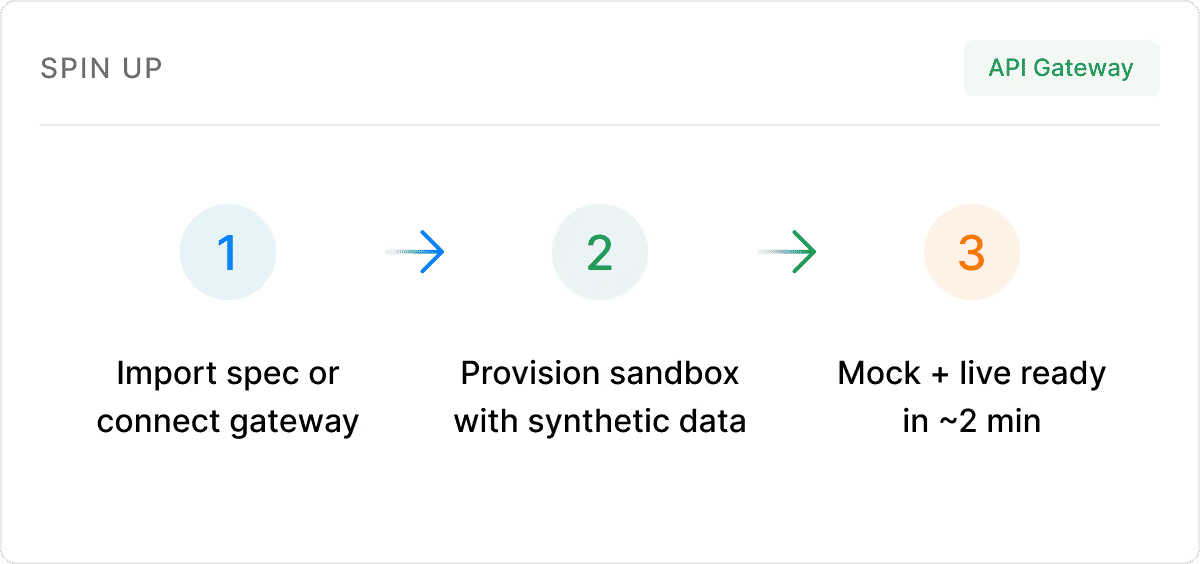
Spin up in minutes from any spec
Import an OpenAPI spec or connect a gateway and API Gateway stands up a sandbox-ready API, no DevOps project, no separate infrastructure to maintain.
See MCP Gateway →
.svg)
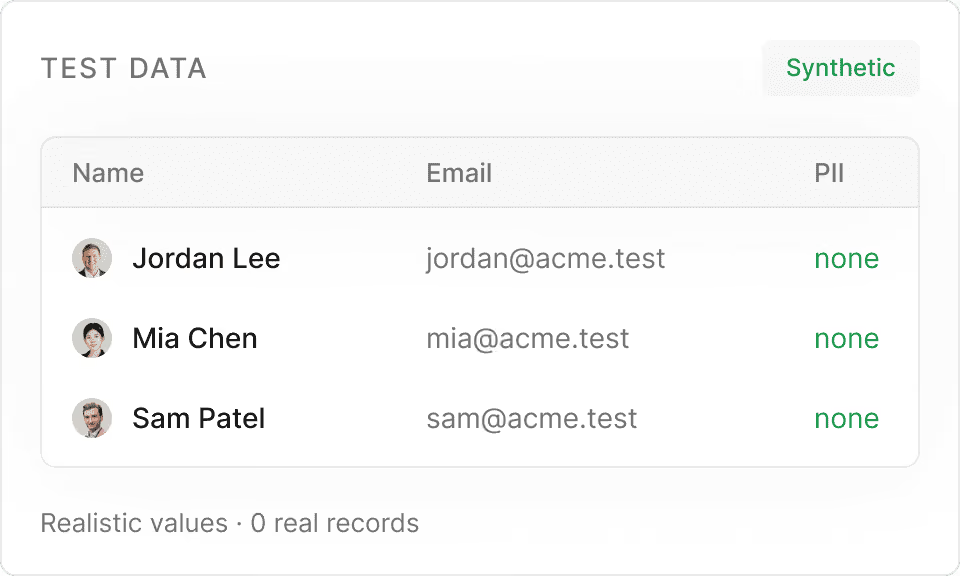
Synthetic data, no PII
Test against realistic, production-like datasets that contain no real customer data, so high-risk flows stay safe and compliant.
.svg)
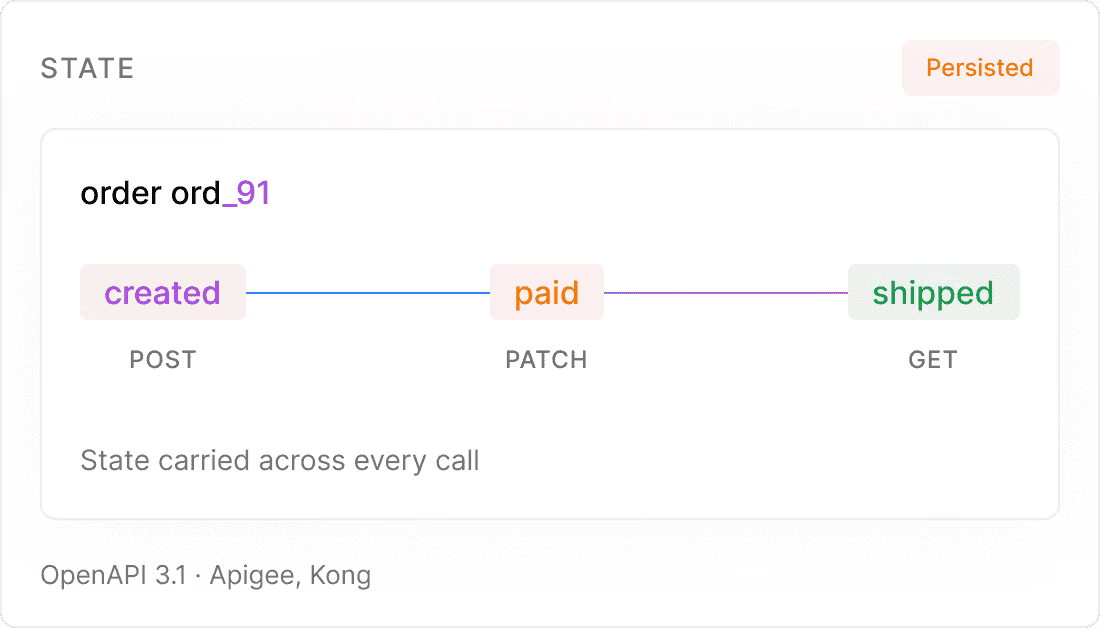
Stateful sandboxes, not just mocks
Sandboxes keep state across calls, so multi-step flows like create, fetch, and update behave like the real API, not stateless one-off mocks.
.svg)
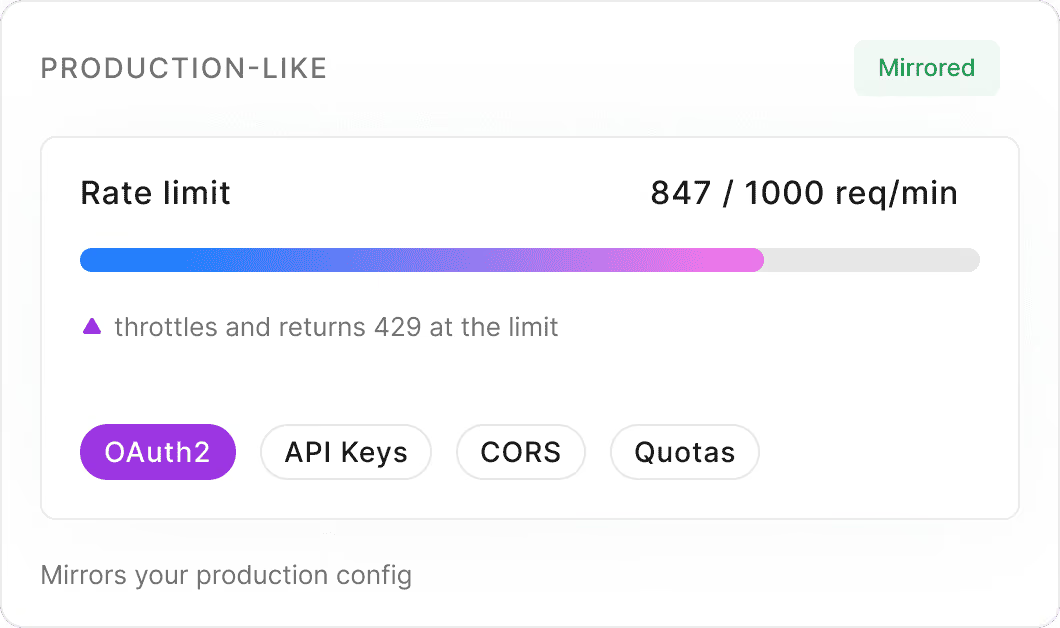
Production-like auth and rate limits
OAuth2, key validation, CORS, quotas, and throttling behave just like production, so what passes in the sandbox works when it ships.
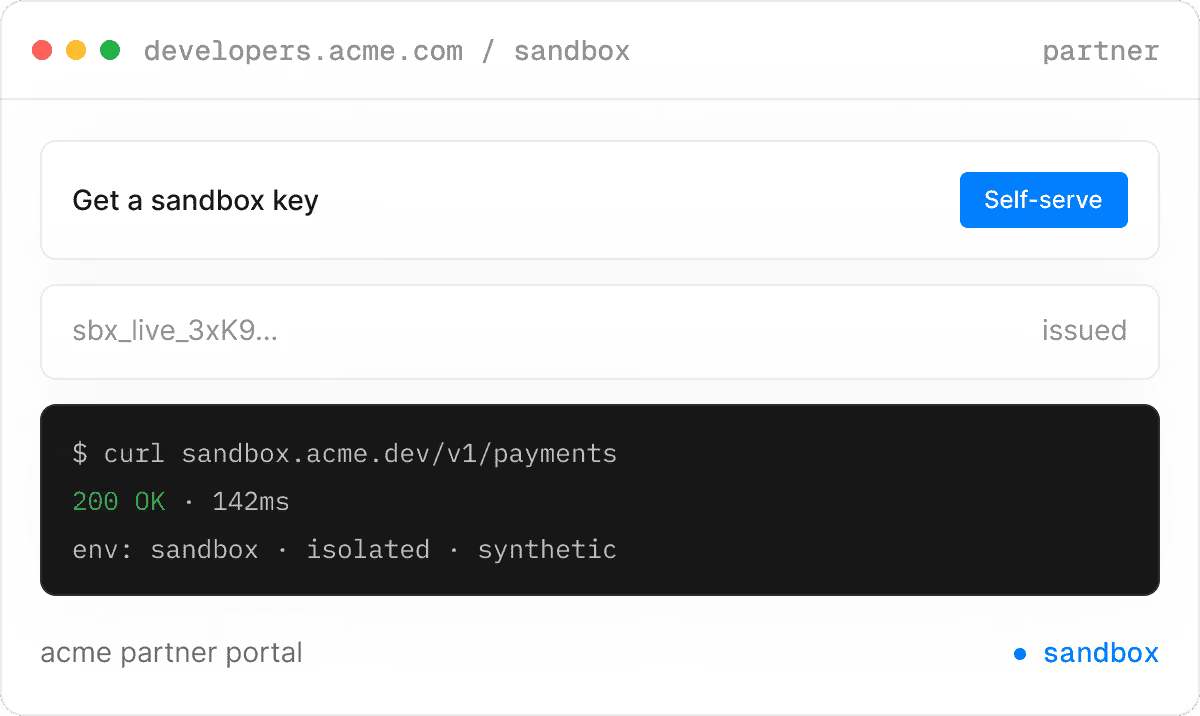
Self-serve sandbox for partner onboarding
Publish sandboxes in your portal with self-serve test keys, so partners and developers integrate and certify on their own and adopt faster.
See the portal →
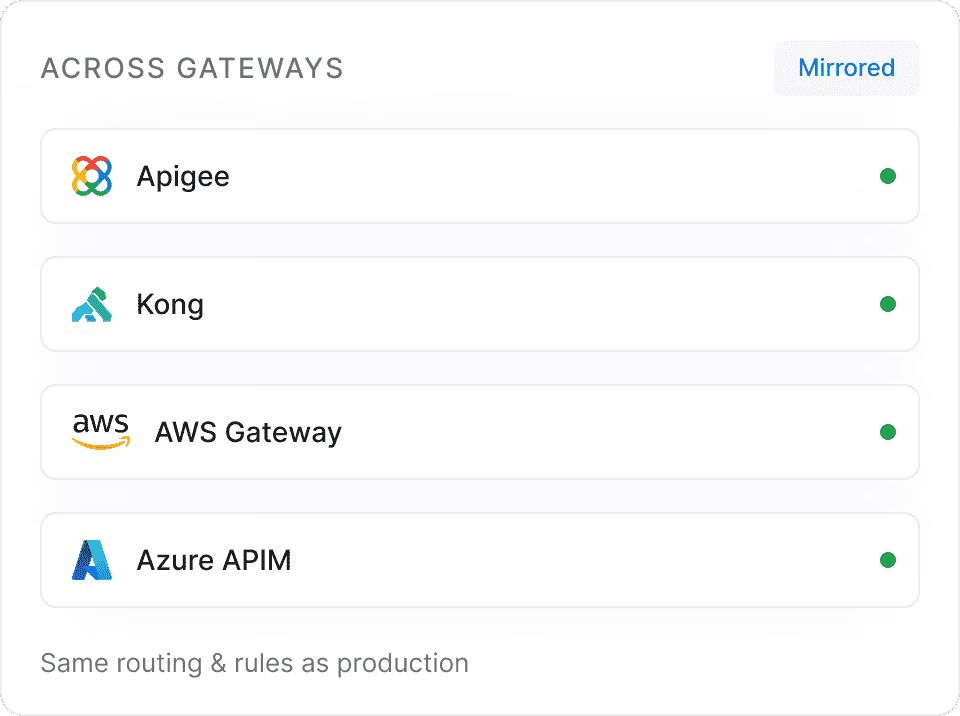
Works across gateways, mirrors production
Stand up consistent sandboxes for APIs on any gateway, mirroring the same routing and rules they will hit in production.
See gateway support →
Agent-era sandboxing
New
A safe place for AI agents to test, not just people
Before an AI agent calls your APIs for real, let it rehearse safely. Expose a sandboxed MCP server, simulate agent traffic and failure modes, and confirm the agent handles errors, auth, and limits correctly, all without touching production.
Sandboxed MCP servers for agents to call safely
Simulate agent traffic, errors, and rate limits
Validate tool calls before anything reaches production
.avif)
How we compare
How does DigitalAPI compare to other API sandbox approaches?
Teams usually reach for one of three options: mock-only tools that are fast but stateless, build-your-own sandbox infrastructure that becomes a snowflake per team, or a single gateway’s test stage. DigitalAPI gives you spec-driven mocks and real, isolated sandboxes across every gateway, with safe data and self-serve built in.
Capability
%20(1).svg)
Mock-only tools
Build your own
Single-gateway stage
Spin up from a spec in minutes
Yes, via API Gateway
Weeks of work
Varies
Truly isolated, stateful environment
Stateless
Synthetic data, no PII
Manual
DIY
Varies
Scenario & error simulation
Basic
DIY
Limited
Production-like auth & rate limits
Faked
DIY
Yes, own stack
Works across multiple gateways
N/A
DIY
Single gateway
Self-serve for partners
DIY
Limited
Sandbox for AI agents / MCP
MCP-native
DIY
Emerging
Spin up from a spec in minutes
Yes, via API Gateway
Mock-only tools
Build your own
Weeks of work
Single-gateway stage
Varies
Truly isolated, stateful environment
Mock-only tools
Stateless
Build your own
Single-gateway stage
Synthetic data, no PII
Mock-only tools
Manual
Build your own
DIY
Single-gateway stage
Varies
Scenario & error simulation
Mock-only tools
Basic
Build your own
DIY
Single-gateway stage
Limited
Production-like auth & rate limits
Mock-only tools
Faked
Build your own
DIY
Single-gateway stage
Yes, own stack
Works across multiple gateways
Mock-only tools
N/A
Build your own
DIY
Single-gateway stage
Single gateway
Self-serve for partners
Mock-only tools
Build your own
DIY
Single-gateway stage
Limited
Sandbox for AI agents / MCP
MCP-native
Mock-only tools
Build your own
DIY
Single-gateway stage
Emerging
Outcomes
What results can you expect?
%20(1).avif)
%20(1).avif)
~2 min
To spin up a sandbox from a spec, not weeks.
5x
Faster partner onboarding with self-serve sandboxes.
0
Real customer records exposed in testing.
0
Production incidents caused by integration testing.
Frequently asked questions
API sandbox FAQs
What is an API sandbox?
An API sandbox is a controlled, isolated environment where developers test and interact with an API without affecting production data or systems. It behaves like the real API using synthetic data and configurable responses, so teams can validate integrations and onboard partners safely before going live.
How is test data kept safe?
Sandboxes use synthetic, production-like datasets that contain no real customer data, and they are fully isolated from production. That lets teams test high-risk flows without exposing PII or risking compliance violations.
Does it work across multiple gateways?
Yes. DigitalAPI stands up consistent sandboxes for APIs on Apigee, Kong, AWS Gateway, and Azure APIM, mirroring the same routing and rules each API will hit in production.
Can AI agents test against the sandbox?
Yes. DigitalAPI is MCP-native, so you can expose a sandboxed MCP server and let agents rehearse tool calls, error handling, auth, and limits safely before anything reaches production.
What is the difference between an API sandbox and a mock server?
A mock server returns spec-generated responses and is great for fast, early testing, but it is stateless and not real integration. A sandbox is an isolated, production-like environment with auth, rate limits, and synthetic data for real integration testing. DigitalAPI provides both.
Can partners and developers self-serve a sandbox?
Yes. You publish sandboxes in your developer portal with self-serve test keys and a try-it console, so partners and developers can integrate and certify on their own, which speeds up onboarding and adoption.
Can you simulate errors, declines, and rate limits?
Yes. You can configure responses on demand: success, declines, 4xx and 5xx errors, timeouts, and rate-limit 429s, so clients are tested against every path rather than only the happy one.

.avif)