




API Developer Experience: How Does It Help Boost Adoption?
A stellar API Developer Experience (DX) is crucial for adoption. A frictionless DX, with clear documentation, easy onboarding, and strong support, drives loyalty, innovation, and API success.

TL;DR
1. API Developer Experience (DX) is paramount; it dictates how easily developers can integrate with and build upon your APIs, directly impacting adoption.
2. A superior DX fosters developer loyalty, accelerates time-to-market for partner integrations, and drives innovative use cases, turning APIs into true products.
3. Key pillars include discoverability through intuitive portals, comprehensive and interactive documentation, and frictionless onboarding with sandboxes and SDKs.
4. Consistency in API design, clear error handling, robust security, and transparent communication are non-negotiable for a positive DX.
5. Measuring DX through metrics like time-to-first-call and support tickets, coupled with active community engagement, ensures continuous improvement and sustained adoption.
Unlock seamless experience for our developers with DigitalAPI's developer portal. Book a Demo to Learn More!
In a digital economy increasingly built on interconnected services, the real currency isn't just data or code; it's how easily developers can access and harness them. An API, no matter how powerful, remains an untapped potential without a stellar API Developer Experience (DX).
This isn't merely about good documentation; it’s an all-encompassing strategy that determines the difference between an API gathering dust and one powering a vibrant ecosystem of innovation. Understanding why API Developer Experience (DX) matters for API adoption is no longer a competitive edge, but a fundamental requirement for any enterprise looking to thrive in the API-first world. It shapes perception, drives utility, and ultimately, dictates success.
What is API Developer Experience (DX)?
API Developer Experience (DX) encompasses the entire journey a developer undertakes when interacting with your API, from initial discovery and evaluation to integration, deployment, and ongoing maintenance. It's the sum total of all touchpoints that influence a developer's perception and efficiency. Think of it as the user experience (UX) for developers. Just as a user-friendly app is intuitive and enjoyable, a good API DX means an API is easy to understand, integrate, and build upon.
A positive DX minimizes friction, reduces the learning curve, and accelerates the time it takes for a developer to achieve their desired outcome – often referred to as "time to first call." This involves a holistic approach, considering everything from the API's design and consistency to the quality of its documentation, the tools provided, and the support available.
Why API Developer Experience (DX) Matters for API Adoption?
The success of an API isn't solely defined by its technical robustness or the breadth of its features. It's profoundly influenced by its Developer Experience. In a crowded market, where developers often have multiple options for similar functionalities, a superior DX is the differentiating factor. It directly impacts adoption rates, long-term engagement, and the health of your API ecosystem. Here's why API DX is critical for adoption success:
1. Reduced Time to First Call and Faster Integration
Developers prioritize efficiency. The quicker they can understand, test, and integrate your API, the more likely they are to adopt it. A seamless experience from initial discovery to making the first successful API call drastically reduces frustration and development cycles. This includes easy access to an interactive API sandbox for testing and well-structured code samples that can be quickly adapted.
2. Enhanced Developer Satisfaction and Loyalty
A positive DX translates into satisfied developers. When an API is a pleasure to work with – intuitive, reliable, and well-supported – developers become advocates. This loyalty is invaluable, leading to sustained usage, word-of-mouth promotion, and a willingness to explore other APIs within your portfolio. Dissatisfied developers, conversely, quickly abandon APIs, taking their projects and potential innovations elsewhere.
3. Increased Innovation and New Use Cases
When an API is easy to use, developers are empowered to experiment, innovate, and build creative solutions that you might not have even envisioned. A low-friction DX encourages exploration, leading to diverse applications and unexpected integrations that expand your API's reach and value. This organic growth fuels a thriving API ecosystem.
4. Stronger Brand Reputation and Market Leadership
Companies known for providing excellent APIs build a reputation as developer-friendly organizations. This reputation can attract top talent, foster partnerships, and establish market leadership. A robust DX signals professionalism, reliability, and a commitment to empowering external and internal developers alike, enhancing your brand's standing in the tech community.
5. Streamlined Support and Reduced Costs
A poorly designed API or insufficient documentation leads to a deluge of support requests, bug reports, and integration issues. A high-quality DX, with clear documentation, predictable behavior, and self-service options, significantly reduces the burden on your support teams. This not only saves operational costs but also allows your support staff to focus on more complex issues, improving overall service quality.
6. Better Partner Engagement and Ecosystem Growth
For APIs aimed at partners, a superior DX is paramount. Partners need to quickly and efficiently integrate your services into their own offerings. A streamlined experience, supported by clear API access management and comprehensive resources, accelerates partner onboarding, strengthens collaborations, and drives the growth of your broader ecosystem. This is particularly crucial for initiatives like open banking or open finance.
The Pillars of an Exceptional API Developer Experience (DX)
Building a great API Developer Experience (DX) requires a multi-faceted approach, focusing on several critical areas that together create a seamless and empowering journey for developers. These pillars are interdependent, and excellence in each contributes significantly to the overall success and adoption of your API.
1. Discoverability: Making Your API Easy to Find
Before a developer can use your API, they need to know it exists and what it does. Discoverability is the first step in the DX journey.
- Centralized Developer Portals: A dedicated API developer portal is the front door to your API ecosystem. It should be a one-stop shop for everything a developer needs: documentation, API keys, usage analytics, support, and community forums. An intuitive, user-friendly developer portal simplifies navigation and access.
- API Catalogs and Marketplaces: For organizations with many APIs, an API discovery mechanism or catalog helps developers find relevant services. External APIs can be listed on public marketplaces to reach a wider audience. Effective search and categorization are key to reducing friction.
- Clear API Productization: Treat your API as a product. Give it a clear purpose, define its target audience, and articulate its value proposition. This clarity aids discovery by helping developers quickly assess if the API meets their needs.
2. Documentation: Clear, Comprehensive, and Interactive
Good documentation is the backbone of a strong DX. It's often the first and most frequent point of interaction for developers.
- Interactive Documentation: Tools like Swagger UI or Postman collections allow developers to explore endpoints, understand request/response structures, and even make live API calls directly from the documentation. This hands-on experience is invaluable.
- Comprehensive Guides and Tutorials: Beyond reference documentation, provide step-by-step guides, quick-start tutorials, and common use cases. Explain complex concepts, error handling, and authentication flows clearly. This significantly improves developer adoption.
- Code Samples and SDKs: Offer ready-to-use code snippets in popular programming languages. For complex APIs, providing official SDKs or client libraries can abstract away much of the underlying HTTP interaction, making integration significantly easier and speeding up development.
3. Onboarding and Time to First Call: Frictionless Integration
Reducing the time it takes for a developer to make their first successful API call is a critical DX metric. This process should be as smooth as possible.
- Self-Service API Key Generation: Developers should be able to quickly sign up, generate API keys, and start testing without manual approval processes. This speeds up the initial engagement.
- Sandbox Environments: Provide dedicated, isolated sandbox environments where developers can experiment freely without impacting live data or incurring charges. These realistic data patterns allow for robust testing.
- Simplified Authentication: While security is paramount, the authentication mechanisms should be straightforward to implement. Clear instructions and examples for OAuth, API keys, or JWTs are essential.
4. Consistency and Predictability: Building Trust
Developers appreciate APIs that behave predictably and follow logical patterns.
- Consistent API Design: Adhere to consistent naming conventions for endpoints, parameters, and data structures. Use standard HTTP methods correctly and apply a uniform API versioning strategy across your entire API portfolio.
- Clear Error Handling: Implement standardized HTTP status codes and provide informative, machine-readable error messages that clearly explain what went wrong and how to rectify it. Inconsistent or vague error responses lead to developer frustration.
- Predictable Rate Limiting: Communicate your API's rate limiting policies clearly, including limits and how to handle `429 Too Many Requests` responses. Avoid arbitrary or unannounced changes to these limits.
5. Support and Community: Fostering Engagement
Even with excellent documentation, developers will inevitably have questions or encounter issues. Robust support is key to retaining users.
- Active Community Forums: Provide a platform for developers to ask questions, share solutions, and interact with your API team and other users. This builds a sense of community and provides peer-to-peer support.
- Responsive Support Channels: Offer clear channels for direct support (e.g., email, dedicated chat, ticketing system) with reasonable response times. Acknowledge and resolve issues promptly.
- Feedback Mechanisms: Make it easy for developers to provide feedback, report bugs, or suggest features. Actively listen to this feedback and use it to improve your APIs and DX. This demonstrates that you value their input.
6. Observability and Monitoring: Transparency and Performance
Developers need visibility into how their integrations are performing and consuming your API.
- Usage Analytics: Provide dashboards that show API call volumes, error rates, latency, and other key API metrics. This helps developers understand their consumption and optimize their applications.
- Alerting and Status Pages: Offer status pages that communicate API uptime, planned maintenance, and any ongoing incidents. Allow developers to subscribe to alerts for critical service changes or outages. Robust API monitoring is crucial here.
- Performance and Reliability: A fast, reliable API is a fundamental component of a good DX. Developers expect consistent performance and high availability.
7. Security and Access Management: Trust and Control
Developers need to trust that their data and integrations are secure, and that they have appropriate control over access.
- Clear Security Guidelines: Provide explicit instructions on how to securely integrate with your API, including best practices for handling API keys, tokens, and sensitive data. Adhere to API security standards.
- Granular Access Control: Allow developers to manage permissions for their applications and API keys, ensuring they can enforce the principle of least privilege.
8. Pricing and Monetization Clarity: Transparency and Value
If your API has a cost associated with it, transparency around pricing is vital for DX.
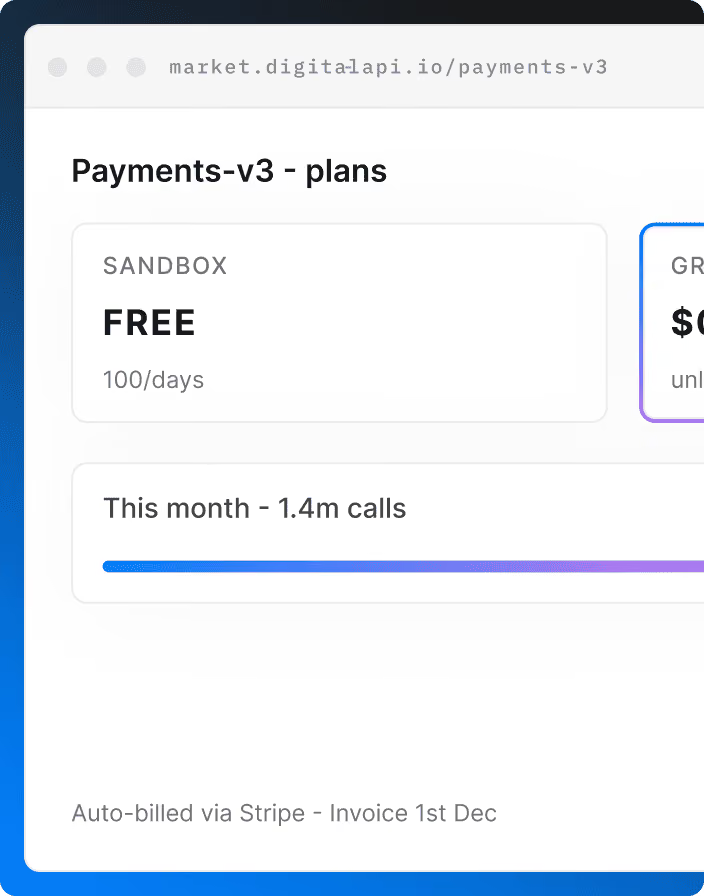
- Clear Pricing Models: Communicate your API monetization strategies and pricing tiers clearly and simply. Avoid hidden fees or complex billing structures that make it difficult for developers to estimate costs.
- Usage Tracking: Provide tools within the developer portal that allow developers to track their API usage against their plan limits and monitor billing information in real-time.
Measuring API Developer Experience (DX) and Adoption Success
To continuously improve your API DX and ensure adoption success, you need to measure it. Key Performance Indicators (KPIs) provide insights into developer satisfaction and engagement:
- Time to First Call: How long does it take for a new developer to make a successful API call after signing up?
- Developer Onboarding Completion Rate: What percentage of developers who sign up successfully complete the onboarding process?
- API Call Volume and Growth: Are developers actively using your API, and is usage increasing over time?
- Error Rates: High error rates indicate potential issues with the API itself or with its documentation and usage guidance.
- Documentation Engagement: Track views, search queries, and feedback on your documentation. Are developers finding the information they need?
- Support Ticket Volume and Resolution Time: A high volume of recurring support tickets might point to common DX friction points. Efficient resolution indicates good support.
- Developer Surveys and Feedback: Directly ask developers about their experience. Qualitative feedback is invaluable for identifying pain points and areas for improvement.
- Retention Rate: Are developers sticking with your API over time, or are they abandoning it after initial integration?
By regularly monitoring these metrics and actively soliciting feedback, you can continuously refine your API and DX strategy, ensuring sustained adoption and a thriving developer ecosystem. This iterative approach is crucial for long-term success.
Unlock seamless experience for our developers with DigitalAPI's developer portal.
Book a Demo to Learn More!
Common Pitfalls to Avoid in API Developer Experience (DX)
Even with the best intentions, organizations can fall into common traps that undermine their API DX and hinder adoption. Being aware of these pitfalls can help you steer clear of them:
- Insufficient or Outdated Documentation: This is the most common and damaging pitfall. Poor documentation is worse than no documentation, as it misleads developers and wastes their time. Ensure your documentation is always current, accurate, and comprehensive.
- Inconsistent API Design: Varying naming conventions, inconsistent error structures, or different authentication methods across endpoints create a chaotic experience. Lack of API contract testing can exacerbate these issues.
- Lack of a Developer Portal: Expecting developers to piece together information from scattered sources, GitHub repos, or internal wikis is a recipe for low adoption. A unified developer portal is essential.
- Complex Onboarding Process: Lengthy signup forms, manual API key approvals, or requiring immediate production usage without a sandbox create unnecessary hurdles, dramatically increasing API onboarding time.
- Ignoring Developer Feedback: Failing to listen to the developer community or act on their suggestions signals indifference, eroding trust and loyalty.
- Poor Error Messages: Generic or vague error responses (e.g., "An error occurred") leave developers guessing about the problem and how to fix it.
- Neglecting API Lifecycle Management: Not communicating changes, deprecations, or new versions effectively can break existing integrations and frustrate developers. A robust API governance strategy is crucial here.
The Future of API Developer Experience (DX): AI and Agentic APIs
The landscape of API consumption is rapidly evolving, driven by advancements in Artificial Intelligence. The future of API Developer Experience will increasingly involve catering not just to human developers, but also to AI agents and automated systems.
Embracing these trends means designing APIs that are not only developer-friendly but also "agent-friendly," ensuring they remain relevant and adoptable in an increasingly automated and AI-driven world.
Conclusion
API Developer Experience (DX) is far more than a buzzword; it's the strategic imperative for successful API adoption and sustainable growth. From the initial moment a developer discovers your API to their ongoing integration and usage, every touchpoint shapes their perception and commitment. In the long run, investing in an exceptional API DX is an investment in your ecosystem's innovation, your brand's reputation, and your ultimate market success.
FAQs
1. What is the "time to first call" in API DX, and why is it important?
"Time to first call" refers to the duration it takes for a developer to successfully send their first request to an API and receive a valid response, starting from the moment they begin exploring the API. It's crucial because a shorter time to first call signifies an intuitive API, clear documentation, and easy onboarding, directly correlating with higher developer satisfaction and quicker API adoption.
2. How can a developer portal improve API adoption?
A developer portal acts as a centralized hub, significantly boosting API adoption by providing a single, organized place for all API-related resources. This includes interactive documentation, quick-start guides, code samples, API keys management, community forums, and usage analytics. It streamlines discovery, accelerates onboarding, reduces support queries, and fosters a sense of community, making the entire developer journey more efficient and enjoyable.
3. Why is consistent API design so critical for Developer Experience?
Consistent API design is critical because it creates predictability and reduces the cognitive load for developers. When naming conventions, data structures, error handling, and authentication methods are uniform across an API portfolio, developers can quickly learn and apply patterns, minimizing errors and speeding up integration. Inconsistency, conversely, leads to confusion, frustration, and higher abandonment rates.
4. What role does a sandbox environment play in good API DX?
A sandbox environment is a safe, isolated testing ground that plays a vital role in good API DX. It allows developers to experiment with API functionalities, test integrations, and develop applications without affecting live data or incurring real-world costs. This low-risk environment accelerates learning, enables thorough testing, and builds confidence in the API, significantly improving the onboarding process and reducing friction.
5. How does API documentation directly impact developer adoption?
API documentation is the primary interface through which developers understand and interact with an API. High-quality, comprehensive, and interactive documentation directly impacts adoption by making the API easy to learn and use. It provides clarity on endpoints, parameters, request/response formats, authentication, and error handling. Poor documentation, conversely, is a major barrier to adoption, leading to frustration, increased support costs, and ultimately, abandonment.
Dhayalan Subramanian is Associate Director, Product Growth at DigitalAPI, where he leads go-to-market and product growth for the company’s multi-gateway API management platform. His work focuses on helping large enterprises and mid-market cloud companies consolidate APIs across AWS, Azure, Apigee, Kong, MuleSoft, and other gateways into a single control plane for governance, discovery, monetization, and agent consumption.
Dhayalan brings 14+ years of experience across product strategy, enterprise architecture, and engineering leadership. Earlier in his career, he held senior roles at Encora (as Associate Architect and Technical Manager), Mindtree (Technology Lead), Tech Mahindra (Technical Lead), and Primus Analytics, where he designed integration frameworks and delivered enterprise-grade digital platforms for global customers.
At DigitalAPI, he works directly with platform, integration, and developer experience leaders at Fortune 500 organizations to operationalize unified API catalogs, developer portals, and MCP-ready APIs. He writes regularly on API developer experience, API governance, and AI agent architectures.

One email a fortnight. Worth opening.
A short digest of what we're writing, what we're learning from customers, and the handful of links you'd actually want from us. No tracking pixels.

.avif)