



IoT Developer Portal: Build and Manage IoT APIs at Scale
IoT APIs break standard portals. Build one that catalogs REST management + MQTT/Kafka event streams with AsyncAPI docs, device auth, stream sandboxing, and fleet-scale governance.

An IoT deployment that works at 10 devices breaks at 10,000. One that works at 10,000 breaks at a million. The failure point is almost never the hardware. It's the API layer connecting those devices to the applications that consume their data.
IoT APIs are different from enterprise REST APIs in nearly every dimension. They are mostly asynchronous. They use protocols REST documentation tools don't understand. They generate enormous volumes of telemetry. They require device authentication models REST security doesn't cover. And when something goes wrong with a device at scale, you need to know about it in real time, not in the next polling cycle.
An IoT developer portal is the infrastructure layer that makes all of this manageable. It gives the developers building on your IoT platform a place to discover what your APIs expose, understand how to connect to them, test against realistic data streams, and manage credentials at device fleet scale. This guide explains what an IoT developer portal needs to do, why it differs from a standard API portal, and how to build and manage one effectively.
TL;DR
- An IoT developer portal is a self-service platform where developers discover, test, and integrate with IoT APIs, including both REST-based management APIs and event-driven APIs (MQTT, WebSocket, AsyncAPI) that stream real-time device data.
- IoT APIs create documentation, governance, and scalability challenges that standard REST-only portals cannot address. MQTT topics, Kafka streams, and event-driven subscriptions need their own discovery and documentation layer.
- Core portal components for IoT include: device and API catalog, AsyncAPI and event documentation, sandbox with real-time data simulation, credential management at fleet scale, rate limiting by device/client, access control, and real-time telemetry analytics.
- Setting up an IoT developer portal requires unifying REST management APIs and event-driven APIs into a single catalog, publishing AsyncAPI specs alongside OpenAPI specs, and enabling sandbox environments that simulate device data streams.
- DigitalAPI's API Management Platform catalogs REST, GraphQL, AsyncAPI, Kafka, and event broker APIs in one unified portal with AI-powered discovery, governance, and sandbox testing.
- AI readiness in IoT portals means converting device APIs into MCP-compliant endpoints so AI agents can query device states, trigger actions, and process telemetry using natural language.
What Is an IoT Developer Portal?
An IoT developer portal is a centralized, self-service platform that gives developers structured access to the APIs that connect, control, and consume data from IoT devices, including synchronous management APIs for device provisioning and configuration, and asynchronous event APIs for real-time telemetry streaming.
The key distinction from a standard developer portal is the event layer. Most developer portals are built around REST APIs: request, response, done. IoT changes that model fundamentally. Devices generate continuous streams of data. Sensors publish telemetry on MQTT topics. Gateways emit events over Kafka. Real-time processing pipelines subscribe to streams rather than polling endpoints.
A developer portal that only documents REST endpoints leaves the event-driven half of your IoT platform undiscoverable. Developers connecting to your platform need to understand both sides: the REST APIs for device management and the event APIs for data consumption.
Why IoT APIs Need a Different Portal Strategy
Standard API management tools and documentation portals were built for the REST world. IoT breaks almost every assumption that world is built on.
1. Multiple Protocols, One Platform
IoT environments typically run several communication protocols simultaneously. REST handles device registration, configuration, and command APIs. MQTT handles lightweight, high-frequency sensor data from constrained devices. WebSocket handles bidirectional real-time communication. CoAP handles ultra-low-power devices. Kafka handles high-throughput telemetry at enterprise scale.
A portal that only renders OpenAPI specifications cannot describe MQTT topic structures, Kafka consumer groups, or WebSocket event schemas. Developers working with your IoT platform need documentation for all of these, surfaced in the same place and with the same discoverability.
2. Scale Changes Everything
A REST API managing enterprise data might handle millions of calls per day across thousands of users. An IoT platform managing a million device fleet handles billions of events per day. That scale changes how rate limiting works, how authentication is structured, and how analytics need to be presented.
Rate limiting in IoT is not just per client. It needs to be enforced per device, per device class, and per tenant. A single badly configured device flooding a topic can degrade service for every other device in the fleet. A portal that surfaces these policies clearly, and lets developers test against realistic load scenarios, is the difference between a fleet that scales and one that doesn't.
3. Device Authentication Is Not User Authentication
OAuth 2.0 and API key management work well for developer credentials. They don't translate cleanly to device fleet authentication. IoT devices need unique device identities, certificate-based authentication, or hardware-anchored credentials that can be provisioned at manufacturing time and revoked remotely if a device is compromised.
An IoT developer portal needs to expose the credential and authentication model clearly, including how devices are registered, how certificates are managed, how device identity is verified, and what happens when a device credential needs to be rotated or revoked.
4. Event Documentation Has No Standard (Yet)
OpenAPI is the established standard for REST documentation. AsyncAPI is the emerging standard for event-driven API documentation, and it is increasingly adopted in IoT contexts. But awareness is uneven, and tooling is less mature than the REST ecosystem.
An IoT developer portal needs to publish AsyncAPI specifications for MQTT topics and Kafka streams with the same clarity that OpenAPI specs provide for REST endpoints. Developers who come from a REST background need the portal to bridge the conceptual gap between request-response models and publish-subscribe models.
Core Components of an IoT Developer Portal
Here are the essential components that separate an IoT developer portal that actually supports scale from one that breaks under it.
1. Unified API and Event Catalog
IoT platforms expose two categories of interfaces: management APIs (REST) and data APIs (event-driven). A unified catalog surfaces both under one searchable interface, so a developer looking for "temperature sensor data" finds both the REST endpoint to query historical data and the MQTT topic to subscribe to real-time readings.
DigitalAPI's platform catalogs REST, GraphQL, AsyncAPI, and event broker integrations from Kafka and Solace in one unified "API and Event Estate." Developers searching the portal surface every relevant interface regardless of its underlying protocol. For IoT teams managing hundreds of device types across multiple data channels, this single source of truth eliminates the most common integration problem: developers not knowing what exists.
2. AsyncAPI Documentation for Event-Driven APIs
MQTT topics, Kafka streams, and WebSocket channels need documentation that explains their structure, payload format, message frequency, QoS levels, and subscription patterns. AsyncAPI is the specification format that does this.
DigitalAPI's AI Documentation Generator creates accurate, structured documentation from AsyncAPI specifications, keeping the event documentation synchronized as topic structures and payload schemas evolve. Developers get the same quality of interactive documentation for event-driven APIs as they expect from REST references.
3. Sandbox with Data Stream Simulation
Testing a REST API against a sandbox is straightforward: send a request, inspect the response. Testing an IoT event subscription is different. Developers need to simulate a stream of device telemetry, subscribe to it in the sandbox environment, and validate their processing logic against realistic data patterns without connecting to live devices.
DigitalAPI's API Sandboxing provides isolated, production-like environments where event-driven APIs can be tested with configurable mock data streams. For IoT teams building subscriber applications or dashboards, this eliminates the need to spin up real devices to test integration logic.
4. Device Credential and Key Management
IoT platforms need to issue credentials to both developers (building applications on the platform) and devices (connecting to the platform). A well-designed portal handles both:
- Developers register, select an access plan, and receive API keys for management API access automatically
- Device provisioning APIs are documented clearly so developers understand how to onboard devices, generate device certificates, and manage device credentials at fleet scale
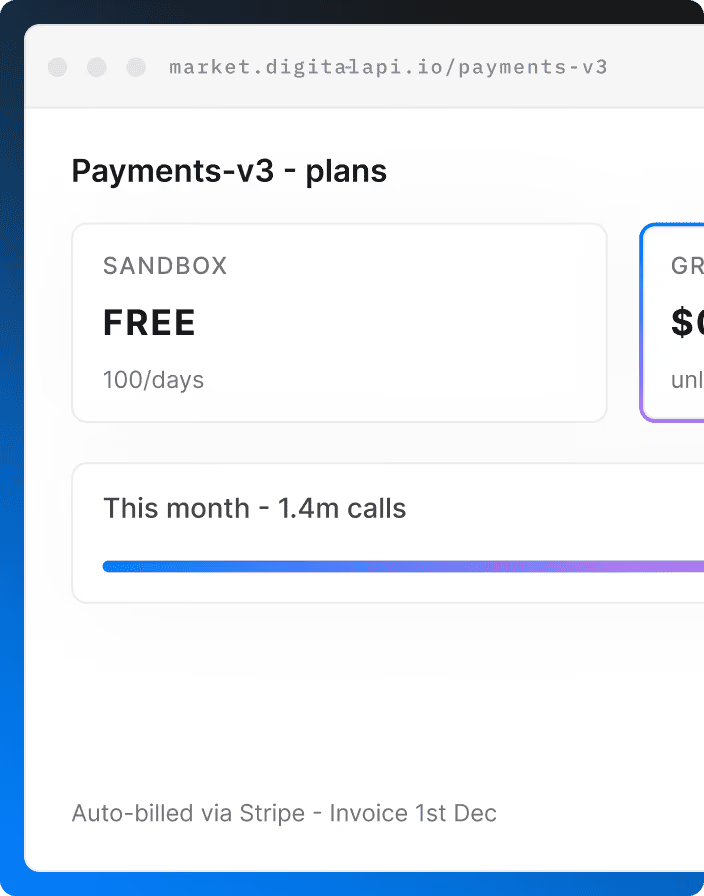
DigitalAPI's platform handles developer credential management through automated subscription workflows, with credentials issued instantly without manual approval for standard access tiers.
5. Role-Based Access Control by Audience Tier
IoT platforms typically serve multiple distinct audiences, each needing different levels of access:
| Tier | Audience | Access Scope |
|---|---|---|
| Internal | Platform engineering teams | Full catalog, internal management APIs, raw telemetry streams |
| Partner / Integrator | Third-party application developers | Published device APIs, event subscriptions, sandboxed data streams |
| Device | IoT device fleet | Device-specific credential issuance and telemetry publication |
| Public | Community developers | Published REST APIs and AsyncAPI documentation, sandbox access |
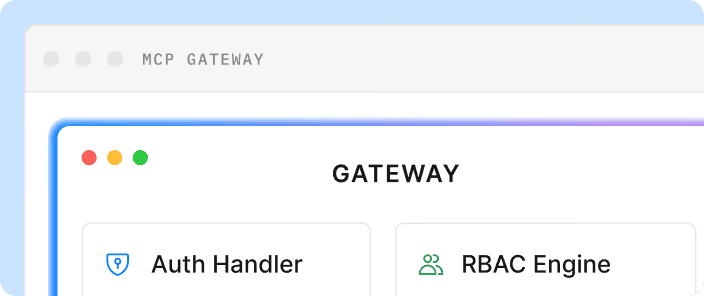
DigitalAPI's API Governance layer enforces these tiers with RBAC, ensuring that partner developers access only the APIs and event streams relevant to their integration, not the internal management interfaces.
6. Real-Time Analytics and Telemetry Visibility
IoT API analytics are more complex than REST analytics. You need to track API call volume, but also event publication rates, subscriber connection counts, message delivery latency, device dropout rates, and per-device error rates.
DigitalAPI's API Analytics provides real-time dashboards covering API performance, usage patterns, subscription growth, and error rates. For IoT platform teams, this data surfaces which device types generate the most traffic, which event topics have the most active subscribers, and where performance is degrading before customers report it.
7. Rate Limiting and Quota Management
Flat rate limits don't work at IoT scale. A portal that allows developers to define rate limits only at the API key level creates an architecture that a single misconfigured device can collapse.
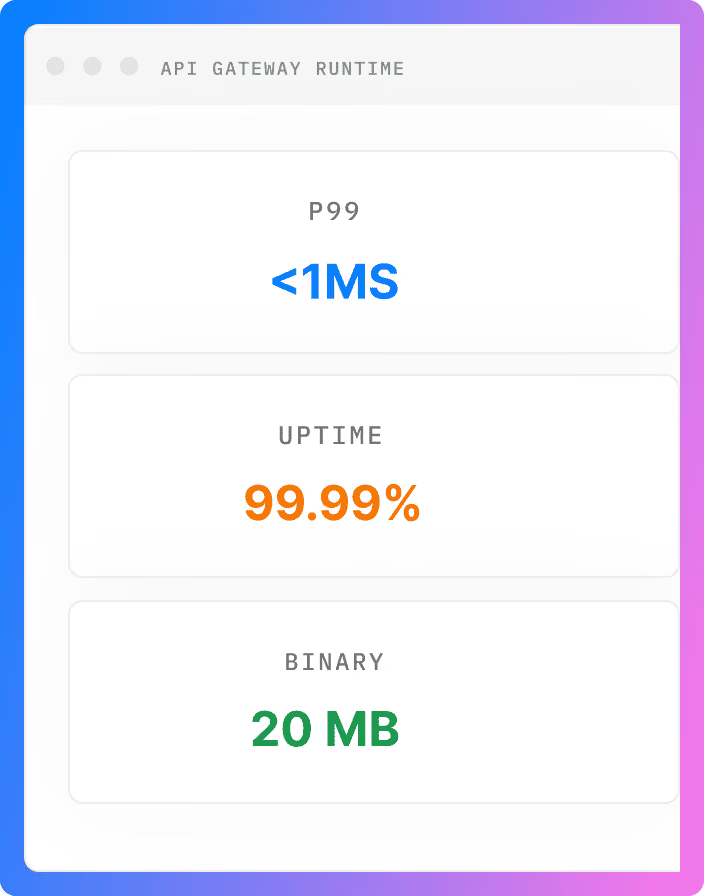
IoT rate limiting needs to be configurable at multiple levels: per device, per device class, per tenant, and per subscription tier. Arelio API Gateway, DigitalAPI's native gateway, supports configurable rate limiting and quota enforcement that can be tuned to handle high-bandwidth IoT requirements without sacrificing stability for other consumers.
How to Set Up an IoT Developer Portal
Below is the step-by-step process for building an IoT developer portal that serves developers from first discovery through production fleet integration.
1. Catalog Every Interface Your IoT Platform Exposes
Start with a full inventory of what your platform actually exposes. This includes REST management APIs (device registration, configuration, command endpoints), event topics (MQTT topics, Kafka streams), webhooks, WebSocket channels, and any data query APIs. Many IoT platforms have these scattered across multiple services with no unified view.
DigitalAPI ingests REST APIs from Kong, AWS, Azure, Apigee, and MuleSoft, and connects to event brokers including Kafka and Solace, normalizing everything into one searchable catalog without requiring you to rebuild your existing infrastructure.
2. Publish OpenAPI and AsyncAPI Specifications
For REST management APIs, publish OpenAPI specifications. For MQTT topics, Kafka streams, and event-driven interfaces, publish AsyncAPI specifications. DigitalAPI's AI Documentation Generator creates structured documentation from both spec formats, flagging any gaps or missing descriptions before publication.
The goal at this step is zero "black box" APIs. Every interface your platform exposes should have complete, accurate documentation that a developer can read and understand without needing to ask anyone on your team.
3. Configure the Event Catalog
Connect your event brokers to the portal. DigitalAPI connects to Kafka and Solace, ingesting topic metadata, schema definitions, and event payload structures into the Event Estate catalog alongside the API catalog. Developers searching the portal see REST endpoints and event topics in the same interface.
4. Set Up Sandbox Environments
Configure sandbox environments for both REST API testing and event stream simulation. For IoT specifically, this means configuring mock data streams that simulate realistic device telemetry patterns, including normal operating data, edge cases (device offline, battery low, sensor error), and high-frequency burst patterns that test subscriber performance.
5. Define Access Tiers and Credential Flows
Configure RBAC for each audience tier. Define what APIs and event topics are visible to internal teams, partner integrators, and public developers. Set up automated credential provisioning for developer API keys. Document the device credential provisioning workflow clearly for integrators building fleet management applications.
6. Set Rate Limits and Governance Policies
Configure rate limiting at device, tenant, and subscription tier levels. Enable automated governance checks through DigitalAPI's governance layer to validate API and AsyncAPI spec quality, enforce security policies, and scan for vulnerabilities before any interface is published to the portal.
7. Apply Branding and Publish
Apply your organization's branding. DigitalAPI's White-Labelled Developer Portal delivers a fully branded experience so the portal looks like your platform product, not a vendor tool. Publish to your target audiences, run end-to-end tests, and confirm analytics is capturing portal usage from the first session.
IoT Developer Portals and AI Readiness in 2026
IoT data is exactly what AI agents need: real-time, structured, telemetry at scale. The question is whether your portal is structured in a way that lets AI agents consume that data reliably.
An AI agent that can query "what is the current temperature reading from all sensors in Building 3 that have reported an anomaly in the last hour" needs to be able to discover the right event stream or REST endpoint, authenticate, and retrieve the data without human intervention. That workflow only works when API metadata is clean, event schemas are documented, and the APIs are accessible to machine-readable consumption patterns.
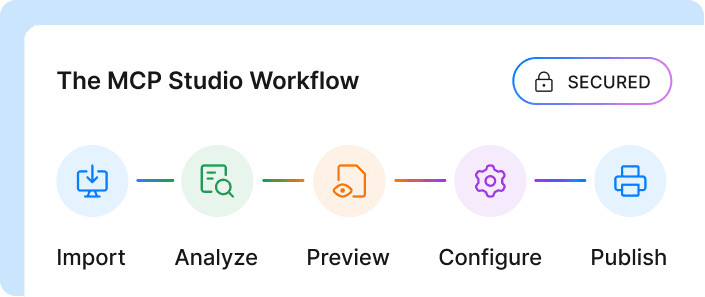
DigitalAPI's API-GPT converts any cataloged API, including IoT management APIs and event streams, into a secure MCP (Model Context Protocol) server with one click. From that point, AI agents can query device state, trigger commands, or subscribe to telemetry streams using plain language. The portal, maintained with complete metadata and accurate AsyncAPI documentation, is what makes that agentic consumption reliable rather than a source of hallucinated outputs.
This also means your IoT APIs become part of broader AI-driven workflows. A manufacturing operations agent can query sensor anomaly data, cross-reference against maintenance schedules, and flag intervention priorities without a human in the loop. The IoT developer portal is what makes the underlying data accessible to that kind of automation.
The Bottom Line
IoT APIs at scale are not just a bigger version of REST API management. The protocols are different, the authentication model is different, the documentation standards are different, and the failure modes are different. A developer portal that treats IoT as just another REST API estate will leave half your platform undiscoverable and most of your governance gaps unaddressed.
Getting this right means building a portal that handles the full event and API estate together, with unified catalog and discovery, AsyncAPI documentation for event-driven interfaces, sandbox environments that simulate real device behavior, and governance that scales from a hundred devices to a hundred million.
DigitalAPI's platform handles REST APIs, AsyncAPI event streams, Kafka topics, and event broker integrations in one unified portal, with AI-powered discovery, automated documentation, and one-click MCP conversion for agentic AI readiness.
Book a demo with DigitalAPI to see how IoT APIs and event streams are cataloged, documented, and governed in a live environment. Or explore the API Management Platform to see how DigitalAPI unifies the full API and event estate for enterprise teams today.
Frequently Asked Questions
1. What is an IoT developer portal?
An IoT developer portal is a self-service platform where developers discover, document, test, and integrate with the APIs and event streams that connect IoT devices to applications. It covers both synchronous management APIs (REST, for device registration and configuration) and asynchronous event APIs (MQTT, Kafka, WebSocket, for real-time telemetry), giving developers a complete picture of the IoT platform's interfaces.
2. How is an IoT developer portal different from a standard API portal?
A standard API portal focuses on REST endpoints. An IoT developer portal must also cover event-driven interfaces: MQTT topic structures, Kafka stream schemas, WebSocket channels, and AsyncAPI specifications. It also needs device credential management, fleet-scale rate limiting, and sandbox environments that simulate real-time telemetry streams, none of which a REST-only portal provides.
3. What protocols does an IoT developer portal need to document?
An IoT developer portal typically needs to document REST (for management and data query APIs), MQTT (for lightweight device telemetry on constrained networks), Kafka (for high-throughput event streaming), WebSocket (for bidirectional real-time communication), and CoAP (for ultra-constrained devices). AsyncAPI is the emerging specification standard for documenting MQTT and Kafka interfaces alongside OpenAPI for REST.
4. How do you handle rate limiting in an IoT API portal?
IoT rate limiting needs to operate at multiple levels: per device, per device class, per tenant, and per subscription tier. Flat per-API-key rate limits are insufficient because a single misconfigured device can generate traffic that degrades the entire platform. A proper IoT portal surfaces rate limit policies clearly and enforces them at the gateway level before traffic reaches backend services.
5. How does an IoT developer portal support AI agent integration?
An IoT developer portal supports AI agents when its APIs and event streams have clean, machine-readable metadata and AsyncAPI specifications. DigitalAPI converts any cataloged IoT API into an MCP (Model Context Protocol) server with one click, making device state queries, telemetry subscriptions, and command APIs immediately accessible to AI agents using natural language, enabling autonomous operational workflows that don't require human-in-the-loop data retrieval.
Dhayalan Subramanian is Associate Director, Product Growth at DigitalAPI, where he leads go-to-market and product growth for the company’s multi-gateway API management platform. His work focuses on helping large enterprises and mid-market cloud companies consolidate APIs across AWS, Azure, Apigee, Kong, MuleSoft, and other gateways into a single control plane for governance, discovery, monetization, and agent consumption.
Dhayalan brings 14+ years of experience across product strategy, enterprise architecture, and engineering leadership. Earlier in his career, he held senior roles at Encora (as Associate Architect and Technical Manager), Mindtree (Technology Lead), Tech Mahindra (Technical Lead), and Primus Analytics, where he designed integration frameworks and delivered enterprise-grade digital platforms for global customers.
At DigitalAPI, he works directly with platform, integration, and developer experience leaders at Fortune 500 organizations to operationalize unified API catalogs, developer portals, and MCP-ready APIs. He writes regularly on API developer experience, API governance, and AI agent architectures.
One email a fortnight. Worth opening.
A short digest of what we're writing, what we're learning from customers, and the handful of links you'd actually want from us. No tracking pixels.

.avif)