

What Is Federated API Management? A Guide for Multi-Gateway Enterprises
Federated API management gives you one catalog, policy layer and developer portal across every API gateway, without migrating. Learn how it works and how to start.

Federated API management is a way to manage APIs across several API gateways from one control plane, without moving any API traffic. Each gateway keeps running its own APIs. The catalog, policies, developer portal, access and analytics are shared across all of them.
It exists because most enterprises no longer run one gateway. Gartner warns that running multiple gateways, especially from different vendors, without an overarching API management layer leads to API sprawl, shadow APIs and governance problems.
This guide covers what federated API management is, how it works, how it differs from centralized management and from GraphQL federation, when you need it and how to roll it out.
TL;DR
Federated API management keeps your existing gateways (the data plane) and adds one management layer (the control plane) on top.
It gives you one catalog, one set of standards, one developer portal and one audit trail across every gateway.
Use it when you run two or more gateways and migrating to one isn't realistic.
Check connector coverage first, because a federated platform can only manage the gateways it can connect to.
What is federated API management?
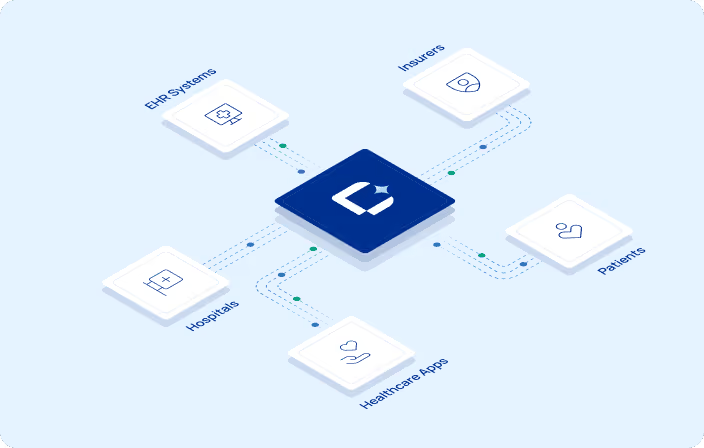
Federated API management is defined as managing APIs that run on many gateways, often from different vendors, through one shared management layer. The gateways stay where they are and keep handling live traffic. The management layer connects to each one and gives teams a single place to find, govern, publish and monitor every API.
It's also called gateway federation, API gateway federation or multi-gateway API management. The terms describe the same idea.
In control plane and data plane terms, federation keeps many data planes and adds one control plane. Our guide to control plane vs data plane explains the split.
How does federated API management work?
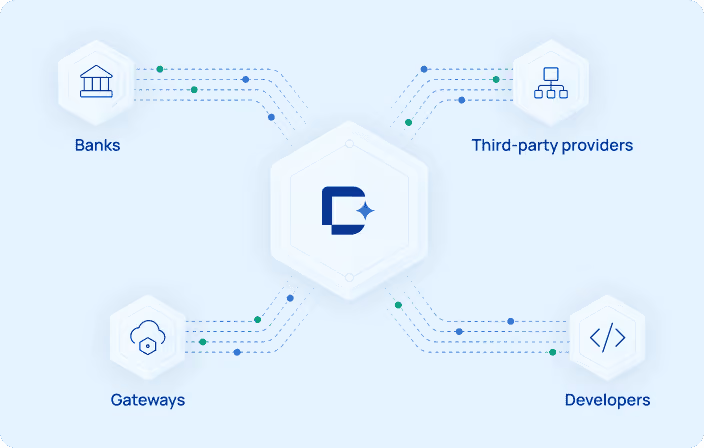
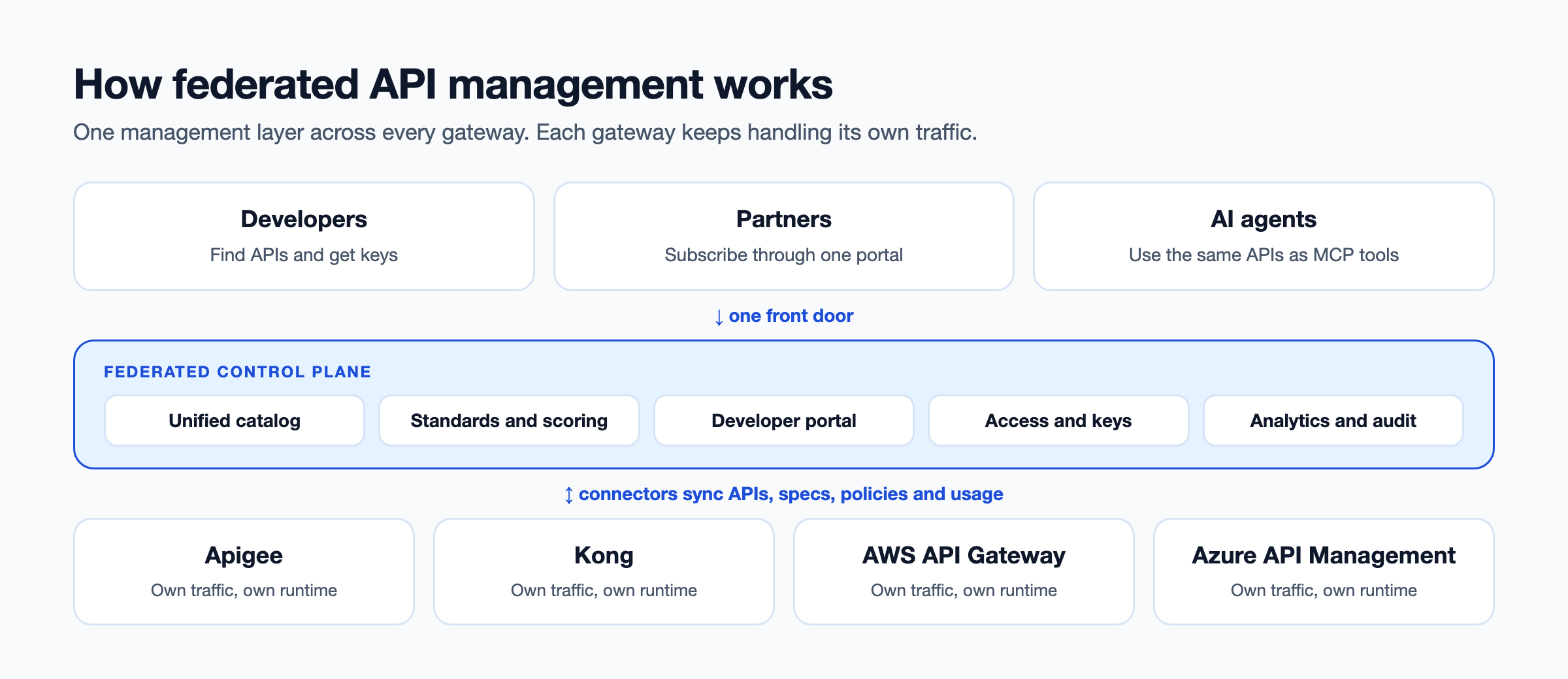
Federated API management works through five components: gateway connectors, a unified catalog, a policy layer, one developer portal and unified analytics. Connectors pull data in, and the other four turn it into one API program.
1. Gateway connectors
Connectors talk to each gateway's admin API. They discover APIs, pull specs, versions and policies, and keep them in sync as teams change things on the gateway. Without connectors, federation becomes a manual spreadsheet.
2. Unified catalog
Every API from every gateway lands in one searchable catalog, with owners, tags, specs and the gateway it runs on. This is where duplicate and unknown APIs show up.
3. Policy and governance layer
Standards are defined once: security, naming, documentation and versioning. Every API is checked against them, whichever gateway it runs on. Runtime policies are still enforced by each gateway.
4. One developer portal
Developers and partners find APIs, read docs, request access and get keys in one place. Behind the scenes, the platform provisions access on the right gateway.
5. Unified analytics and audit
Usage, errors and access logs from every gateway are collected into one view. Security gets one audit trail, and product teams see adoption across the whole estate.
What's the difference between federated and centralized API management?
Centralized API management runs every API through one gateway and one platform; federated API management keeps several gateways and centralizes only the management layer. Decentralized management, the third model, has no shared layer at all.
Federation keeps the consistency of the centralized model and the flexibility of the decentralized one. That's why it suits companies that grow through acquisitions or run in several clouds.
Is federated API management the same as federated API governance?
No. Federated API governance is an operating model for who sets and enforces API rules; federated API management is the platform that applies those rules across gateways. You can have either one without the other, but they work best together.
In federated governance, a central team sets standards and domain teams apply them to their own APIs. Federated management gives both groups the shared catalog, scoring and reporting to make that work. Our guides to centralized vs federated API governance and governance for federated teams cover the people side.
What's the difference between API federation and GraphQL federation?
API federation in API management means managing many gateways from one layer, while GraphQL federation means combining several GraphQL services into one graph that clients query. The words overlap, but the problems are different.
If you're searching for federated API management to manage REST APIs across Apigee, Kong or AWS, GraphQL federation isn't what you need.
When do you need federated API management?
You need federated API management when you run two or more API gateways and can't, or don't want to, migrate them to one. The signals are usually visible before anyone names the problem.
Federated API management is right for you if:
- You run gateways from more than one vendor or cloud
- Acquisitions keep adding gateways and portals
- Partners use different portals depending on the API
- Security wants one audit trail across every gateway
- Teams rebuild APIs because they can't find existing ones
It's not right for you yet if:
- You run a single gateway and plan to keep it
- You have only a few APIs and one team owns them all
Discovery is often the first pain. Postman's 2025 State of the API report found that 34% of teams can't find existing APIs. A pattern we see often: a connectivity data platform ended up with three gateway setups after several acquisitions and wanted one developer experience across them. A luxury travel brand with an AWS gateway, MuleSoft and point-to-point integrations wanted one control plane for all of it. Our guide to why enterprises end up with multiple API gateways covers the causes.
What are the benefits and limits of federated API management?
The main benefit of federated API management is one API program across every gateway without a migration; the main limit is that each gateway still decides what can be enforced at runtime. Knowing both sets the right expectations.
Benefits:
- No migration: Traffic stays on the gateways that already run it.
- Full inventory: Every API, including unknown ones, appears in one catalog.
- Consistent standards: Every API is scored against the same rules.
- One front door: Partners and developers use one portal and one access flow.
- One audit trail: Security and compliance get one view across gateways.
- Faster acquisitions: A new company's gateway joins the catalog instead of a migration queue.
Limits:
- Connector coverage: A platform can only manage gateways it has connectors for.
- Runtime enforcement: Rate limits and auth still run on each gateway, with each gateway's features.
- Delayed usage data: Usage pulled from gateways arrives in batches, which limits real-time billing.
- Two layers to run: Gateway teams still operate their gateways.
How do you implement federated API management?
You implement federated API management in seven steps, from inventory to retiring duplicate portals. Start with visibility, then add governance and access.
- List your gateways: Every gateway, vendor, owner and environment.
- Connect them: Set up connectors and sync APIs, specs and versions.
- Clean the catalog: Add owners and tags, and flag duplicate or unknown APIs.
- Set standards: Define security, naming and documentation rules, and score every API.
- Open one portal: Publish approved APIs with docs and a single access flow.
- Unify analytics: Pull usage and logs from every gateway into one view.
- Retire duplicates: Shut down old portals and redundant APIs.
Our guide to managing multiple API gateways without migration covers the steps in more detail.
What should you look for in a federated API management platform?
Look for a federated API management platform that connects to every gateway you run and adds governance, a portal and analytics without sitting in the request path. Use this checklist in evaluations.
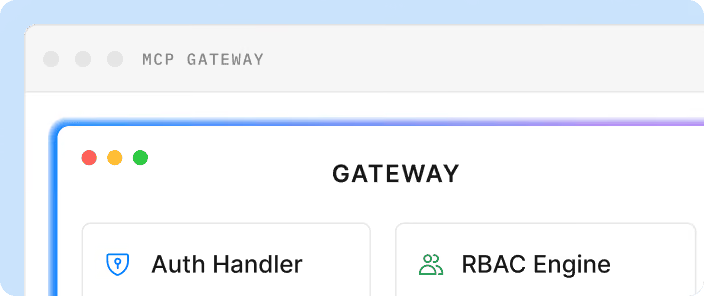
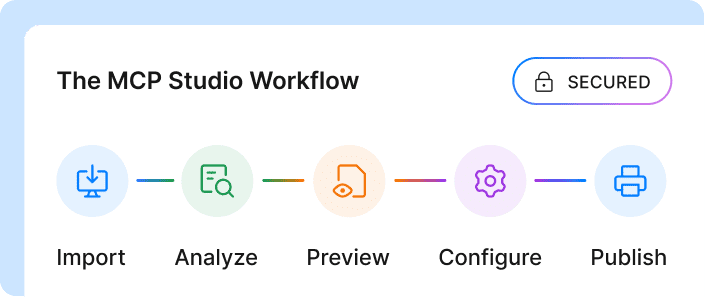
AI support is the newest criterion and the easiest to miss. Agents need the same APIs your partners use, so the catalog that federates your gateways should also feed your MCP servers. DigitalAPI generates MCP servers from the specs in the federated catalog, so agents follow the same access rules as developers.
How does a federated platform work in practice?
In practice, a federated platform connects to your gateways, builds the catalog and becomes the one place teams and partners use, while gateways keep serving traffic. Here is what that looks like with one platform.
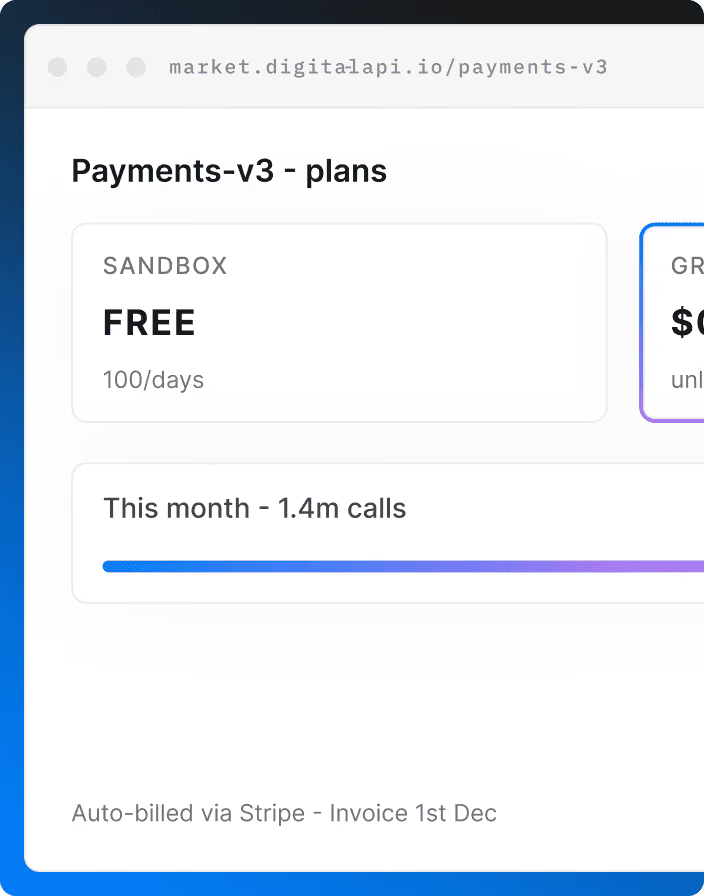
DigitalAPI's API marketplace connects to gateways including Apigee, Kong, Apache APISIX, AWS API Gateway, Azure API Management, IBM and MuleSoft, as well as its own gateway. Every API gets a governance score from 0 to 100 across security, style and documentation. Developers and partners use one portal and one subscription flow, and the marketplace stays out of the request path unless you choose proxy mode for real-time billing.
Teams using DigitalAPI go live with a federated marketplace in 4 to 8 weeks, without moving a single API. The API marketplace page shows the supported gateways.
FAQs
1. What is federated API management?
Federated API management is managing APIs that run on several API gateways through one shared layer. Each gateway keeps handling its own traffic, while the catalog, governance, developer portal, access and analytics are shared across all of them. It lets enterprises with many gateways run one API program without migrating.
2. What is API gateway federation?
API gateway federation is connecting several API gateways, often from different vendors, to one control plane. The control plane discovers each gateway's APIs, applies common standards and exposes them through one catalog and portal, while every gateway continues to process its own API calls.
3. What is a federated API gateway?
A federated API gateway setup is one where several gateways are managed as a group through a shared control plane. The term sometimes also describes a single gateway product that can manage other vendors' gateways. Either way, runtime traffic stays on each gateway.
4. What's the difference between federated and centralized API management?
Centralized API management routes every API through one gateway and one platform, so it usually requires migration. Federated API management keeps several gateways and centralizes only the management layer: catalog, standards, portal and analytics. Both give consistent governance, but federation avoids moving traffic.
5. Do I have to migrate my gateways to use federated API management?
No. Federated API management connects to the gateways you already run and leaves traffic where it is. You can migrate or retire gateways later if it makes sense, but federation doesn't require it.
6. What is API federation in GraphQL?
In GraphQL, federation combines several GraphQL services, called subgraphs, into one schema that clients query through a router. It's a different idea from API gateway federation, which manages many gateways and APIs of any style from one management layer.
7. Does federated API management add latency?
Federated API management doesn't add latency when the management layer stays out of the request path. Gateways handle calls directly, and the platform only syncs configuration and usage data in the background. Latency is added only if you route traffic through a proxy, for example for real-time billing.
Final word
Federated API management accepts how enterprises grow: through clouds, teams and acquisitions that each bring a gateway. Instead of chasing one gateway, it gives you one API program.
Start small. Connect two gateways, build the combined catalog and count how many APIs you didn't know you had. That number usually makes the case for the rest.
Running APIs across more than one gateway?
See how DigitalAPI federates every gateway into one catalog and portal.
Dhayalan Subramanian is Associate Director, Product Growth at DigitalAPI, where he leads go-to-market and product growth for the company’s multi-gateway API management platform. His work focuses on helping large enterprises and mid-market cloud companies consolidate APIs across AWS, Azure, Apigee, Kong, MuleSoft, and other gateways into a single control plane for governance, discovery, monetization, and agent consumption.
Dhayalan brings 14+ years of experience across product strategy, enterprise architecture, and engineering leadership. Earlier in his career, he held senior roles at Encora (as Associate Architect and Technical Manager), Mindtree (Technology Lead), Tech Mahindra (Technical Lead), and Primus Analytics, where he designed integration frameworks and delivered enterprise-grade digital platforms for global customers.
At DigitalAPI, he works directly with platform, integration, and developer experience leaders at Fortune 500 organizations to operationalize unified API catalogs, developer portals, and MCP-ready APIs. He writes regularly on API developer experience, API governance, and AI agent architectures.

One email a fortnight. Worth opening.
A short digest of what we're writing, what we're learning from customers, and the handful of links you'd actually want from us. No tracking pixels.