



Top 7 On-Premises API Management Platforms in 2026
Master on-premises API management! This guide reviews top platforms, crucial features, and selection criteria for robust control, security, and compliance in your enterprise.

TL;DR
1. On-premises API management offers unparalleled control, security, and compliance, making it ideal for highly regulated industries and specific data residency needs.
2. Key evaluation criteria include robust security features, comprehensive governance, seamless integration, a developer-friendly portal, and strong analytics.
3. Choosing the right platform involves assessing current infrastructure, scalability requirements, team expertise, and long-term TCO beyond initial setup.
4. Top platforms like DigitalAPI, Kong Enterprise, Apigee Edge Private Cloud, MuleSoft Anypoint Platform, Gravitee.io, Tyk, and WSO2 API Manager offer specialized capabilities for on-premises deployments.
5. Successfully navigating data residency and compliance is a primary driver for on-premises solutions, ensuring sensitive information never leaves your controlled environment.
Optimize your API operations with the best on-premises solutions. Book a Demo with DigitalAPI!
In an era defined by interconnected applications, robust API management isn't just an advantage—it's foundational. While cloud-native solutions often grab headlines, many organizations find themselves with stringent requirements that make on-premises API management not merely an option, but a necessity. For enterprises grappling with sensitive data, intricate regulatory landscapes, or established infrastructure, deploying API management within their own data centers offers a level of control and assurance that public clouds simply cannot match. This guide delves into selecting the best on-premises API management platforms, providing the insights needed to make an informed decision for your unique operational environment.
What Exactly is On-Premises API Management and Why Does it Matter Today?
On-premises API management refers to the deployment and operation of an API management platform entirely within an organization's own data center or private cloud infrastructure. Unlike cloud-based solutions where the vendor hosts and manages the platform, an on-premises setup means the enterprise takes full responsibility for hardware, software, security, and maintenance. This model places the API gateway, developer portal, analytics, and other management components directly under the client's control.
This approach matters significantly today for several critical reasons. Many enterprises, particularly in sectors like finance, healthcare, and government, handle highly sensitive data that cannot, by policy or law, reside outside their physical or virtual perimeter. On-premises deployments provide maximum control over data residency and API security measures, ensuring that all API traffic and metadata remain within the organization's trusted network. It also allows for deep integration with existing legacy systems and custom infrastructure, a common challenge in large, established organizations. This matters because it enables organizations to manage their entire API lifecycle with greater autonomy, directly addressing unique compliance and operational demands.
Why Choose On-Premises API Management Over Cloud or Hybrid Alternatives?
The decision to opt for on-premises API management often stems from a combination of strategic and operational drivers that outweigh the perceived flexibility of cloud or hybrid models. The primary advantages center around control, security, and compliance.
- Unparalleled Data Control: With an on-premises deployment, your data—including API requests, responses, and metadata—never leaves your controlled environment. This is crucial for organizations dealing with highly confidential or regulated information where data sovereignty is non-negotiable.
- Enhanced Security Posture: Enterprises can leverage their existing, battle-tested security infrastructure, policies, and expertise. This allows for bespoke security configurations, direct integration with internal identity management systems, and a tighter grip on access control, minimizing external attack vectors.
- Strict Regulatory Compliance: Industries subject to regulations like GDPR, HIPAA, PCI-DSS, or specific national data protection laws often find on-premises solutions essential. It simplifies audits and demonstrates adherence to mandates requiring data to be stored and processed within defined geographical or organizational boundaries.
- Integration with Legacy Systems: Older, complex systems often reside within the corporate network and are challenging to expose securely to the public cloud. On-premises API management facilitates seamless, low-latency integration with these internal services, preserving existing investments.
- Predictable Costs: While initial setup costs can be higher, on-premises models offer more predictable operational expenses over time, free from variable cloud usage fees. This can be a significant factor for long-term budgeting and financial planning.
- Customization and Performance: Organizations gain complete control over hardware, networking, and software stacks, enabling fine-tuned performance optimization and deep customization to meet specific application requirements without vendor limitations.
While hybrid and cloud models offer agility, the full ownership and granular control provided by on-premises deployments remain indispensable for many enterprises prioritizing security, compliance, and deep integration within their existing IT ecosystem.
Essential Features and Criteria for Evaluating On-Premises API Management Platforms
Selecting the best on-premises API management platform requires a thorough evaluation against a comprehensive set of features and criteria. Beyond basic functionality, the nuances of an on-premises environment demand particular attention to specific capabilities.
Key Features to Prioritize:
- Robust API Security: Look for advanced authentication (OAuth, OpenID Connect, API Keys), authorization, threat protection (OWASP Top 10), rate limiting, and bot protection. Essential for guarding APIs within your private network.
- Comprehensive API Gateway Capabilities: This includes traffic management, routing, caching, load balancing, protocol transformation (REST, SOAP, GraphQL), and policy enforcement. The gateway is the core of on-premises control.
- Full API Governance: The platform should enforce design standards, versioning policies, lifecycle management (design, deploy, deprecate), and access controls to maintain consistency and quality across your API estate.
- Developer Portal: A self-service portal is crucial for internal and partner developers. It should offer interactive documentation, code samples, API discovery, subscription management, and testing environments. See how a strong API developer portal can boost adoption.
- Advanced Analytics and Monitoring: Real-time visibility into API usage, performance, errors, and security events is vital. Look for customizable dashboards, alerting, and integration with existing SIEM or observability tools.
- Scalability and High Availability: The platform must be able to scale horizontally to handle increasing traffic and ensure continuous operation with features like active-active clustering, disaster recovery, and failover support within your data center.
- Integration Capabilities: Seamless integration with your existing identity providers (LDAP, Active Directory), CI/CD pipelines, monitoring systems, and other internal tools is non-negotiable for an on-premises setup.
Evaluation Criteria:
- Deployment Flexibility: Does the platform support various on-premises environments (VMs, Kubernetes, bare metal) and offer clear installation guidelines?
- Vendor Support and Community: Assess the vendor's enterprise support, documentation quality, and the vibrancy of its community for troubleshooting and knowledge sharing.
- Total Cost of Ownership (TCO): Factor in licensing, hardware, maintenance, operational overhead, and staffing requirements. A good platform should provide a clear API management cost breakdown.
- Ease of Use and Management: Evaluate the administrative interface for managing APIs, policies, and users. It should be intuitive for your operations teams.
- Future Road-map: Consider the vendor's commitment to on-premises development and alignment with your long-term API strategy, including any specific needs for regulated industries, such as a checklist for banks API management.
Top On-Premises API Management Platforms Reviewed: Our Expert Picks for 2024
Navigating the landscape of API management platforms for on-premises deployment can be complex. We've curated a list of the best on-premises API management platforms, highlighting their strengths and specific suitability for various enterprise needs. These platforms offer robust capabilities, emphasizing control, security, and scalability within your own infrastructure, while DigitalAPI provides flexible deployment options including cloud, hybrid, and on-premises.
1. DigitalAPI
DigitalAPI stands out as a versatile and powerful API management platform designed to meet the demanding requirements of modern enterprises across any deployment model. It provides comprehensive capabilities for the entire API lifecycle, from design and development to security, deployment, and monitoring. DigitalAPI's strength lies in its ability to unify API governance, security, and discovery across diverse environments, ensuring a seamless experience whether your APIs reside in the cloud, on-premises, or in a hybrid setup. Its user-friendly interface and robust feature set make it an excellent choice for organizations seeking a flexible yet powerful solution.
Key Features:
- Unified API Catalog and Governance: Centralizes all APIs, regardless of deployment, enabling consistent governance, versioning, and lifecycle management.
- Advanced Security Policies: Offers granular control over access, authentication, authorization, and threat protection, vital for sensitive on-premises data.
- Developer Portal for Accelerated Adoption: Provides a customizable, self-service portal with interactive documentation, API discovery, and sandbox environments.
- Hybrid and Multi-Cloud Deployment Support: Seamlessly manages APIs across cloud, hybrid, and dedicated on-premises environments from a single control plane.
- Real-time Analytics and Insights: Delivers deep visibility into API performance, usage, and security events, aiding in proactive management and optimization.
- Seamless Integration: Designed to integrate effortlessly with existing enterprise systems, CI/CD pipelines, and identity providers for smooth operations.
Pros:
- Highly flexible deployment options (cloud, hybrid, on-premises).
- Strong focus on API governance and security for regulated environments.
- Intuitive developer portal enhances API adoption.
- Comprehensive analytics and monitoring capabilities.
- Excellent support for complex enterprise integrations.
Cons:
- May require initial investment in setting up on-premises infrastructure.
- Complexity can be high for smaller teams without dedicated APIOps resources.
- Customization for highly unique use cases might require deeper technical expertise.
- Learning curve for new users familiar with older, less integrated systems.
.png)
2. Kong Enterprise
Kong Enterprise is a leading service connectivity platform built on the lightweight and high-performance open-source Kong Gateway. It excels in managing microservices and APIs across hybrid and multi-cloud environments, with robust support for on-premises deployments. Kong offers a rich set of plugins for security, traffic control, and analytics, making it a highly adaptable choice for organizations requiring a flexible and extensible API gateway and management solution. Its strong community support and extensibility appeal to developers and operations teams alike.

Key Features:
- High-Performance API Gateway: Built on NGINX, offering low-latency performance and high throughput for demanding on-premises workloads.
- Extensive Plugin Ecosystem: Provides a vast library of plugins for authentication, authorization, traffic control, and logging, highly customizable for any environment.
- Hybrid and Multi-Cloud Control Plane: Manages APIs consistently across distributed infrastructures, including dedicated on-premises data centers.
- Advanced Developer Portal: Facilitates API discovery, documentation, and consumption for internal and external developers.
- Service Mesh Integration: Seamlessly integrates with service mesh technologies for enhanced traffic management and observability.
- Centralized Management: Provides a unified interface for managing APIs, consumers, and policies across multiple Kong Gateway instances.
Pros:
- Exceptional performance and scalability.
- Highly extensible through plugins and open-source nature.
- Strong community and enterprise support.
- Ideal for microservices architectures and hybrid deployments.
- Flexible deployment options across various on-premise setups.
Cons:
- Complexity can be high for those new to Kong or API management.
- Enterprise features can be costly.
- Reliance on NGINX may require specific expertise.
- Configuration management can be intricate in large deployments.
3. Apigee Edge Private Cloud
Apigee Edge, now part of Google Cloud, offers an enterprise-grade API management platform with a "Private Cloud" option for on-premises deployments. This solution brings the power and advanced capabilities of Apigee's cloud offering directly into your data center, providing full control over your API infrastructure and data. It's particularly well-suited for large enterprises that require the sophisticated features of Apigee for security, analytics, and developer engagement, while adhering to strict data residency and regulatory compliance mandates. Apigee Edge Private Cloud ensures that your API ecosystem remains within your trusted network perimeter.
Key Features:
- Comprehensive API Proxying: Manages API traffic, applies policies, and ensures secure communication between API consumers and backend services.
- Advanced API Security: Offers robust threat protection, access control, and identity management integration for on-premises environments.
- Customizable Developer Portal: Provides a branded portal for API discovery, documentation, and self-service onboarding for developers.
- Powerful API Analytics: Delivers deep insights into API performance, usage, and business metrics, all within your private infrastructure.
- Monetization Capabilities: Supports various API monetization models, including rate limiting and quotas, for commercial API programs.
- Policy-Driven Management: Enables definition and enforcement of policies for caching, routing, security, and mediation.
Pros:
- Industry-leading API management features.
- Strong analytics and monetization capabilities.
- Robust security framework for enterprise use.
- Mature platform with extensive documentation.
- Suitable for large, complex enterprise environments.
Cons:
- High cost for licensing and infrastructure.
- Complex deployment and maintenance requirements.
- Requires significant operational expertise.
- Updates and upgrades can be challenging.
4. MuleSoft Anypoint Platform
MuleSoft's Anypoint Platform is a comprehensive integration platform that includes powerful API management capabilities, designed for both cloud and on-premises deployments. It enables organizations to build an application network by connecting applications, data, and devices, whether they reside on-premises or in the cloud. For on-premises users, MuleSoft provides a robust runtime engine, Mule Runtime, that can be deployed in private data centers, offering full control over API gateways, proxies, and mediation layers. This makes it an ideal choice for enterprises with complex integration needs and a strong emphasis on reusability and governed API access within their own infrastructure.
Key Features:
- API Design and Lifecycle Management: Tools for designing, building, and managing APIs through their entire lifecycle with a strong focus on reusability.
- Hybrid Deployment Options: Supports deploying API gateways and integration runtimes on-premises, in private clouds, or any public cloud environment.
- Robust Security Features: Implements advanced policies for threat protection, access control, and identity management.
- Comprehensive Analytics: Provides dashboards and reporting for API performance, usage, and health across all deployment models.
- Integration Capabilities: Unifies API management with enterprise integration, allowing seamless connectivity to legacy systems and applications.
- Developer Engagement: Offers a customizable developer portal for API discovery and consumption.
Pros:
- Excellent for complex enterprise integration scenarios.
- Strong capabilities for API design and reuse.
- Supports both on-premises and hybrid cloud models.
- Comprehensive analytics and monitoring.
- Robust security and governance features.
Cons:
- Can be expensive, especially for smaller deployments.
- Steep learning curve for new users.
- Overkill for simple API management needs without integration.
- Resource-intensive for on-premises infrastructure.
5. Gravitee.io API Management
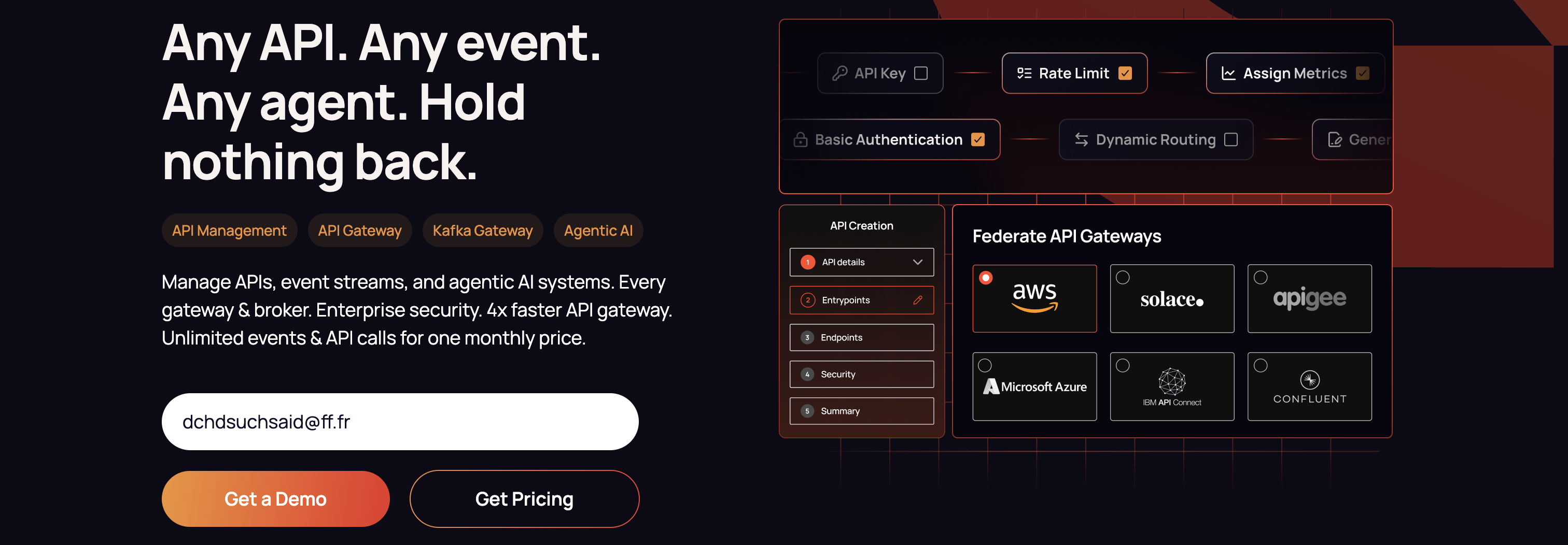
Gravitee.io API Management is an open-source, flexible, and powerful platform that is highly regarded for its adaptability to on-premises deployments. It provides a full set of features for managing, securing, and monitoring APIs, making it a strong contender for organizations seeking an open-source solution with enterprise-grade capabilities. Gravitee.io's event-driven architecture and policy engine allow for fine-grained control over API traffic and interactions, fitting well into environments that prioritize customization and granular control over their API infrastructure. Its focus on developer experience also ensures smooth adoption.
Key Features:
- Policy-Driven API Gateway: Offers a powerful policy engine to control security, traffic, transformation, and QoS.
- Dynamic API Management: Allows for real-time changes to API configurations without downtime, critical for agile on-premises environments.
- Developer Portal with Subscription Management: A fully customizable portal for API consumption, documentation, and application management.
- Advanced Access Management: Integrates robust authentication and authorization mechanisms, including OAuth2, JWT, and API Keys.
- Real-time Analytics and Monitoring: Provides comprehensive dashboards and metrics for API performance, usage, and health.
- Event-Native Design: Leverages an event-driven core for high scalability and responsiveness, suitable for modern architectures.
Pros:
- Open-source core with strong community support.
- Highly flexible and customizable for on-premises needs.
- Event-driven architecture for scalability.
- Comprehensive security and policy enforcement.
- Developer-friendly portal and tools.
Cons:
- Enterprise features require a paid subscription.
- Requires internal expertise for deployment and maintenance.
- Smaller community compared to some larger vendors.
- Documentation can sometimes lag behind new features.
6. Tyk API Gateway
Tyk API Gateway is an open-source, cloud-native ready, and highly performant API management platform known for its flexibility and ease of deployment in various environments, including on-premises. Tyk offers a full range of features including an API gateway, a developer portal, analytics, and a dashboard, all designed to be lightweight and efficient. It's particularly favored by organizations looking for a developer-centric solution that can handle high volumes of API traffic while providing robust security and granular control over their API ecosystem within their own infrastructure.
Key Features:
- High-Performance API Gateway: Designed for speed and scalability, handling large volumes of API traffic with low latency.
- Built-in Developer Portal: Provides a ready-to-use, customizable portal for API discovery, documentation, and onboarding.
- Advanced Security Features: Supports various authentication methods (JWT, OAuth, API Keys) and fine-grained access control.
- Granular Quota and Rate Limiting: Allows for precise control over API consumption to prevent abuse and manage capacity.
- Comprehensive Analytics: Offers detailed insights into API usage, performance, and health through a powerful dashboard.
- Plugin Architecture: Extensible with custom plugins to meet specific business and integration requirements.
Pros:
- Excellent performance and scalability.
- Open-source core with flexible deployment options.
- Developer-friendly features and intuitive dashboard.
- Strong focus on security and traffic control.
- Good documentation and community support.
Cons:
- Enterprise features come with a cost.
- Configuration management can be complex in large-scale deployments.
- Some advanced features may require deeper technical knowledge.
- Less comprehensive integration capabilities than full-stack iPaaS.
7. WSO2 API Manager
WSO2 API Manager is a 100% open-source, full lifecycle API management solution that offers unparalleled flexibility for on-premises deployments. It provides a complete platform for designing, publishing, managing, and consuming APIs, backed by a strong commitment to open standards. WSO2 is an excellent choice for enterprises that prioritize open-source freedom, deep customization, and robust security within their own data centers. Its modular architecture allows organizations to select and deploy only the components they need, making it highly adaptable to diverse architectural and operational requirements, especially in environments demanding full control over their stack.
Key Features:
- Full Lifecycle API Management: Supports API design, publishing, governance, and retirement processes.
- API Gateway: Routes and secures API traffic with policy enforcement, caching, and throttling.
- Developer Portal: A customizable, self-service portal for API discovery, documentation, and application management.
- Robust Security: Offers comprehensive authentication (OAuth, SAML, JWT) and threat protection capabilities.
- API Analytics and Monitoring: Provides real-time insights into API usage, performance, and error rates.
- Microservices and Integration Support: Built to integrate with microservices architectures and existing enterprise systems.
Pros:
- Completely open-source and free to use (community edition).
- Highly customizable and extensible.
- Strong security features and governance capabilities.
- Flexible deployment options for on-premises.
- Robust support for various integration patterns.
Cons:
- Enterprise support comes at a cost.
- Requires significant in-house expertise for setup and maintenance.
- Steeper learning curve compared to some commercial offerings.
- Documentation can sometimes be overwhelming due to its breadth.
Navigating the Data Residency and Compliance Demands with On-Premises API Management
For many organizations, the driving force behind choosing on-premises API management isn't just preference, but strict necessity dictated by data residency and regulatory compliance. These demands are becoming increasingly complex and critical, making the ability to keep data within a controlled, known environment paramount. On-premises API management platforms excel in addressing these challenges.
Data Residency: This refers to the physical or geographical location where an organization's data is stored. For multi-national corporations or businesses operating in specific regions, laws like the EU's GDPR, various state-specific data protection acts (e.g., CCPA in California), or sector-specific regulations often mandate that certain types of data (e.g., personal identifiable information, financial records) must remain within the borders of a particular country or jurisdiction. By deploying an API management platform on-premises, enterprises ensure that all API request and response data, logs, and metadata stay within their chosen data center, directly fulfilling these residency requirements.
Regulatory Compliance: Beyond data residency, numerous industry-specific and governmental regulations impose stringent requirements on how data is processed, secured, and audited. Examples include:
- HIPAA (Healthcare): Mandates strict security and privacy controls for protected health information (PHI).
- PCI-DSS (Payment Card Industry Data Security Standard): Governs the handling of credit card data.
- GDPR (General Data Protection Regulation): Imposes comprehensive data protection and privacy rules for EU citizens' data.
- SOX (Sarbanes-Oxley Act): Affects financial reporting and requires stringent IT controls.
An on-premises API management solution provides the granular control necessary to implement and prove adherence to these regulations. Organizations can integrate the platform with their existing identity and access management (IAM) systems, enforce custom security policies tailored to specific mandates, conduct internal audits with ease, and directly manage encryption keys and certificate lifecycles. This level of oversight is particularly valuable for developer portals in regulated industries, ensuring only authorized access to sensitive APIs. The ability to control every layer of the infrastructure, from physical servers to network configurations, allows enterprises to build a verifiable chain of custody for their data, a crucial aspect of regulatory compliance and data security.
Key Considerations for Successfully Selecting and Implementing Your On-Premises API Management Solution
Choosing and deploying the best on-premises API management platform is a significant undertaking that requires careful planning and consideration beyond just feature comparison. Success hinges on a holistic approach that accounts for your existing infrastructure, team capabilities, and long-term strategic goals.
- Assess Your Current Infrastructure: Understand your existing hardware capabilities, virtualization platforms (VMware, OpenStack, Kubernetes), networking setup, and database infrastructure. The chosen API management solution must be compatible and integrate seamlessly with your current ecosystem. Consider if your API management architecture can accommodate the new platform.
- Evaluate Team Expertise: On-premises deployments demand in-house expertise for installation, configuration, maintenance, and troubleshooting. Assess your team's skills in areas like Linux administration, container orchestration (if using Kubernetes), networking, security, and database management. If there are skill gaps, factor in training or hiring costs.
- Define Scalability Requirements: Clearly outline your anticipated API traffic volumes, peak loads, and growth projections. The platform must be able to scale horizontally within your data center to meet these demands without performance bottlenecks. Plan for resource allocation (CPU, RAM, storage) and network capacity.
- Integration with Existing Systems: A critical aspect of on-premises deployments is integrating with your legacy applications, identity providers (LDAP, Active Directory), monitoring tools, logging systems, and CI/CD pipelines. Ensure the chosen platform offers robust connectors or APIs for these integrations.
- Security and Compliance Deep Dive: Beyond the platform's inherent security features, assess how it integrates with your organizational security policies. This includes firewalls, intrusion detection systems, data encryption at rest and in transit, and audit logging. Verify its ability to help you meet specific regulatory requirements.
- Total Cost of Ownership (TCO): Look beyond initial licensing fees. Factor in hardware costs, software licenses, operational expenses (power, cooling, rack space), maintenance, support contracts, and the cost of human resources for management. A comprehensive API management cost analysis is essential.
- Vendor Support and Road-map: Evaluate the vendor's commitment to on-premises deployments, their support tiers, response times, and the clarity of their product road-map. An active and responsive support team is invaluable for resolving issues in complex on-premises environments.
- Proof of Concept (PoC): Before a full-scale commitment, conduct a limited PoC to test the platform's core functionalities, deployment process, performance under simulated load, and integration capabilities within your actual environment. This helps validate the choice and uncover potential challenges early on.
FAQs
1. What is the primary difference between on-premises and cloud API management?
The primary difference lies in deployment and control. On-premises API management involves deploying the entire platform within your own data center, giving you full control over hardware, software, security, and data residency. Cloud API management, conversely, is hosted and managed by a third-party vendor in their cloud infrastructure, offering greater agility and scalability but with shared control and reliance on the vendor's security and compliance posture. You can delve deeper into cloud vs. on-premises API management to understand more.
2. When is on-premises API management the most suitable choice for an enterprise?
On-premises API management is most suitable for enterprises with strict data residency requirements, stringent regulatory compliance mandates (e.g., HIPAA, GDPR, PCI-DSS), existing significant investments in on-premises infrastructure, or a need for complete control over their API security and operational environment. It's often chosen by organizations in highly regulated industries like finance, healthcare, and government.
3. Are there robust open-source options for on-premises API management?
Yes, absolutely. Several robust open-source options are highly suitable for on-premises API management, providing flexibility, customization, and cost-effectiveness. Examples include Kong Gateway, Gravitee.io API Management, Tyk API Gateway, and WSO2 API Manager. These platforms offer enterprise-grade features and can be deployed and managed entirely within an organization's private infrastructure. Many are considered among the best open-source API management tools available.
4. What are the typical challenges and hidden costs associated with on-premises API management?
Typical challenges include the need for significant in-house IT expertise for deployment and maintenance, higher initial hardware and software licensing costs, and the ongoing operational overhead of managing physical infrastructure (power, cooling, security). Hidden costs can arise from unexpected hardware upgrades, specialized training for staff, complexities in integrating with legacy systems, and the potential for prolonged downtime if not properly managed, impacting the overall API management cost.
5. How does an on-premises API management platform contribute to enhanced data security and regulatory compliance?
An on-premises API management platform enhances data security by keeping all API traffic, data, and metadata within the organization's controlled network perimeter, allowing for custom security policies and direct integration with internal security tools. For regulatory compliance, it ensures data residency, simplifies audits by providing full control over data processing and storage locations, and enables the implementation of specific controls required by regulations like GDPR, HIPAA, or PCI-DSS, bolstering overall API security and compliance posture.
Dhayalan Subramanian is Associate Director, Product Growth at DigitalAPI, where he leads go-to-market and product growth for the company’s multi-gateway API management platform. His work focuses on helping large enterprises and mid-market cloud companies consolidate APIs across AWS, Azure, Apigee, Kong, MuleSoft, and other gateways into a single control plane for governance, discovery, monetization, and agent consumption.
Dhayalan brings 14+ years of experience across product strategy, enterprise architecture, and engineering leadership. Earlier in his career, he held senior roles at Encora (as Associate Architect and Technical Manager), Mindtree (Technology Lead), Tech Mahindra (Technical Lead), and Primus Analytics, where he designed integration frameworks and delivered enterprise-grade digital platforms for global customers.
At DigitalAPI, he works directly with platform, integration, and developer experience leaders at Fortune 500 organizations to operationalize unified API catalogs, developer portals, and MCP-ready APIs. He writes regularly on API developer experience, API governance, and AI agent architectures.

One email a fortnight. Worth opening.
A short digest of what we're writing, what we're learning from customers, and the handful of links you'd actually want from us. No tracking pixels.

.avif)