




How to scale and manage your API partner program
Master API partner programs and external API consumption for business growth. Learn strategic design, robust security, excellent DX, and smart monetization for a scalable, value-driven API ecosystem.

TL;DR
1. Scaling API partner programs requires a strategic blend of robust API design, comprehensive governance, and an exceptional developer experience.
2. Effective management of external API consumption involves clear lifecycle strategies, strong security, and continuous monitoring.
3. Prioritize self-service capabilities, automated onboarding, and crystal-clear documentation to drive partner adoption and reduce operational overhead.
4. Monetization models should be transparent and aligned with partner value, supported by flexible billing and analytics.
5. DigitalAPI provides a unified platform to manage, secure, monetize, and accelerate your API partner programs, acting as an API Marketplace for seamless external consumption and integration.
Ready to monetize your APIs? Book a Demo with DigitalAPI!
The era of isolated digital operations is rapidly fading. Businesses are increasingly woven into complex ecosystems, where seamless data exchange and collaborative innovation are paramount. At the heart of this interconnectedness lie API partner programs, offering unprecedented opportunities for growth, market expansion, and enhanced customer experiences. Yet, harnessing this potential demands more than just exposing an endpoint. It requires a strategic mastery of how to scale and manage external API consumption, transforming potential chaos into a well-orchestrated engine of value creation. This guide delves into the essential frameworks and practical strategies for navigating this evolving landscape.
Why API Partner Programs are Indispensable for Modern Enterprises
API partner programs have evolved beyond mere technical integrations; they are strategic business enablers. By opening up core capabilities through well-defined APIs, organizations can unlock new revenue streams, accelerate innovation, extend market reach, and cultivate a vibrant ecosystem around their products and services. Consider the growth of fintech, e-commerce, and SaaS platforms – much of it powered by external API consumption. For many, it's no longer a question of if, but how to scale and manage API partner programs effectively.
However, the journey from a few ad-hoc integrations to a thriving API ecosystem is fraught with challenges. Without proper planning and robust infrastructure, scaling can lead to unmanageable complexity, security vulnerabilities, inconsistent experiences, and ultimately, a failure to realize the program's full potential. Mastering this balance is crucial for sustainable growth and competitive advantage.
.png)
The Foundational Pillars of a Scalable API Partner Program
Building a robust API partner program that can truly scale and efficiently manage external API consumption requires attention to several critical areas. These pillars ensure that your APIs are not just available, but consumable, secure, and valuable for your partners.
1. API Design and Standardization
Consistency is king. A well-designed API is intuitive, predictable, and adheres to established standards. This minimizes the learning curve for partners and reduces integration friction. Standardizing your API design means adopting consistent naming conventions, data formats, error handling, and authentication methods across your entire API portfolio. This is not just about aesthetics; it directly impacts developer experience and adoption rates. A clear API design philosophy ensures that as your program scales, partners can easily discover and integrate new APIs without relearning fundamental patterns.
2. Robust API Management and Governance
At scale, manual oversight of APIs is impossible. A comprehensive API management platform is essential. This platform should provide capabilities for lifecycle management, security, traffic management (like API rate limiting), analytics, and developer onboarding. Governance extends beyond mere technical controls; it involves defining policies for API usage, versioning, deprecation, and security, ensuring all partners adhere to agreed-upon terms. This systematic approach is vital for maintaining control and ensuring the long-term health of your API ecosystem.
3. Developer-First Experience (DX)
Your API partner program lives or dies by the experience you offer developers. A world-class API developer portal is the central hub for this experience. It should provide comprehensive, up-to-date documentation, interactive API explorers, code samples in multiple languages, SDKs, and transparent communication channels. The easier it is for developers to discover, understand, and integrate your APIs, the faster your program will scale. This also includes providing self-serve sandbox APIs for experimentation without impacting production systems.
4. Comprehensive API Security
Exposing APIs to external partners introduces significant security risks. Strong API security measures are non-negotiable. This includes robust API authentication mechanisms (e.g., OAuth 2.0, API keys), authorization, encryption in transit and at rest, input validation, and protection against common API threats like injection attacks and DDoS. Regular security audits and continuous monitoring are critical to identifying and mitigating vulnerabilities proactively. Trust is paramount in partner relationships, and a security breach can irrevocably damage that trust.
5. Proactive Monitoring and Analytics
Understanding how your APIs are being used is crucial for scaling and managing external API consumption. Implementing proactive API monitoring tools helps track performance, availability, and error rates, ensuring a high quality of service for your partners. Beyond operational metrics, API analytics KPIs provide insights into adoption rates, popular endpoints, partner behavior, and potential areas for improvement or new API offerings. These insights drive informed decisions for future development and strategic adjustments to your program.
6. Clear Versioning and Deprecation Strategy
APIs evolve, and changes are inevitable. A clear API versioning strategy ensures that partners are not negatively impacted by updates. This involves communicating changes well in advance, providing clear migration paths, and offering parallel support for older versions for a defined period. A well-managed deprecation policy minimizes disruption and maintains partner trust, which is essential for long-term program health.
7. Flexible API Monetization Models
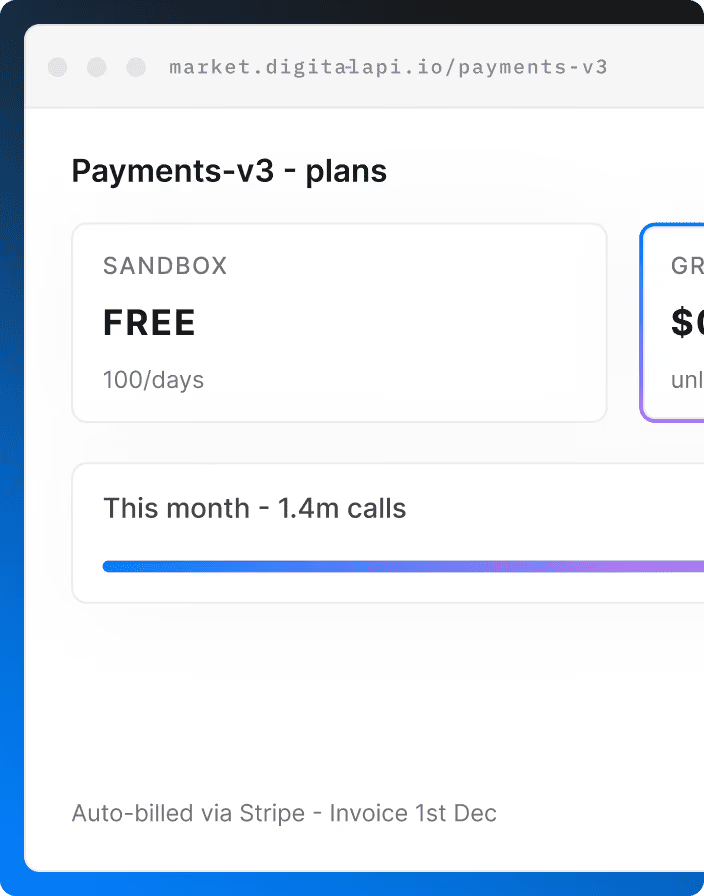
For many organizations, API partner programs are a significant revenue driver. Choosing the right API monetization models—whether freemium, tiered, usage-based, or outcome-based—is critical. The model should align with the value partners derive and be transparently communicated. Implementing robust billing and metering systems (how to implement billing quotas and SLAs while monetizing APIs) that integrate seamlessly with your API management platform is crucial for accurate revenue tracking and partner satisfaction.
Strategies for Scaling API Partner Programs Effectively
Scaling is not just about increasing the number of partners; it's about doing so efficiently and sustainably. Here are practical strategies:
1. Automated Onboarding and Self-Service
Manual onboarding processes become a bottleneck as your partner program grows. Invest in a self-serve developer experience that allows partners to register, browse APIs, generate API keys, access documentation, and test integrations with minimal human intervention. This significantly reduces operational overhead and allows you to accelerate API onboarding, which is a key driver for adoption. The goal is to make it as easy as possible for partners to get started and derive value.
2. Community Building and Support
Foster a vibrant community around your APIs. This can include forums, dedicated Slack channels, webinars, and hackathons. A strong community provides peer-to-peer support, gathers valuable feedback, and acts as a force multiplier for innovation. Beyond community, ensure robust technical support channels are available for partners facing complex integration challenges.
3. Tiered Partner Engagement
Not all partners are created equal. Implement a tiered engagement model that offers different levels of access, support, and features based on partner commitment, business impact, or usage volume. This allows you to prioritize resources and provide tailored experiences, from a basic self-service tier to a premium tier with dedicated support and custom integrations.
4. Feedback Loops and Iteration
Treat your API program as a product. Continuously collect feedback from your partners through surveys, support interactions, and usage analytics. Use this feedback to iterate on your API designs, documentation, and overall partner experience. Regular updates and improvements demonstrate your commitment to the program and encourage continued engagement.
Managing External API Consumption: A Two-Sided Coin
When we talk about scaling and managing external API consumption, it's important to consider both perspectives: being a provider of APIs and being a consumer of third-party APIs.
For API Providers (Your Partner Program)
This entire blog largely focuses on this. Key takeaways include:
- Invest in a comprehensive API management platform.
- Prioritize a stellar developer experience with a robust API portal.
- Implement stringent API access management and security policies.
- Define clear API versioning and deprecation strategies.
- Offer compelling and transparent API monetization models.
- Automate onboarding and provide tools to reduce API onboarding time.
For API Consumers (Integrating Third-Party APIs)
Enterprises also consume many external APIs to power their own services. Effective management here involves:
- Thorough Vetting: Before integration, thoroughly vet the third-party API provider for reliability, security, documentation quality, and support.
- Robust Error Handling: Design your systems to gracefully handle API downtime, rate limits, and various error codes from external APIs.
- Caching Strategies: Implement caching where appropriate to reduce calls to external APIs, improving performance and potentially reducing costs.
- Dependency Management: Understand the impact of external API changes on your systems and have a strategy for managing these dependencies.
- Cost Monitoring: Keep track of usage and associated costs for any monetized third-party APIs.
DigitalAPI's Role in Scaling and Managing Your API Partner Programs
Scaling and managing API partner programs effectively demands a platform that unifies disparate systems, automates complex workflows, and prioritizes the developer experience. This is where DigitalAPI shines. As a leading API marketplace and management solution, DigitalAPI empowers organizations to build, grow, and govern their API ecosystems with unparalleled efficiency.
1. Unified Management Across All Gateways
DigitalAPI provides a singular pane of glass to manage APIs across various gateways and environments. This centralizes control, simplifies governance, and gives you a holistic view of your entire API landscape, crucial for scalable API management. Whether your APIs live on Apigee, Kong, AWS, or Azure, DigitalAPI consolidates them, eliminating sprawl and ensuring consistent policies.
2. Developer-Centric API Marketplace
At the core of DigitalAPI is its intuitive developer portal, which doubles as a branded API marketplace. This platform accelerates adoption by providing a superior unified API developer portal experience with rich documentation, interactive testing tools, code samples, and self-service onboarding. Partners can discover, subscribe to, and integrate APIs quickly, transforming potential partners into active users. It also ensures developer portal security when exposing APIs externally, building trust.
3. Advanced Monetization and Billing
DigitalAPI offers flexible monetization features, allowing you to implement various API monetization models and manage billing seamlessly. With detailed usage analytics and customizable pricing plans, you can optimize your revenue streams and provide transparent cost structures for your partners. This ensures that the financial aspect of your API program is as scalable as its technical backbone.
4. Robust Governance and Security
With DigitalAPI, you can enforce comprehensive governance policies, including API lifecycle management, versioning, and security standards. The platform helps you maintain compliance, identify potential risks, and apply consistent controls across all APIs exposed to partners. This reduces the administrative burden and ensures the integrity and security of your API ecosystem.
Overcoming Common Challenges in Scaling API Partner Programs
Even with the right strategies and tools, challenges will arise. Anticipating them and having a plan is crucial.
- Lack of Internal Alignment: API programs require cross-functional collaboration. Ensure business, product, and engineering teams are aligned on goals, priorities, and ownership.
- Technical Debt and Legacy Systems: Older systems can be difficult to expose via modern APIs. A phased approach, potentially using API gateways to abstract legacy services, can mitigate this.
- Security Concerns: The fear of exposing data or business logic often hinders API programs. Address this by implementing robust API security best practices from the outset and communicating safeguards transparently.
- Measuring ROI: Clearly define success metrics, such as partner adoption, revenue generated, and innovation accelerated, and track them rigorously to demonstrate the value of your program.
- Developer Experience Gaps: Inadequate documentation, inconsistent APIs, or poor support can lead to partner frustration. Continuously invest in improving your developer portal and support mechanism.
Conclusion
Scaling and managing API partner programs is a strategic imperative for organizations aiming to thrive in the interconnected digital economy. It's a journey that demands a holistic approach, encompassing thoughtful API design, robust API management, an exceptional developer experience, stringent security, and continuous iteration. By leveraging platforms like DigitalAPI, enterprises can overcome the complexities of external API consumption, transforming their API initiatives from technical undertakings into powerful engines for business growth, innovation, and ecosystem expansion. Embrace these principles, and your API partner program will not just scale, but truly flourish.
FAQs
1. What is an API partner program?
An API partner program involves providing external organizations (partners) access to your business's data or functionalities through Application Programming Interfaces (APIs). These programs are designed to foster collaboration, enable new product development, extend market reach, and create new revenue streams by allowing partners to build their own applications and services on top of your platform.
2. Why is it important to scale and manage external API consumption?
Scaling and managing external API consumption is crucial for several reasons: it ensures the stability and performance of your API ecosystem as partner usage grows, maintains a consistent security posture against external threats, standardizes the developer experience for wider adoption, optimizes monetization strategies, and prevents operational overhead from becoming a bottleneck. Effective management allows you to maximize the business value derived from your API program.
3. What are the biggest challenges in managing API partner programs?
Key challenges include maintaining consistent API quality and documentation across a growing portfolio, ensuring robust security for external access, managing API versioning and deprecation without disrupting partners, providing excellent developer support at scale, defining fair and effective monetization models, and gaining insights into API usage for continuous improvement. Overcoming these often requires a dedicated API management platform.
4. How does an API marketplace help with partner programs?
An API marketplace, like DigitalAPI, serves as a centralized hub where partners can discover, learn about, subscribe to, and manage access to your APIs. It enhances the developer experience through comprehensive documentation, interactive tools, and self-service capabilities. For providers, it centralizes management, security, and monetization, streamlining the process of scaling and governing your API partner program by providing a single, intuitive platform for interaction.
5. What key metrics should I track to measure the success of my API partner program?
To gauge success, you should track metrics such as API adoption rate (number of partners, active integrations), API usage (call volume, unique users, successful requests), developer satisfaction (feedback, support tickets), time to first call (onboarding efficiency), revenue generated (if monetized), and API performance (latency, error rates, uptime). These API analytics KPIs provide a holistic view of your program's health and impact.
Dhayalan Subramanian is Associate Director, Product Growth at DigitalAPI, where he leads go-to-market and product growth for the company’s multi-gateway API management platform. His work focuses on helping large enterprises and mid-market cloud companies consolidate APIs across AWS, Azure, Apigee, Kong, MuleSoft, and other gateways into a single control plane for governance, discovery, monetization, and agent consumption.
Dhayalan brings 14+ years of experience across product strategy, enterprise architecture, and engineering leadership. Earlier in his career, he held senior roles at Encora (as Associate Architect and Technical Manager), Mindtree (Technology Lead), Tech Mahindra (Technical Lead), and Primus Analytics, where he designed integration frameworks and delivered enterprise-grade digital platforms for global customers.
At DigitalAPI, he works directly with platform, integration, and developer experience leaders at Fortune 500 organizations to operationalize unified API catalogs, developer portals, and MCP-ready APIs. He writes regularly on API developer experience, API governance, and AI agent architectures.


One email a fortnight. Worth opening.
A short digest of what we're writing, what we're learning from customers, and the handful of links you'd actually want from us. No tracking pixels.

.avif)