



How are Agentic AI Workflows Redefining Healthcare Operations
Agentic AI refers to AI systems designed to act autonomously, make decisions, and achieve specific goals in dynamic environments.


TL;DR
1. Agentic AI redefines healthcare by enabling autonomous AI agents to perform complex tasks, coordinate, and make decisions across workflows.
2. These intelligent agents automate administrative burdens, augment clinical decision-making, accelerate research, and personalize patient care.
3. Key components include specialized agents, robust tools, and a secure API infrastructure for seamless interaction with existing systems.
4. Implementing Agentic AI requires careful consideration of data privacy, regulatory compliance, bias mitigation, and robust integration strategies.
5. The future of healthcare will see Agentic AI transform efficiency, accuracy, and patient outcomes, demanding secure, well-governed API access.
Ready to future-proof your healthcare operations with Agentic AI? Explore DigitalAPI's solutions!
The healthcare landscape, grappling with escalating demands, complex data, and a relentless pursuit of better patient outcomes, stands on the cusp of a profound transformation. While AI has long promised efficiency, a new paradigm, Agentic AI, is now emerging to deliver on that promise by moving beyond mere prediction to autonomous action and dynamic decision-making. Imagine intelligent software agents that can not only analyze vast datasets but also proactively manage workflows, coordinate care, and even contribute to groundbreaking research. This shift towards Agentic AI workflows in healthcare is poised to fundamentally redefine operations, streamline processes, and unlock unprecedented levels of personalized and efficient care.
Agentic AI: A New Frontier for Healthcare
Artificial intelligence has steadily woven itself into the fabric of healthcare, from predicting disease outbreaks to assisting with diagnostic imaging. However, traditional AI models are largely reactive, performing tasks based on predefined inputs and delivering outputs for human interpretation. Agentic AI represents an evolution, endowing AI systems with the capacity for autonomy, planning, and goal-oriented action. These are not just algorithms; they are intelligent agents capable of understanding objectives, breaking them down into sub-tasks, interacting with their environment, often through APIs, and adapting their strategies to achieve desired outcomes.
In healthcare, this translates into a powerful new capability. Instead of a clinician manually sifting through patient records, an Agentic AI system could autonomously gather relevant information from disparate sources, synthesize a comprehensive patient profile, suggest personalized treatment pathways, and even schedule follow-up appointments, all while interacting with various clinical and administrative systems. This shift from assistive AI to autonomous, collaborative agents marks a pivotal moment, promising to alleviate clinician burnout, enhance operational efficiency, and significantly improve the quality and accessibility of care.
What is Agentic AI?
Agentic AI refers to AI systems designed to act autonomously, make decisions, and achieve specific goals in dynamic environments. Unlike simpler AI models that merely process data or generate responses, agentic systems possess several key characteristics:
- Autonomy: They can operate independently without constant human intervention.
- Goal-oriented: They are designed to achieve specific objectives, often breaking down complex goals into manageable sub-tasks.
- Perception: They can interpret information from their environment.
- Action: They can perform actions, often by calling tools or interacting with other systems via APIs.
- Learning & Adaptation: They can learn from experiences and adapt their behavior to improve performance over time.
- Collaboration: Complex agentic systems often involve multiple agents working together, each specializing in different aspects of a task.
For a deeper dive into the foundational concepts, understand what is Agentic AI and how API architects prepare for this transformative shift.
Why Agentic AI Workflows are Crucial for Healthcare
Healthcare is notoriously complex, characterized by:
- Data Overload: Electronic health records, imaging, genomic data, wearable device data, the sheer volume is overwhelming.
- Administrative Burden: Clinicians spend significant time on paperwork, insurance authorizations, and scheduling, diverting attention from patient care.
- Personnel Shortages: A global shortage of healthcare professionals strains existing resources.
- Fragmented Systems: Information often resides in silos, making holistic patient views challenging to achieve.
- Demand for Personalization: Patients expect tailored care, which is difficult to scale manually.
Agentic AI offers a pathway to address these challenges by automating repetitive tasks, synthesizing complex information, and enabling more proactive and personalized interventions. It shifts the focus from humans reacting to data to intelligent systems actively managing processes and supporting human decision-makers.
Core Components of Agentic AI Workflows in Healthcare
Building effective Agentic AI workflows in healthcare requires a robust architecture, combining specialized AI agents with powerful tools and seamless integration capabilities. Understanding the architecture of Agentic AI is essential for successful implementation.
1. Specialized AI Agents
These are the brains of the operation, designed with specific roles:
- Data Ingestion Agents: Responsible for securely collecting and processing data from various sources (EHRs, wearables, lab results, medical devices).
- Diagnostic Agents: Analyze symptoms, lab results, and imaging to suggest potential diagnoses or flag anomalies for physician review.
- Treatment Planning Agents: Develop personalized treatment plans based on patient data, clinical guidelines, and genetic information.
- Care Coordination Agents: Manage patient pathways, schedule appointments, send reminders, and facilitate communication between care teams.
- Administrative Agents: Automate tasks like insurance pre-authorization, billing, inventory management, and patient intake forms.
- Research Agents: Sift through vast scientific literature, identify patterns, and propose new hypotheses for drug discovery or clinical trials.
2. Tools and API Infrastructure
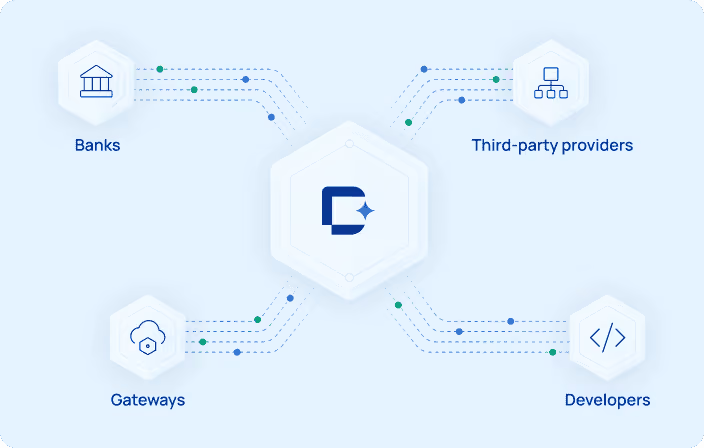
AI agents don't work in isolation. They need to interact with external systems and databases to gather information and perform actions. This is where a robust API infrastructure becomes critical.
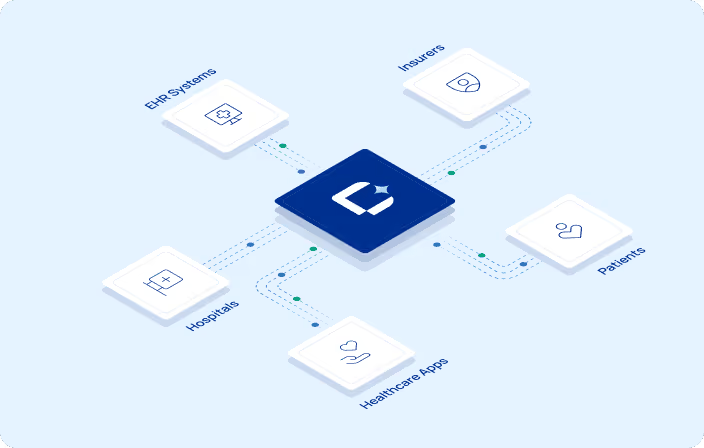
- EHR Integration APIs: Allow agents to read and write patient data securely.
- Lab & Imaging System APIs: Provide access to diagnostic results and image data.
- Scheduling & Communication APIs: Enable agents to manage appointments and send notifications.
- Billing & Insurance APIs: Facilitate automated administrative processes.
- Knowledge Base APIs: Connect agents to medical guidelines, research papers, and drug formularies.
The ability to make APIs ready for AI agents is paramount for seamless and secure operations.
3. Orchestration Layer
For complex workflows involving multiple agents, an orchestration layer is necessary. This layer manages the flow of information between agents, resolves conflicts, and ensures that the overall goal is achieved efficiently. It acts as a conductor, guiding individual agents to perform their specialized tasks in a coordinated manner. API orchestration tools can be invaluable here; explore the complete guide to API orchestration for more insights.
Key Applications and Examples of Agentic AI Workflows in Healthcare
Agentic AI is poised to revolutionize various facets of healthcare. Here are five examples of how these intelligent workflows can manifest:
1. Personalized Patient Care & Treatment Plans
One of the most profound impacts of Agentic AI will be in tailoring care to individual patients. An Agentic AI system can synthesize a patient's entire medical history, genomic data, lifestyle factors, and real-time physiological data from wearables. It can then generate a personalized treatment plan, anticipate potential complications, and adjust interventions dynamically. For instance, a "Personalized Oncology Agent" could continuously monitor a cancer patient's response to therapy, cross-reference it with global research findings (e.g., from clinical trial databases via APIs), and recommend real-time adjustments to medication or dosage, all while flagging critical changes to the care team. This iterative and adaptive approach moves beyond static guidelines to truly individualized medicine.
2. Clinical Operations & Administrative Automation
Healthcare systems are often bogged down by bureaucratic tasks. Agentic AI can automate many of these, freeing up valuable human resources. Consider a "Discharge Planning Agent." This agent could autonomously coordinate all aspects of a patient's discharge: arranging post-hospital care, ordering necessary medical equipment, scheduling follow-up appointments, and ensuring all insurance pre-authorizations are complete. It would interact with various hospital systems (e.g., scheduling systems, pharmacy, billing) through their respective APIs, providing a seamless transition for the patient and reducing administrative burden on nurses and case managers. This leads to increased efficiency, similar to how API management streamlines digital operations.
3. Drug Discovery & Research Acceleration
The process of discovering and developing new drugs is notoriously long, expensive, and often unsuccessful. Agentic AI can significantly accelerate this. A "Drug Target Identification Agent" could autonomously analyze vast biochemical databases, genomic datasets, and scientific literature to identify novel disease targets. It could then collaborate with a "Molecule Synthesis Agent" to propose new molecular structures that bind effectively to these targets, simulating their properties in a virtual lab environment. These agents could run millions of simulations, identifying promising candidates much faster than traditional methods, greatly reducing the time and cost of early-stage drug discovery.
4. Diagnostic Augmentation and Early Detection
Agentic AI can enhance diagnostic accuracy and enable earlier detection of diseases. Imagine a "Continuous Monitoring Diagnostic Agent" integrated with patient wearables and home health devices. This agent could continuously analyze subtle changes in vital signs, activity patterns, and even vocal biomarkers. If it detects a deviation indicative of an impending health crisis (e.g., a heart attack, sepsis, or diabetic ketoacidosis), it could immediately alert the patient and their care provider, provide preliminary advice, and automatically initiate a virtual consultation. This proactive diagnostic augmentation can lead to interventions before conditions become critical, improving patient outcomes significantly.
5. Public Health & Epidemiology
Agentic AI can play a crucial role in managing public health crises and tracking disease outbreaks. A "Public Health Surveillance Agent" could continuously monitor global news feeds, social media, travel data, and syndromic surveillance systems. Upon detecting early signals of a potential outbreak, it could autonomously cross-reference this with historical epidemiological data, geographic information, and population density. It could then generate real-time risk assessments, propose containment strategies, and even simulate the spread of the disease under different intervention scenarios. This allows public health officials to react faster and implement more effective strategies, mitigating the impact of health emergencies. For these systems to function effectively, careful API governance is essential to ensure data quality and security.
.png)
Benefits of Agentic AI Workflows in Healthcare
The adoption of Agentic AI promises a multitude of benefits for patients, clinicians, and healthcare organizations alike:
- Enhanced Efficiency: Automating routine and complex tasks frees up clinicians to focus on direct patient interaction and critical decision-making.
- Improved Accuracy: Agents can process and analyze data with a consistency and speed that surpasses human capabilities, reducing errors in diagnosis and treatment.
- Personalized Care at Scale: Tailoring treatment plans and interventions to individual patient needs becomes feasible for larger populations.
- Accelerated Research: Agentic AI can dramatically speed up drug discovery, clinical trial analysis, and the identification of new therapeutic targets.
- Cost Reduction: Streamlining administrative processes, reducing hospital readmissions, and optimizing resource allocation can lead to significant cost savings.
- Proactive Interventions: Continuous monitoring and predictive capabilities enable earlier detection and prevention of adverse health events.
- Reduced Clinician Burnout: By offloading repetitive and administrative tasks, agents can help alleviate the immense pressure on healthcare professionals.
Challenges and Considerations for Agentic AI in Healthcare
While the potential of Agentic AI is immense, its implementation in healthcare is not without significant challenges that demand careful consideration.
1. Data Privacy and Security
Healthcare data is among the most sensitive information. Agentic AI systems will interact with vast amounts of Protected Health Information (PHI), necessitating rigorous API security measures, robust encryption, and strict adherence to regulations like HIPAA, GDPR, and other local privacy laws. Ensuring that agents only access the minimum necessary data and that data trails are auditable is paramount. Robust API access management and API authentication protocols will be critical to prevent unauthorized access.
2. Regulatory Compliance and Accountability
The autonomous nature of Agentic AI raises complex questions about accountability. If an AI agent makes an erroneous decision leading to patient harm, who is responsible? Developing clear regulatory frameworks, certification processes for AI systems, and legal guidelines for liability will be essential before widespread adoption. Furthermore, ensuring that agent actions are transparent and explainable (e.g., "why did the agent recommend this treatment?") is vital for clinician and patient trust.
3. Bias and Fairness
AI systems are only as unbiased as the data they are trained on. If training data reflects historical healthcare disparities (e.g., underrepresentation of certain ethnic groups or socioeconomic classes), Agentic AI could perpetuate or even exacerbate these biases in diagnostics or treatment recommendations. Rigorous testing, continuous monitoring, and diverse datasets are required to ensure fairness and equitable outcomes. It's important to understand common pitfalls of AI agents consuming APIs, including data bias.
4. Integration with Existing Systems
Healthcare IT infrastructure is often a patchwork of legacy systems and newer technologies. Seamless integration of Agentic AI with existing Electronic Health Records (EHRs), lab systems, imaging platforms, and administrative software will be a major technical hurdle. This requires well-documented, standardized APIs and a flexible integration strategy to avoid further data silos. Proper API lifecycle management will be vital for managing these integrations over time.
5. Trust and Adoption by Clinicians and Patients
For Agentic AI to be successful, clinicians must trust its recommendations and patients must feel comfortable with AI's involvement in their care. This requires extensive training for healthcare professionals, clear communication about AI's role and limitations, and a focus on human-in-the-loop oversight. Building intuitive interfaces, providing explainable AI outputs, and demonstrating tangible benefits will be key to fostering widespread adoption.
Implementing Agentic AI Workflows: A Strategic Approach
Transitioning to Agentic AI workflows in healthcare is a complex undertaking that requires a phased and strategic approach. It's not just about deploying technology; it's about transforming processes, culture, and governance.
1. Start Small and Prioritize Impactful Use Cases
Instead of attempting a wholesale overhaul, identify specific, high-impact areas where Agentic AI can deliver immediate value. Examples include automating pre-authorization, optimizing appointment scheduling, or assisting with preliminary diagnostic screening for specific conditions. Starting small allows for learning, iteration, and demonstrating ROI. For these initial steps, leveraging an efficient AI API management strategy can provide a solid foundation.
2. Build a Robust and Secure API Foundation
Agentic AI thrives on data and connectivity. Invest in building a secure, standardized, and well-governed API infrastructure that allows agents to seamlessly access and interact with various healthcare systems. This includes developing clear API governance policies, employing strong security measures, and ensuring comprehensive documentation. Consider a centralized platform for API management to control, secure, and scale these integrations.
3. Focus on Data Quality and Integration
Garbage in, garbage out. The effectiveness of Agentic AI hinges on the quality and accessibility of data. Prioritize efforts to cleanse, standardize, and integrate data from disparate sources. Implement robust data pipelines and ensure real-time data synchronization where necessary.
4. Establish Clear Governance and Oversight
Develop policies and procedures for the design, deployment, and monitoring of Agentic AI systems. Define clear lines of accountability and establish mechanisms for human oversight and intervention. This includes setting up guardrails for AI agent behavior; for more on this, check out AI agent API guardrails for secure governance and risk control. Regular audits and performance reviews are essential to ensure agents operate within ethical and regulatory boundaries.
5. Foster Collaboration and Training
Engage clinicians, IT professionals, legal experts, and patients throughout the development and deployment process. Provide comprehensive training to healthcare staff on how to interact with and leverage Agentic AI systems. Emphasize that AI is a tool to augment, not replace, human expertise.
6. Implement Continuous Monitoring and Iteration
Agentic AI systems are dynamic. Continuous monitoring of their performance, accuracy, and adherence to ethical guidelines is crucial. Use feedback loops to identify areas for improvement, retrain models, and update agent behaviors as new data becomes available or operational needs evolve. Utilizing best API monitoring tools can help keep track of agent performance and system health. For regulated industries like healthcare, establishing secure developer portals for healthcare is key to managing external and internal access to AI capabilities and data.
The Future of Healthcare with Agentic AI
The journey towards widespread Agentic AI workflows in healthcare is just beginning, but its trajectory promises a future where healthcare is more precise, proactive, and patient-centric than ever before. Imagine a world where:
- Chronic disease management is largely automated, with agents adjusting medication and lifestyle recommendations based on real-time biometric data.
- Rare diseases are diagnosed earlier, thanks to agents sifting through global genomic and symptom databases.
- Surgical robots collaborate with AI agents to optimize precision and outcomes.
- Public health crises are anticipated and mitigated with unprecedented speed and accuracy.
This future is not merely an extension of current AI capabilities; it's a paradigm shift towards intelligent, autonomous systems that can truly transform healthcare delivery. For healthcare organizations, embracing Agentic AI means investing in robust data infrastructure, secure API strategies, and a culture of innovation that prioritizes patient safety and ethical AI development. Those who strategically adopt these technologies will not only redefine their own operations but also set new standards for care in the digital age.
FAQs
1. What are Agentic AI workflows in healthcare?
Agentic AI workflows in healthcare refer to automated processes driven by autonomous AI agents that can perceive, plan, act, and learn to achieve specific goals. In healthcare, these agents can manage tasks like personalized treatment planning, administrative automation, diagnostic support, and care coordination by interacting with various systems and data sources.
2. How do Agentic AI agents interact with healthcare systems?
Agentic AI agents primarily interact with healthcare systems (like EHRs, lab systems, scheduling platforms) through APIs (Application Programming Interfaces). These APIs allow agents to securely read and write data, trigger actions, and access specific functionalities within existing IT infrastructure, enabling seamless integration and operation.
3. What are the main benefits of using Agentic AI in healthcare operations?
The primary benefits include enhanced operational efficiency by automating repetitive tasks, improved accuracy in diagnostics and treatment planning, delivery of highly personalized patient care, accelerated drug discovery and medical research, and significant reductions in healthcare costs. It also helps alleviate clinician burnout by offloading administrative burdens.
4. What are the biggest challenges to implementing Agentic AI in healthcare?
Key challenges include ensuring strict data privacy and security (e.g., HIPAA compliance), navigating complex regulatory landscapes for autonomous AI, mitigating bias in AI models to ensure equitable care, integrating with fragmented legacy healthcare IT systems, and fostering trust and adoption among clinicians and patients.
5. How can healthcare organizations prepare for Agentic AI?
Organizations should start by building a robust and secure API infrastructure, ensuring high data quality and integration capabilities, and establishing strong governance frameworks for AI systems. Prioritizing impactful use cases, providing extensive training for staff, and committing to continuous monitoring and ethical development are also crucial steps for successful Agentic AI adoption.
Dhayalan Subramanian is Associate Director, Product Growth at DigitalAPI, where he leads go-to-market and product growth for the company’s multi-gateway API management platform. His work focuses on helping large enterprises and mid-market cloud companies consolidate APIs across AWS, Azure, Apigee, Kong, MuleSoft, and other gateways into a single control plane for governance, discovery, monetization, and agent consumption.
Dhayalan brings 14+ years of experience across product strategy, enterprise architecture, and engineering leadership. Earlier in his career, he held senior roles at Encora (as Associate Architect and Technical Manager), Mindtree (Technology Lead), Tech Mahindra (Technical Lead), and Primus Analytics, where he designed integration frameworks and delivered enterprise-grade digital platforms for global customers.
At DigitalAPI, he works directly with platform, integration, and developer experience leaders at Fortune 500 organizations to operationalize unified API catalogs, developer portals, and MCP-ready APIs. He writes regularly on API developer experience, API governance, and AI agent architectures.
One email a fortnight. Worth opening.
A short digest of what we're writing, what we're learning from customers, and the handful of links you'd actually want from us. No tracking pixels.

.avif)