

API Product Manager

Role overview
VantageScore's APIs are consumed by outside developers, enterprise clients, data partners and its own internal teams. This role owns the complete developer experience across those APIs: finding them, requesting access, onboarding, testing, going to production and growing usage afterwards. It is a full-time, individual-contributor product job for someone with one to three years in product management, at least some of it spent on API products.
You will work alongside Engineering, Design, Support, Customer Success, Security, Legal/Compliance and go-to-market colleagues so that documentation is complete, self-service flows make sense, sandboxes are dependable, API behaviour is consistent and error messages tell developers what to do next. The company measures success here through less integration friction, lower long-run support cost, better adoption and retention, and higher developer and customer NPS. Expect three days a week in the South San Francisco office, so you need to live within roughly an hour of it.
What you will do
- Own the onboarding and self-serve integration path for every API consumer type, covering access requests, credentials and authentication, the first working call, testing, production readiness, launch and continued adoption.
- Set and maintain the strategy, roadmap and prioritised backlog for developer-experience and API capabilities, weighing customer value against business impact, feasibility, reliability and risk.
- Produce and keep current the API documentation set: quick starts, tutorials, code samples, reference pages, FAQs, release notes, changelogs and migration guides.
- Work with Engineering to build and run mock services, test data, API explorers, sandboxes and similar tools that let developers integrate and validate on their own.
- Define API product standards covering authentication, pagination and rate limits; resource naming and schemas; idempotency; versioning, backward compatibility and deprecation; and error responses, and get teams to follow them.
- Embed reviews of documentation, developer usability and error handling in the development and release process so consistency is checked before anything ships.
- Track the developer journey through signals such as usage, onboarding completion, error patterns, support contacts, NPS and retention, and use them to find friction and prioritise fixes.
- Mine support tickets, developer feedback, documentation search logs, usage and failure data for recurring problems that push up long-term support cost.
- Run research and usability sessions with external developers, enterprise customers, partners and internal consumers, turning what you learn into requirements, acceptance criteria and measurable outcomes.
- Coordinate launches and API changes with Sales, Marketing, Support, Customer Success, Engineering, Security and Compliance, handling release comms and migration readiness, and represent API consumers when explaining decisions, trade-offs, risks and progress to leadership.
What the employer is looking for
- One to three years of product management experience.
- Hands-on API product management: you have owned platform capabilities, integration workflows, developer-facing experiences or API products themselves.
- You have owned or improved developer onboarding, self-serve integration, API docs, sandbox or test experiences, or similar developer workflows.
- Able to turn input from customers, partners and developers into strategy, roadmaps, requirements and a prioritised delivery plan.
- Working knowledge of what keeps an API product sound over its lifecycle: versioning, backward compatibility, consistency, reliability, security, privacy and error handling.
- Strong writing and information-design skills; you can make complicated technical material clear and usable.
- Comfortable leading across functions, managing stakeholders and making decisions in an Agile setting.
- Bachelor's degree.
Good to have
- Prior work on developer portals, API docs, sandboxes or other developer-experience tooling.
- Exposure to data-provider, partner or complex B2B integrations.
- Having supported API products with a mixed audience: internal teams, data partners, enterprise customers and outside developers.
- Experience working alongside Solutions Engineering, Support, Customer Success or Product Operations.
Benefits and compensation
- 401(k) with employer match up to 7%
- Flexible time off plus 12 paid holidays
- Medical, dental, vision and wellness coverage
- Monthly team events
- Modern office and collaboration spaces
About VantageScore
VantageScore provides APIs used by outside developers, enterprise customers, data partners and its own internal teams, and is building out dedicated product ownership for the developer experience around them. The company runs a hybrid set-up from an office in South San Francisco and backs staff with a 7% 401(k) match, flexible time off and 12 paid holidays.
Quick answers
Is the VantageScore API Product Manager role remote?
No. It is hybrid, with three days a week in the South San Francisco office, and candidates need to live within about an hour of it.
How much experience does the role need?
One to three years in product management, including direct responsibility for API products, platform capabilities, integration workflows or developer-facing experiences. A bachelor's degree is required.
What does the API Product Manager role pay?
The posted range is $135K to $145K a year, alongside a 7% 401(k) match, 12 paid holidays, flexible time off and medical, dental, vision and wellness benefits.

DigitalAPI's read on this role
Why this API Product Manager role matters in today's APIM market
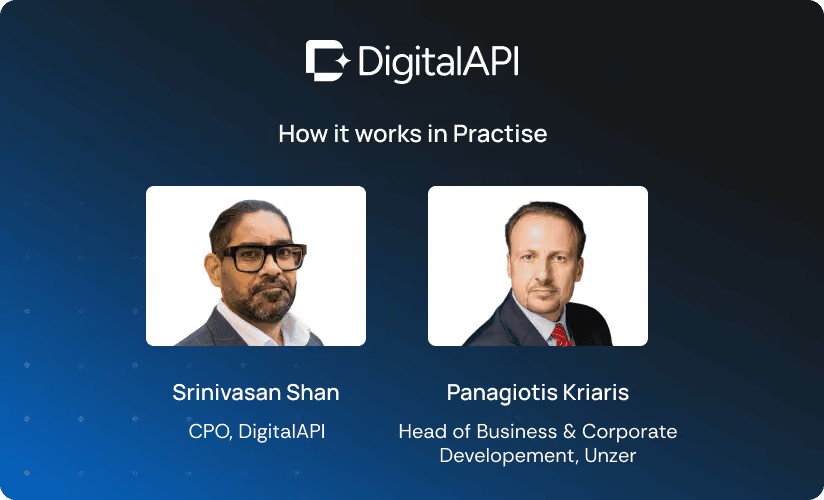
DigitalAPI's leadership team has run API programmes for Fortune 100 companies and now builds the platform behind them. Here is their take on what this opening really asks for.
What this role says about the market
This posting is a clean example of the developer experience being treated as the product. VantageScore is not hiring someone to design endpoints; it wants someone to own discovery, access, onboarding, sandboxes, documentation and error handling, and it says plainly that the scorecard is integration friction, support cost, adoption and NPS. That is the portal-and-catalogue layer of API management, and it is where most enterprises leak value: the gateway works, but developers cannot find the API, get credentials or make a first call without raising a ticket. The standards list in the role (versioning, deprecation, idempotency, rate limits, error responses) is governance work delivered through product management rather than a review board. With external developers, data partners and internal teams all consuming the same APIs, and agent-based consumers on the horizon for any data product, the consistency this role enforces is what makes the APIs usable by machines as well as people.
What to emphasise in your application
- Concrete before-and-after examples of onboarding you improved: time to first successful call, drop-off points you removed, support tickets you eliminated.
- Documentation you have owned end to end, including changelogs and migration guides for breaking changes, and how you kept it accurate as the API evolved.
- Your working knowledge of API standards (versioning, backward compatibility, pagination, rate limiting, idempotency, error design) and a case where you got engineering to adopt one.
- Evidence you can read the signals the posting lists, from onboarding completion to NPS, and turn them into a prioritised backlog.
- Experience with B2B, partner or data-provider integrations, where the consumer is another company's engineering team rather than a hobbyist.
For hiring managers
DigitalAPI's leadership team would screen for product thinking about the developer journey rather than API design trivia. Ask candidates to walk through a first-call experience they shipped, how they measured friction, and what they did when a documentation gap was generating support load. Look for people who instinctively build error-handling and usability checks into the release process, because that is how consistency survives beyond the first roadmap.
Our view is that the developer portal and catalogue are where APIs turn into products, and this role is that thesis written as a job description. A PM who gets self-service access, sandboxes and consistent behaviour right is also laying the groundwork for agent-callable APIs, whatever gateway sits underneath.
About DigitalAPI
DigitalAPI is the gateway-agnostic command centre for APIs and AI agents. It connects to the gateways an enterprise already runs, Apigee, Kong, AWS API Gateway and Azure API Management, and turns everything behind them into one governed, self-serve catalogue for developers, partners and AI agents. API Gateway, API Portal, API Catalog, API Marketplace, MCP Gateway and MCP Portal ship as one platform.
The company grew out of an API consultancy founded in Bangalore in 2015 that became an Apigee-Google partner in 2017, then built its own cloud-agnostic, AI-powered platform in 2020 after seeing how fragmented gateways and duplicate APIs blocked its clients. More than 240 API teams now use it, with customers such as Zurich, Canara Bank, HSBC, Fiserv and Mahindra Finance. DigitalAPI has offices in the USA, UK and India, 130+ people, and recognition from Gartner and Deloitte.