



What makes Arelio API Gateway different than legacy platforms?
In this blog, we’ll see what makes Arelio API Gateway superior to legacy platforms and why it’s redefining enterprise API operations.


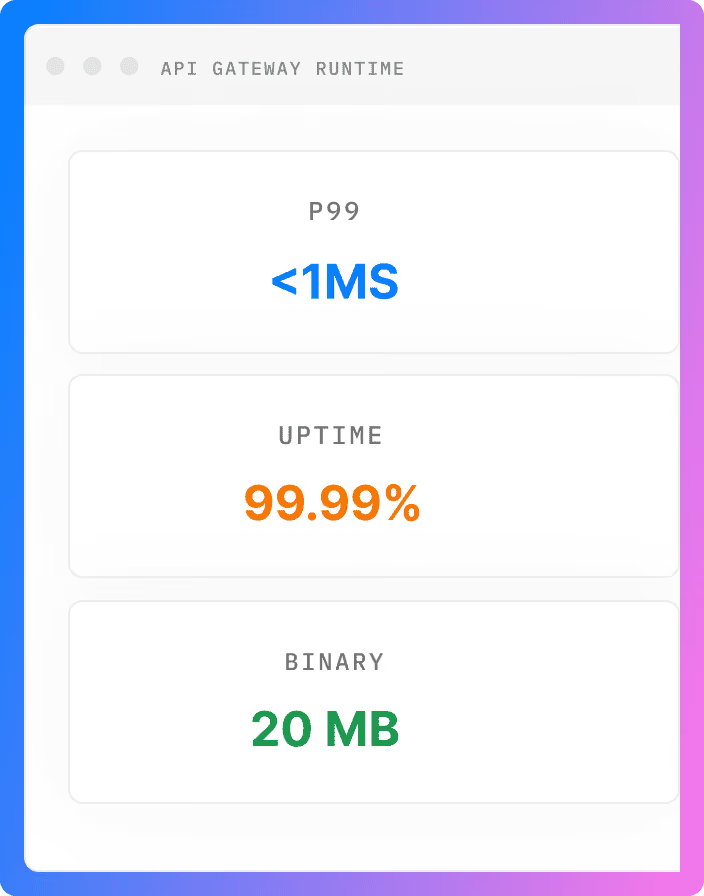
Legacy API gateways were built for simpler times, single clouds, REST endpoints, and manual operations. Arelio API Gateway is built for today’s distributed, AI-driven enterprises. It’s lightweight, cloud-native, and automated, delivering high performance without the complexity of traditional setups.
Designed for speed, scale, and intelligence, Arelio handles APIs, events, and MCP servers with built-in governance, monetization, and observability. It’s a next-generation gateway that replaces DevOps overhead with automation and prepares enterprises for the AI era of API consumption.
Get started with Arelio today—Book a Demo!
Enterprise architectures today look nothing like they did when legacy API gateways were built. What used to be monolithic systems serving REST endpoints are now distributed networks of APIs, events, and AI-ready interfaces spread across clouds, gateways, and regions. Yet most enterprises are still relying on gateways designed for a pre-microservices era, heavy, static, and blind to the realities of hybrid ecosystems.
Arelio API Gateway was built for that new reality. It replaces configuration sprawl with clarity, DevOps overhead with automation, and rigid routing with intelligence. Designed to handle APIs, events, and MCP servers in one place, it’s not just another gateway; it’s the next-generation control plane for modern API delivery.
In this blog, we’ll see what makes Arelio API Gateway superior to legacy platforms and why it’s redefining enterprise API operations.
The problem with legacy API gateway platforms
Legacy API gateways were built for simpler times, when APIs lived on one cloud, one stack, and served one kind of consumer. Today’s distributed architectures have outgrown them, exposing the cracks in scalability, visibility, and developer experience. Here’s where traditional gateways fall short:
- Heavy, monolithic architectures: Most legacy gateways were designed for centralised control and single-region deployments. As enterprises move to hybrid or multi-cloud models, these heavy architectures struggle to scale, leading to latency and downtime under load.
- Complex DevOps overhead: Managing policies, configurations, and rollouts across multiple clusters often requires dedicated teams. What should take minutes turns into hours of YAML, scripting, and manual version management.
- Fragmented visibility: Legacy tools focus on runtime enforcement, not observability. With APIs scattered across gateways, teams lose the single pane of glass needed for performance tracking, troubleshooting, and governance.
- Limited extensibility: Integrating AI, events, or non-HTTP protocols requires workarounds or expensive custom modules. Traditional gateways simply weren’t designed for the event-driven, AI-ready architectures enterprises are now adopting.
- Poor developer experience: Developers often face rigid configuration layers, inconsistent documentation, and limited self-serve capabilities. This friction slows delivery and reduces API adoption across business units.
- Lack of built-in monetization or discovery: Most legacy gateways stop at traffic management. There’s no native support for cataloguing APIs, bundling them as products, or monetising consumption, making it harder for enterprises to turn APIs into real business assets.
.png)
What does the “modern gateway” need to deliver?
The modern enterprise no longer runs on APIs alone; it runs on interconnected ecosystems of APIs, events, and data flows across multiple clouds and gateways. A modern gateway must reflect that reality. It’s not just about routing requests; It’s about orchestrating experiences, enforcing governance, and preparing the enterprise for the AI-driven era. Here’s what the new standard looks like:
1. Cloud-native and lightweight
It should deploy anywhere, on-prem, cloud, or edge, without introducing latency. Lightweight architecture and container-ready deployment are non-negotiable for agility and scale.
2. Zero-ops automation
A next-gen gateway should configure, scale, and secure APIs automatically. From policy updates to traffic throttling, DevOps overhead should shrink to near zero.
3. Unified visibility across gateways
Enterprises need a single control plane that provides analytics, health metrics, and governance across multiple gateways, vendors, and environments, not yet another siloed dashboard.
4. First-class developer experience
Modern gateways must empower developers with self-serve onboarding, real-time documentation, sandbox testing, and version management, all from one interface.
5. Built-in monetization and marketplace integration
APIs are products. A modern gateway should let enterprises package, price, and publish APIs internally or externally, turning consumption into measurable revenue.
6. AI- and agent-ready infrastructure
As AI agents become the next consumers of APIs, gateways must support model context protocol (MCP), event APIs, and LLM-driven use cases natively, ensuring your API ecosystem is ready for autonomous consumption.
Introducing Arelio API Gateway: What makes it superior to legacy platforms
Arelio API Gateway isn’t a rebranded control plane; it’s a reimagined foundation for how APIs, events, and AI systems are deployed, governed, and scaled across the enterprise. Built by DigitalAPI.ai, Arelio transforms how teams launch, manage, and monetise APIs with zero DevOps friction and full AI readiness.
1. Plug & play gateway—Configure, secure, and scale in minutes
Arelio eliminates complex setups with its no-code, plug-and-play architecture. Teams can publish, secure, and route APIs within minutes without deep YAML or CI/CD pipelines. Whether it’s REST, GraphQL, or event APIs, Arelio delivers full lifecycle management out of the box.
2. Zero DevOps overhead (Designed for speed and simplicity)
Traditional gateways demand constant configuration and manual scaling. Arelio automates it all, from policy enforcement to runtime upgrades, so teams can focus on building APIs, not maintaining infrastructure. It’s the fastest way to move from design to production.
3. Unified control plane across multiple gateways
Enterprises rarely run on one gateway. Arelio connects to existing stacks, Apigee, Kong, Mulesoft, AWS, and Azure, and gives a single control plane to view, govern, and analyse APIs across them. No re-platforming, no immediate need of migration, just unified intelligence across the ecosystem.
4. Built-in traffic management and observability
With Arelio, API performance isn’t a black box. It offers in-depth analytics, rate limiting, caching, and circuit breaking natively, giving teams precise control over traffic and instant visibility into performance metrics.
5. Developer-first experience with built-in design studio
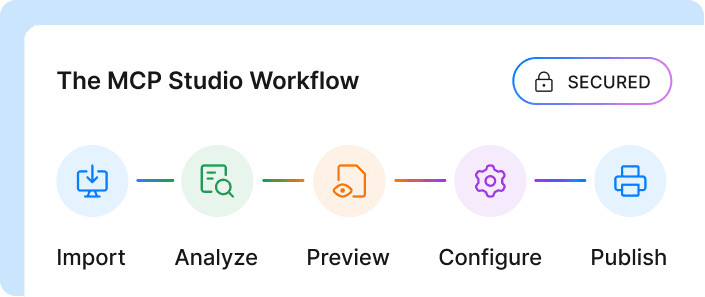
Arelio integrates a visual API design studio that lets developers import OpenAPI specs, mock endpoints, and deploy APIs instantly. Combined with live documentation and sandbox environments, it dramatically improves time-to-market and developer onboarding.
6. Out-of-the-box marketplace and monetization
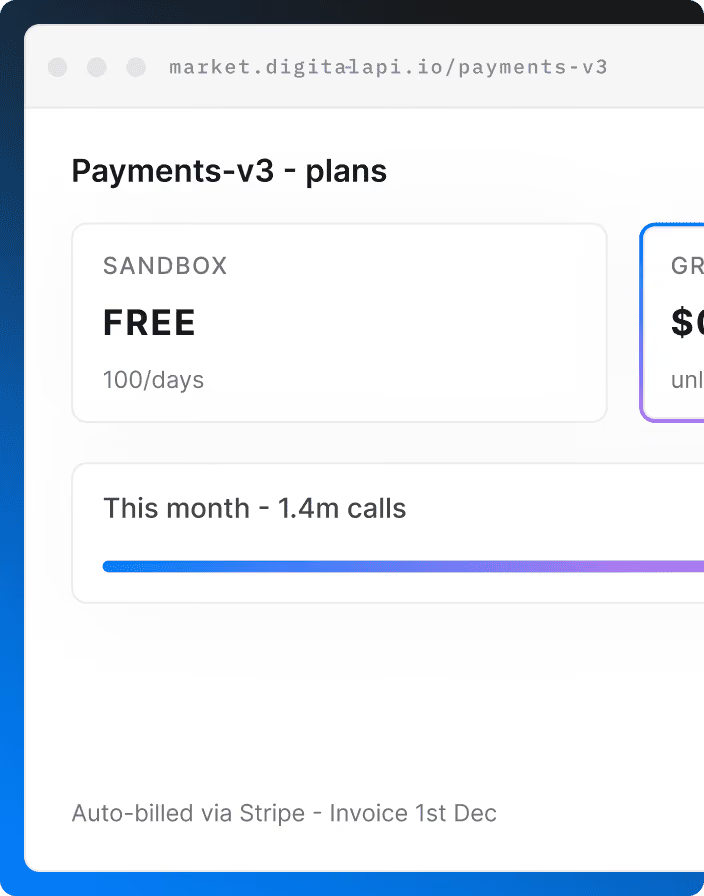
Arelio goes beyond gateway duties by enabling enterprises to publish APIs as products. It integrates seamlessly with the DigitalAPI Marketplace for subscription management, tiered pricing, and automated billing, turning APIs into revenue streams.
7. AI-ready and MCP-compatible
Arelio is the first enterprise gateway designed with the Model Context Protocol (MCP) in mind. It can automatically expose APIs to AI agents, making them discoverable, interpretable, and actionable. Enterprises can make their API ecosystem “agent-ready” in days, not months.
8. Enterprise-grade security and governance
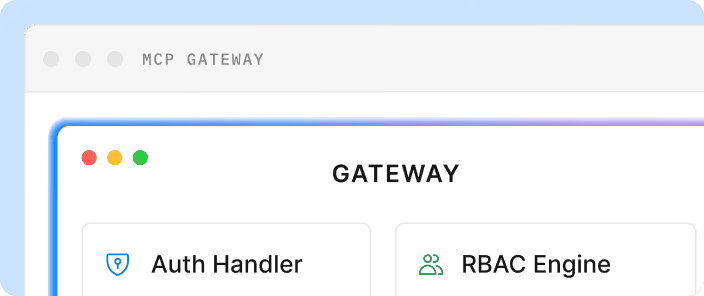
With fine-grained RBAC, authentication, encryption, and policy management, Arelio provides end-to-end governance across environments. Security doesn’t slow down innovation; it scales with it.
9. Cloud-native, edge-ready architecture
Arelio runs wherever your APIs do, from Kubernetes clusters to on-prem deployments and edge nodes. Its lightweight containerized build ensures high availability, low latency, and near-infinite scalability.
10. Observability meets intelligence
Every API call in Arelio is tracked, correlated, and analysed through unified analytics. Combined with Flylytics, DigitalAPI’s observability suite, it offers cross-gateway insights into usage, errors, and performance, all from one pane of glass.
Decision checklist while choosing an API Gateway for enterprise buyers
Choosing an API gateway isn’t just a technical decision; it’s a long-term architectural one. The right platform should unify governance, accelerate innovation, and reduce operational drag, not add to it. Before you commit, benchmark every gateway against these essentials:
- Multi-gateway & multi-cloud compatibility: Does it integrate seamlessly with existing gateways (Apigee, Kong, AWS, etc) and support hybrid or multi-cloud deployments?
- Zero-ops and automation: Can you deploy, scale, and secure APIs without deep DevOps effort or constant manual intervention?
- Unified observability and governance: Does it provide a single pane of glass for analytics, policies, and access control across all gateways and environments?
- Developer experience and self-serve capabilities: Is it intuitive for developers, with built-in design tools, sandbox testing, documentation, and version management?
- Security and compliance by design: Does it offer enterprise-grade RBAC, encryption, and audit trails to align with internal and regulatory standards?
- Monetization and marketplace readiness: Can APIs be productized, priced, and published easily, with automated subscription and billing support?
- AI and agentic readiness: Is it compatible with emerging standards like MCP, enabling AI agents and LLMs to discover and consume APIs safely?
- Cost efficiency and scalability: Does it scale elastically without demanding expensive infrastructure or licensing overhead?
Final Thoughts
The API landscape has evolved, but most gateways haven’t. Legacy systems may still keep the lights on, but they can’t keep pace with multi-cloud architectures, AI-driven use cases, or the speed enterprises now demand.
Arelio API Gateway was built for this new reality, combining plug-and-play simplicity, unified governance, and AI readiness in one platform. Whether you’re modernizing legacy stacks or scaling across regions, Arelio ensures your APIs perform, govern, and monetize seamlessly.
Experience how modern API delivery should feel. Book a demo to see how Arelio API Gateway can simplify your ecosystem and make your APIs future-ready.
FAQs
1. What is an API gateway?
An API gateway is a control layer that manages, secures, and routes traffic between clients and backend services. It handles authentication, rate limiting, and monitoring while simplifying API consumption for developers. Essentially, it acts as the entry point to your API ecosystem, ensuring performance, reliability, and governance across distributed applications and services.
2. How does a modern API gateway differ from a legacy one?
A modern API gateway is lightweight, cloud-native, and automation-driven. Unlike legacy gateways that rely on heavy, monolithic setups, modern gateways support multi-cloud, containerized environments, and event-based or AI-driven workloads. They provide unified observability, faster deployment, and developer-first tools, making them ideal for distributed architectures where speed, scalability, and interoperability are non-negotiable.
3. What makes Arelio API Gateway different?
Arelio API Gateway goes beyond traditional traffic management. It unifies APIs, events, and MCP servers across multiple gateways, provides built-in monetization, and is AI- and agent-ready by default. With zero DevOps overhead and unified analytics, it enables faster launches, smarter governance, and seamless interoperability, delivering the agility enterprises need to modernize API delivery.
4. Can I deploy Arelio in my existing on-premises data centre / hybrid cloud?
Yes. Arelio API Gateway is cloud- and edge-agnostic, designed for flexible deployment across on-premises, hybrid, or multi-cloud environments. Its lightweight, containerized architecture ensures consistent performance and governance no matter where your APIs live. You can integrate Arelio with your existing stack without migrations or infrastructure disruption, enabling gradual modernization at enterprise scale.
5. Does Arelio support API monetization out of the box?
Absolutely. Arelio includes native API monetization capabilities that let enterprises define pricing tiers, manage subscriptions, and automate billing through the DigitalAPI Marketplace. It helps transform APIs from internal assets into revenue-generating products, offering transparency, analytics, and self-service purchasing that legacy gateways lack. Monetization runs as smoothly as consumption, right from launch.
6. How do I migrate from my existing legacy gateway to Arelio?
Migrating to Arelio is seamless. It connects to your existing gateways, Apigee, Kong, Mulesoft, or AWS, and imports API definitions directly, eliminating the need for disruptive re-platforming. Once connected, Arelio provides unified visibility and governance across all gateways, letting you transition gradually while maintaining uptime, security, and operational continuity.
Dhayalan Subramanian is Associate Director, Product Growth at DigitalAPI, where he leads go-to-market and product growth for the company’s multi-gateway API management platform. His work focuses on helping large enterprises and mid-market cloud companies consolidate APIs across AWS, Azure, Apigee, Kong, MuleSoft, and other gateways into a single control plane for governance, discovery, monetization, and agent consumption.
Dhayalan brings 14+ years of experience across product strategy, enterprise architecture, and engineering leadership. Earlier in his career, he held senior roles at Encora (as Associate Architect and Technical Manager), Mindtree (Technology Lead), Tech Mahindra (Technical Lead), and Primus Analytics, where he designed integration frameworks and delivered enterprise-grade digital platforms for global customers.
At DigitalAPI, he works directly with platform, integration, and developer experience leaders at Fortune 500 organizations to operationalize unified API catalogs, developer portals, and MCP-ready APIs. He writes regularly on API developer experience, API governance, and AI agent architectures.
One email a fortnight. Worth opening.
A short digest of what we're writing, what we're learning from customers, and the handful of links you'd actually want from us. No tracking pixels.

.avif)