


DigitalAPI Named an Honorable Mention in the 2026 Gartner® Magic Quadrant™ for API Management
DigitalAPI is an Honorable Mention in the 2026 Gartner® Magic Quadrant™ for API Management. Here is what Gartner highlighted about our platform and why AI gateways, MCP and federated API management now shape the category.

DigitalAPI has been named an Honorable Mention in the 2026 Gartner® Magic Quadrant™ for API Management, recognising our approach to API management and governance as enterprises prepare for increasingly distributed, AI-driven technology environments.
For us, this recognition reflects a direction we have been building towards for years.
Enterprise API infrastructure is no longer defined by a single gateway, a single developer portal or even a single type of consumer.
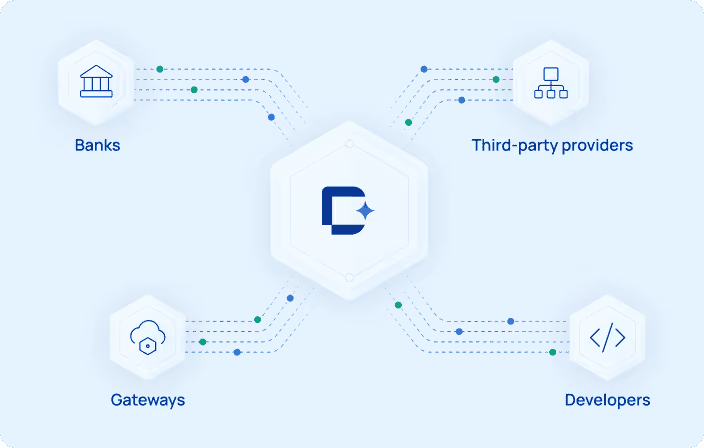
Organisations are managing APIs across multiple gateways, clouds, teams and business units.
Developers are no longer the only consumers.
AI applications, MCP servers and autonomous agents are becoming part of the API ecosystem.
And API management platforms increasingly need to help enterprises discover, govern, secure and expose those APIs across all of these environments.
That is exactly the problem space DigitalAPI has been focused on.
In this article, we look at what Gartner highlighted about DigitalAPI, what the 2026 Magic Quadrant says about the API management market, and what enterprises should now be considering when evaluating their API infrastructure.
What Gartner highlighted about DigitalAPI
DigitalAPI was named as one of the Honorable Mentions in the 2026 Gartner Magic Quadrant for API Management.
Gartner highlighted our API management and governance capabilities built around an OpenAPI-first approach.
The capabilities referenced include:
API management across the lifecycle
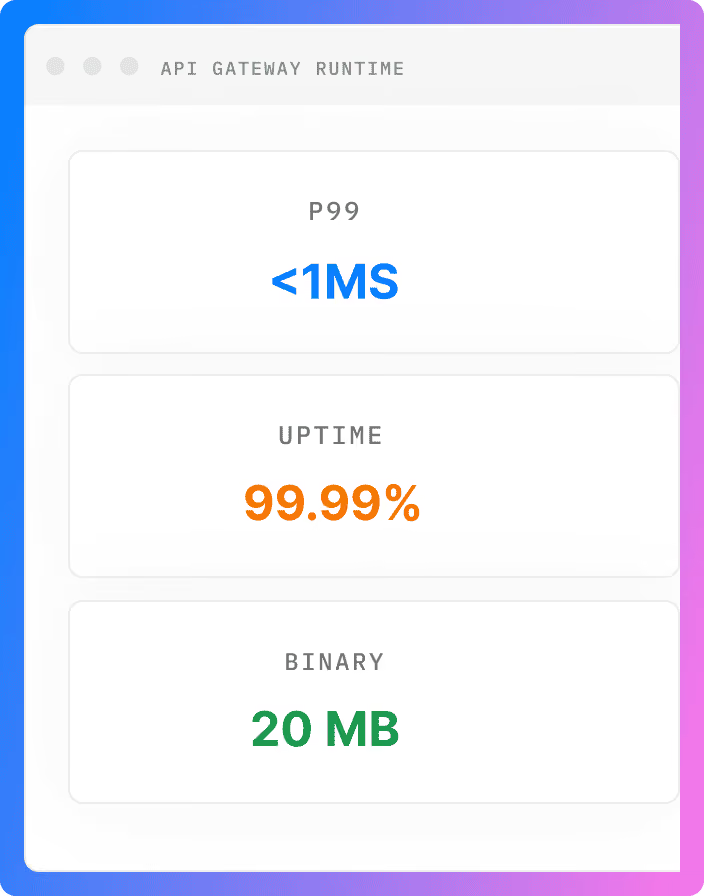
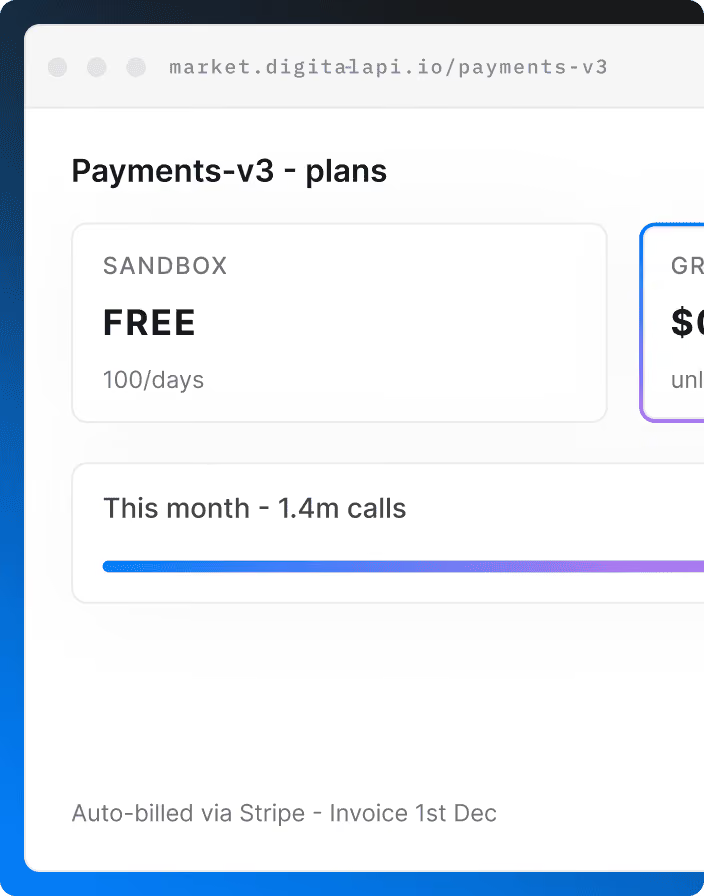
DigitalAPI brings together core API management capabilities including:
- API gateway
- API catalogue
- Developer portal
- API marketplace
- API governance
- API lifecycle management
Rather than treating these as isolated tools, our goal is to provide enterprises with one connected layer for managing how APIs are designed, discovered, governed, published and consumed.
Explore DigitalAPI's API Management
AI capabilities across API design, development and management
AI is increasingly becoming part of the API lifecycle itself.
DigitalAPI applies AI capabilities across API design, development, testing, documentation and management, helping teams reduce manual work while maintaining governance across the lifecycle.
As organisations move towards AI-native development and agent-based applications, API platforms need to support both traditional developer workflows and emerging AI-driven ones.
Explore DigitalAPI's AI-powered API platform
MCP Gateway for governing APIs and AI agents
One of the biggest shifts in API management is the emergence of AI agents as API consumers.
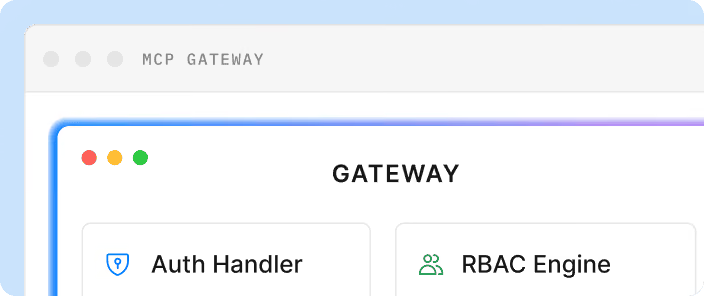
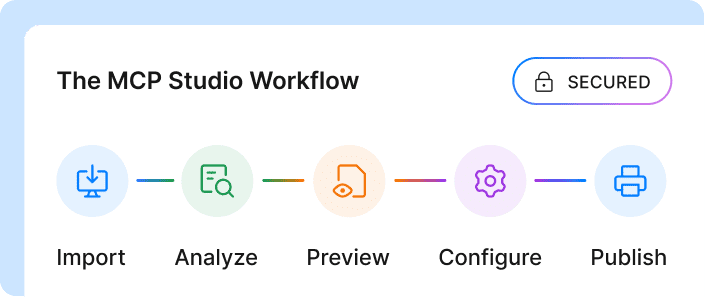
Our MCP Gateway helps organisations expose existing APIs and MCP servers to AI agents while maintaining the security, governance and observability enterprises already expect from their API infrastructure.
Instead of creating a parallel layer of unmanaged AI integrations, enterprises can bring agent access into the same governed API ecosystem.
Explore DigitalAPI's MCP Gateway
Industry-specific API capabilities
Gartner also referenced DigitalAPI's industry content, including prebuilt APIs for sectors such as banking, healthcare and insurance.
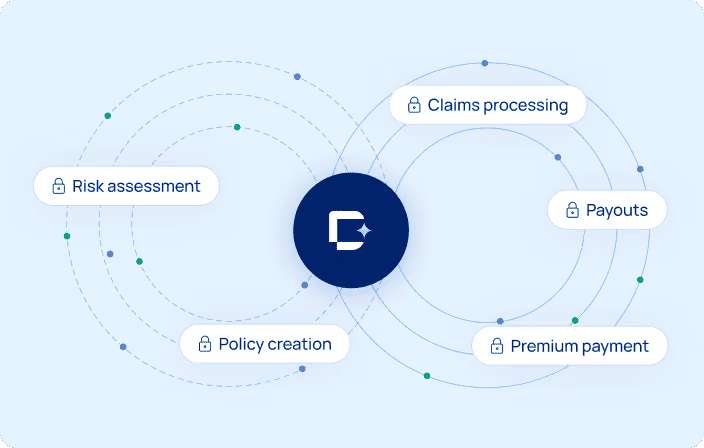
For enterprises in regulated industries, API management often goes beyond generic gateway functionality.
Teams need to account for:
- Industry standards
- Security requirements
- Partner ecosystems
- Regulatory frameworks
- Domain-specific API journeys
DigitalAPI has worked extensively across banking, financial services and insurance environments where these requirements are particularly important.
Explore DigitalAPI for Banking and Financial Services
Why this recognition matters to us
The recognition is meaningful because many of the capabilities becoming central to API management today are the same challenges we have been working on with enterprises for years.
Enterprises are no longer operating one API gateway
Most large organisations do not have a clean, single-vendor API environment.
They may have:
- Apigee in one business unit
- Azure API Management in another
- AWS gateways for cloud-native teams
- Kong or other gateways for specific workloads
- Legacy APIs still operating elsewhere
Replacing all of this infrastructure is rarely realistic.
The challenge becomes:
How do you create consistent visibility, governance and discovery across all of it?
That is why DigitalAPI has focused heavily on multi-gateway and federated API management.
Learn about DigitalAPI's Multi-Gateway Management
API consumers are changing
Historically, developer portals were designed around one primary user: the developer.
That is changing.
API consumers can now include:
- Internal developers
- Partners
- Customers
- Product teams
- AI applications
- AI agents
- MCP clients
Each of these consumers discovers and uses APIs differently.
This creates a new requirement for API platforms.
APIs need to be discoverable not only by humans, but increasingly by machines.
Metadata, schemas, documentation and governance therefore become even more important.
API infrastructure is becoming part of AI infrastructure
The relationship between APIs and AI is becoming much tighter.
AI agents need access to enterprise systems.
Those systems are frequently exposed through APIs.
That means API infrastructure becomes one of the layers controlling what an agent can:
- Discover
- Access
- Execute
- Modify
- Retrieve
- Trigger
The API management platform therefore becomes part of the enterprise AI control plane.
This is one of the reasons capabilities such as MCP support, AI gateways and agent governance are becoming increasingly important in the market.
What the 2026 Gartner® Magic Quadrant™ says about the API management market?
The 2026 Gartner Magic Quadrant for API Management evaluates vendors across Ability to Execute and Completeness of Vision.
The report also reflects a broader change in what enterprises expect from API management platforms.
Several themes stand out.
1. AI gateways and MCP are becoming part of API management
The scope of API management is expanding.
Capabilities related to AI gateways, AI protocol support and Model Context Protocol are increasingly becoming relevant when evaluating API infrastructure.
According to the report, evaluated capabilities now include support for AI protocols such as MCP and Agent2Agent, alongside AI gateway functionality.
This reflects a fundamental shift.
Enterprises are beginning to ask not only:
How do we secure API traffic?
But also:
How do we govern how AI agents access those APIs?
That requires capabilities around:
- Agent authentication
- MCP governance
- Observability
- Policy enforcement
- Cost controls
- Access management
- Traceability
Learn how DigitalAPI makes APIs MCP-ready
2. Federated API management is becoming increasingly important
Enterprise API environments are fragmented.
Large organisations often operate several API gateways across cloud platforms, regions and business units.
The 2026 Gartner report highlights the growing importance of federated API management, where enterprises create a central governance and discovery layer across distributed API infrastructure.
This allows organisations to maintain local gateway autonomy while gaining central visibility.
For example, an enterprise may continue using Apigee, Azure, AWS and Kong across different teams while creating one catalogue and governance layer above them.
This is an area where DigitalAPI has invested significantly.
Instead of forcing organisations into a rip-and-replace migration, our approach is designed to work across the API infrastructure enterprises already have.
Explore Federated API Management with DigitalAPI
3. AI agents are becoming API consumers
The definition of an API consumer is expanding.
Developers will remain important, but they will increasingly be joined by:
- AI engineers
- Business applications
- Copilots
- Autonomous agents
- MCP clients
The report highlights this change in how APIs are consumed.
For API teams, this means API discovery must evolve.
Human-readable documentation alone is not enough.
APIs increasingly need:
- Structured metadata
- Accurate API specifications
- Machine-readable contracts
- Ownership information
- Clear access policies
- MCP exposure
- Lifecycle information
This changes what an API catalogue and developer portal need to provide.
4. API economics are becoming more complex
AI workloads introduce new consumption patterns.
Traditional API infrastructure often measures:
- API calls
- Transactions
- Requests
- Subscriptions
AI infrastructure introduces additional dimensions including token consumption and model costs.
The report highlights the increasing importance of granular tracking and cost controls around AI workloads.
For enterprises, API management therefore increasingly intersects with:
- FinOps
- AI governance
- Monetisation
- Consumption analytics
- Usage-based pricing
How DigitalAPI is approaching this shift?
Our view is that the next generation of API management cannot be built around the assumption that every organisation has:
- One gateway
- One cloud
- One portal
- One type of API consumer
Enterprise architecture is already more complicated than that.
AI will make it even more distributed.
DigitalAPI is therefore focused on four areas.
1. Unified API discovery
Create one searchable catalogue across APIs, events, services and distributed infrastructure.
2. Multi-gateway governance
Provide visibility and governance across multiple gateway environments without forcing enterprises to replace existing infrastructure.
3. Agent-ready APIs
Allow existing APIs to be exposed safely to AI agents through MCP and governed agent interfaces.
4. API productisation and monetisation
Help enterprises turn APIs into discoverable, consumable products for internal teams, partners and customers.
What should enterprises look for when evaluating an API management platform in 2026?
The Magic Quadrant can be a useful starting point for building a shortlist.
But the right platform ultimately depends on your architecture and use cases.
Before selecting an API management platform, we recommend asking the following questions.
Can it manage more than one gateway?
If your organisation already runs multiple API gateways, determine whether the platform can discover, catalogue and govern APIs across all of them.
Can it support both developers and AI agents?
Evaluate whether the platform supports traditional developer workflows as well as emerging agent-based consumption.
Ask vendors to demonstrate:
- MCP support
- AI gateway controls
- Agent discovery
- Agent authentication
- Observability
- Policy enforcement
Can it work with your existing infrastructure?
Avoid assuming that modernisation requires replacing every API gateway you already operate.
For many enterprises, federation is more practical than migration.
Does it provide a genuine API catalogue?
A catalogue should provide more than documentation.
Look for:
- Ownership
- Lifecycle
- API dependencies
- Search
- Metadata
- Governance
- Versioning
- Consumption information
Can it support API productisation?
If APIs are being exposed to partners, customers or external developers, evaluate capabilities around:
- Subscription
- Onboarding
- Developer experience
- Pricing
- Monetisation
- Analytics
- Access controls
When DigitalAPI may be a good fit for you?
DigitalAPI is particularly relevant for enterprises that:
- Operate two or more API gateways
- Struggle to maintain a central API inventory
- Need stronger API governance across teams
- Want to expose APIs to partners or external developers
- Are building AI agents that need controlled access to enterprise APIs
- Need to make existing APIs MCP-ready
- Operate in regulated industries such as banking, insurance or healthcare
- Want to monetise or productise APIs
- Want central governance without replacing every gateway
If those challenges sound familiar, we would be happy to show you how the platform works.
Book a Demo with DigitalAPI
Our perspective on the recognition
Being named an Honorable Mention in the 2026 Gartner Magic Quadrant for API Management is an important milestone for DigitalAPI.
But for us, the more interesting part is what the report says about where API management is heading.
The industry is moving towards a world where enterprises must govern APIs across multiple gateways while simultaneously preparing those APIs for AI applications and autonomous agents.
That intersection of API management, federation, governance and agent enablement is exactly where we believe the next phase of API infrastructure will be built.
And it is where we intend to continue investing.
Frequently Asked Questions
What is the Gartner® Magic Quadrant™ for API Management?
The Gartner Magic Quadrant for API Management evaluates API management vendors based on two primary dimensions: Ability to Execute and Completeness of Vision.
Was DigitalAPI included in the 2026 Gartner Magic Quadrant for API Management?
DigitalAPI was named an Honorable Mention in the 2026 Gartner Magic Quadrant for API Management.
Honorable Mentions sit outside the formal Magic Quadrant vendor evaluation.
What capabilities did Gartner highlight about DigitalAPI?
The report referenced DigitalAPI capabilities including:
- API gateway
- API catalogue
- Developer portal
- API marketplace
- AI capabilities across the API lifecycle
- MCP Gateway
- Industry-specific API content
Does Gartner evaluate MCP support in API management?
Yes. The 2026 report includes AI protocol support, including Model Context Protocol and Agent2Agent, within the capabilities considered for API management platforms.
Why is federated API management becoming important?
Many enterprises operate multiple API gateways across cloud platforms, business units and regions.
Federated API management allows organisations to create central discovery and governance while retaining distributed gateway infrastructure.
What comes next
API management is entering a new phase.
Developers are no longer the only consumers.
AI agents need governed access to enterprise systems.
API gateways are becoming more distributed.
And organisations need much stronger visibility across the API estate.
The challenge is no longer simply:
“How do we manage our APIs?”
It is becoming:
“How do we govern every API, gateway and agent from one connected layer?”
Sources
Gartner®, Magic Quadrant™ for API Management
Shameen Pillai, Nicholas Carter, John Santoro
28 September 2026
Gartner disclaimer
GARTNER is a registered trademark and service mark of Gartner, Inc. and/or its affiliates in the U.S. and internationally, and MAGIC QUADRANT is a registered trademark of Gartner, Inc. and/or its affiliates and is used herein with permission. All rights reserved.
Gartner does not endorse any vendor, product or service depicted in its research publications and does not advise technology users to select only those vendors with the highest ratings or other designation. Gartner research publications consist of the opinions of Gartner's research organisation and should not be construed as statements of fact. Gartner disclaims all warranties, expressed or implied, with respect to this research, including any warranties of merchantability or fitness for a particular purpose.
Bharath Kumar is the Founder and CEO of DigitalAPI, the multi-gateway API management platform helping organizations unify API discovery, governance, monetization, and AI agent enablement across Apigee, AWS, Azure, Kong, and MuleSoft.
Bharath founded DigitalAPI in 2015 after several years as a Solutions Architect at Apigee, the platform now part of Google Cloud and widely regarded as the foundational product of the modern API management category. At Apigee, he worked across pre-sales, product evangelism, and customer architecture, designing API programs for Fortune 100 customers. Earlier in his career, he held engineering roles at IBM, GalaxE Solutions, and Infinite Computer Solutions.
Under his leadership, DigitalAPI has grown into a globally recognized API management platform and caters to multiple Fortune 500 customers. His perspective on APIs, AI, and developer experience has been featured in Forbes, and he is a recurring speaker at Apidays and other API industry events.
One email a fortnight. Worth opening.
A short digest of what we're writing, what we're learning from customers, and the handful of links you'd actually want from us. No tracking pixels.