



Best Serverless Developer Portal Platforms: Features and Comparison for 2026
Serverless developer portal platforms remove the infrastructure overhead of hosting and maintaining a portal yourself. This guide compares the best options for 2026, covering core features, pricing models, multi-gateway support, and what to look for before you commit.

TL;DR
A serverless developer portal is a type of API developer portal that operates as a fully managed service - no infrastructure provisioning, patching, or scaling required.
The best platforms combine multi-gateway ingestion, auto-generated docs, sandbox testing, and monetization in one interface.
DigitalAPI's API developer portal excels for API-first and cloud-native companies that need self-serve discovery, sandbox testing, and AI-ready MCP support - all in one platform
Other strong options include Kong Konnect, Apigee, Tyk Cloud, and Gravitee Cloud, each with different tradeoffs.
Pick on four axes: gateway coverage, time to launch, monetization depth, and AI-readiness.
Get started with DigitalAPI's developer portal today. Book a Demo!
Your platform team has two choices. Spin up Kubernetes, run Backstage, and assign three engineers to keep it alive. Or pick a serverless developer portal that ships in a week, scales itself, and lets your team go back to building product. Most enterprises picked wrong the first time. Here is how to pick right the second time.
What is a serverless developer portal
A serverless developer portal is a fully managed SaaS platform where your API catalog, documentation, sandbox, credential management, and analytics run on vendor-operated infrastructure. You do not provision servers, patch operating systems, or scale capacity. You configure, publish, and use.
The "serverless" label here covers two related things. The platform itself runs on serverless or managed cloud infrastructure, so cost scales with use. And the operational model is zero-ops for the customer: no Kubernetes clusters, no plugin maintenance, no quarterly upgrade windows. Both matter because an enterprise running APIs across five business units cannot afford a platform team dedicated to keeping the portal alive.
Why serverless matters for portal platforms
Self-hosted portals like Backstage look cheap on paper. The license is zero. The reality is different. Platform engineering teams spend 30 to 50 percent of their time on portal upkeep, plugin compatibility, and upgrade cycles. That cost does not show up in the procurement line item, but it shows up everywhere else.
Serverless portals flip the equation. Three shifts make this the dominant model in 2026:
Vendor-managed upgrades remove the plugin-breakage tax that cripples self-hosted portals. Auto-scaling handles traffic spikes from product launches without capacity planning. And AI-readiness features, including MCP conversion and metadata enrichment, ship faster in managed products because the vendor controls the release cadence.
For a deeper look at the self-hosted tradeoffs, our Backstage alternatives guide breaks down why teams switch.
Evaluation criteria that actually predict fit
Before looking at platforms, define what matters. These five criteria predict long-term fit better than feature checklists:
Gateway coverage: Does the portal ingest from every gateway you run today and every gateway you might acquire tomorrow? Single-gateway portals rot the moment your stack changes.
Time to launch: Measure in weeks, not months. If the platform needs a professional services engagement to ship a basic portal, it is not truly serverless.
Monetization depth: Native Stripe and Braintree integration, tiered pricing, and usage metering baked into the subscription flow. Bolt-on billing through third-party tools breaks the partner experience.
AI-readiness: MCP server conversion, AI-powered documentation, and duplicate detection. APIs built for 2023 rarely perform for 2026 consumers, which now include autonomous agents.
White-label depth: Branding that goes beyond a logo upload. Full domain control, custom CSS, and design system alignment matter for partner trust.
Our full portal selection framework walks through each criterion with scoring guidance.
The 7 best serverless developer portal platforms
1. DigitalAPI
DigitalAPI's API Developer Portal is a self-serve, fully customizable branded developer portal built to offer a great developer experience for both internal teams, external developers, customers, partners, and AI agents. t is a purpose-built solution for any organization that exposes APIs to developers, partners, or AI agents and has outgrown documentation-only tools, spreadsheets, or homegrown portals.
Instead of forcing teams to stitch together a docs tool, a key-management spreadsheet, a sandbox, a ticket queue, and a finance handoff, the portal connects discovery, testing, access, subscriptions, and analytics in one place. Developers and AI agents query the catalog in plain English and find any API by use case, name, or data type.
Unlike documentation-only or gateway native developer portals that offer a subpar experience, or open-source internal portal frameworks that take 3 to 6 months to set up and require huge engineering effort, DigitalAPI's Developer Portal handles the entire developer journey out of the box and can be up and running in 3 days. It's built agent-ready from day one, so AI agents consume your APIs through the same governance and audit trail as human developers.
Key features of DigitalAPI's Developer Portal
- Unified API catalog and search: Get a searchable registry of all available APIs in your organization in one searchable catalog, spread across multiple gateways, teams, repositories, and environments, with role-based visibility per audience.
- AI-powered search and API-GPT: Developers and AI agents find the right API by use case, name, data type, or plain English query. The same natural-language layer serves human developers and AI agents, which matters as agent traffic grows.
- Interactive API explorer and sandboxing: An interactive sandbox inside the portal with pre-filled auth tokens, saved history, and shareable examples. Collapses the gap from "discovered the API" to "made the first call" from days to minutes.
- Self-serve onboarding and subscription management: External developers sign up, accept terms, pick a tier, and get a key. Internal engineers request access and get routed to the API owner. Plan tiers, quotas, key rotation (90 or 120-day, per-user), and audit trails handle the full lifecycle.
- Usage analytics and visibility: Consumer dashboards show what's being called, by whom, and how often. Account managers see partner usage and expiry; internal teams see reuse and dependency maps.
- Monetization ready: Native billing for tiered subscriptions, pay-per-use, and overages, with usage data flowing directly into Stripe, NetSuite, or QuickBooks. Revenue recognition is audit-ready out of the box. Turns external APIs from a support cost into a revenue line without standing up a separate billing stack.
- Comprehensive SDKs: Auto-generated, downloadable code kits in Python, Java, JavaScript, Go, and .NET, distributed via NPM, Maven, and the package managers developers already use. One-click global language switching changes the programming language of every code snippet across the portal, so developers can integrate in their stack of choice.
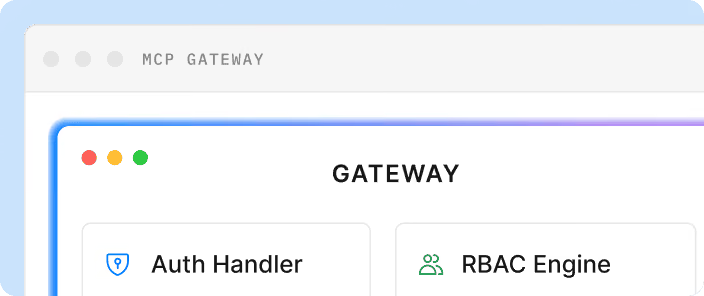
- Governance and RBAC: Role-based access control with custom roles for internal engineers, external partners, and AI agents under one access model. IP allowlisting, scoped credentials, and immutable audit logs export to your SIEM, so every audience operates under the same compliant policies.
- Community and support: Integrated changelogs, FAQ sections, an embedded chatbot, and Salesforce-routed support ticketing keep developers informed and engaged. A built-in CMS lets a non-developer team publish guides, tutorials, and announcements without engineering.
- Automated, high-quality documentation and key management: Docs generate from your OpenAPI specs and stay current as APIs change. Keys provision on approval, rotate on policy, notify before expiry. Ends the cycle of stale docs and surprise key expirations.
- White-label branding without engineering: Custom domain, your colors, typography, and logos. A drag-and-drop theme editor and built-in CMS let a product or partner team publish updates without an engineering ticket. New tenant portals are provisioned in minutes.
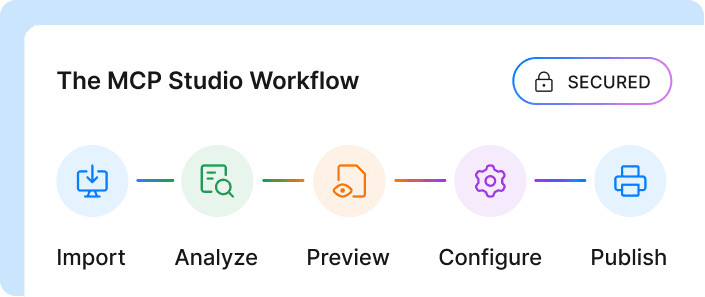
- Agent and MCP ready: Every API auto-generates an MCP tool definition from its OpenAPI spec. Agents authenticate via OAuth M2M with scoped access and per-agent rate limits. One catalog, one governance model, one audit trail across human developers, partners, and AI agents.
Best for
DigitalAPI's Developer Portal works for any team productizing APIs for internal developers, external partners, customers, or AI agents. The fit holds across stages and segments:
- Cloud-first SaaS and API-first products distributing APIs to internal developers, external partners, and customers
- Enterprises scaling external developer and partner programs
- Fintech, payments, and insurance companies opening APIs to brokers, agents, and third-party developers
- Healthcare and data platforms productizing access to clinical, claims, or transactional data
- Telecom, connectivity, and logistics platforms giving partners programmatic access to your network
- Platform engineering teams consolidating scattered internal API catalogs across teams and gateways
- Mid-market companies running internal and external API programs from one portal
- Enterprises that need SSO, RBAC, audit logs, multi-tenancy, and SOC 2 from day one, with live deployments at HSBC, Zurich Insurance, Fiserv, and Canara Bank
2. Kong Konnect
Best for: Teams already running Kong Gateway who want a tightly coupled portal experience.
Konnect is Kong's managed cloud offering. The developer portal ships with MCP support, customizable Markdown-based pages, self-service app registration, and interactive documentation. It runs serverless and integrates natively with Kong Gateway and Insomnia.
Strengths: Strong Kong ecosystem integration, clean AI agent support, fast portal spin-up. Tradeoffs: Multi-gateway story is thinner outside the Kong stack. Teams running Apigee or MuleSoft alongside Kong will feel the pull toward standardizing on Kong.
3. Apigee (Google Cloud)
Best for: Google Cloud-native organizations with deep Apigee gateway usage.
Apigee's integrated portal provides fast setup inside the Apigee UI, with a Drupal-based option for deeper customization. It ships self-service onboarding, app registration, and monetization features.
Strengths: Mature analytics, strong security posture, enterprise-grade SLAs. Tradeoffs: The portal is tightly bound to Apigee as the gateway. Customization beyond the integrated portal pushes teams into Drupal maintenance, which partially defeats the serverless model.
4. Tyk Cloud
Best for: Mid-sized teams wanting a serverless portal with clear monetization features.
Tyk Cloud delivers a hosted developer portal with theming, access control, and built-in monetization. The platform runs fully managed, and the portal supports OpenAPI specs with a clean developer experience.
Strengths: Good monetization primitives, strong API gateway performance, reasonable pricing. Tradeoffs: Ecosystem is smaller than Apigee or Kong. Enterprise features like AI Affinity and MCP conversion are not as developed.
5. Gravitee Cloud
Best for: Teams managing a mix of REST, async, and event-driven APIs.
Gravitee's managed cloud covers REST, WebSocket, Kafka, and MQTT APIs in one portal. The breadth across synchronous and event-driven APIs is a differentiator. The portal runs fully hosted with self-service onboarding.
Strengths: Async and event API support, flexible deployment models. Tradeoffs: Smaller partner ecosystem, monetization features less mature than enterprise incumbents.
6. WSO2 Choreo
Best for: Organizations that value open-source heritage with a managed delivery model.
Choreo is WSO2's serverless platform-as-a-service, which includes a developer portal layer. It supports REST, SOAP, GraphQL, and async APIs with OAuth2 and rate limiting built in. Pricing works well for organizations wanting open-source flexibility without the self-hosting cost.
Strengths: Multi-protocol support, transparent pricing, open-source lineage. Tradeoffs: UX polish lags the enterprise incumbents. Multi-gateway ingestion from non-WSO2 sources is limited.
7. Port
Best for: Platform engineering teams wanting an internal developer portal with strong service catalog features.
Port is a managed internal developer portal focused on service ownership, scorecards, and self-service actions. It is not primarily an API portal, but the catalog and workflow features fit internal platform use cases.
Strengths: Strong internal developer experience, service ownership modeling. Tradeoffs: Limited API documentation, monetization, and partner-facing features. Not a fit for external API portals.
Side-by-side comparison
For a broader platform landscape, our API management tools comparison covers the adjacent category in detail.
How to choose the right platform
Pick on outcomes, not features. These four decision paths cover most enterprise situations:
- If you run APIs across multiple gateways and clouds: Start with DigitalAPI. Gateway-agnostic ingestion is the one capability that is painful to retrofit later. Monetization and AI Affinity add up quickly for enterprises with partner ecosystems.
- If you are Kong-standardized and likely to stay: Kong Konnect fits. The tight integration and MCP support remove friction for AI-driven workflows.
- If you are all-in on Google Cloud and Apigee: Apigee's integrated portal is the lowest-friction option, though plan for Drupal if you need deep customization.
- If you run async and event APIs alongside REST: Gravitee Cloud's broader protocol coverage matters more than marginal UX differences elsewhere.
For enterprise buyers weighing requirements beyond features, our enterprise portal requirements guide covers the full checklist, including compliance, SSO, and audit trails.
If monetization is the primary driver, the API marketplace platforms landscape covers the revenue-focused comparison.
Why DigitalAPI Is the Strongest Serverless Portal for API Monetization
Most serverless developer portals stop at documentation and credentials. DigitalAPI goes further the API marketplace layer sits directly on top of the portal catalog, turning a discovery tool into a revenue-generating product line without a separate platform or a custom build.
From Portal to Paid Subscription in One Platform
The gap most serverless portals leave open is the commercial layer. A developer finds an API, tests it, and gets credentials, and then the monetization workflow falls apart because the portal was never designed to handle subscriptions, billing, or usage metering.
DigitalAPI closes that gap in one system. Subscription plans, tiered pricing, and automated billing run inside the same interface developers use to discover and test APIs. There is no handoff to a separate tool and no manual approval queue between trial and paid access.
The Full Commercial Stack Serverless and Built-In
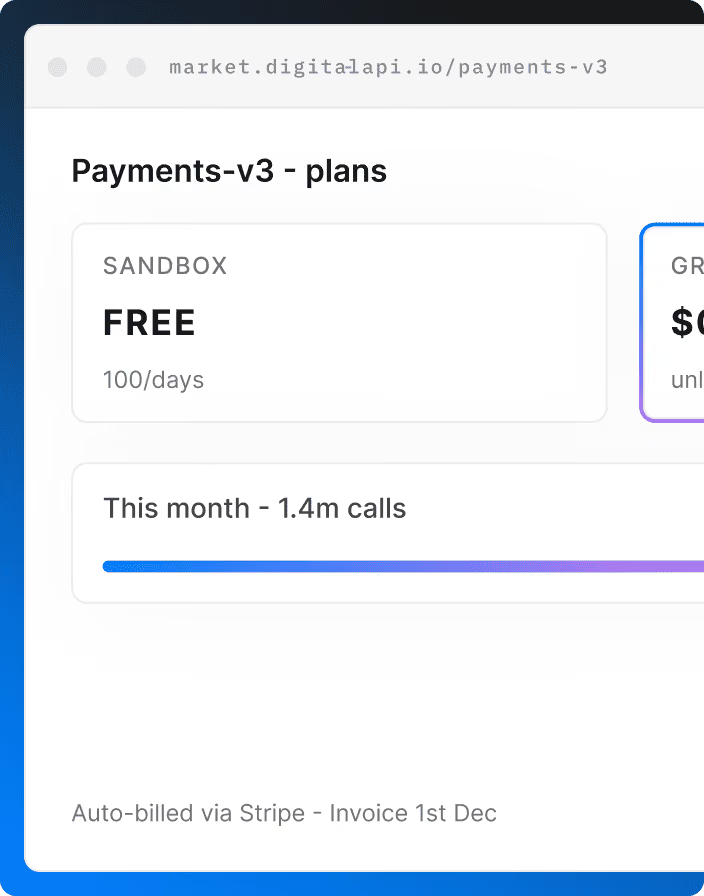
- Flexible billing without custom engineering: Usage-based billing, tiered subscriptions, freemium limits, and enterprise licensing are all configurable through DigitalAPI's API monetization platform. Stripe and Braintree connect natively. Usage flows from the gateway to the invoice automatically: no reconciliation, no manual intervention.
- Sandbox before subscription: Developers test before they pay. DigitalAPI's API sandbox gives trial users an isolated environment with realistic mock data so they can validate integration behavior and build confidence before selecting a plan. This is what drives trial-to-paid conversion, not a pricing page.
- White-label branding at the marketplace level: Your marketplace runs under your brand, your domain, and your design. Zurich Insurance built a fully branded marketplace on DigitalAPI's white-labeled developer portal that now processes millions of API transactions with no third-party vendor identity in sight.
- Revenue analytics separate from performance data: DigitalAPI's API analytics gives operators two distinct views: API performance data and business revenue data. Subscription growth, churn, and conversion rates sit in a separate layer from latency and error metrics because the product team and the infrastructure team are asking different questions.
Proven at Enterprise Scale
Fiserv used DigitalAPI to take fintech partner onboarding from weeks to days; subscription management, tiered pricing, and billing are handled in one platform. Chenosis built a monetizable API ecosystem for African telecoms from scratch. Canara Bank doubled transaction volume while cutting infrastructure costs by 50%.
For enterprises where monetization is the primary driver, no other serverless portal on this list matches DigitalAPI's depth across billing, governance, and partner onboarding in a single managed platform.
The bottom line
The best serverless developer portal is the one that matches your gateway footprint, launch timeline, and commercial model without locking you into a single vendor's runtime. For enterprises with multi-cloud API estates and active partner programs, DigitalAPI sits at the top because gateway-agnostic ingestion, native monetization, and AI-ready features come in one package. Single-stack teams have good alternatives in Kong Konnect, Apigee, and Tyk Cloud.
If you are running APIs across multiple gateways and manual portal maintenance is slowing partner adoption, DigitalAPI ships a white-labeled, AI-ready portal in weeks rather than months, with monetization and governance built in. Explore the API management platform or the API marketplace to see how the pieces fit your stack.
FAQs
1. What makes a developer portal "serverless"?
The platform runs on vendor-managed infrastructure with auto-scaling and zero operational overhead for the customer. No servers to provision, no Kubernetes clusters to maintain, no upgrade windows to plan.
2. Is a serverless portal the same as a hosted or SaaS portal?
Mostly, yes. "Serverless" emphasizes the infrastructure model and elastic scaling, while "SaaS" emphasizes the delivery model. Modern platforms like DigitalAPI, Kong Konnect, and Apigee fit both descriptions.
3. Can a serverless developer portal handle enterprise-scale traffic?
Yes. Managed platforms scale automatically to handle spikes. Enterprises like Fiserv and Zurich Insurance run production partner ecosystems on serverless portal platforms with no capacity planning on their side.
4. How do serverless portals handle multiple gateways?
Gateway-agnostic platforms ingest API specs from each gateway through connectors and normalize them into a unified catalog. DigitalAPI supports AWS, Azure, Kong, Apigee, MuleSoft, Postman, GitHub, and SwaggerHub out of the box.
5. Does a serverless portal support API monetization?
The better ones do. Look for native Stripe and Braintree integration, tiered subscription plans, usage metering, and automated invoicing. DigitalAPI and Tyk Cloud lead on this dimension.
Dhayalan Subramanian is Associate Director, Product Growth at DigitalAPI, where he leads go-to-market and product growth for the company’s multi-gateway API management platform. His work focuses on helping large enterprises and mid-market cloud companies consolidate APIs across AWS, Azure, Apigee, Kong, MuleSoft, and other gateways into a single control plane for governance, discovery, monetization, and agent consumption.
Dhayalan brings 14+ years of experience across product strategy, enterprise architecture, and engineering leadership. Earlier in his career, he held senior roles at Encora (as Associate Architect and Technical Manager), Mindtree (Technology Lead), Tech Mahindra (Technical Lead), and Primus Analytics, where he designed integration frameworks and delivered enterprise-grade digital platforms for global customers.
At DigitalAPI, he works directly with platform, integration, and developer experience leaders at Fortune 500 organizations to operationalize unified API catalogs, developer portals, and MCP-ready APIs. He writes regularly on API developer experience, API governance, and AI agent architectures.
One email a fortnight. Worth opening.
A short digest of what we're writing, what we're learning from customers, and the handful of links you'd actually want from us. No tracking pixels.

.avif)