



What is an API Marketplace? Definition, Types & How It Works (2026)
Learn what an API marketplace is, how it differs from portals and gateways, and why enterprises use them to discover, govern, and monetize APIs. Covers internal marketplaces, business models, and architecture.

Every enterprise runs on APIs. But as the number of APIs inside an organization grows, from dozens to hundreds to thousands, teams lose track of what already exists, rebuild what's already been built, and struggle to expose APIs to the right consumers with the right access controls.
An API marketplace solves this by giving APIs a storefront. It's where providers publish APIs as discoverable, self-service products, and where developers, internal or external, find, evaluate, and integrate them without filing tickets or chasing documentation across wikis.
This guide covers what an API marketplace is, how it differs from API portals and gateways, the business models behind it, what an internal API marketplace looks like, and how AI agents are changing the way APIs are discovered and consumed.
Key takeaways
- The API marketplace industry reached USD 18 billion in 2024 and is growing at 18.9% CAGR through 2030.
- 74% of developers now follow an API‑first approach, highlighting a rapid shift toward API‑centric development.
- Built‑in analytics in marketplaces help teams retire unused APIs and guide investment decisions.
- Access control and versioning reduce integration delays and minimise operational risks.
- APIs become monetisable products when published through marketplaces with governance and visibility.
What is an API marketplace?
An API marketplace is a platform where API providers publish, manage, and monetize their APIs, and where developers discover, evaluate, and integrate them through a self-service experience.
Think of it as an app store, but for APIs. Just as the App Store gives mobile developers a single place to distribute applications to millions of users, an API marketplace gives API providers a single place to expose their APIs, complete with documentation, pricing, sandbox testing, and access controls, to developers who need them.
But unlike a simple API directory or catalog, a full API marketplace includes commercial and governance capabilities:
- Discovery: Developers search, browse categories, or use AI-powered search to find the APIs they need.
- Evaluation: Interactive documentation, sandbox environments, and live testing let developers try before they commit.
- Access control: Subscription approvals, API key management, OAuth, and role-based access govern who can consume what.
- Monetization: Pricing tiers, usage-based billing, and revenue tracking let providers charge for API access.
- Analytics: Usage metrics, performance monitoring, and consumer behavior data help providers improve and optimize their APIs.
- Governance: Versioning, deprecation policies, compliance enforcement, and audit trails keep the marketplace healthy at scale.
An API marketplace can be public (like the Postman API Network, where any developer can discover third-party APIs), private/internal (where an enterprise catalogs APIs for its own teams), or partner-facing (where APIs are exposed to specific business partners with negotiated access terms).
The critical distinction is that a marketplace treats APIs as products, with packaging, pricing, documentation, and lifecycle management, rather than as raw technical endpoints buried in internal wikis.
API Marketplace vs API Portal vs API Gateway: What's the Difference?
These three terms get used interchangeably, but they serve fundamentally different functions. Most enterprises need all three working together, but understanding what each one does prevents costly architectural mistakes.
Comparison Table
How to choose between them?
- You need an API gateway when you have APIs in production and need to manage traffic, enforce security policies, and handle rate limiting at the infrastructure level. Every API deployment needs a gateway, it's foundational.
- You need an API portal when your developers need a central place to read documentation, get API keys, and test endpoints. A portal is developer-facing but typically covers APIs from a single provider or organization.
- You need an API marketplace when you have multiple API providers (internal teams, external partners, or third parties), need to manage subscriptions and billing, want self-service discovery across your entire API landscape, or need governance that spans multiple gateways and environments.
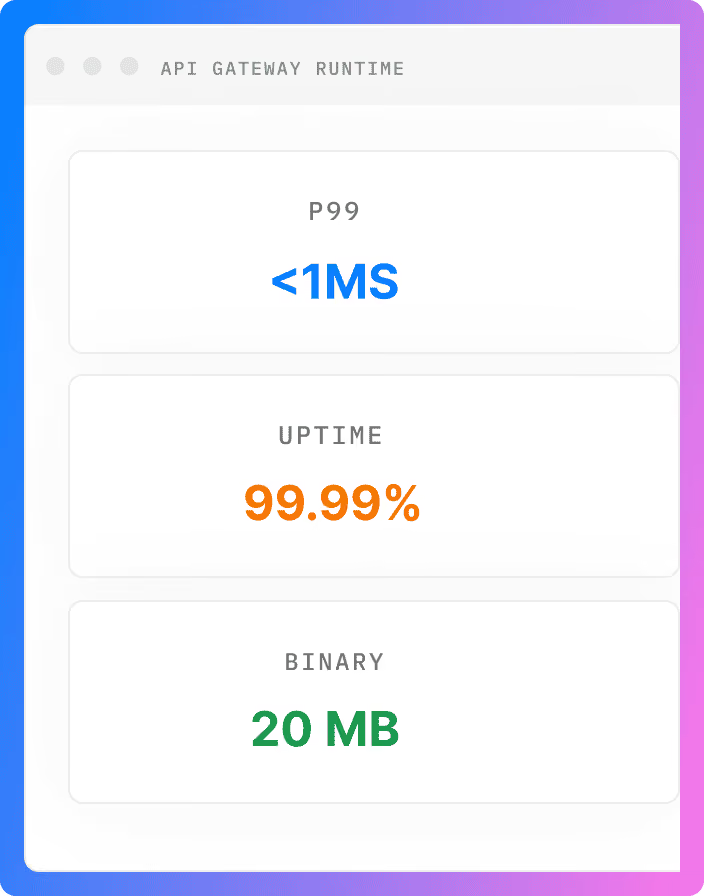
Most enterprises end up needing all three. The gateway handles runtime traffic. The portal handles developer documentation. The marketplace handles discovery, access management, monetization, and governance across everything. Platforms like DigitalAPI unify all three into a single control plane, while others require you to assemble them from separate vendors.
How Does an API Marketplace Work?
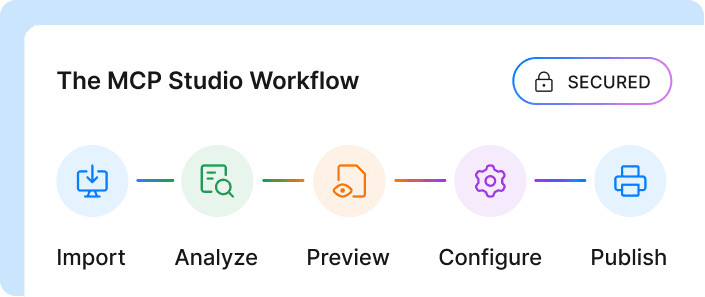
An API marketplace operates as a two-sided platform connecting API providers (who build and publish APIs) with API consumers (who discover and integrate them). Here's how the lifecycle works from end to end:
Step 1: API Publishing
The API provider registers their API on the marketplace. This includes uploading the API specification (OpenAPI, GraphQL schema, gRPC proto), writing documentation, configuring authentication methods, setting pricing tiers, and defining usage policies. The marketplace validates the submission against governance standards before making it available.
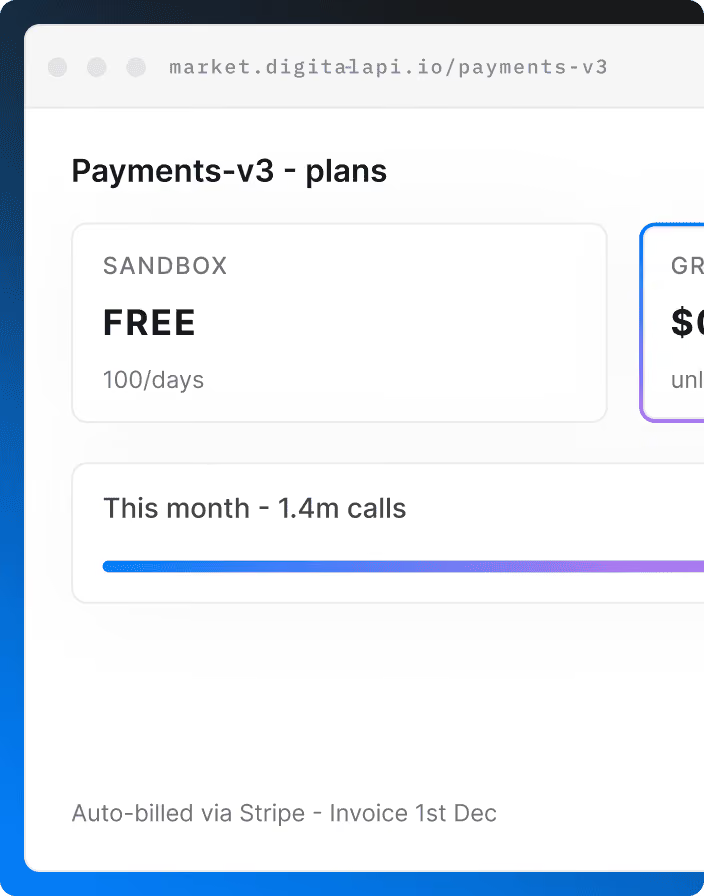
Example: A fintech company publishes a KYC verification API with three pricing tiers, free (100 calls/month), growth ($99/month for 10,000 calls), and enterprise (custom pricing with SLA guarantees).
Step 2: Cataloging & Exposure
The marketplace indexes the API into its catalog, assigns it to relevant categories, and makes it searchable. Advanced marketplaces use AI-powered search so developers can describe what they need in natural language rather than guessing exact keywords.
Step 3: Discovery & Evaluation
Developers browse the catalog, search for APIs that match their needs, and evaluate options. A well-built marketplace provides interactive documentation, sandbox environments for live testing, and sample code so developers can assess fit before committing.
Example: A developer searching for "identity verification" finds three KYC APIs, compares their pricing and response formats in the sandbox, and chooses one based on latency and coverage.
Step 4: Access & Subscription
The developer subscribes to the API, selects a pricing tier, and receives credentials (API key, OAuth tokens). Depending on the marketplace's governance model, access may be instant (self-service) or require approval from the API provider or an admin.
Step 5: Integration & Consumption
The developer integrates the API into their application using the provided credentials, documentation, and SDKs. The marketplace tracks every call for billing, analytics, and compliance purposes.
Step 6: Monitoring & Analytics
Both the provider and the consumer get visibility into API performance. Providers see usage metrics, error rates, and consumer behavior. Consumers see their usage against quota limits and billing projections. The marketplace uses this data to surface insights, like which APIs are underperforming or which consumers are approaching rate limits.
Step 7: Governance & Lifecycle Management
As APIs evolve, the marketplace manages versioning (so consumers aren't broken by updates), deprecation workflows (with advance notice and migration paths), and compliance enforcement (ensuring all published APIs meet organizational or regulatory standards).
Key Features of a Robust API Marketplace
Not all API marketplaces are equal. The difference between a basic API directory and an enterprise-grade marketplace comes down to six capability areas:
1. Comprehensive API Discovery & Management
The foundation of any marketplace is making APIs findable. This means a searchable catalog with category organization, tagging, and filtering. Enterprise marketplaces go further with AI-powered search (natural language queries instead of keyword matching), federated discovery (aggregating APIs from multiple gateways and environments), and automated API registration (detecting new APIs without manual publishing).
2. Security Framework
APIs are attack surfaces. A marketplace must enforce authentication (OAuth 2.0, API keys, mTLS), authorization (role-based and scope-based access controls), rate limiting (preventing abuse and ensuring fair usage), data protection (encryption in transit and at rest), and threat detection (anomalous usage patterns, injection attempts).
3. Integrated Analytics
Usage analytics drive every decision in an API marketplace, from pricing optimization to capacity planning to API retirement. Key analytics capabilities include: real-time usage dashboards (calls, latency, error rates per API), consumer behavior tracking (which APIs are discovered but not subscribed, which are subscribed but underused), operational metrics (uptime, p95 latency, error budgets), and security monitoring (failed auth attempts, unusual traffic patterns).
4. Monetization Engine
For marketplaces that charge for API access, the monetization engine handles pricing configuration (flat-rate, tiered, pay-per-call, usage-based), billing and invoicing (automated billing cycles, invoice generation), revenue reporting (per-API, per-consumer, per-tier revenue breakdown), and trial management (free tiers, time-limited trials, credit-based sampling).
5. Developer-Centric Portal
The developer experience determines adoption. A strong portal provides interactive API documentation (try-it-now consoles embedded in docs), SDK generation (auto-generated client libraries in multiple languages), sandbox environments (isolated testing with mock data), onboarding workflows (guided first-call experiences), and community features (forums, changelogs, status pages).
6. Governance & Compliance
At scale, governance is what keeps a marketplace from becoming a junkyard of undocumented, unmaintained APIs. Governance capabilities include API design standards enforcement (linting against organizational style guides), publishing approval workflows (review gates before APIs go live), deprecation management (sunset timelines, consumer migration support), audit trails (who published what, who accessed what, when), and regulatory compliance (GDPR data handling, HIPAA for healthcare APIs, SOC 2 controls).

Types of API Marketplaces
API marketplaces aren't one-size-fits-all. The right type depends on who your API consumers are and what you're trying to achieve.
1. Public / Open API Marketplaces
Open to any developer. Providers publish APIs for broad external consumption, and anyone can sign up, subscribe, and start integrating. Revenue comes from subscription fees, usage-based billing, or freemium models.
Examples: Postman API Network, Zyla API Hub, ApyHub
Best for: API providers who want maximum developer reach and are comfortable with self-service consumption.
2. Internal API Marketplaces
Restricted to an organization's own teams. Internal marketplaces catalog APIs built by different departments so other teams can discover and reuse them instead of building from scratch. These marketplaces focus on governance, reuse metrics, and reducing duplicate development.
Examples: Enterprises using DigitalAPI Marketplace, MuleSoft Anypoint Exchange, or Backstage with marketplace plugins
Best for: Large organizations with 50+ APIs where teams frequently can't find what already exists.
3. Partner API Marketplaces
Exposed to specific business partners with negotiated access terms. Partner marketplaces sit between public (open to all) and internal (closed to outsiders), they provide controlled access to trusted third parties with custom SLAs, pricing, and usage agreements.
Examples: DigitalAPI Marketplace, Twilio Marketplace (communication partners), Salesforce AppExchange (ecosystem partners)
Best for: Platform companies building ecosystems where partners extend core capabilities.
4. Composite / Unified API Marketplaces
Aggregate APIs from multiple sources, internal teams, external providers, and partners, into a single catalog. Composite marketplaces provide a unified discovery experience regardless of where the API originates or which gateway it runs on.
Examples: DigitalAPI Marketplace (multi-gateway), Axway Amplify Engage (federated catalog) Best for: Enterprises with APIs spread across multiple gateways, clouds, and business units that need a single pane of glass.
What is an Internal API Marketplace?
While public API marketplaces get most of the attention, internal API marketplaces are where enterprises see the fastest ROI.
An internal API marketplace is a private platform where an organization catalogs, governs, and shares APIs across its own teams. It's the difference between every team building their own payment processing integration (because they didn't know the payments team already published one) and a developer finding the existing payment API in 30 seconds through a searchable internal catalog.
Why Enterprises Need Internal API Marketplaces
The core problem is visibility. In a company with 200+ APIs spread across multiple teams, gateways, and cloud accounts, no single person knows what exists. The result:
- Duplicate development: Teams rebuild APIs that already exist because they can't find them. Industry data suggests 30-40% of internal API development is redundant.
- Inconsistent standards: Without a central catalog enforcing governance, every team designs APIs differently, different naming conventions, different auth patterns, different error formats.
- Slow onboarding: New developers spend days or weeks finding the right APIs and the right people to get access, instead of self-serving from a catalog.
Shadow APIs, Undocumented, unmonitored APIs proliferate when there's no central registry, creating security blind spots.
Internal vs External API Marketplace
Making an Internal Marketplace Work
The biggest mistake enterprises make is treating an internal marketplace as a documentation dump. A successful internal marketplace requires:
- Executive sponsorship: Someone owns the mandate that all APIs must be published to the marketplace.
- Automated registration: APIs should be auto-discovered from gateways and service meshes, not manually published by each team.
- Developer experience investment: Internal developers have the same expectations as external ones: interactive docs, sandbox testing, and self-service access.
- Governance that helps, not blocks: Linting and design standards should be enforced automatically at publish time, not through manual review bottlenecks.
Platforms like DigitalAPI Marketplace support internal marketplace use cases with white-label portals, federated API discovery across multiple gateways, and governance automation, making the internal catalog as polished as a public marketplace.
API Marketplace Business Models: How Revenue Works
Understanding how API marketplaces generate and distribute revenue is critical whether you're building a marketplace, publishing APIs on one, or evaluating platforms.
Marketplace Operator Models
- Commission-based: The marketplace takes a percentage (typically 15-30%) of every transaction between API providers and consumers. This was RapidAPI's model before the Nokia acquisition, and it's now under pressure because AI API pricing (token-based, highly variable per call) makes fixed commissions impractical.
- Subscription-based: The marketplace charges providers a flat fee to list their APIs, or charges consumers a platform subscription for access. ApyHub's credit-based model is a variation, one subscription gives consumers credits usable across all APIs.
- Freemium: Basic access is free (limited calls, limited APIs), with paid tiers unlocking higher quotas, premium APIs, or enterprise features. This is the most common model for public marketplaces targeting individual developers.
- Enterprise license: The marketplace is sold as a platform to organizations that want to build their own internal or partner marketplace. DigitalAPI, Axway, and MuleSoft follow this model, the revenue comes from the platform license, not from individual API transactions.
API Provider Monetization Models
The AI Pricing Challenge
Traditional API marketplace billing was built for predictable, per-call pricing. A geocoding API costs roughly the same per call regardless of input. But AI APIs, especially those wrapping large language models, have wildly variable costs. A simple text classification call might cost $0.001, while a complex multi-step reasoning call might cost $0.50.
This breaks the commission model (20% of what?) and makes tiered subscriptions unreliable (usage patterns are unpredictable). Marketplaces that support AI APIs need:
- Token-based metering: Tracking input and output tokens, not just call counts
- Dynamic pricing: Per-request pricing that varies based on model, input size, and complexity
- Cost transparency: Real-time cost estimates before the call is made
- Budget controls: Spending caps and alerts so consumers don't get surprise bills
This is one of the reasons platforms like DigitalAPI and Kong Konnect have invested in AI-specific billing and analytics, the traditional marketplace billing stack simply doesn't work for AI API economics.
How AI Agents Are Changing API Marketplaces
The traditional API marketplace model assumes a human developer browses a catalog, reads documentation, evaluates options, and manually integrates an API. That model is being disrupted by AI agents.
From Human Discovery to Agent Discovery
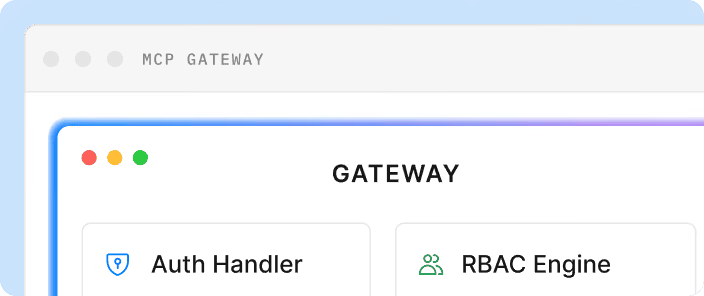
With protocols like MCP (Model Context Protocol), APIs become tools that AI agents can discover, evaluate, and call autonomously. Instead of a developer searching a marketplace for "email verification API," an AI agent working on a lead enrichment task can:
- Query an MCP-enabled marketplace for available email verification tools
- Read the API schema and understand input/output formats
- Request access credentials
- Make the API call and process the results
- Handle errors and fallbacks, all without human intervention
This shifts the API marketplace from a human-browsed storefront to a machine-readable tool registry.
What This Means for API Marketplace Architecture
Marketplaces built for human developers need to evolve:
- Machine-readable metadata: API descriptions need to be structured for agent consumption, not just human-readable documentation. MCP server definitions, tool schemas, and capability descriptions become as important as Swagger docs.
- Programmatic access management: Agents need to request and receive API credentials through automated workflows, not through web forms and email approvals.
- Dynamic pricing for agents: AI agents may make thousands of micro-calls across dozens of APIs in a single task. The billing model needs to handle high-frequency, low-value transactions efficiently.
- Usage attribution: When an AI agent calls an API on behalf of a user, the marketplace needs to track who authorized the call, which agent made it, and which end-user it served.
Where This is Headed
Platforms like DigitalAPI Marketplace (with MCP gateway support), Kong Konnect (with MCP Registry), and Zyla API Hub (with MCP compatibility) are already building for this future. Over the next 2-3 years, the distinction between "API marketplace" and "AI agent tool registry" will blur, and marketplaces that don't support agent-driven discovery will lose relevance as AI-native development workflows become standard.
API Marketplace Architecture: Core Components
Every API marketplace, regardless of scale, is built on five foundational components working together. Here's how they fit:

- Catalog & Discovery Service sits at the top of the stack. It indexes every API in the marketplace, manages categorization and tagging, and powers the search experience. In enterprise marketplaces, this service federates across multiple gateways, pulling API metadata from Kong, AWS API Gateway, Azure APIM, and other sources into a single searchable index.
- Developer Portal is the consumer-facing layer. It renders interactive documentation, provides sandbox environments for testing, generates SDKs, and handles the onboarding flow from first visit to first API call.
- Monetization & Billing Engine manages the commercial layer, pricing configuration, usage metering, invoice generation, and revenue reporting. For AI APIs, this engine needs to support token-based metering and dynamic pricing, not just flat per-call rates.
- Governance & Analytics Engine sits in the middle, enforcing policies across every interaction. It handles access control, tracks usage analytics, monitors API performance, enforces design standards at publish time, and maintains audit trails for compliance.
- API Gateway Layer is the runtime foundation. It handles actual API traffic, routing requests, enforcing rate limits, managing authentication, and transforming payloads. Multi-gateway support is critical for enterprises that run APIs across different infrastructure.
Benefits of an API Marketplace
The value of an API marketplace is two-sided, it serves both the teams publishing APIs and the developers consuming them.
For API Providers
- Faster time-to-market for API products: Instead of building distribution infrastructure from scratch (documentation sites, developer portals, billing systems), providers publish to the marketplace and get all of it out of the box. A fintech startup can go from "API is built" to "API is discoverable, documented, and billable" in days rather than months.
- Centralized access management: One place to manage who has access to your API, at what tier, with what rate limits. No more spreadsheets tracking API keys or manual provisioning workflows.
- Built-in analytics without instrumentation: The marketplace tracks usage, error rates, latency, and consumer behavior automatically. Providers get insights into how their API is being used without adding custom analytics code.
- Monetization without payment infrastructure: Pricing tiers, billing cycles, invoicing, and revenue collection are handled by the marketplace platform. Providers set their pricing model and the platform handles the rest.
- Version management and deprecation support: When it's time to ship v2, the marketplace manages the transition, notifying consumers, supporting parallel versions during migration, and enforcing sunset timelines.
For API Consumers / Developers
- Faster discovery, find what exists before building from scratch: Instead of asking across Slack channels and wikis, developers search a single catalog. In internal marketplaces, this alone reduces duplicate API development by 30-40%.
- Self-service access without tickets: Subscribe, get credentials, and start integrating without waiting for someone to manually provision access. The best marketplaces get developers to their first successful API call in under 5 minutes.
- Consistent documentation and testing: Every API in the marketplace follows the same documentation standards and provides sandbox testing. No more APIs with outdated Confluence pages and no way to test before integration.
- Reduced integration risk: Sandbox environments, versioning guarantees, and SLA transparency mean developers know what they're getting before they commit. Breaking changes come with advance notice and migration support.
- Unified billing and credential management: On public marketplaces with unified API keys (like Zyla API Hub), developers manage one subscription and one credential instead of separate accounts with every API provider.
How to Measure API Marketplace Success
Most organizations launch an API marketplace and measure success by counting published APIs. That's like measuring an e-commerce store's success by counting how many products are listed, it misses whether anyone is actually buying.
Here are the KPIs that matter:
For Internal Marketplaces
For External / Monetized Marketplaces
These metrics shift your marketplace from "we launched it" to "it's delivering measurable business value." Platforms like DigitalAPI Marketplace provide built-in analytics dashboards that track most of these KPIs out of the box.
Real-World API Marketplace Examples
1. Enterprise Internal Marketplace
A global bank with 400+ internal APIs across payments, compliance, customer data, and fraud detection deployed an internal API marketplace to solve a critical problem: development teams were spending 3-4 weeks finding and getting access to internal APIs. After launching a searchable internal catalog with sandbox testing, time-to-integration dropped to under 2 days, and the API reuse ratio hit 55% within the first year, eliminating an estimated 120 redundant API development projects.
2. Public API Monetization
Before Nokia's acquisition, RapidAPI demonstrated the public marketplace model at scale, hosting 40,000+ APIs from independent providers, handling unified billing through a single API key, and taking a commission on every transaction. The model worked for traditional APIs with predictable per-call costs but began to strain as AI APIs (with variable token-based pricing) became a larger share of marketplace traffic.
3. Partner Ecosystem Marketplace
Twilio's marketplace extends its core communication platform through partner-built add-ons. When a Twilio customer needs call transcription, they don't build it themselves or search the open web, they find a transcription add-on in the Twilio Marketplace, activate it, and it starts processing their call recordings. The marketplace creates distribution for partners and extended capability for customers, with revenue shared between Twilio and the add-on provider.
Scale APIs with governance and clarity
Most enterprises don’t struggle with building APIs, they struggle with organising them. Without a structured approach, APIs become hard to find, govern, and scale. A marketplace solves this by bringing consistency to how APIs are published, accessed, and managed.
It’s not about adding another platform. It’s about enabling reuse, reducing operational overhead, and creating a system developers and business units can trust.
Digital API’s API Marketplace supports that shift with the architecture and governance that large organisations demand.
Frequently Asked Questions
1. What is an API marketplace?
An API marketplace is a platform where API providers publish, manage, and monetize their APIs, and where developers discover, evaluate, test, and integrate them through a self-service experience. It functions as a storefront for APIs, combining discovery, documentation, access control, billing, and governance in one platform.
2. What is the difference between an API marketplace and a developer portal?
A developer portal typically serves a single API provider, it hosts documentation, provides API keys, and supports developer onboarding for that provider's APIs. An API marketplace aggregates APIs from multiple providers into a single catalog and adds commercial features like billing, subscription management, and cross-provider discovery. A portal is a documentation layer; a marketplace is a business platform.
3. What is the difference between an API marketplace and an API gateway?
An API gateway is infrastructure, it routes API traffic, enforces rate limits, handles authentication, and manages load balancing at runtime. An API marketplace is a business and discovery layer, it catalogs APIs, enables search, manages subscriptions, and handles billing. The gateway handles "how API calls flow"; the marketplace handles "how APIs are found and consumed."
4. How do you monetize an API marketplace?
Marketplace operators use commission-based models (taking a cut of each transaction), platform subscription fees, or enterprise licensing. API providers within a marketplace typically use tiered subscriptions, pay-per-call pricing, usage-based billing, or credit-based models. For AI APIs, token-based pricing is becoming standard. See our business models section for the full breakdown.
6. What is an internal API marketplace?
An internal API marketplace is a private platform where an organization catalogs and shares APIs across its own teams. The goal is reducing duplicate development, enforcing design standards, and accelerating delivery by making existing API assets discoverable. Unlike public marketplaces, internal ones focus on governance and reuse metrics rather than revenue generation.
7. What are examples of API marketplaces?
Public marketplaces include Postman API Network, Zyla API Hub, and ApyHub. Enterprise marketplace platforms include DigitalAPI Marketplace, Axway Amplify Engage, and MuleSoft Anypoint Exchange. Cloud-specific options include Google Apigee API Hub and AWS Marketplace. See our full comparison of the 15 best API marketplaces in 2026.
8. How are AI agents changing API marketplaces?
AI agents use protocols like MCP (Model Context Protocol) to discover, evaluate, and call APIs autonomously, without human developers browsing catalogs. This shifts API marketplaces from human-browsed storefronts to machine-readable tool registries. Marketplaces that support MCP compatibility (like DigitalAPI, Kong Konnect, and Zyla API Hub) allow AI agents to find and consume APIs as part of automated workflows.
9. What features should an enterprise API marketplace have?
At minimum: federated API discovery across multiple gateways, role-based access control, interactive documentation with sandbox testing, monetization and billing capabilities, usage analytics, governance and compliance enforcement, and version/deprecation management. For 2026, AI agent support (MCP compatibility) and token-based billing for AI APIs are increasingly important.
Dhayalan Subramanian is Associate Director, Product Growth at DigitalAPI, where he leads go-to-market and product growth for the company’s multi-gateway API management platform. His work focuses on helping large enterprises and mid-market cloud companies consolidate APIs across AWS, Azure, Apigee, Kong, MuleSoft, and other gateways into a single control plane for governance, discovery, monetization, and agent consumption.
Dhayalan brings 14+ years of experience across product strategy, enterprise architecture, and engineering leadership. Earlier in his career, he held senior roles at Encora (as Associate Architect and Technical Manager), Mindtree (Technology Lead), Tech Mahindra (Technical Lead), and Primus Analytics, where he designed integration frameworks and delivered enterprise-grade digital platforms for global customers.
At DigitalAPI, he works directly with platform, integration, and developer experience leaders at Fortune 500 organizations to operationalize unified API catalogs, developer portals, and MCP-ready APIs. He writes regularly on API developer experience, API governance, and AI agent architectures.

One email a fortnight. Worth opening.
A short digest of what we're writing, what we're learning from customers, and the handful of links you'd actually want from us. No tracking pixels.

.avif)