






Top API Management Use Cases for Businesses in 2026
API management refers to the comprehensive process of overseeing the entire lifecycle of APIs, from their initial design and development through deployment, versioning, security, monitoring, and eventual retirement.


TL;DR
1. API management is essential for orchestrating digital services, ensuring robust security, seamless integration, and scalable growth.
2. Key use cases include enhancing developer experience, fortifying security, accelerating digital transformation, and enabling new monetization models.
3. An effective API management platform offers comprehensive capabilities like intelligent API gateways, intuitive developer portals, lifecycle management, and real-time analytics.
4. It empowers organizations to govern microservices, modernize legacy systems, and build thriving partner ecosystems, all while maintaining compliance.
5. Prioritize a solution that aligns with your strategic goals, offering flexibility, scalability, and powerful tools for governance and innovation.
Unlock your potential with comprehensive API management with DigitalAPI. Book a Demo!
Modern business thrives on interconnected digital experiences, making the efficient flow of data between applications and services paramount. Enterprises today navigate a complex tapestry of internal systems, partner integrations, and customer-facing platforms, each powered by an ever-growing array of APIs. Effectively managing these digital conduits is no longer a technical nicety but a strategic imperative. From safeguarding sensitive information to fostering rapid innovation and creating new revenue streams, a robust approach to API management underpins the agility and resilience required to compete and excel in the current landscape. It's about transforming raw data exchange into a well-orchestrated engine for sustained business success.
What is API Management?
API management refers to the comprehensive process of overseeing the entire lifecycle of APIs, from their initial design and development through deployment, versioning, security, monitoring, and eventual retirement. It provides the tools and processes necessary for organizations to publish, document, and analyze APIs in a secure and scalable environment. At its core, API management aims to streamline API consumption for developers, enforce consistent policies, ensure security, and provide actionable insights into API performance and usage. It acts as a crucial bridge between API providers and consumers, facilitating seamless integration and accelerating the pace of digital innovation while maintaining control and governance.
Top API Management Use Cases for Business Success
As businesses increasingly rely on a distributed ecosystem of services, understanding the practical API management use cases becomes paramount. These use cases illustrate how robust API management platforms empower organizations to drive innovation, enhance security, and achieve scalable digital growth.
1. Improving Developer Experience and Adoption
One of the primary benefits of API management is its ability to create a superior experience for developers, both internal and external. A well-managed API ecosystem includes features like intuitive developer portals, comprehensive and up-to-date documentation, interactive API consoles, and readily available SDKs. This self-service environment significantly reduces the friction associated with API discovery, understanding, and integration. When developers can easily find, understand, and integrate APIs, adoption rates soar, leading to faster application development, increased innovation, and a stronger developer community around your digital assets. It transforms API consumption from a complex task into an efficient, streamlined process.
2. Enhancing Security and Compliance
APIs are gateways to valuable data and critical business functions, making them prime targets for cyberattacks. An API management platform provide a crucial layer of security by enforcing authentication (OAuth, JWT, API keys), authorization, and access control policies at the API gateway. They also offer threat protection capabilities like spike arrest, traffic throttling, and bot detection to prevent denial-of-service attacks and data breaches. Furthermore, API management solutions facilitate compliance with industry regulations (e.g., GDPR, HIPAA, PCI DSS) through robust auditing, logging, and policy enforcement, ensuring that data access and usage adhere to legal and corporate standards. This centralized security approach protects sensitive information and maintains trust.
3. Enabling Digital Transformation and Innovation
Digital transformation often hinges on unlocking and exposing core business capabilities as consumable APIs. API management platforms are instrumental in this journey by providing the infrastructure to create, publish, and manage these new digital services. They allow organizations to decouple legacy systems, create modern microservices architectures, and expose data in a controlled manner, fostering agility and enabling rapid experimentation. This facilitates the development of new products, services, and business models, allowing companies to respond quickly to market changes and innovate at an accelerated pace, ultimately driving competitive advantage and new revenue streams.
4. Scaling APIs Effectively
As API usage grows, managing increased traffic and ensuring consistent performance becomes a significant challenge. API management solutions offer features designed for scalability, including load balancing, caching mechanisms, rate limiting, and request quotas. These capabilities prevent individual APIs from being overwhelmed, optimize response times, and ensure a smooth user experience even during peak demand. Centralized monitoring and analytics tools within API management platforms also provide insights into API performance, allowing organizations to proactively identify and address bottlenecks, provision resources effectively, and scale their API infrastructure gracefully without compromising reliability.
5. Monetization and Partner Ecosystems
Many businesses leverage APIs as a product, creating new revenue streams or extending their reach through partner ecosystems. API management platforms provide the necessary tools for API monetization, such as tiered access plans, billing integration, and usage tracking. They also facilitate the onboarding and management of partner developers, offering customized portals, clear terms of service, and dedicated support channels. By simplifying the process of exposing and managing APIs for commercial use, organizations can effectively build and grow strong partner networks, expand their market footprint, and generate new value from their digital assets, turning technical capabilities into business opportunities.
6. Real-time Analytics and Insights
Understanding how APIs are being used is crucial for continuous improvement and strategic planning. API management platforms provide comprehensive analytics and reporting capabilities, offering real-time insights into API performance, usage patterns, error rates, and consumer behavior. These insights enable organizations to identify popular APIs, detect performance bottlenecks, understand user demographics, and inform future API development decisions. By analyzing API metrics, businesses can optimize their API offerings, enhance user experience, refine their monetization strategies, and gain a deeper understanding of their digital ecosystem's health and impact on the broader business objectives.
7. Microservices Orchestration and Governance
In a microservices architecture, a single application is composed of many loosely coupled, independently deployable services. An API gateway, a core component of API management, acts as the entry point for all client requests, routing them to the appropriate microservices. It handles cross-cutting concerns like authentication, rate limiting, and logging, abstracting the complexity of the microservices from the consuming applications. This central point of control enables consistent policy enforcement, simplified service discovery, and robust governance across a distributed landscape, making microservices easier to manage, secure, and scale.
8. API Versioning and Lifecycle Management
APIs, like any software product, evolve over time. Managing multiple versions of an API and ensuring smooth transitions for consumers is a critical challenge. API management platforms provide tools for effective API versioning, allowing organizations to introduce new features or breaking changes without disrupting existing integrations. They support controlled deprecation strategies, clear communication channels for version updates, and the ability to manage the entire API lifecycle from design and development to testing, deployment, and retirement. This ensures that APIs remain relevant, reliable, and continuously supported, minimizing integration headaches for developers and maximizing the longevity of API investments.
9. API Gateway and Portal Consolidation
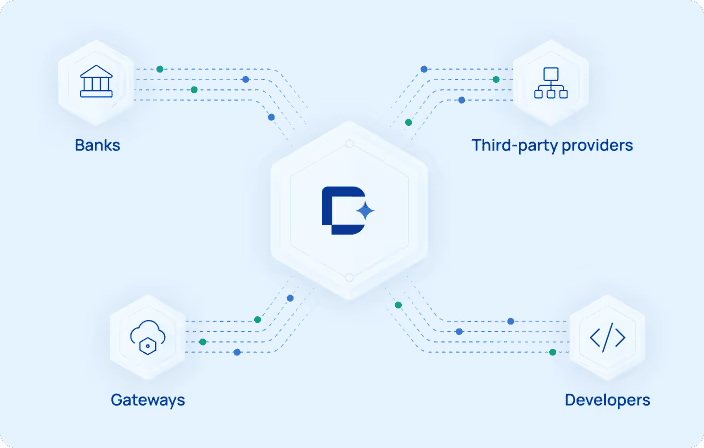
In large enterprises, it's common to find APIs spread across multiple API gateways (e.g., Apigee, MuleSoft, AWS, Kong) and various developer portals. This fragmentation leads to operational overhead, inconsistent governance, and a confusing developer experience. A comprehensive API management solution can act as a single pane of glass, abstracting the underlying gateway infrastructure and providing a unified API catalog and developer portal. This consolidation streamlines API discovery, simplifies management, enforces consistent policies across all APIs regardless of their deployment location, and significantly improves the overall developer experience by offering one central place for all API interactions.
.png)
Key Capabilities of an API Management Platform
To support modern digital initiatives, API management platforms must go beyond simple traffic handling. As APIs span multiple teams, gateways, and use cases, from internal services to external ecosystems, a robust platform provides the foundation for visibility, security, governance, and scale across the entire API lifecycle.
- API Discovery & Cataloguing: A strong API management platform provides a centralised catalogue that makes all APIs visible and searchable across the organisation. It helps teams quickly understand what APIs exist, who owns them, and how they can be used. This reduces duplication, improves reuse, and accelerates adoption across teams.
- Developer Portal & Documentation: Developer portals act as the front door to your APIs, enabling self-service onboarding for internal, partner, and external developers. They provide clear documentation, examples, and interactive testing to reduce dependency on manual support. A good portal improves developer experience and drives faster API consumption.
- Security & Access Control: Security capabilities ensure that only authorised users and systems can access APIs. This includes authentication, authorisation, rate limiting, and policy enforcement across all environments. Centralised security controls help organisations reduce risk while maintaining flexibility for different consumer types.
- Governance & Lifecycle Management: API governance ensures consistency across design, deployment, and retirement of APIs. Lifecycle management capabilities help teams enforce standards, manage versions, control approvals, and safely deprecate APIs. This is critical for maintaining stability and compliance as API estates grow.
- Traffic Management & Reliability: Traffic management features protect backend systems while ensuring consistent API performance. Capabilities such as throttling, caching, load balancing, and failover help maintain reliability under varying load. These controls are essential for delivering dependable digital experiences at scale.
- Analytics & Observability: Analytics provide visibility into how APIs are performing and how they are being consumed. Platforms should offer insights into usage patterns, latency, errors, and failure trends. This data helps teams troubleshoot issues faster and make informed product and operational decisions.
- Monetisation & Subscription Management: For organisations treating APIs as products, monetisation capabilities are essential. These include plans, quotas, subscriptions, and usage tracking. Such features allow teams to control access, measure value, and create sustainable API-driven business models.
- Multi-Gateway & Environment Support: Enterprises often operate APIs across multiple gateways, clouds, and environments. A capable platform provides consistent management, visibility, and governance across this fragmented landscape. This avoids tool sprawl and ensures a unified operating model for APIs.
- Automation & CI/CD Integration: Modern API management platforms integrate seamlessly with CI/CD pipelines and developer workflows. Automation reduces manual effort in publishing, testing, and governing APIs. This enables teams to ship faster while maintaining quality and control.
- AI & Future-Readiness: As APIs evolve to support AI and agent-based consumption, platforms must be built with future use cases in mind. This includes intelligent discovery, policy automation, and readiness for new interaction patterns. Future-ready platforms help organisations adapt without rebuilding their API foundations.
Conclusion
API management is no longer an optional add-on but a foundational pillar for any enterprise striving for business success. By mastering the diverse API management use cases, organizations can unlock unprecedented levels of agility, security, and innovation. From enhancing developer productivity and protecting critical data to accelerating digital transformation and building powerful partner ecosystems, a well-implemented API management strategy empowers businesses to thrive in the API-driven economy. Investing in the right platform and approach ensures that your APIs become strategic assets, propelling your journey towards sustained digital leadership and competitive advantage.
FAQs
1. What is API management?
API management is the comprehensive process of creating, publishing, documenting, and analyzing APIs in a secure and scalable environment. It oversees the entire lifecycle of an API, from design to retirement, ensuring consistent policies, security, and usability for developers and consumers alike. It includes tools for gateways, portals, analytics, and access control.
2. What are the main benefits of API management?
The main benefits include improved developer experience and faster application development, enhanced security and compliance, accelerated digital transformation, efficient API scaling, new monetization opportunities, better visibility through analytics, and streamlined microservices governance. Ultimately, it drives innovation and operational efficiency.
3. How does API management help with digital transformation?
API management facilitates digital transformation by enabling organizations to expose legacy data and business logic as modern, consumable APIs. This unlocks internal assets, fosters the development of new digital services, supports microservices architectures, and allows businesses to rapidly integrate with partners and third-party applications, accelerating their transition to a more agile, interconnected digital enterprise.
4. Can API management improve security?
Yes, API management significantly enhances security by providing a centralized control point for all API traffic. It enforces robust authentication (e.g., OAuth, API keys) and authorization policies, implements rate limiting and traffic throttling to prevent attacks, and offers features for threat detection and data encryption. It also aids in maintaining compliance with various regulatory standards.
5. What is an API developer portal?
An API developer portal is a self-service platform provided as part of an API management solution. It serves as a central hub where developers can discover available APIs, access comprehensive documentation, review code samples, test API functionality, register applications, and manage their API keys. A good portal is crucial for fostering API adoption and building an active developer community.
Dhayalan Subramanian is Associate Director, Product Growth at DigitalAPI, where he leads go-to-market and product growth for the company’s multi-gateway API management platform. His work focuses on helping large enterprises and mid-market cloud companies consolidate APIs across AWS, Azure, Apigee, Kong, MuleSoft, and other gateways into a single control plane for governance, discovery, monetization, and agent consumption.
Dhayalan brings 14+ years of experience across product strategy, enterprise architecture, and engineering leadership. Earlier in his career, he held senior roles at Encora (as Associate Architect and Technical Manager), Mindtree (Technology Lead), Tech Mahindra (Technical Lead), and Primus Analytics, where he designed integration frameworks and delivered enterprise-grade digital platforms for global customers.
At DigitalAPI, he works directly with platform, integration, and developer experience leaders at Fortune 500 organizations to operationalize unified API catalogs, developer portals, and MCP-ready APIs. He writes regularly on API developer experience, API governance, and AI agent architectures.
One email a fortnight. Worth opening.
A short digest of what we're writing, what we're learning from customers, and the handful of links you'd actually want from us. No tracking pixels.

.avif)