



Top Gravitee Alternatives for Scalable API Management
You likely selected Gravitee for its event-native capabilities and the flexibility of an open-source foundation.

TL;DR
Teams often switch due to platform limitations in the UI, inconsistent performance under heavy loads, weak governance compared to enterprise leaders, and a lack of native frameworks for API monetization.
Top gravitee alternatives include DigitalAPI.ai, Kong, Apigee, Tyk, WSO2, MuleSoft, NGINX, Amazon API Gateway, Azure API Management.
It is a mistake to choose a replacement based solely on protocol support without considering the long-term costs of governance, the maturity of the developer portal, and the ease of managing a hybrid architecture.
You likely selected Gravitee for its event-native capabilities and the flexibility of an open-source foundation. It served its purpose during the early stages, bridging the gap between synchronous REST APIs and asynchronous event streams like Kafka. But as your API ecosystem expands into a complex mesh of gateways, protocols, and enterprise requirements, you might be hitting a ceiling.
The management layer often lacks the maturity of larger enterprise platforms, and the user interface can feel disjointed for non-technical teams. Operational complexity also rises when you attempt to implement strict governance or advanced monetization strategies that Gravitee handles with less sophistication than its competitors. If you are looking for a platform that offers deeper governance, a unified control plane for multiple gateways, or stronger monetization tools, it is time to explore other options.
What is Gravitee?
Gravitee is an event-native API management platform that bridges synchronous APIs and asynchronous event streams like Kafka. It secures and exposes APIs while mediating protocols. Although developers value its flexibility, scaling organizations often face challenges with governance and operational demands.
Why do companies look beyond Gravitee?
Gravitee excels in specific niche scenarios, but broader enterprise needs often expose its limitations. Engineering leads and architects typically seek alternatives to address specific pain points that hinder rapid scaling.we
Platform limitations and UI maturity
- User interface: The management layer and UI are not as mature as those in enterprise-grade platforms like Apigee or DigitalAPI.
- Customization: Teams often find the API consumer experience less customizable, which impacts the adoption of internal developer portals.
- Visibility: Visibility across multiple gateways can be limited, making it difficult to get a holistic view of a hybrid estate.
Operational and performance issues
- Engineering support: Deployments often require significant engineering support, diverting resources from feature development.
- Performance: Some teams report inconsistent performance under heavy workloads, introducing risk for mission-critical applications.
- Complexity: Developing custom plugins to extend functionality can be complex, slowing down the ability to adapt to new business requirements.
Business and governance gaps
- Governance: Governance features are often perceived as weaker compared to leaders like Kong Konnect or Apigee.
- Analytics: Reporting capabilities may lack the depth required for detailed business insights.
- Monetization: There is no native marketplace or robust framework for monetization, which is a major blocker for companies treating APIs as products.
Top 9 Gravitee alternatives
We have evaluated the top contenders based on their ability to deliver scalable performance, robust governance, and enterprise-grade management. The table below offers a snapshot to help you verify which platforms align with your architectural strategy.
| Platform | Deployment | Pricing Model | Best For |
|---|---|---|---|
| DigitalAPI | Managed / Self-hosted | Enterprise Value | Multi-gateway mgmt & Monetization |
| Kong | Self-hosted / Cloud | Free / Service-based | High-performance Microservices |
| Apigee | Managed / Hybrid | Subscription / Usage | Enterprise Governance & Monetization |
| Tyk | Self-hosted / Hybrid | Open Source / Enterprise | Developer-friendly & Flexible |
| WSO2 | Self-hosted | Free / Support Sub | 100% Open Source Lifecycle |
| MuleSoft | Cloud / Hybrid | vCore Subscription | Heavy Enterprise Integration |
| NGINX | Self-hosted | Free / Subscription | Raw Performance Routing |
| AWS | Fully Managed | Pay-as-you-go | Serverless AWS Workloads |
| Azure | Managed / Hybrid | Hourly Tiered | Microsoft / .NET Shops |
1. Arelio API Gateway by DigitalAPI (Book a demo)
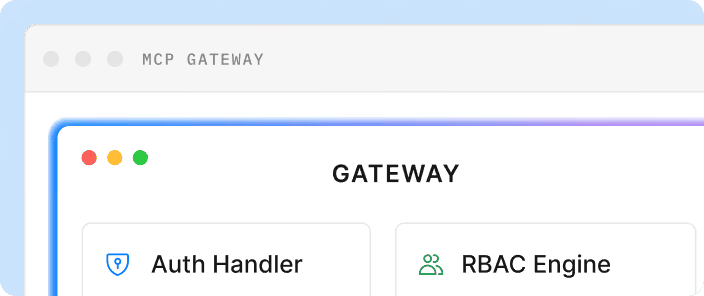
DigitalAPI solves the problem of API sprawl by providing a unified control plane that sits above your existing infrastructure. It allows you to govern and manage Gravitee alongside other gateways like Kong or AWS from a single pane of glass.
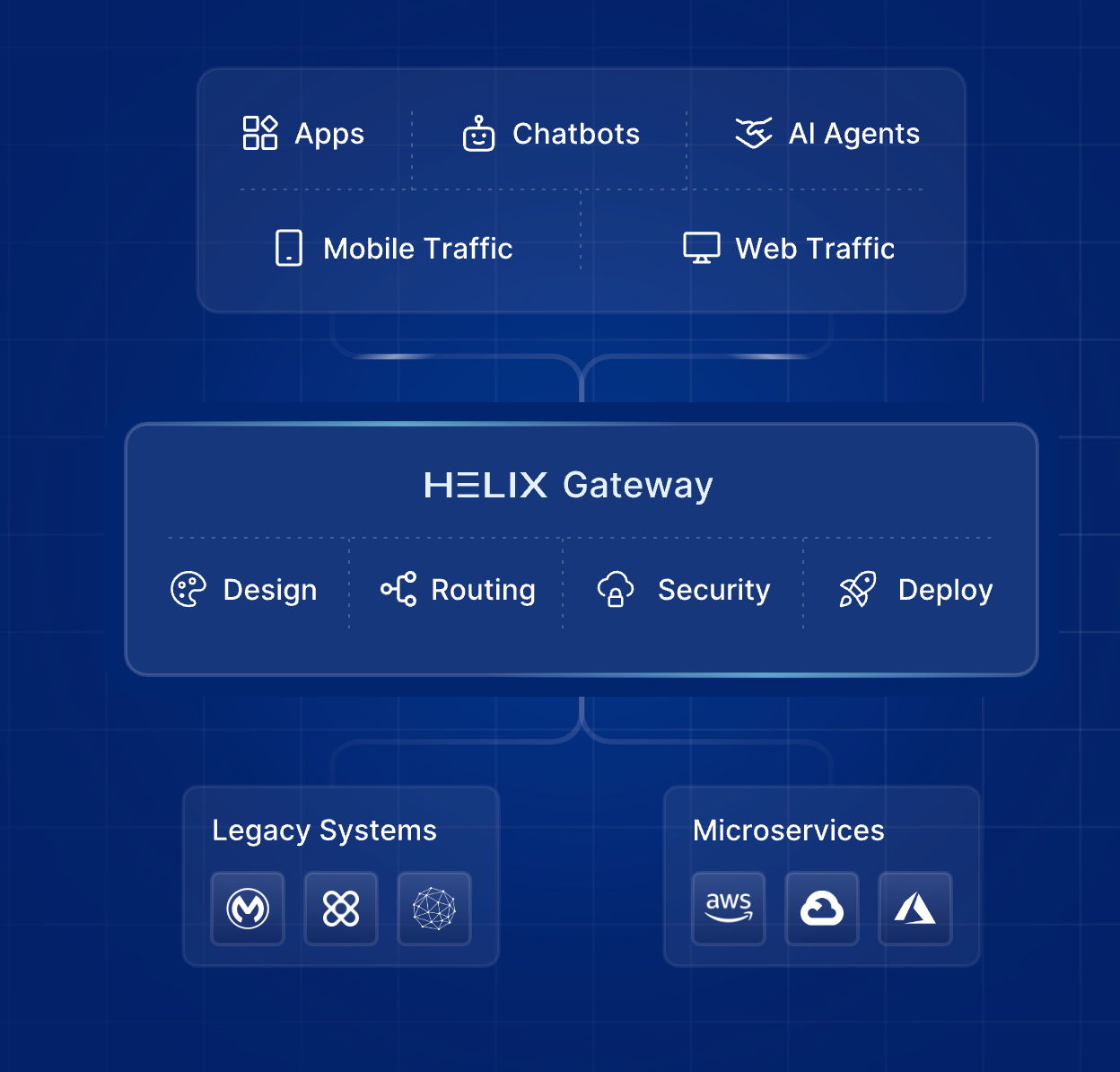
This means you do not need to rip and replace Gravitee immediately; you can overlay DigitalAPI to gain the analytics and governance you are missing. For new projects, the Arelio API Gateway offers a high-performance, AI-ready alternative that simplifies deployment and reduces DevOps overhead.
Key features
- Unified control plane: Manage policies, analytics, and lifecycles across all your gateways (gateway-agnostic) from one dashboard.
- Arelio API Gateway: A lightweight, easy-to-use gateway designed for speed and simplicity, ideal for teams moving fast.
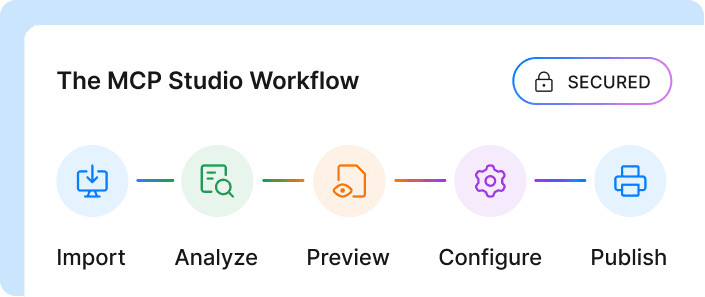
- AI-ready MCP agents: Automatically generate Model Context Protocol (MCP) servers for your APIs, making them instantly consumable by AI agents.
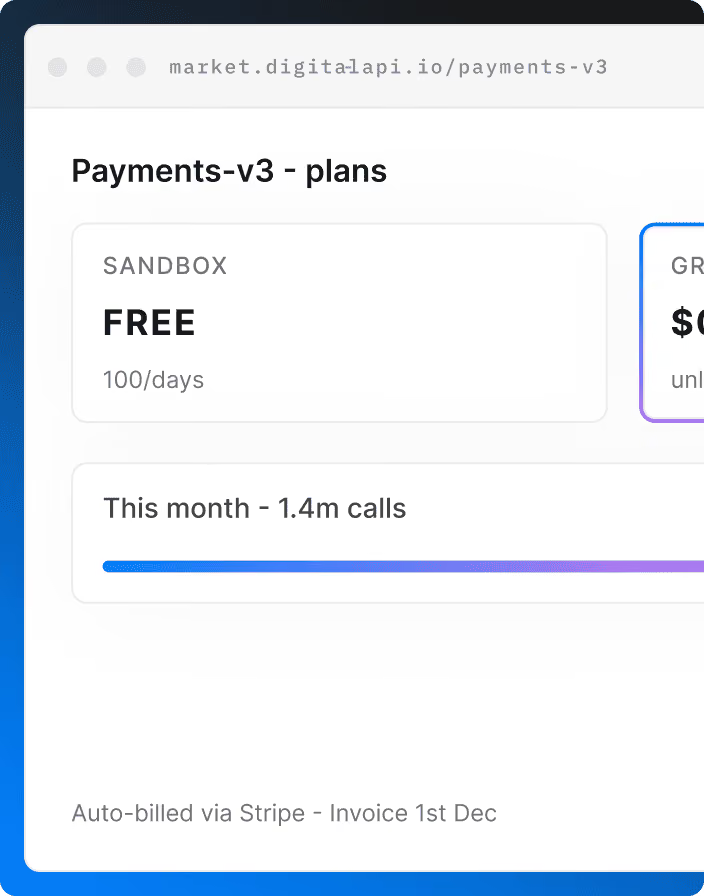
- API marketplace: Launch a branded storefront to publish APIs from any source, enabling discovery and monetization.
- Centralized governance: Define security policies once and enforce them globally across heterogeneous environments to prevent configuration drift.
Pros & cons
- Pros: Eliminates vendor lock-in; unifies fragmented API estates; provides built-in monetization and AI readiness.
- Cons: A newer challenger in the market compared to legacy giants; the ecosystem is growing but smaller than Kong's.
Best fit: Enterprises struggling with multi-gateway complexity and those needing a unified catalog with monetization capabilities.
2. Kong Gateway / Kong Konnect
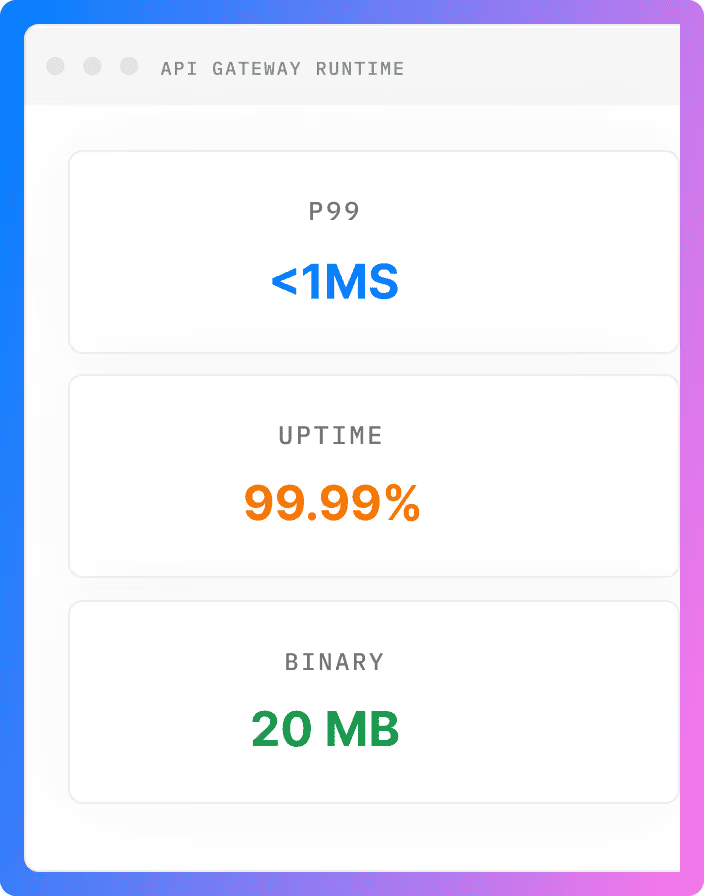
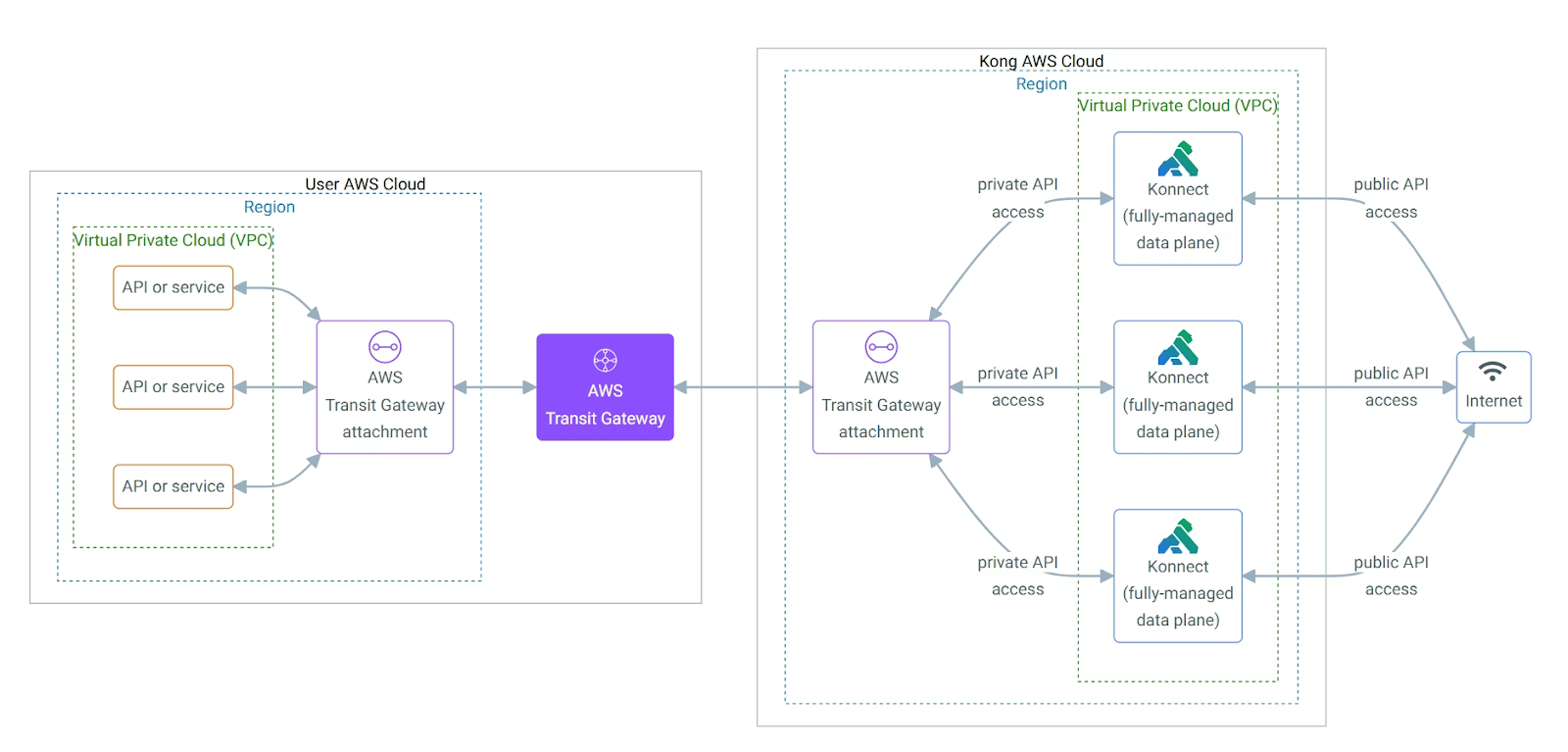
Kong is the most popular open-source alternative for teams that prioritize raw performance and modularity. Built on NGINX, it is lightweight and designed to handle high-throughput traffic with sub-millisecond latency. It relies on a vast ecosystem of plugins to extend functionality, allowing you to add authentication or traffic control without changing backend code.
Key features
- Plugin architecture: Extensive library of plugins for security, transformations, and observability.
- Kubernetes native: Integrates seamlessly into GitOps workflows and CI/CD pipelines, making it a favorite for DevOps teams.
- Performance: Optimized for microservices and distributed architectures where speed is critical.
Pros & cons
- Pros: Extremely fast; massive community support; highly extensible via Lua plugins; fits perfectly in containerized environments.
- Cons: Advanced features like the GUI and specific enterprise plugins require a paid license; managing plugins at scale can add complexity.
Best fit: High-performance microservices and Kubernetes-native environments.
Teams evaluating open-source gateways often compare Gravitee with Kong, but there are several Kong alternatives for API management that offer stronger governance and flexibility.
3. Apigee (Google Cloud)
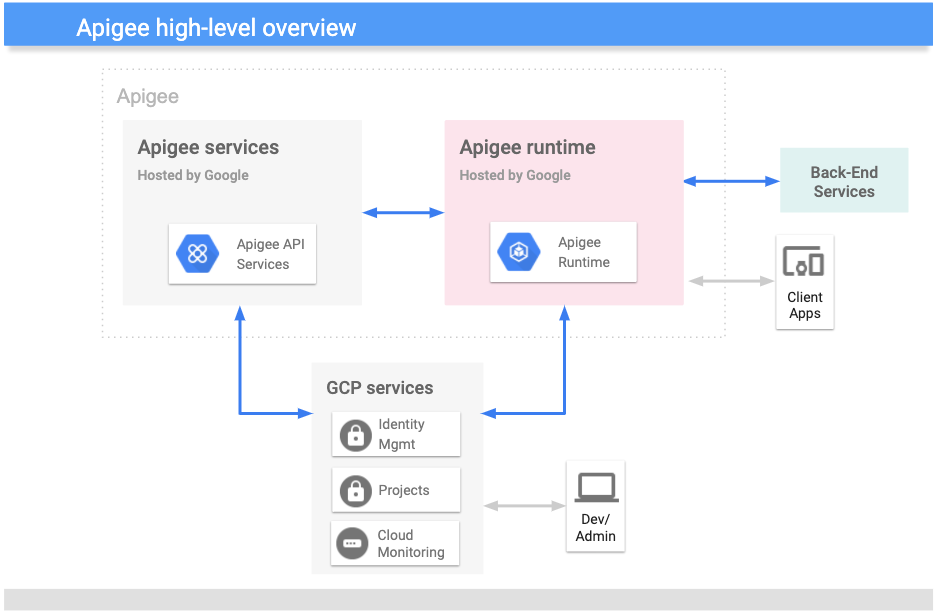
Apigee is the heavyweight champion for enterprise API management, focusing deeply on the business value of APIs. It excels in governance, security, and advanced monetization, acting as a "control tower" for your digital assets. This platform is ideal for organizations that treat APIs as products and need robust tools to manage external partners.
Key features
- Advanced monetization: Includes rate plans, revenue sharing, and billing engines out of the box.
- Security: Deep integration with Google Cloud security services for advanced threat protection.
- Analytics: Provides detailed business dashboards to track revenue, adoption, and usage trends.
Pros & cons
- Pros: Best-in-class features for monetization; comprehensive lifecycle management; strong enterprise support.
- Cons: High cost and complexity; significant vendor lock-in to the Google Cloud ecosystem; higher latency than lightweight proxies.
Best fit: Large enterprises requiring full-lifecycle management and deep monetization capabilities.
Enterprises needing advanced governance and monetization often evaluate Apigee alternatives for enterprise API management when Gravitee falls short.
4. Tyk
Tyk is an open-source gateway written in Go, known for being "batteries-included" and easy to deploy. It offers a flexible architecture that includes a dashboard, developer portal, and analytics without the need for immediate enterprise upgrades. This makes it a strong contender for teams that want a capable, self-hosted gateway without the complexity of Java-based stacks.
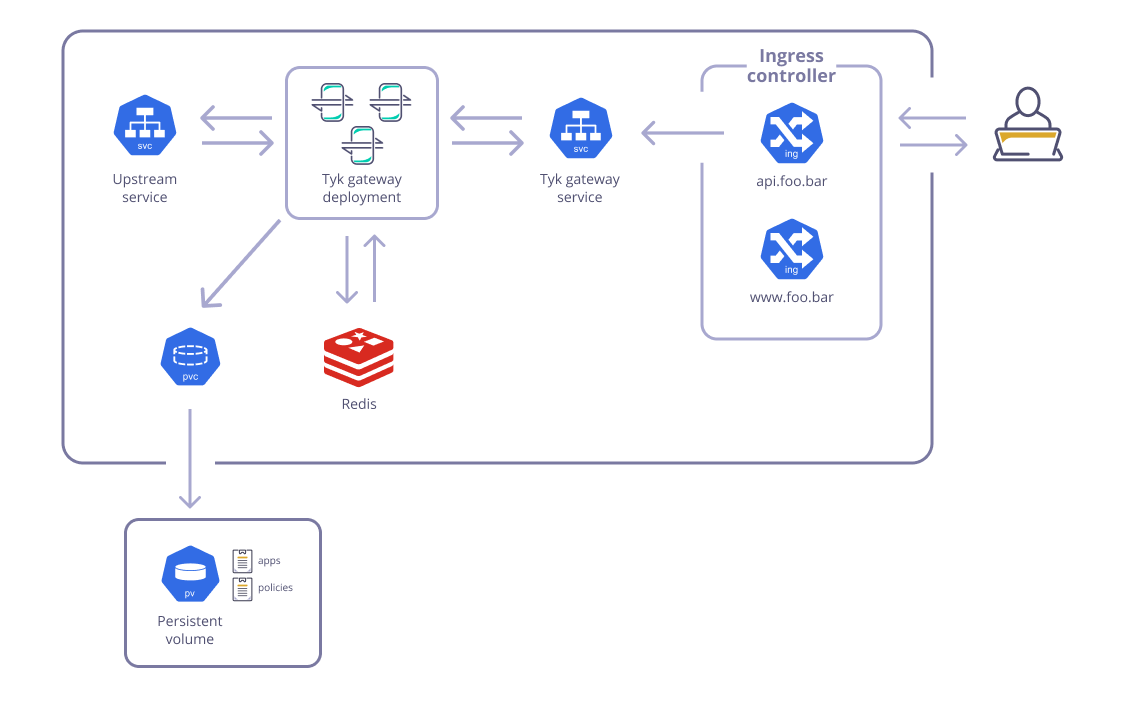
Key features
- Batteries-included: Features like the developer portal and analytics are available in the open-source version.
- Flexible deployment: Runs on-premise, in the cloud, or as a hybrid deployment.
- GraphQL support: Native support for GraphQL, including stitching and federation.
Pros & cons
- Pros: Easy to set up; no immediate license cost for key features; flexible architecture; strong community.
- Cons: The commercial ecosystem is smaller than legacy suites; extending it requires knowledge of Go.
Best fit: Teams seeking a flexible, open-source, and easy-to-use gateway.
5. WSO2 API Manager
WSO2 offers a fully open-source API management platform that includes the gateway, publisher, and store components. It is part of a larger middleware stack, making it a powerful choice for organizations with heavy integration needs. Unlike "open core" models, WSO2 releases its full feature set as open source, giving you total control.
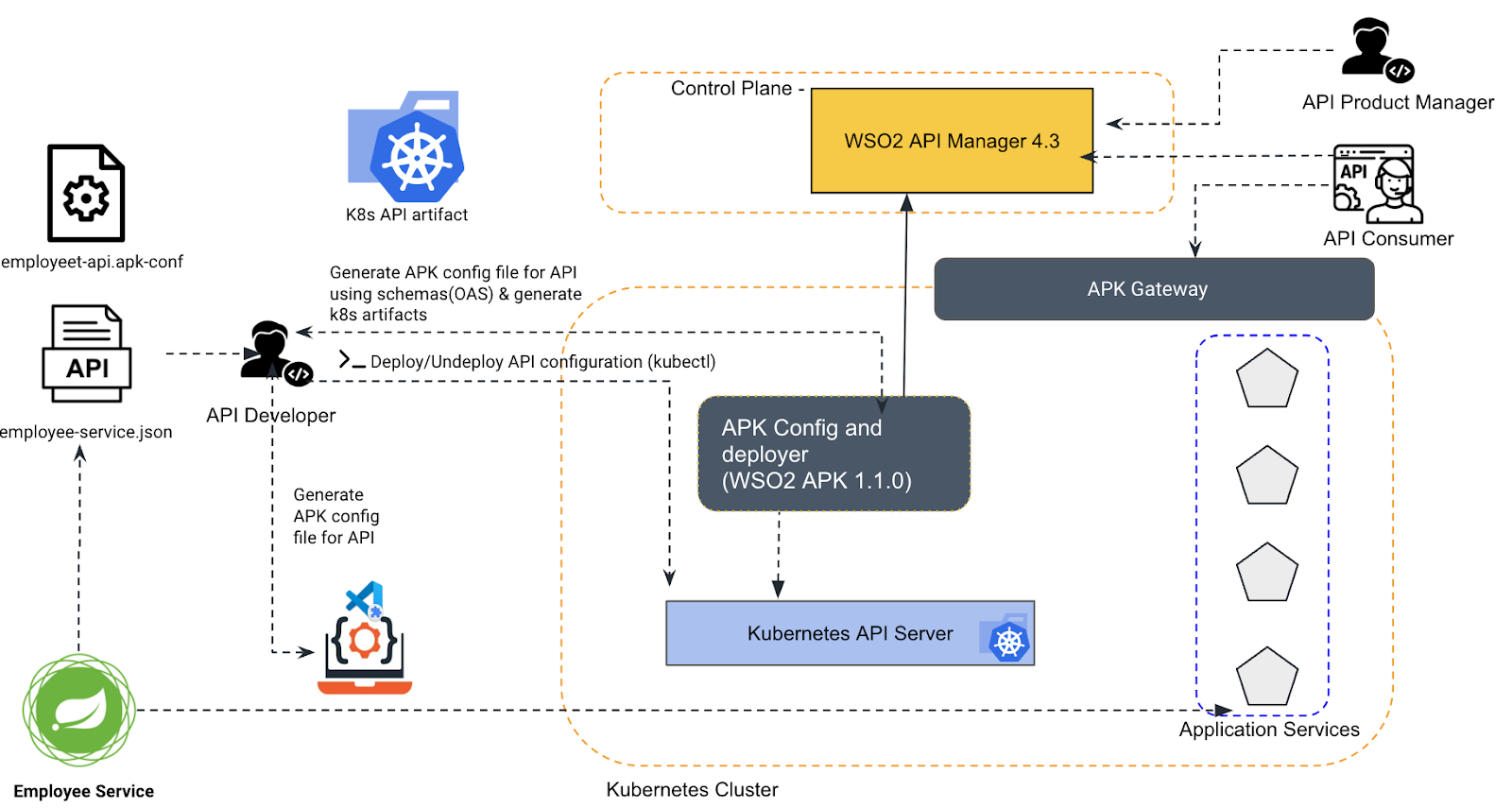
Key features
- Full open source: Access to the complete suite without license keys.
- Integration focus: Deep capabilities for message transformation and protocol bridging.
- Identity management: Includes a powerful Identity Server for complex federation and SSO.
Pros & cons
- Pros: No feature lock-in; highly customizable; strong identity capabilities; flexible deployment.
- Cons: High operational overhead to manage the Java stack; the UI can feel dated; upgrades can be complex.
Best fit: Enterprises wanting a complete, 100% open-source API lifecycle stack.
6. MuleSoft Anypoint Platform
MuleSoft is primarily an integration platform (iPaaS) that connects disparate systems, from mainframes to modern cloud apps. It uses an "API-led connectivity" approach to create a network of applications, making it much more than just a proxy. This is the go-to choice for large enterprises that need to unlock data from legacy systems and orchestrate complex workflows.
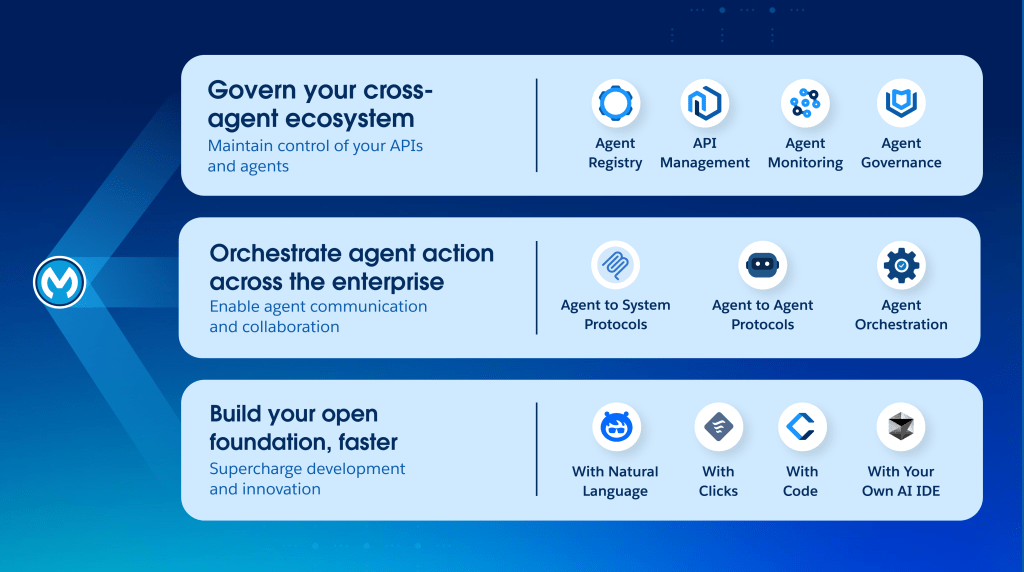
Key features
- Universal connectivity: Pre-built connectors for virtually any enterprise system (SAP, Salesforce, Oracle).
- Data transformation: Powerful DataWeave language for complex data mapping.
- Centralized governance: Ensures all integrations adhere to corporate security policies.
Pros & cons
- Pros: Unmatched for deep integration; strong visual tools; huge library of connectors.
- Cons: Very expensive; heavyweight for simple API routing; steep learning curve.
Best fit: Deep enterprise integration and connecting legacy systems.
Organizations replacing heavyweight ESB platforms often evaluate Gravitee alongside MuleSoft alternatives for modern API platforms to reduce cost and operational overhead.
7. NGINX API Gateway
NGINX is the gold standard for raw performance, serving as the engine for many other gateways. Used as a standalone gateway, it strips away management overhead to focus purely on efficient packet routing. It handles massive concurrency with very low memory usage, making it ideal for edge routing.
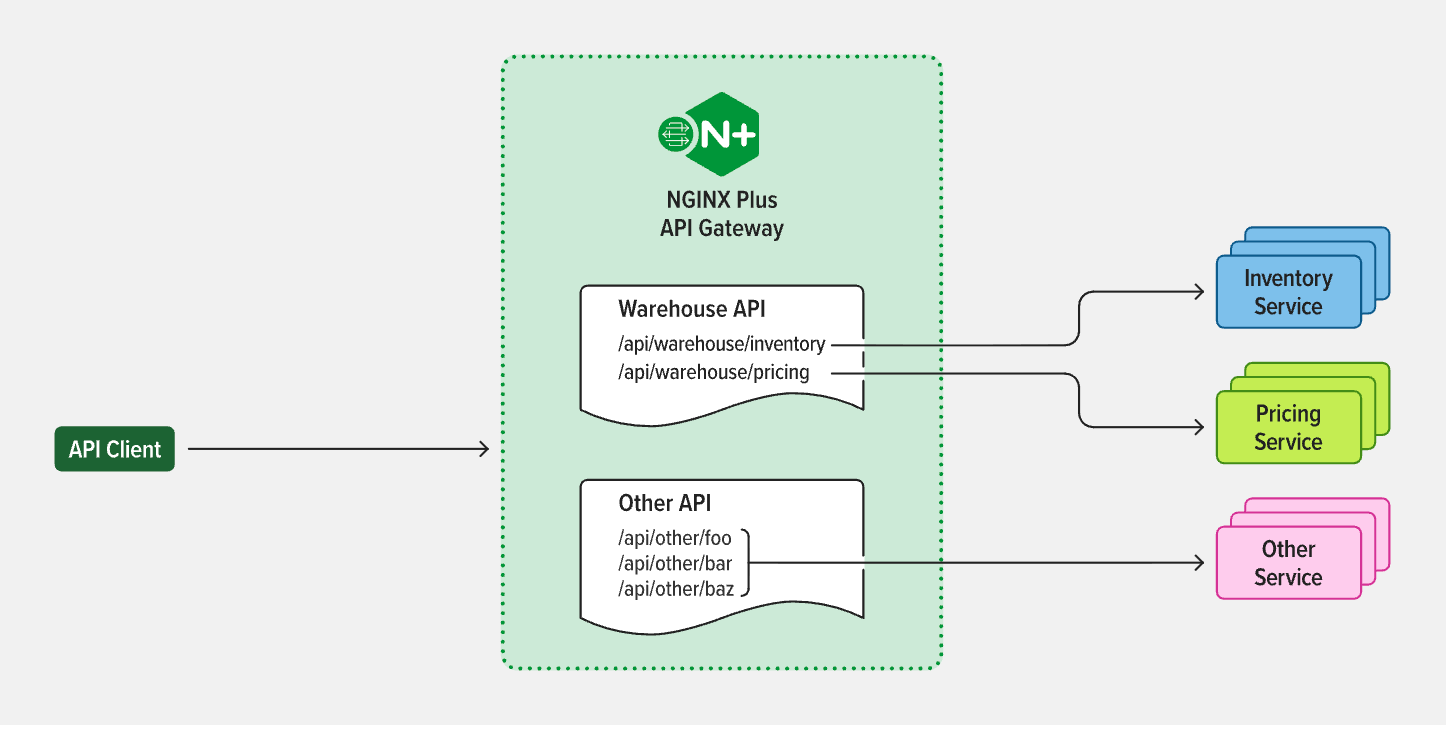
Key features
- Speed: Legendary throughput and stability under load.
- Simplicity: Configured via standard text files, with no database to manage.
- Load balancing: Robust capabilities for traffic distribution and health checks.
Pros & cons
- Pros: Incredibly fast; widely understood; zero dependencies; low resource footprint.
- Cons: Lacks native lifecycle management, portals, or GUIs; managing configs manually scales poorly.
Best fit: Performance-sensitive ingress where advanced management features are not required.
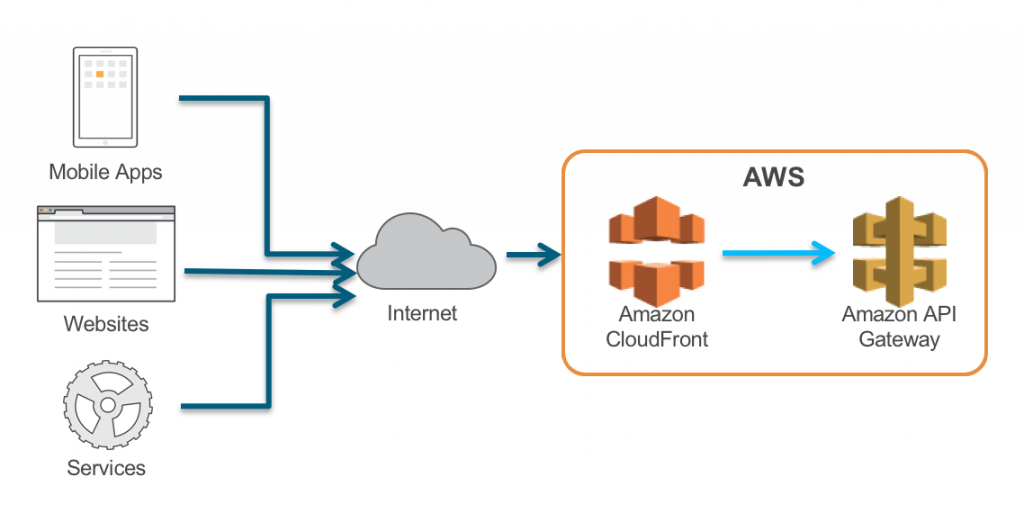
8. Amazon API Gateway
AWS API Gateway is a fully managed service designed for the AWS ecosystem. It integrates deeply with services like Lambda and DynamoDB, making it the default choice for serverless architectures. The pay-as-you-go pricing model makes it attractive for startups and varying workloads.
Key features
- Serverless integration: Native support for triggering Lambda functions.
- Auto-scaling: Handles traffic spikes automatically without infrastructure management.
- Security: Built-in integration with AWS IAM and Cognito.
Pros & cons
- Pros: Zero maintenance; tight AWS integration; elastic scaling.
- Cons: High vendor lock-in; costs can become unpredictable at high volumes; limited observability outside CloudWatch.
Best fit: Serverless applications and teams fully invested in AWS.
For teams moving away from cloud-locked architectures, several AWS API Gateway alternatives provide better multi-cloud and hybrid support than Gravitee.
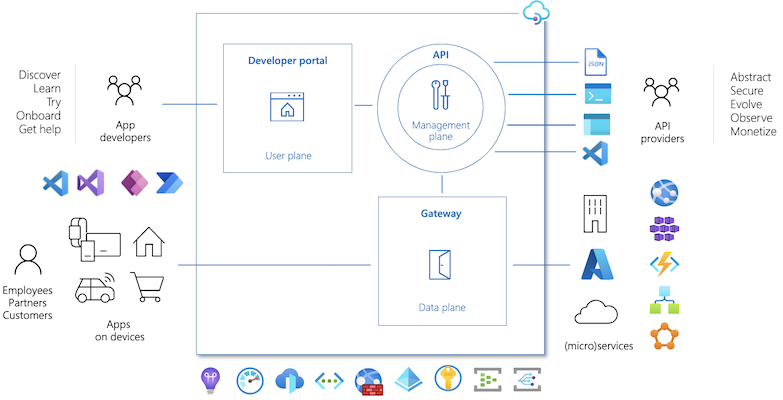
9. Azure API Management
Azure APIM is the Microsoft equivalent, offering strong integration with the Azure stack and .NET ecosystem. It provides a comprehensive developer portal and robust policy enforcement tools. The platform supports hybrid deployments via Azure Arc, allowing management of on-premise gateways from the cloud.
Key features
- Developer portal: Customizable portal for onboarding and documentation.
- Hybrid deployment: Manage gateways anywhere using Azure Arc.
- Microsoft integration: Native support for Azure Active Directory and Logic Apps.
Pros & cons
- Pros: Great developer experience; strong Microsoft integration; robust hybrid options.
- Cons: Deployment times can be slow; feature depth lags behind specialized tools like Apigee.
Best fit: Organizations building on the Microsoft Azure ecosystem.
How to choose the right alternative
Selecting a replacement for Gravitee requires aligning your platform choice with your specific technical and business goals. You must evaluate your need for event support against the need for governance or monetization.
Scenario 1: The Multi-Gateway Enterprise
If you manage a fragmented estate with Gravitee, AWS, and other gateways, you need a unified view.
Recommendation: DigitalAPI. It offers a control plane to govern all your gateways without forced migration, plus a unified catalog.
Scenario 2: High-Performance Microservices
If your priority is sub-millisecond latency for internal microservices traffic in Kubernetes.
Recommendation: Kong. Its lightweight NGINX core makes it the fastest option for east-west traffic.
Scenario 3: The API Business
If you need to treat APIs as products with complex billing, revenue sharing, and partner management.
Recommendation: Apigee or DigitalAPI. Both offer robust monetization tools, with DigitalAPI providing a faster deployment path.
Scenario 4: Deep Integration Needs
If you are connecting legacy mainframes and need complex data transformation alongside API management.
Recommendation: MuleSoft. Its ability to unlock legacy data via pre-built connectors is unmatched.
Find the right fit for your API strategy
Moving away from Gravitee is a chance to mature your API operations. You need a platform that not only handles traffic but also enables governance, monetization, and developer adoption. Whether you choose the speed of Kong, the business depth of Apigee, or the unified control of DigitalAPI, ensure your choice supports your long-term architecture.
Unify your gateways with DigitalAPI
Stop managing gateways in silos. DigitalAPI lets you govern, secure, and monetize your entire ecosystem, including Gravitee, Kong, and AWS, from one single place.
Start your free trial today
Frequently asked questions
1. Why are companies moving away from Gravitee?
Companies often switch due to the lack of a mature UI, operational complexity in deploying plugins, and weaker governance features compared to enterprise leaders. The absence of a native monetization framework also limits companies looking to generate revenue from their APIs.
2. Is Gravitee good for large enterprises?
Gravitee can work for enterprises focused on event-driven architectures, but it often lacks the robust governance, analytics, and "batteries-included" developer portal experiences that large organizations require for broad adoption. Managing it at a global scale can also introduce significant operational overhead.
3. What is the best open-source alternative?
Kong is the most widely adopted open-source alternative, known for its performance and vast plugin ecosystem. Tyk is another strong option, offering a Go-based architecture that is easy to deploy and includes a developer portal in its open-source version.
4. Which platform is best for API governance?
DigitalAPI and Apigee are leaders in governance. DigitalAPI provides a unified control plane to enforce policies across multiple gateways, while Apigee offers deep, centralized control suitable for highly regulated industries like banking and healthcare.
5. Does Gravitee support API monetization?
Gravitee does not have a strong native framework for monetization. While you can enforce quotas, building a full marketplace with billing, invoicing, and subscription tiers requires significant custom development. Platforms like DigitalAPI or Apigee offer these capabilities out of the box.
Dhayalan Subramanian is Associate Director, Product Growth at DigitalAPI, where he leads go-to-market and product growth for the company’s multi-gateway API management platform. His work focuses on helping large enterprises and mid-market cloud companies consolidate APIs across AWS, Azure, Apigee, Kong, MuleSoft, and other gateways into a single control plane for governance, discovery, monetization, and agent consumption.
Dhayalan brings 14+ years of experience across product strategy, enterprise architecture, and engineering leadership. Earlier in his career, he held senior roles at Encora (as Associate Architect and Technical Manager), Mindtree (Technology Lead), Tech Mahindra (Technical Lead), and Primus Analytics, where he designed integration frameworks and delivered enterprise-grade digital platforms for global customers.
At DigitalAPI, he works directly with platform, integration, and developer experience leaders at Fortune 500 organizations to operationalize unified API catalogs, developer portals, and MCP-ready APIs. He writes regularly on API developer experience, API governance, and AI agent architectures.
One email a fortnight. Worth opening.
A short digest of what we're writing, what we're learning from customers, and the handful of links you'd actually want from us. No tracking pixels.

.avif)