



Best Developer Portal for AWS API Gateway: Why Platform Teams Upgrade
Organizations using AWS API Gateway often need a developer portal that simplifies API discovery, onboarding, and documentation. DigitalAPI provides a developer portal designed to work alongside AWS API Gateway while improving the overall developer experience.

TL;DR
When AWS API Gateway operates independently, organisations encounter obstacles that an API developer portal is designed to solve: fragmented API documentation, manual developer onboarding, limited API discoverability, and lack of a centralized developer experience.
DigitalAPI's API developer portal addresses these gaps through unified API catalogues, built-in sandboxing, automated documentation, key management, self-service onboarding, and better visibility into API usage.
Book a demo to see how DigitalAPI helps organizations build a scalable developer portal for AWS API Gateway.
Amazon API Gateway is widely used to publish and manage APIs on AWS. It handles routing, security, throttling, and integrations with services like AWS Lambda. However, the gateway alone does not provide the developer experience needed to support growing API programs.
A developer portal for AWS API Gateway provides that missing layer. It allows teams to publish APIs, provide documentation, and onboard developers through a centralized platform. This helps developers discover APIs, request access, and start integrating faster.
What Are the Limitations of AWS API Gateway’s Developer Portal?
AWS API Gateway is designed to manage API traffic, security, and integrations across AWS services. However, AWS does not provide a fully integrated developer portal experience. Teams often need additional tools to handle API discovery, documentation, and developer onboarding.
Some of the most common gaps teams encounter include:
- Basic native developer portal in AWS API Gateway: AWS API Gateway focuses on API runtime management. It does include a built-in developer portal but needs to be customized internally for most features.
- Developer portal requires AWS Amplify templates: AWS provides reference templates for building a portal using Amplify and CloudFormation. However, teams must build and maintain the portal themselves.
- Documentation is not automatically generated: API Gateway does not generate rich interactive documentation by default. Teams must manage OpenAPI files or separate documentation tools.
- Limited API discovery across AWS services: APIs may be spread across multiple API Gateway instances and AWS accounts. Developers often struggle to find available APIs without a centralized catalog.
- No built-in developer onboarding workflows: AWS publishes a serverless reference portal (deployable via SAR), but teams must operate, scale and customize it themselves.
- API product and monetization support is limited: Packaging APIs into products, plans, or monetized offerings requires additional tooling beyond AWS API Gateway.
Do you need a Developer Portal for AWS API Gateway?
Many teams start using AWS API Gateway without a developer portal. This works when the number of APIs and developers is small. However, as more APIs are published, managing access, documentation, and discovery becomes difficult.
A developer portal for AWS API Gateway becomes necessary when API programs begin scaling across teams, partners, or external developers. It provides a structured way to publish APIs, manage onboarding, and support developer adoption.
You likely need a developer portal if the following conditions apply:
Developer Portal Evaluation Checklist
- Developers struggle to find available APIs: APIs are distributed across multiple AWS API Gateway services or AWS accounts.
- API documentation is scattered across tools: Documentation exists in Git repositories, internal wikis, or separate documentation platforms.
- Developer onboarding requires manual steps: API access requests, credential generation, and approvals require intervention from platform teams.
- Your organization manages multiple APIs or API teams: As the number of APIs grows, discoverability and governance become harder without a portal.
- You want self-service developer onboarding: Developers should be able to sign up, request API access, and obtain credentials independently.
- You want visibility into API adoption and usage: Platform teams need insights into which APIs are used, who is consuming them, and how frequently.
Book a demo to see how DigitalAPI can help you scale your developer portal for AWS API Gateway
What Features Should a Developer Portal for AWS API Gateway Have?
A developer portal for AWS API Gateway should address the operational gaps teams experience when managing APIs across the AWS ecosystem. APIs behind API Gateway often integrate with services like AWS Lambda, microservices, and internal platforms. A well-designed portal helps present these APIs in a structured way while simplifying developer onboarding and API adoption.
1. Centralized API Catalog Across AWS Services
AWS environments often contain APIs across multiple API Gateway instances, regions, or AWS accounts. A developer portal should provide a centralized API catalog that aggregates these APIs into a single discoverable interface.
This allows developers to easily find APIs without navigating different AWS environments.
2. Automatic Documentation from OpenAPI Specifications
AWS API Gateway commonly relies on OpenAPI specifications to define APIs. A developer portal should automatically generate documentation from these specifications.
This ensures documentation stays synchronized with API definitions and reduces manual documentation effort.
3. Self-Service Access to API Gateway Keys
Developers consuming APIs through AWS API Gateway often require API keys or other credentials. A developer portal should allow developers to request access and generate API Gateway keys through a self-service workflow. This removes the need for manual credential provisioning by platform teams.
4. Clear Visibility into API Gateway Resources
APIs managed in AWS often involve multiple components such as routes, stages, and integrations. A developer portal should present these API Gateway resources in a simplified way for developers. This helps developers understand available endpoints and how to interact with them.
5. Support for Testing and API Exploration
Developers should be able to test API endpoints directly from the portal. Interactive testing allows developers to validate requests, understand responses, and experiment with APIs before building integrations. This significantly improves the developer onboarding experience.
6. Insights into API Usage and Adoption
Teams using AWS API Gateway need visibility into how APIs are consumed. A developer portal should provide insights into API usage, developer activity, and adoption trends.
These insights help platform teams understand which APIs deliver the most value and where improvements are needed.
Why choose DigitalAPI’s Developer Portal for AWS API Gateway?
Organizations using AWS API Gateway often need a developer portal that simplifies API discovery, onboarding, and documentation. DigitalAPI provides a developer portal designed to work alongside AWS API Gateway while improving the overall developer experience.
Key advantages include:
- Unified API catalog and search: A single searchable registry of all APIs across gateways, teams, and environments with role-based visibility.
- AI-powered search and API-GPT: Natural-language API discovery that serves both human developers and AI agents.
- Interactive API explorer and sandboxing: In-portal sandbox with pre-filled auth, saved history, and shareable examples to make first calls in minutes.
- Self-serve onboarding and subscription management: Full lifecycle signup, tiered access, key rotation, and audit trails for external and internal users.
- Usage analytics and visibility: Dashboards showing who's calling what, partner usage, and internal reuse or dependency maps.
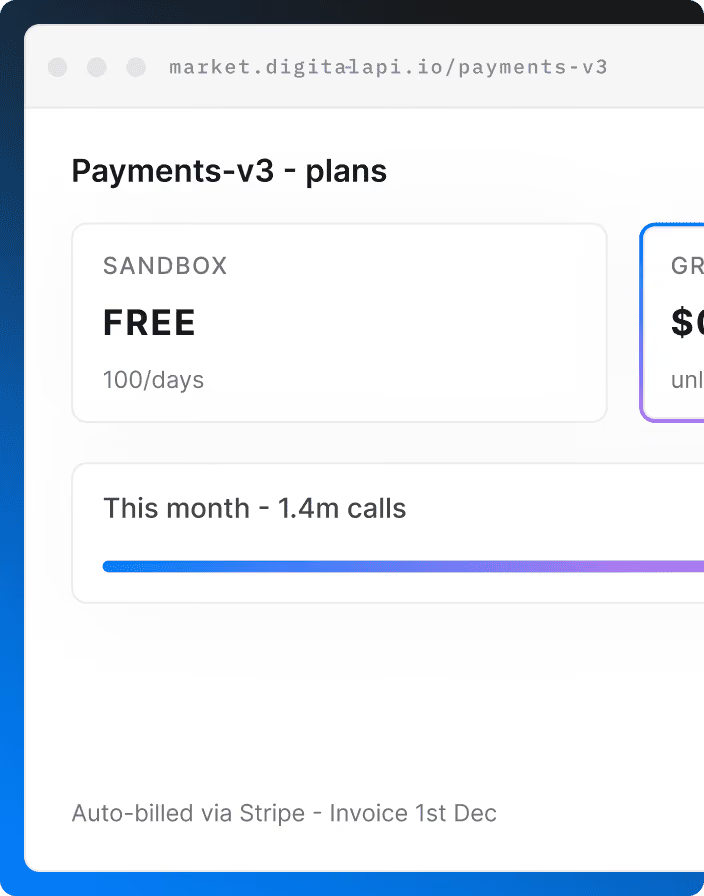
- Monetization ready: Native billing for subscriptions, pay-per-use, and overages with direct sync to Stripe, NetSuite, or QuickBooks.
- Comprehensive SDKs: Auto-generated SDKs in Python, Java, JavaScript, Go, and .NET with one-click language switching across the portal.
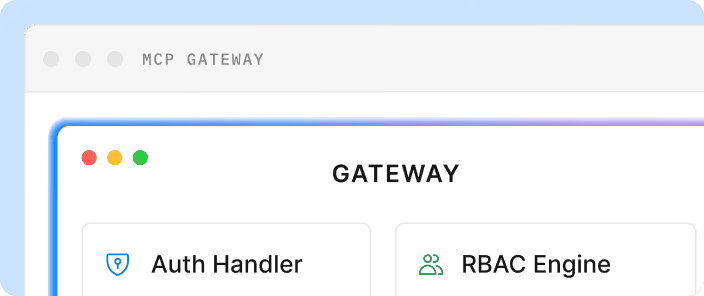
- Governance and RBAC: Unified role-based access, IP allowlisting, scoped credentials, and SIEM-exportable audit logs across all audiences.
- Community and support: Integrated changelogs, FAQs, chatbot, Salesforce ticketing, and a CMS for non-developer publishing.
- Automated, high-quality documentation and key management: Docs auto-generated from OpenAPI specs with policy-based key provisioning, rotation, and expiry alerts.
- White-label branding without engineering: Custom domain, theming, and CMS that let non-engineers spin up branded tenant portals in minutes.
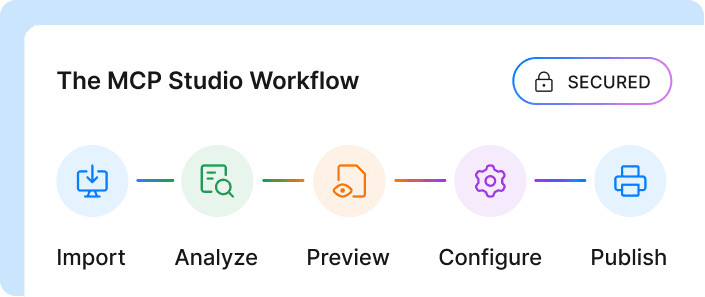
- Agent and MCP ready: Auto-generated MCP tool definitions per API with OAuth M2M, scoped access, and per-agent rate limits under one governance model.
Book a demo to see how DigitalAPI helps teams build a scalable developer portal for AWS API Gateway
FAQs
1. Does AWS API Gateway include a developer portal?
AWS API Gateway does not provide a fully built-in developer portal. AWS offers reference templates that allow teams to build a portal using services like AWS Amplify, but organizations must configure and maintain it themselves.
2. Why do teams use a developer portal with AWS API Gateway?
Teams use a developer portal for AWS API Gateway to simplify API discovery, documentation, and developer onboarding. A portal provides a centralized place where developers can explore APIs, request access, and start integrating.
3. How do developers get API keys in AWS API Gateway?
Developers typically receive API keys through usage plans configured in AWS API Gateway. A developer portal can automate this process by allowing developers to request and manage API keys through a self-service interface.
4. Can a developer portal integrate with AWS API Gateway?
Yes. Developer portals can integrate with AWS API Gateway using OpenAPI specifications, API configurations, and AWS service integrations. This allows APIs managed in AWS to be published and documented in the portal.
5. What should teams look for in a developer portal for AWS API Gateway?
Teams should look for features such as a centralized API catalog, automated documentation, self-service developer onboarding, API key management, and usage analytics. A flexible architecture is also important to avoid vendor lock-in.
Rajanish GJ is Chief Technology Officer at DigitalAPI, the multi-gateway API management platform that helps large enterprises consolidate API discovery, governance, monetization, and AI agent enablement across heterogeneous gateway environments, including Apigee, AWS API Gateway, Azure API Management, Kong, and MuleSoft.
Rajanish brings 20+ years of engineering leadership to the role. He spent formative years at Apigee, the API management platform now part of Google Cloud and widely regarded as the category’s foundational product, and at Google itself, where he worked on developer-facing infrastructure at scale. That operator background informs DigitalAPI’s architectural bets around gateway abstraction, MCP-ready APIs, and agent-native developer experience.
He writes regularly on API architecture, developer infrastructure, and AI-native API management, with particular focus on how engineering teams can future-proof their API platforms for the agent era.

One email a fortnight. Worth opening.
A short digest of what we're writing, what we're learning from customers, and the handful of links you'd actually want from us. No tracking pixels.

.avif)