



Apigee vs Kong vs Gravitee: The enterprise guide to multi-gateway API management
Enterprise architecture has reached a point where centralization strategies fail in a cloud-native world
TL;DR
1. Apigee is the premier choice for API monetization and partner governance, trading higher cost for comprehensive business analytics.
2. Kong leads in performance and microservices, offering a lightweight, Kubernetes-native footprint and ultra-low latency.
3. Gravitee specializes in event-driven architectures, natively bridging REST with asynchronous protocols like Kafka and MQTT.
4. Enterprises often face a multi-gateway reality, using all three tools across different teams, which can fragment governance.
5. DigitalAPI.ai unifies this fragmentation as a central control plane, providing governance and monetization without replacing existing gateways.
Book a Demo with DigitalAPI.ai
Enterprise architecture has reached a point where centralization strategies fail in a cloud-native world; the monolithic gateway is dead, replaced by a complex ecosystem where Digital Product teams demand business tooling, Platform Engineering requires high-speed proxies, and Data Architects adopt event-native solutions. This fragmentation forces a decision between Apigee vs Kong vs Gravitee that is rarely winner-take-all, as understanding each platform's architectural DNA is critical to managing the complexity of running them simultaneously. In this guide, we compare their performance, security, and monetization capabilities to help you match the right tool to the right problem and navigate the multi-gateway environment effectively.
The 3 pillars: Manager, accelerator, and event enabler
Apigee, Kong, and Gravitee represent three distinct philosophies of API management, each purpose-built to solve a different set of enterprise challenges rather than competing as identical clones.
- Apigee is the "Manager," designed for the API Product Owner to prioritize control, monetization, and business value over raw speed.
- Kong is the "Accelerator," engineered for the Platform Engineer to deliver ultra-low latency traffic routing within high-velocity Kubernetes environments.
- Gravitee is the "Event Enabler," serving the Data Architect by natively bridging asynchronous protocols like Kafka and MQTT to bring order to chaotic event streams alongside traditional REST APIs.
The core choice: Business, speed, or events
The decision usually comes down to the primary pain point your specific team is trying to solve right now. You must evaluate your immediate technical requirements against your long-term business goals to make the right choice for your specific use case.
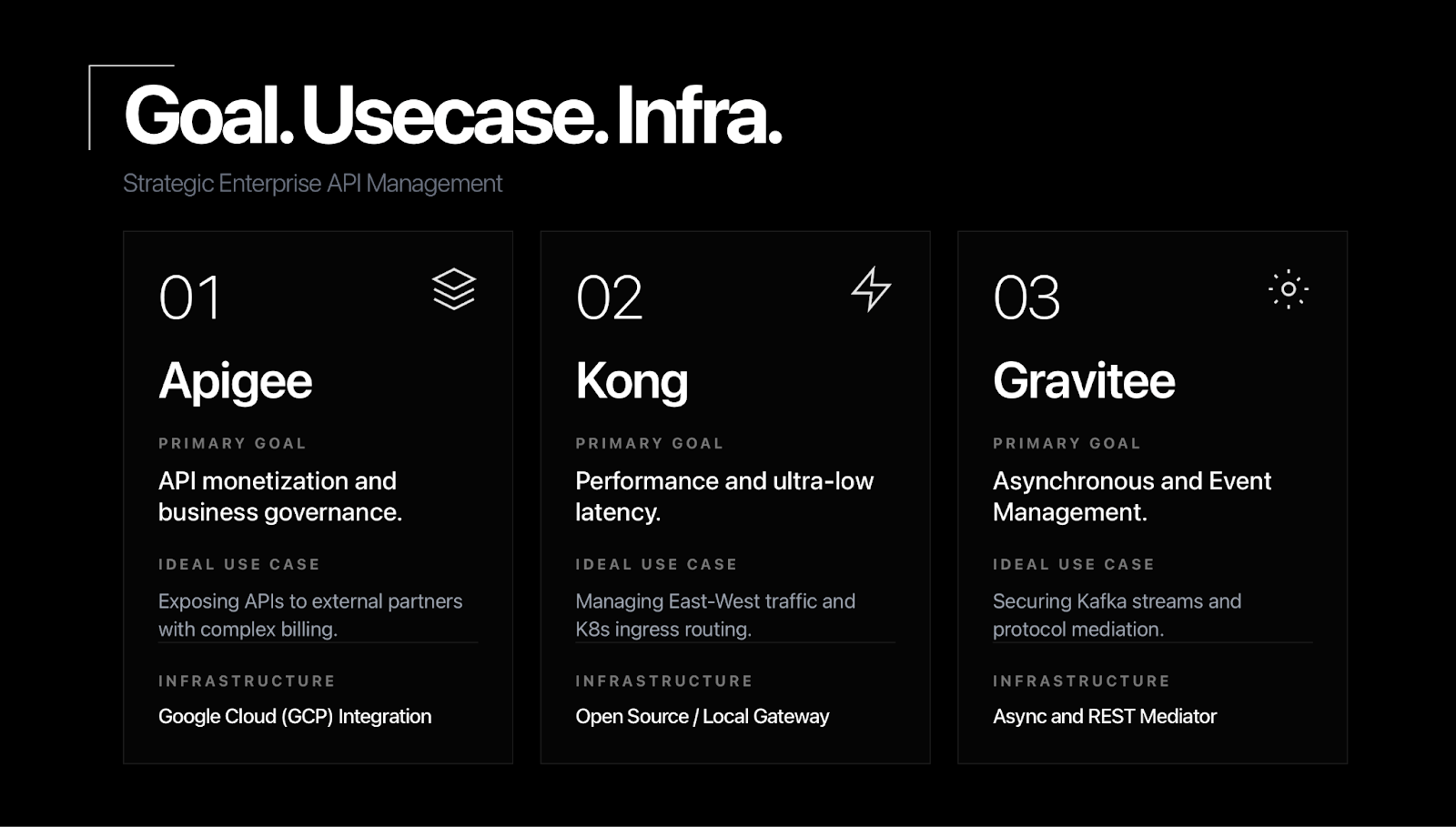
Choose Apigee if:
- Your primary goal is API monetization and business governance. You need a platform that understands rate plans, developer portals, and partner onboarding workflows out of the box without extensive customization.
- You need to expose APIs to external partners. Complex billing requirements and charging third parties for access to data or services are best handled by Apigee's native monetization engine.
- Your infrastructure is on Google Cloud Platform (GCP). The integration between Apigee X and Google's other services like IAM, Cloud Armor, and BigQuery provides significant operational advantages.
Choose Kong if:
- Your primary goal is Performance and low latency. You are building a system where every millisecond counts, such as a real-time bidding engine or a high-frequency trading platform, and you cannot afford proxy overhead.
- You are managing east-west traffic. Kong's lightweight footprint allows it to run as a sidecar or ingress controller in Kubernetes, handling service-to-service communication efficiently.
- You need a developer-friendly local gateway. Kong's open-source nature means your engineering teams can run the exact same gateway on their laptops as they do in production.
Choose Gravitee if:
- Your primary goal is Event Management. You need to manage the lifecycle of asynchronous APIs and treat event streams with the same rigor as you treat your RESTful services to prevent data swamps.
- You need to secure Kafka streams or MQTT topics. Gravitee allows you to apply policies like rate limiting and authentication to message brokers, which is often difficult with traditional gateways.
- You require a unified protocol mediator. You need to transform legacy SOAP services into modern event streams or expose Kafka topics via WebSockets to frontend applications.
The question remains regarding what happens when you discover you need all three capabilities simultaneously to stay competitive. Most large enterprises eventually realize they need the business control of Apigee, the speed of Kong, and the event handling of Gravitee. We will address the solution to that fragmentation later in this guide.
Apigee vs Kong vs Gravitee: Detailed feature comparison
A true comparison of Apigee, Kong, and Gravitee requires looking beyond marketing claims to understand their core engineering philosophies. Each platform was architected to solve a specific set of problems, ranging from business-centric monetization to ultra-low latency traffic management. This detailed analysis breaks down their capabilities across critical dimensions.
Apigee, Kong, and Gravitee each solve one problem. DigitalAPI solves all three.
See DigitalAPI as Your Control Plane
1. Architecture: The engines under the hood
The architectural differences between Apigee, Kong, and Gravitee dictate everything from their deployment flexibility to their operational cost. A deep understanding of these underlying engines is crucial for predicting how the platform will behave under load and how much maintenance it will require.
Apigee: The cloud proxy model
Apigee operates on a classic "Cloud Proxy" architecture which centralizes traffic management in a managed cloud environment.
- Deployment: In its most common SaaS form (Apigee X), the control plane is hosted and managed entirely by Google, providing a fully managed service experience.
- Traffic Routing: Traffic is routed through Google's global network before reaching your backend services, which ensures high availability and DDoS protection.
- Capabilities: This centralized model offers immense power for global analytics and security enforcement because Google handles the scaling, the patching, and the threat defense.
- Trade-off: This architecture introduces latency because every API call must hop to the Apigee edge, process policy logic, and then travel to your backend.
Kong: The lightweight NGINX model
Kong takes the opposite approach by utilizing a decentralized architecture that favors distribution over centralization.
- Core Engine: Built on top of NGINX (and OpenResty), Kong is designed to be lightweight and distributed across your infrastructure.
- Footprint: It uses a small footprint and can be deployed as a sidecar container next to every single microservice, minimizing network hops.
- Processing: Kong does not rely on a heavy central proxy for traffic processing; instead, the gateway instances handle the traffic locally, while a separate control plane pushes configuration updates.
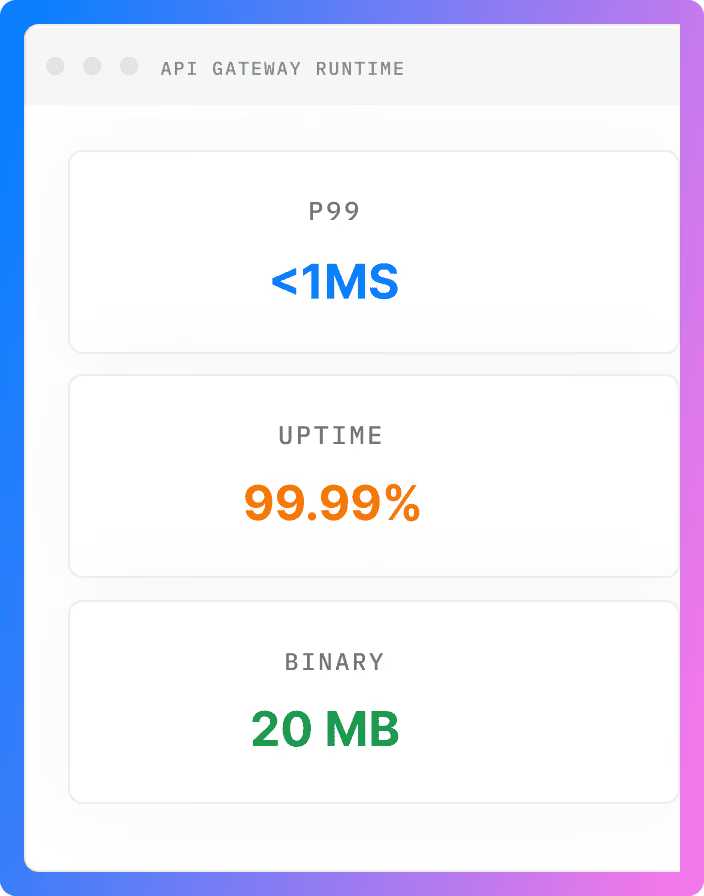
- Advantage: This architecture allows Kong to achieve incredibly low latency, making it the de facto standard for high-volume internal traffic where every millisecond counts.
Gravitee: The event-native model
Gravitee offers a unique architectural hybrid that bridges the gap between synchronous and asynchronous worlds.
- Performance: It provides a highly performant gateway built on Java (specifically Netty), which allows it to handle non-blocking I/O efficiently, a requirement for high-concurrency event streaming.
- Mediation: Its differentiator is the ability to mediate protocols natively within the gateway runtime without external adapters.
- Flexibility: Gravitee does not just proxy HTTP requests; it can ingest a Kafka topic and expose it as a WebSocket to a frontend app, or take a webhook and push it into a message queue.
2. Performance: Latency and throughput
Performance differences between Apigee, Kong, and Gravitee reflect what each gateway chooses to optimize. None is slow, but each favors a distinct workload style. Kong prioritizes proximity and traffic flow, Apigee prioritizes inspection and governance, and Gravitee prioritizes concurrency and protocol flexibility. These choices shape behavior under load, resource usage, and suitability. Performance is not competition, but architectural intent alone.
Kong: Built for raw speed
Kong focuses on moving traffic with minimal overhead by keeping its runtime lean and close to application services. Its NGINX and LuaJIT core processes requests quickly without heavy inspection layers, which helps maintain low and predictable latency. By running inside Kubernetes clusters or near workloads, Kong reduces network hops and avoids centralized bottlenecks. This design makes it behave more like infrastructure than a governance layer, which is why it is preferred in performance-critical environments.
Why it performs well:
- NGINX and LuaJIT core keeps latency low
- Local traffic processing inside clusters
- Small runtime footprint
- Stable performance at high TPS
Best suited for:
- East-west microservice traffic
- High-volume REST workloads
- Latency-sensitive internal systems
Apigee: Built for governed traffic
Apigee accepts performance trade-offs to enable deeper inspection across every API call. Requests pass through multiple policy layers for authentication, quota control, transformation, and analytics. This adds processing time, yet delivers strong governance and auditability. For external and partner APIs, network latency already dominates, so the extra milliseconds rarely change user experience. What changes is business visibility and compliance confidence.
Why it feels heavier:
- Executes multiple policy layers per request
- Parses and validates payloads
- Collects business analytics
- Enforces quotas and security rules
Best suited for:
- Partner and customer APIs
- Policy-heavy REST endpoints
- Business-critical integrations
Gravitee: Built for concurrency
Gravitee favors long-lived connection stability over short traffic bursts. Its reactive, non-blocking runtime manages thousands of concurrent streams without thread exhaustion. This design suits WebSockets, Kafka, and MQTT workloads where sessions stay open. It prioritizes consistent delivery for real-time, event-driven systems that depend on uninterrupted, reliable data flow every second.
Why it stands out:
- Reactive, non-blocking architecture
- Handles long-lived connections well
- Strong for streaming and event APIs
Best suited for:
- WebSockets and streaming APIs
- Kafka and MQTT mediation
- Real-time dashboards and feeds
Performance fit by workload
3. Deployment: SaaS, hybrid, and Kubernetes
How you deploy your gateway determines your operational overhead and your data sovereignty compliance posture. The choice between a fully managed SaaS, a customer-managed hybrid model, or a Kubernetes-native installation fundamentally changes the role of your operations team.
4. Monetization: Turning APIs into revenue
Monetization separates gateways built for business from gateways built only for traffic. While all three platforms can expose APIs, only one treats revenue as a native concern.
Apigee: Monetization as a core capability
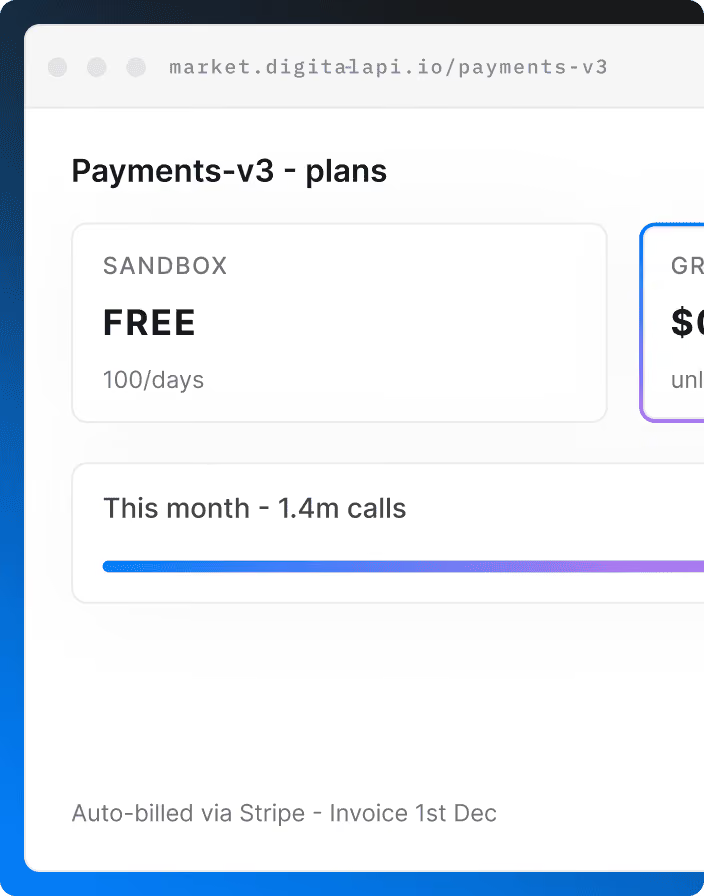
Apigee offers a full monetization engine with native support for rate plans, revenue sharing, prepaid and postpaid billing, taxation, and invoicing. API products can be commercialized without external billing systems. This makes Apigee the preferred choice for telecom, fintech, and data platforms that sell API access to partners.
Kong and Gravitee: Monetization as an extension
Kong and Gravitee do not treat monetization as a primary design goal. Their open-source versions lack billing features, and enterprise editions rely on plugins or integrations. Teams often build custom billing systems around them, which increases operational complexity and long-term maintenance effort.
Monetization maturity
The enterprise problem
- Only APIs running through Apigee are easy to monetize. APIs on Kong and Gravitee remain outside billing workflows. To monetize them, teams reroute traffic through Apigee, adding latency, cost, and architectural risk. This creates revenue silos, fragmented invoices, and missed commercial opportunities.
- Monetization stops being a gateway feature and becomes a platform problem.
5. Security: Guarding the front door
All three platforms offer strong security, but the implementation and focus differ significantly based on architecture. Security is no longer just about basic authentication; it involves advanced threat detection, zero-trust architectures, and granular access control for complex data streams.
Apigee: Advanced API security
Apigee focuses on "Advanced API Security" powered by intelligence.
- AI Detection: It uses Google’s AI to detect traffic anomalies (e.g., "This partner usually calls 5 times an hour, now they are calling 5,000 times") and block potential attacks before they succeed.
- Edge Defense: It excels at threat protection at the edge, leveraging Google's massive threat intelligence database to identify bad actors.
Kong: Zero-trust security
Kong focuses on zero-trust security within the network.
- mTLS Enforcement: Through its "Kong Mesh" offering, it enforces strict mTLS (mutual TLS) between services, ensuring that every service-to-service call is encrypted and authenticated.
- Hostile Assumption: It assumes the network is hostile and verifies every packet, making it ideal for highly secure internal microservices architectures.
Gravitee: Access management
Gravitee focuses on access management and identity control.
- Strong IAM: It has a strong Identity and Access Management (AM) module that rivals standalone IDPs, allowing for granular control over who can access specific data streams.
- Complex Protocols: It supports complex protocols like biometric authentication and step-up auth, making it highly effective for securing sensitive consumer-facing applications.
How to choose: Mapping tools to personas
The selection of the right tool depends entirely on who holds the budget and what the immediate business objective is. Different stakeholders within the organization will naturally gravitate toward different tools based on their specific KPIs and operational realities.
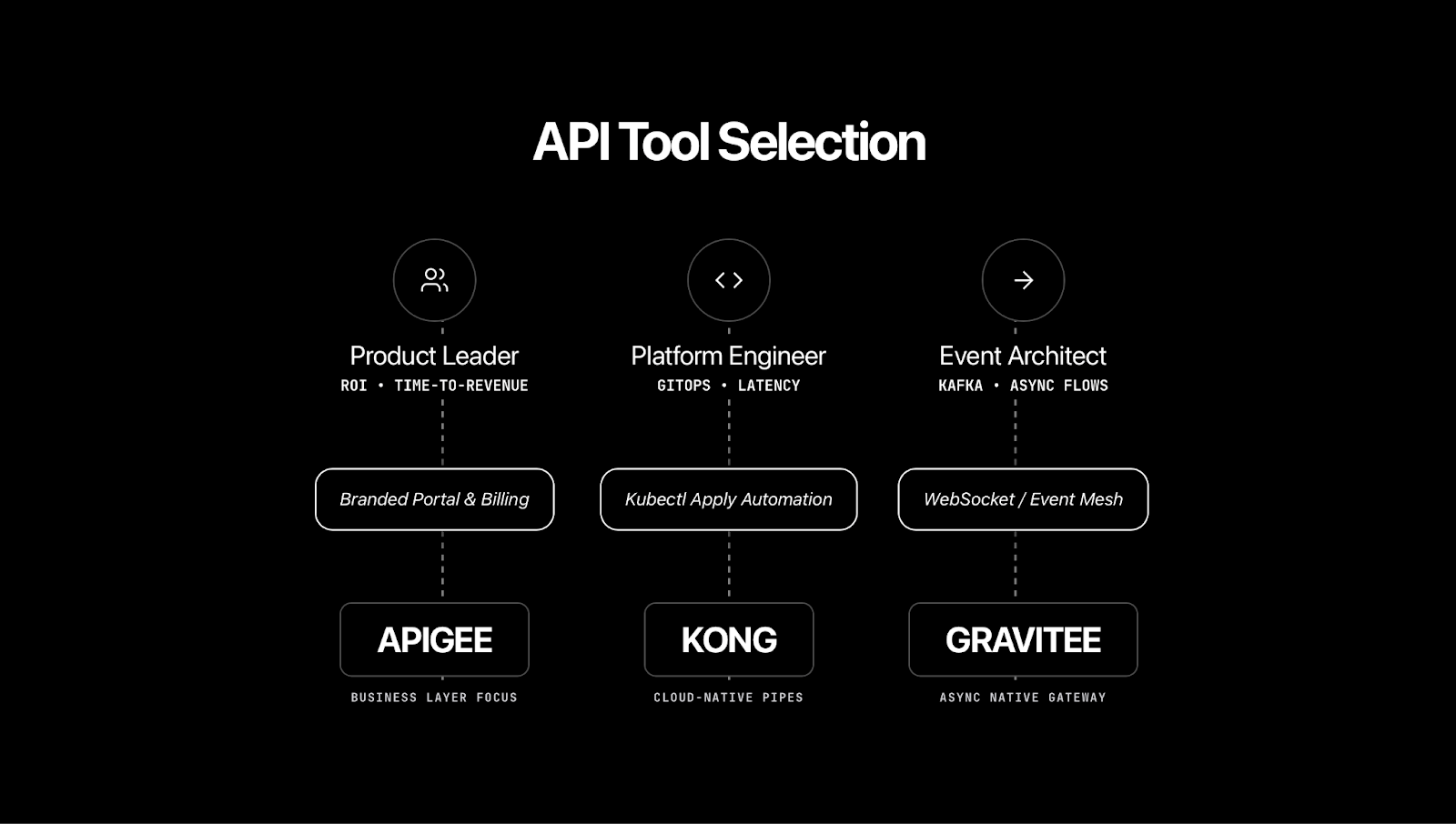
The "API Product" leader
Profile: You are a Digital Product Manager or CDO. You view APIs as products that drive revenue.
- Needs: You need deep analytics to understand customer behavior, a branded developer portal to onboard partners, and flexible billing options. You care about "Time to Revenue" and partner satisfaction.
- Best Fit: Apigee. Its focus on the business layer aligns perfectly with product-led growth strategies. It provides the dashboards and business insights you need to prove the ROI of your API program to the C-suite.
The "Cloud-Native" engineer
Profile: You are a Platform Engineer or DevOps Lead. You view APIs as pipes.
- Needs: You need a gateway that installs via kubectl apply. You want GitOps capability so that gateway configuration is stored in code repositories like Git. You hate clicking buttons in a UI and prefer automation. You care about "Latency and Uptime."
- Best Fit: Kong. Its developer-friendly, CLI-driven approach fits seamlessly into modern CI/CD pipelines. It gets out of the way and lets you build high-performance infrastructure without managing heavy vendor software.
The "Event-Driven" architect
Profile: You are an Enterprise Architect designing a real-time data mesh.
- Needs: You need to expose a Kafka topic to a mobile app over WebSocket. You need to apply rate limits to message consumption, not just API calls. You deal with asynchronous data flows.
- Best Fit: Gravitee. Its native understanding of asynchronous protocols makes it the only viable choice for event-heavy architectures. It bridges the gap between your event brokers and your API consumers without custom glue code.
The multi-gateway reality
Organizations often adopt a mixed gateway environment, utilizing different gateways for various purposes, such as public APIs, microservices, and event streams. While this "best-of-breed" approach solves specific technical problems for individual teams, it introduces significant organizational debt: fragmented governance, siloed visibility, and inconsistent security. This parallel, multi-team management of disparate gateways results in a chaotic landscape instead of a unified platform.
This creates Gateway Silos, which are detrimental to the overall health of the digital ecosystem.
- Discovery Gaps: You have no single catalog of all your APIs, making discovery impossible for developers.
- Security Risks: Your security policies are inconsistent: an OAuth rule in Apigee might not exist in Kong, leaving a vulnerability.
- Developer Friction: Worst of all, your developers are frustrated because they have to visit three different portals to find the documentation they need.
- Cost of Migration: The answer is not to rip them all out and migrate to a single monolith. That project will take three years and cost millions. The answer is to govern them where they are.
Unified governance with DigitalAPI.ai
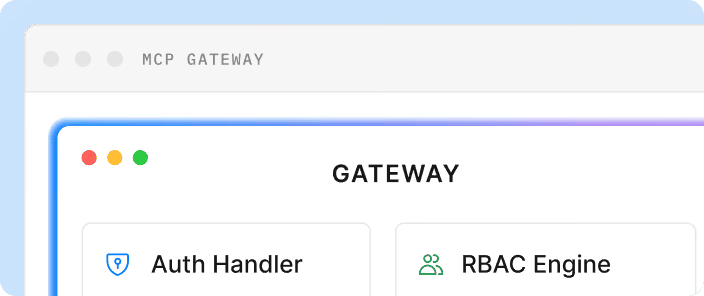
DigitalAPI.ai unifies Apigee, Kong, and Gravitee under a single Unified Control Plane, not by replacing them. It overlays existing gateways, ingesting configurations to offer a "Single Pane of Glass" for control and visibility without changing runtime. This enables central teams to enforce governance and gain insights, while product teams retain the freedom to use their preferred gateway.
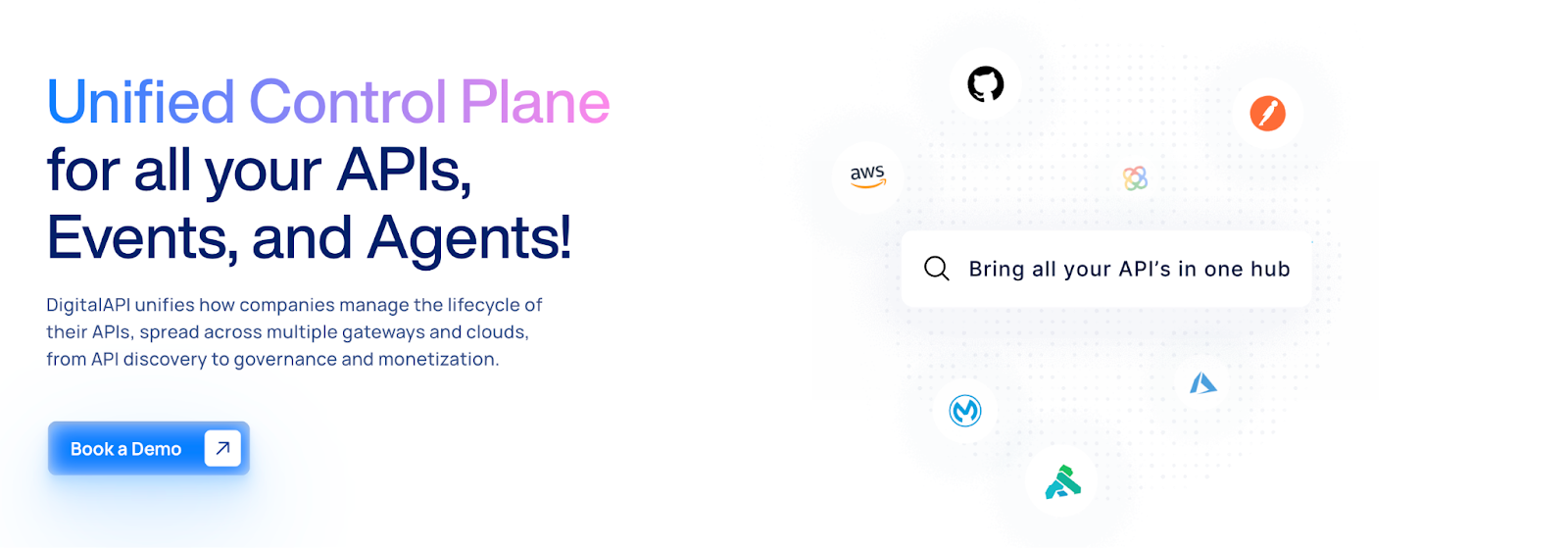
- Unified API discovery: One searchable catalog for APIs across Apigee, Kong, and Gravitee.
- Gateway-agnostic governance: Policies defined once and checked across all connected gateways.
- Cross-gateway monetization: Single billing and usage layer instead of gateway-specific monetization silos.
- Operational visibility: Clear view of ownership, documentation gaps, and security posture.
- No gateway replacement: Works as an overlay without changing existing runtime paths.
- Multi-gateway consistency: Reduces fragmentation across product, platform, and data teams.
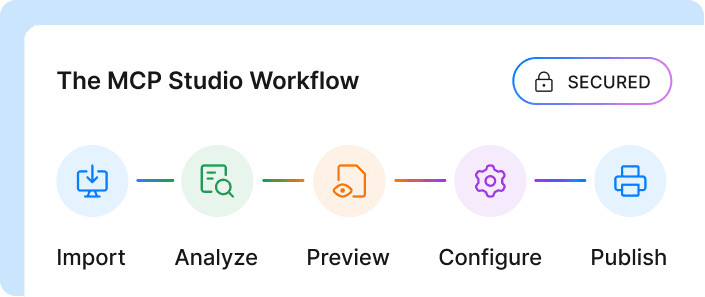
- AI-ready API contracts: Prepares APIs for AI agent consumption using machine-readable contracts.
Frequently Asked Questions
1. Can Kong replace Apigee?
Technically, yes, but it is often a strategic mismatch. Kong excels at performance and traffic management, but it lacks the business-layer features of Apigee. Replacing Apigee with Kong often requires building significant custom tooling for monetization, partner onboarding, and business analytics that Apigee provides out of the box.
2. Can Gravitee replace Kong?
Gravitee can replace Kong as a microservices gateway, as it is performant and lightweight enough for many use cases. However, Kong has a larger ecosystem of plugins and deeper roots in the Kubernetes community. Teams purely focused on high-speed K8s ingress often stick with Kong for its familiarity.
3. Which platform is the cheapest at scale?
Kong (Open Source) is the most cost-effective for raw traffic volume because it is free to use if you can manage it yourself. Apigee is typically the most expensive due to its call-volume pricing model. Gravitee offers a middle ground with node-based pricing that is predictable.
4. Which is best for AI and event-driven architectures?
Gravitee is best for event-driven architectures due to native support for Kafka and MQTT protocols. For AI consumption, DigitalAPI.ai is the superior choice as an overlay, as it specifically prepares APIs from any gateway for consumption by AI agents via MCP generation.
One email a fortnight. Worth opening.
A short digest of what we're writing, what we're learning from customers, and the handful of links you'd actually want from us. No tracking pixels.

.avif)