



Top 7 API Visibility Tools to Monitor & Secure Your APIs
API visibility refers to the ability to gain comprehensive insight into the entire lifecycle and operational behavior of your Application Programming Interfaces.


TL;DR
1. API visibility tools are essential for monitoring, securing, and understanding the entire API landscape within an enterprise.
2. They provide real-time insights into API performance, usage patterns, and potential security threats.
3. Effective tools centralize logging, enable proactive threat detection, and enforce consistent governance policies.
4. Fragmented API ecosystems, shadow APIs, and evolving cyber threats necessitate robust visibility solutions.
5. Key features include advanced analytics, traffic management, centralized alerting, and seamless integration with existing infrastructure.
Gain complete control over your API ecosystem. Discover DigitalAPI today!
In an era defined by interconnected services, APIs have become the lifeblood of digital operations, powering everything from internal microservices to customer-facing applications and partner integrations. This proliferation, however, introduces complexity. Enterprises often find their API landscape growing exponentially, spread across diverse environments and owned by numerous teams. Without a clear, comprehensive view, organizations risk performance bottlenecks, security vulnerabilities, compliance gaps, and an inability to innovate efficiently. Gaining deep API visibility isn't merely a technical luxury; it's a strategic imperative for maintaining control, ensuring security, and optimizing the health of your digital ecosystem.
What is API Visibility?
API visibility refers to the ability to gain comprehensive insight into the entire lifecycle and operational behavior of your Application Programming Interfaces. It's about seeing, understanding, and managing every aspect of an API, from its design and deployment to its runtime performance, security posture, and usage patterns. This goes beyond simple uptime monitoring; it encompasses a holistic view that includes:
- Real-time Performance Monitoring: Tracking latency, error rates, throughput, and resource consumption.
- Security Posture & Threat Detection: Identifying vulnerabilities, unauthorized access attempts, data breaches, and abnormal usage patterns.
- Usage Analytics: Understanding who is using which APIs, how frequently, and from where.
- API Discovery & Inventory: Knowing what APIs exist across the organization, their documentation, ownership, and lifecycle status.
- Compliance & Governance: Ensuring APIs adhere to internal policies, industry regulations, and security standards.
- Error and Log Management: Centralized collection and analysis of API errors and transaction logs for faster troubleshooting.
Ultimately, API visibility provides the clarity needed to make informed decisions, mitigate risks, and optimize the value derived from your API investments.
Key Features of an Effective API Visibility Tool
To truly master your API ecosystem, the right visibility tool must offer a comprehensive suite of capabilities. Here are the essential features to look for:
- Real-time Monitoring & Alerts: Instantaneous tracking of API health, performance metrics (latency, throughput, error rates), and resource utilization. Configurable alerts notify teams immediately of anomalies, outages, or performance degradation.
- Advanced Security Analytics & Threat Detection: Capabilities to analyze API traffic for malicious patterns, detect common attack vectors (e.g., SQL injection, XSS), identify suspicious behavior, and integrate with WAF (Web Application Firewall) functionalities for proactive defense.
- Centralized Logging & Tracing: Aggregating logs from all APIs and services into a single, searchable repository. Distributed tracing helps visualize end-to-end request flows across microservices, simplifying root cause analysis for complex distributed systems.
- API Discovery & Inventory Management: Automatic discovery of existing APIs across various environments (gateways, cloud services, code repositories) to build a comprehensive, up-to-date API catalog, including metadata, ownership, and documentation links.
- Traffic Management & Throttling: Controls to manage API traffic, including rate limiting, quota enforcement, and spike arrest policies, preventing abuse and ensuring fair usage while protecting backend services.
- Usage Analytics & Reporting: Detailed insights into API consumption, including top users, most popular APIs, geographical usage, and historical trends. Customizable dashboards and reports provide business and operational intelligence.
- Policy Enforcement & Governance: Tools to define and automatically enforce API design standards, security policies, access controls, and compliance requirements across the entire API lifecycle.
- Integration Capabilities: Seamless integration with existing development tools (CI/CD), security information and event management (SIEM) systems, identity providers (IdP), analytics platforms, and cloud infrastructure for a unified operational view.
- Developer Portal Integration: Providing a clear, well-documented portal where API consumers can discover, learn about, and interact with APIs, often leveraging the visibility tool's data for metrics and usage examples.
Top 7 API Visibility Tools to Monitor & Secure Your APIs
Navigating the vast landscape of API management and monitoring tools can be challenging. We’ve curated a list of the top API visibility tools, each offering distinct strengths in monitoring, security, and overall API lifecycle management, to help you make an informed choice.
1. DigitalAPI (Unified API Visibility & Governance)
DigitalAPI is a unified API intelligence and visibility platform purpose-built for enterprises operating large, fragmented API ecosystems. Instead of focusing on a single gateway or runtime, DigitalAPI provides a centralized control and visibility layer across APIs spread over multiple gateways, clouds, and teams. It helps organizations understand what APIs exist, how they are being consumed, and where governance gaps lie. The platform is designed to bring order to API sprawl while enabling scalable discovery, governance, and analytics across the entire API estate.
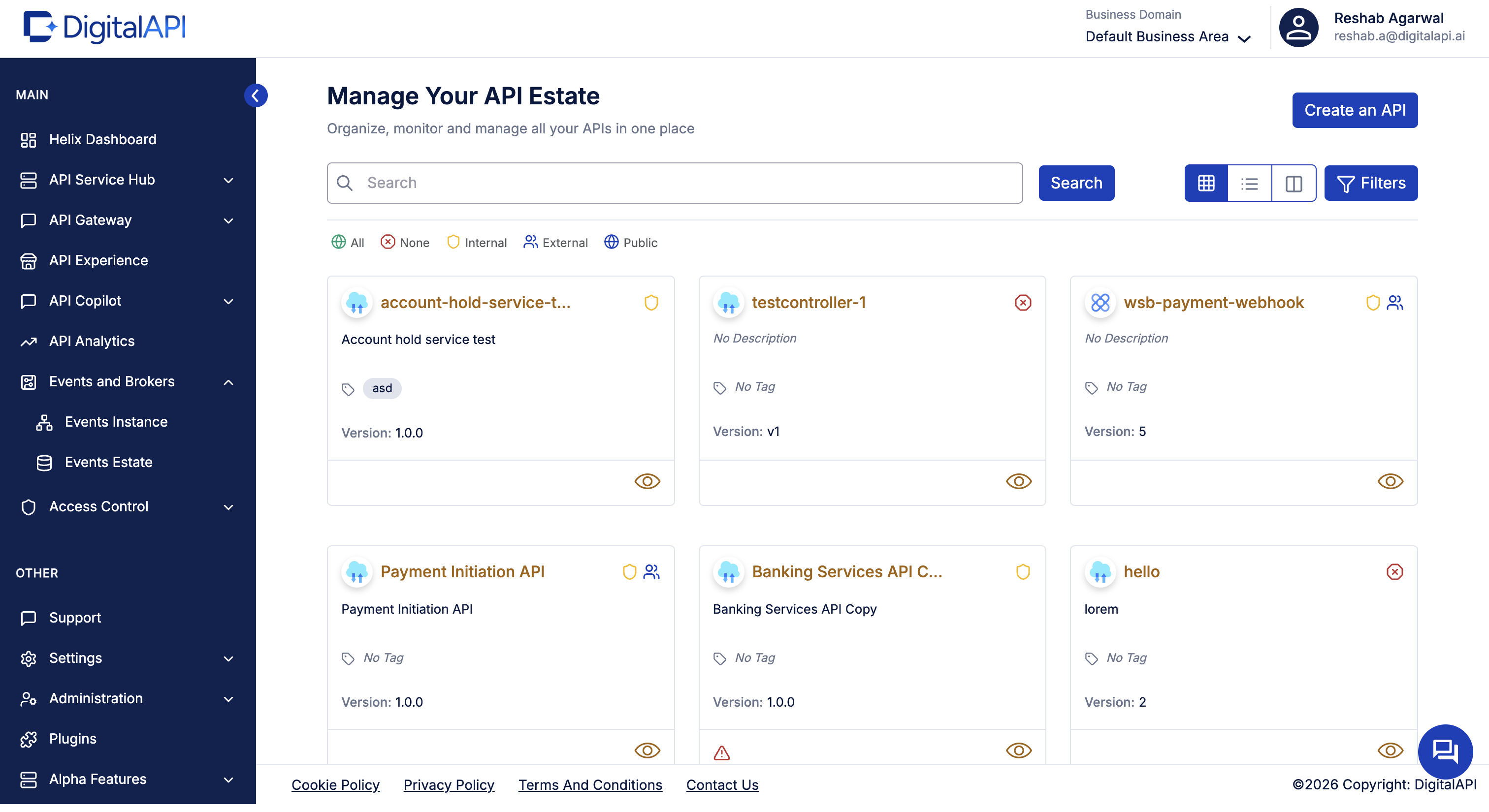
Visibility Features
- Unified API Inventory: Aggregates APIs from multiple gateways, clouds, specs, and teams into a single searchable catalog.
- Cross-Gateway Analytics: Provides consolidated metrics on traffic, latency, errors, and usage across all gateways, not just one runtime.
- End-to-End API Lifecycle Visibility: Covers discovery, consumption, governance, and operational insights across the full API lifecycle.
- Shadow & Zombie API Detection: Identifies undocumented, unused, or forgotten APIs to reduce operational and security risk.
- Consumption & Adoption Insights: Tracks who is using which APIs, how frequently, and from where, across internal, partner, and external consumers.
- Operational & Governance Dashboards: Offers role-based views for platform teams, architects, and security teams with actionable API intelligence.
Security Features
- Centralized Governance Layer: Enforces consistent governance policies across APIs hosted on different gateways.
- Fine-Grained Access Control: Supports RBAC, SSO, and scoped permissions for developers, partners, and internal teams.
- Security Posture Visibility: Surfaces risky access patterns, inconsistent policies, and anomalous API behaviour across the estate.
Strengths
Designed for enterprises with fragmented API ecosystems. Focuses on visibility, governance, and intelligence beyond individual gateways.
Best For
Enterprises managing APIs across multiple gateways, clouds, and teams.
Pros
- True cross-gateway API visibility
- Unified analytics across the entire API estate
- Strong discovery and governance capabilities
- Complements existing gateways
Cons
- Not a runtime gateway replacement
- Requires integration with existing gateways
.png)
2. Apigee API Management (Google Cloud)
Apigee is Google Cloud’s enterprise-grade API management platform designed to help organizations build, manage, and secure APIs at scale. It provides deep visibility into API traffic flowing through Apigee-managed proxies, enabling teams to monitor performance, reliability, and usage in real time. Apigee combines strong analytics with robust security and policy enforcement capabilities. It is often adopted by large enterprises standardizing their API programs on Google Cloud.
Visibility Features
- Real-Time Analytics Dashboards: Tracks traffic, latency, error rates, and throughput at the API proxy level.
- Customizable Reports: Enables detailed analysis of usage patterns, developer engagement, and API performance trends.
- Backend Health Monitoring: Provides visibility into backend target availability and response behaviour.
Security Features
- Policy-Driven API Security: Supports OAuth 2.0, API keys, JWT validation, and threat protection policies.
- Advanced Traffic Controls: Includes rate limiting, IP filtering, and protection against common API attacks.
Strengths
Full-lifecycle API management with strong analytics and security, tightly integrated with Google Cloud.
Best For
Enterprises standardised on Google Cloud needing end-to-end API management.
Pros
- Deep gateway-level analytics
- Strong security policy enforcement
- Seamless Google Cloud integration
Cons
- Limited visibility outside Apigee
- Can be complex and costly at scale
3. Kong Konnect / Kong Enterprise
Kong is a high-performance API gateway and service connectivity platform widely used in modern microservices architectures. Kong Konnect extends this capability by offering a cloud-native control plane to manage APIs across multiple environments. It focuses heavily on performance, scalability, and extensibility through plugins. Kong is often chosen by engineering-led teams that prioritize speed, flexibility, and distributed deployments.

Visibility Features
- Centralized Control Plane: Manages APIs, consumers, and plugins from a unified dashboard.
- Traffic & Usage Analytics: Provides insights into API traffic, latency, and health across environments.
- Logging & Observability Integrations: Exports metrics and logs to external monitoring tools.
Security Features
- Extensive Security Plugins: Supports authentication, authorization, IP restriction, and WAF integrations.
- RBAC for Gateway Management: Ensures controlled access to administrative and operational functions.
Strengths
High performance, cloud-native architecture, and a rich plugin ecosystem.
Best For
Organizations building microservices-based platforms requiring high-throughput API gateways.
Pros
- Extremely fast and scalable
- Highly extensible via plugins
- Strong hybrid and multi-cloud support
Cons
- Visibility is gateway-centric
- Advanced analytics often require add-ons
4. MuleSoft Anypoint Platform
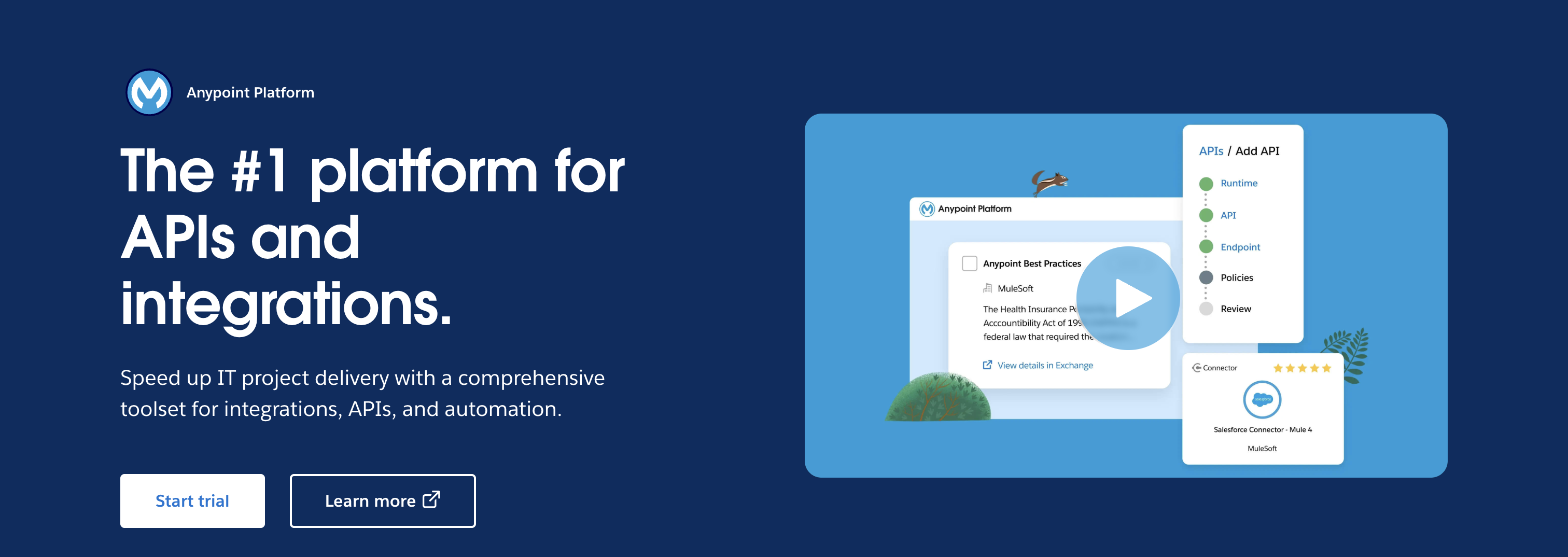
MuleSoft Anypoint Platform is a comprehensive integration and API management solution designed to connect applications, data, and systems across the enterprise. Its API Manager component provides visibility and security for APIs managed within the Anypoint ecosystem. MuleSoft emphasizes governance, standardization, and enterprise integration patterns. It is particularly popular among organizations already invested in Salesforce technologies.
Visibility Features
- Anypoint Monitoring Dashboards: Offers real-time metrics and alerts for APIs and integrations.
- Anypoint Visualizer: Graphically maps dependencies between APIs, services, and integrations.
- Operational Health Insights: Tracks performance and availability across the integration landscape.
Security Features
- Policy Enforcement Engine: Supports OAuth, JWT, client ID enforcement, and rate limiting.
- Enterprise Identity Integration: Works with external IdPs for centralized access control.
Strengths
Unified platform combining API management and enterprise integration.
Best For
Organizations with complex integration needs spanning APIs, SaaS, and legacy systems.
Pros
- Strong governance and lifecycle management
- Visual integration and dependency mapping
- Deep Salesforce ecosystem alignment
Cons
- Higher cost and operational complexity
- Less flexible for non-MuleSoft APIs
5. Akana by Perfoce
Akana is an enterprise-focused API management platform with a strong emphasis on governance, security, and compliance. It is designed for organizations operating in regulated industries where policy enforcement and control are critical. Akana provides mature tooling for managing API lifecycles, access, and developer engagement. Its strength lies in structured governance rather than lightweight API delivery.
Visibility Features
- API Performance Analytics: Tracks usage, response times, and adoption trends.
- Service Health Monitoring: Monitors availability and SLA compliance.
- API Catalog & Versioning: Provides structured discovery and lifecycle tracking.
Security Features
- Enterprise-Grade Security Policies: Supports OAuth, API keys, SAML, and data privacy controls.
- Compliance & Standards Support: Includes FIPS 140-2 and regulatory readiness features.
Strengths
Strong governance, compliance, and security controls.
Best For
Highly regulated enterprises with strict API governance requirements.
Pros
- Excellent governance capabilities
- Mature security and compliance features
Cons
- Heavier platform footprint
- Slower innovation compared to newer platforms
6. Postman Enterprise
Postman Enterprise extends the popular API development and testing tool into an organization-wide platform for API visibility, collaboration, and governance. It provides insight into APIs during design, testing, and early operational stages rather than at runtime. Postman is widely adopted by developers, making it effective for standardization and collaboration. Its visibility strengths lie primarily in the development lifecycle.
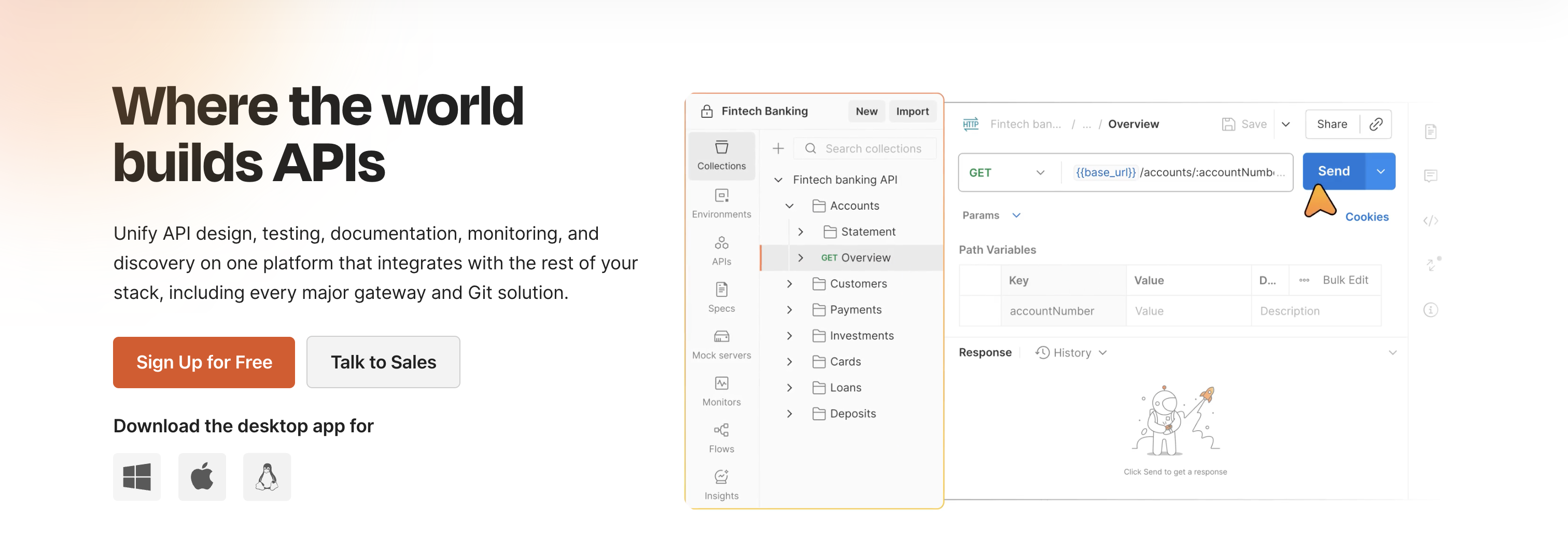
Visibility Features
- API Monitoring Checks: Tracks uptime, response times, and correctness.
- Centralized API Network: Provides visibility into APIs, collections, and environments.
- Workspace-Level Insights: Helps reduce shadow APIs and duplicated efforts.
Security Features
- Design-Time Security Warnings: Flags security issues during API design.
- Access Control for Teams: Centralized permissions for workspaces and collections.
Strengths
Developer-friendly platform with strong collaboration and testing features.
Best For
Teams focused on API design, testing, and early-stage governance.
Pros
- Widely adopted and easy to use
- Strong collaboration and testing tools
Cons
- Limited runtime visibility
- Not a replacement for API gateways
7. AWS API Gateway with CloudWatch, X-Ray, and WAF
AWS API Gateway, combined with CloudWatch, X-Ray, and WAF, provides a native API visibility and security stack for AWS-based architectures. It leverages tightly integrated AWS services to monitor performance, trace requests, and protect APIs. The solution is highly scalable and serverless-friendly. Visibility and security are strongest within AWS-managed environments.
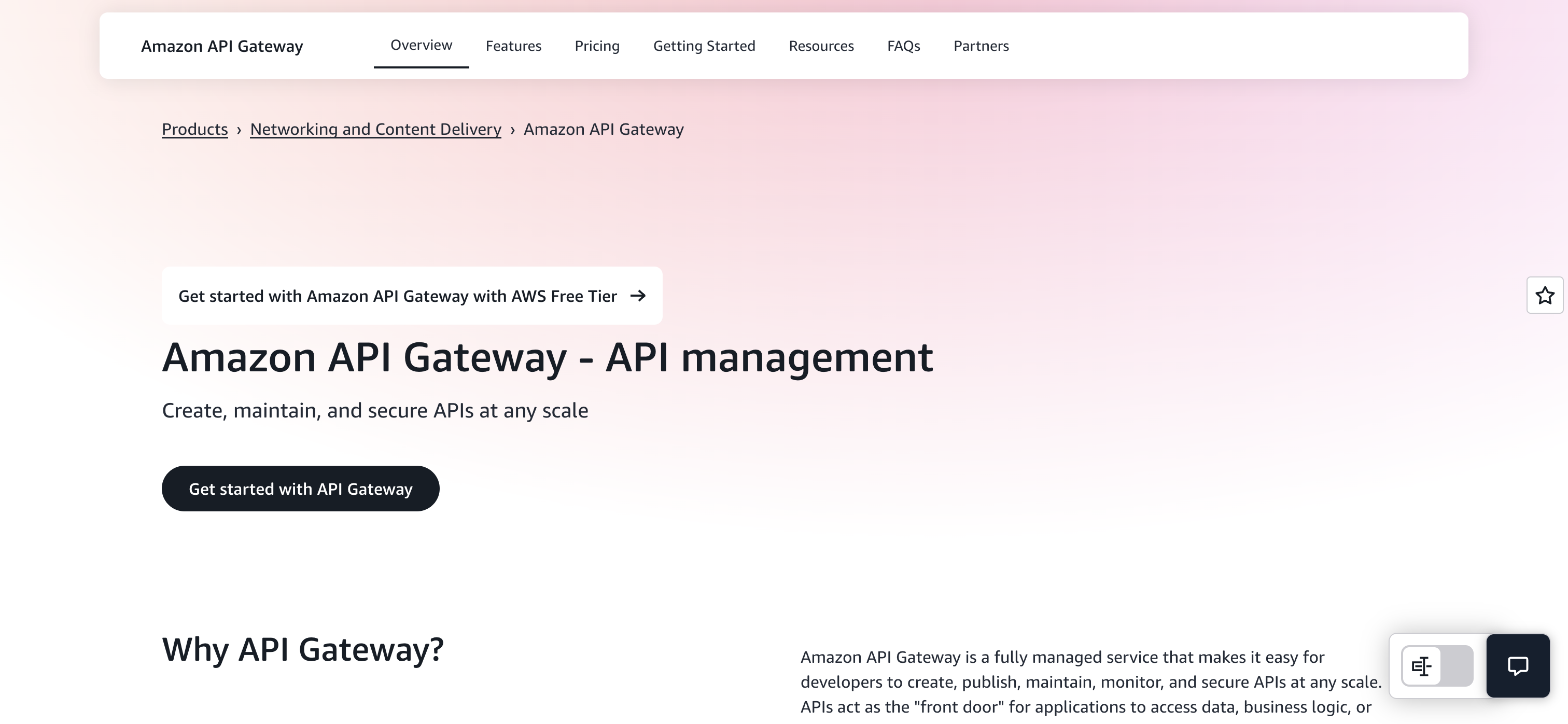
Visibility Features
- CloudWatch Metrics & Logs: Tracks latency, errors, and request volumes.
- AWS X-Ray Tracing: Provides end-to-end request tracing across services.
- Operational Alarms: Enables proactive alerting on API health.
Security Features
- AWS WAF Integration: Protects against common web exploits and bots.
- IAM & Cognito Authorization: Enables fine-grained access control.
Strengths
Deep AWS integration with strong scalability and security.
Best For
Organizations running fully or primarily on AWS.
Pros
- Native AWS integration
- Highly scalable and serverless-friendly
Cons
- Limited visibility outside AWS
- Fragmented tooling across services
Why API Visibility Matters for Enterprises
As API ecosystems expand, the challenges of managing them grow exponentially. Lack of visibility can lead to costly downtime, security breaches, and hindered innovation. Here’s why robust API visibility is non-negotiable for modern enterprises:
- Proactive Threat Detection and Security: APIs are prime targets for cyberattacks. Visibility tools offer real-time monitoring of traffic, authentication attempts, and data flows, allowing organizations to detect and respond to threats like injection attacks, DDoS, and unauthorized access before they escalate.
- Performance Optimization: Slow or failing APIs directly impact user experience and business operations. Comprehensive visibility provides metrics on latency, error rates, and resource utilization, enabling teams to pinpoint performance bottlenecks and optimize API efficiency.
- Compliance and Governance Assurance: Enterprises operate under strict regulatory frameworks (e.g., GDPR, HIPAA, PCI DSS). API visibility tools help enforce governance policies, track data access, and generate audit trails, ensuring APIs comply with legal and industry standards.
- Mitigating Shadow APIs: Unmanaged or undocumented APIs (shadow APIs) pose significant security and operational risks. Visibility solutions help discover all APIs across the organization, bringing them under centralized management and control.
- Faster Troubleshooting and Root Cause Analysis: When an API fails, quick resolution is critical. Centralized logging, error tracking, and request tracing provided by visibility tools dramatically reduce the time it takes to diagnose and fix issues, minimizing downtime.
- Improved Developer Experience and Adoption: Developers rely on clear documentation, consistent behavior, and reliable performance. Visibility into API usage and health helps API providers improve their offerings, making APIs more discoverable, easier to integrate, and more trustworthy for consumers.
- Scalability and Resilience: Understanding API traffic patterns and resource demands is crucial for scaling infrastructure effectively. Visibility insights allow organizations to anticipate load increases, provision resources proactively, and build more resilient API architectures that can handle fluctuating demand.
Choosing the Right API Visibility Tool for Your Enterprise
Selecting the ideal API visibility tool requires careful consideration of your organization's unique needs, existing infrastructure, and long-term goals. Here are key factors to guide your decision-making process:
- Scalability & Performance: Does the tool handle your current API traffic volumes and projected growth? Can it operate efficiently in your distributed environments (on-prem, multi-cloud, hybrid)?
- Integration Ecosystem: How well does it integrate with your existing API gateways, CI/CD pipelines, SIEM systems, identity providers, and monitoring tools? A seamless fit minimizes friction.
- Feature Set Alignment: Does the tool offer the specific monitoring, security, governance, and analytics features most critical to your operations? Prioritize capabilities that address your biggest pain points.
- Ease of Use & Developer Experience: Is the interface intuitive? Is it easy for different teams (developers, operations, security) to access the insights they need? Good documentation and community support are also vital.
- Security & Compliance: Does the tool meet your industry's compliance requirements? Does it offer robust security features like advanced threat detection, access control, and vulnerability management?
- Cost & Licensing Model: Evaluate the total cost of ownership, including licensing, infrastructure, and operational overhead. Understand if the pricing scales with usage or features.
FAQs
1. What is API visibility?
API visibility refers to the ability to monitor, analyze, and understand the operational status, performance, usage, and security of your APIs across their entire lifecycle. It provides insights into how APIs are being used, their health, and any potential security risks.
2. Why are API visibility tools important for security?
API visibility tools are crucial for security because they enable real-time threat detection, anomaly identification, and proactive defense against attacks like DDoS, injection flaws, and unauthorized access. They help enforce security policies, manage access controls, and provide audit trails for compliance.
3. How do API visibility tools help with performance monitoring?
These tools monitor key performance indicators (KPIs) such as latency, error rates, throughput, and resource utilization in real-time. By collecting and analyzing this data, they help identify performance bottlenecks, diagnose issues, and optimize API efficiency to ensure a smooth user experience.
4. Can API visibility tools help discover shadow APIs?
Yes, many advanced API visibility tools offer API discovery features that automatically scan and inventory APIs across different environments, including gateways, cloud services, and code repositories. This helps organizations uncover undocumented or "shadow" APIs, bringing them under proper management and control.
5. What's the difference between an API gateway and an API visibility tool?
An API gateway primarily acts as an entry point for APIs, handling traffic management, security policies, and routing. While gateways offer some basic monitoring, a dedicated API visibility tool (or a comprehensive API management platform) provides much deeper analytics, end-to-end tracing, advanced security intelligence, and often integrates with multiple gateways and services for a holistic view across a heterogeneous API landscape.
Dhayalan Subramanian is Associate Director, Product Growth at DigitalAPI, where he leads go-to-market and product growth for the company’s multi-gateway API management platform. His work focuses on helping large enterprises and mid-market cloud companies consolidate APIs across AWS, Azure, Apigee, Kong, MuleSoft, and other gateways into a single control plane for governance, discovery, monetization, and agent consumption.
Dhayalan brings 14+ years of experience across product strategy, enterprise architecture, and engineering leadership. Earlier in his career, he held senior roles at Encora (as Associate Architect and Technical Manager), Mindtree (Technology Lead), Tech Mahindra (Technical Lead), and Primus Analytics, where he designed integration frameworks and delivered enterprise-grade digital platforms for global customers.
At DigitalAPI, he works directly with platform, integration, and developer experience leaders at Fortune 500 organizations to operationalize unified API catalogs, developer portals, and MCP-ready APIs. He writes regularly on API developer experience, API governance, and AI agent architectures.

One email a fortnight. Worth opening.
A short digest of what we're writing, what we're learning from customers, and the handful of links you'd actually want from us. No tracking pixels.

.avif)