



Top 10 API Orchestration Tools for Seamless Integration in 2026
API orchestration refers to the process of combining multiple API calls into a single, coordinated workflow.

TL;DR
1. API orchestration combines multiple API calls into a single, cohesive workflow, enabling complex business processes.
2. It's crucial for achieving agility, scalability, and efficiency in modern, interconnected enterprise architectures.
3. Key benefits include reduced development time, improved data consistency, and enhanced system resilience.
4. Tools range from open-source frameworks like Apache Camel to enterprise iPaaS solutions like MuleSoft and Dell Boomi.
5. Selecting the right tool depends on factors like integration complexity, development team skills, scalability needs, and budget.
Ready to streamline your integrations? Explore the top API orchestration tools below!
In today's digital operations, applications rarely stand alone. They constantly interact, exchanging data and triggering actions across diverse systems. Managing these intricate dependencies and ensuring seamless communication between services is a complex challenge. API orchestration emerges as a vital strategy, allowing businesses to weave together disparate API calls into powerful, automated workflows. This approach isn't just about connecting points; it's about crafting intelligent sequences that drive efficiency, enhance user experiences, and unlock new capabilities from existing infrastructure. Understanding the landscape of API orchestration tools is key for any organization looking to optimize its integrated ecosystem and stay competitive.
What is API Orchestration?
API orchestration refers to the process of combining multiple API calls into a single, coordinated workflow. Instead of making individual, independent calls to different APIs, orchestration sequences these calls, handles data transformations between steps, manages errors, and ensures that complex business processes execute smoothly from start to finish. It's like a conductor leading an orchestra, ensuring each instrument (API) plays its part at the right time and in harmony to produce a complete symphony (business process).
This capability is crucial for building robust applications that interact with various services, whether internal microservices, third-party SaaS platforms, or legacy systems. It abstracts away the complexity of individual API interactions, presenting a simplified interface for developers and end-users alike.
Top 10 API Orchestration Tools in 2026
1. DigitalAPI
DigitalAPI is an enterprise API management platform is designed to unify APIs across multiple gateways, clouds, and tools. Rather than replacing existing gateways, DigitalAPI acts as an intelligence and control layer that enables API discovery, governance, orchestration, and consumption across fragmented API estates. It is especially focused on making APIs consumable not just by developers, but also by partners and AI agents.
Key Features
- Multi-Gateway API Orchestration: Orchestrate and manage APIs across Apigee, Kong, MuleSoft, AWS API Gateway, Azure, and more from a single control plane.
- Unified API Discovery: Automatically discover APIs from gateways, repositories, and specs, and expose them via a central catalog and developer portal.
- Cross-Gateway Governance: Define policies (auth, rate limits, approvals, access rules) once and apply them consistently across gateways.
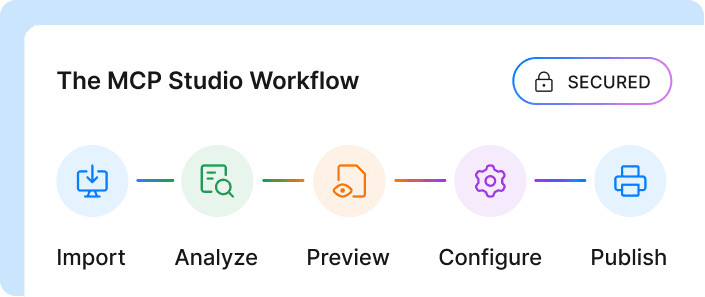
- API Workflow Orchestration: Chain APIs into workflows for internal automation, partner flows, and AI-agent-driven use cases.
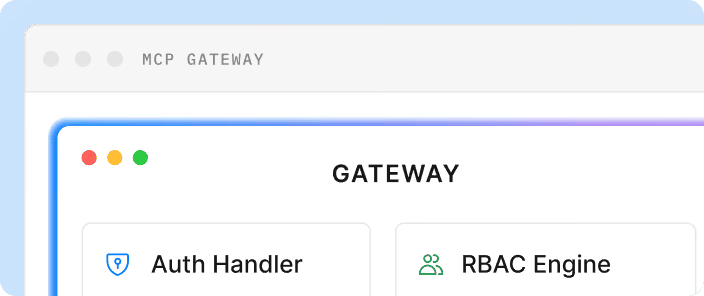
- AI & Agent Readiness: Support for MCP-ready APIs, AI-agent consumption patterns, and controlled autonomous API access.
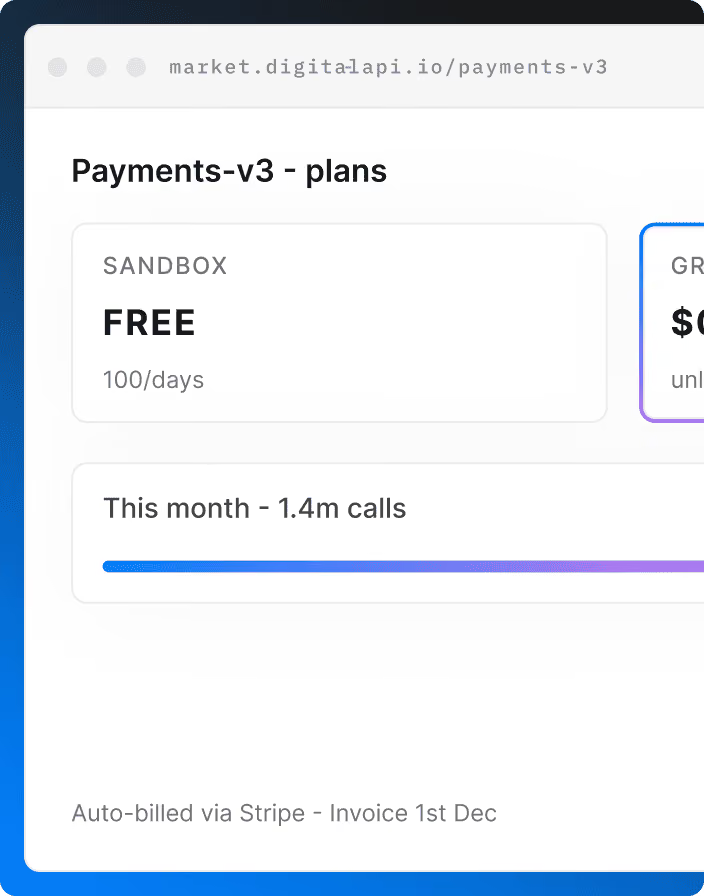
- Developer & Partner Portals: Self-serve portals with onboarding, testing, subscriptions, and sandbox environments.
- Usage Analytics & Observability: Deep insights into API usage, adoption, and value across gateways and consumers.
- Hybrid & Enterprise Deployment: Works across cloud, on-prem, and regulated enterprise environments.
Pros
- Solves API sprawl without re-platforming
- Strong governance and discovery across multiple gateways
- Built for both developers and AI agents
- Enterprise-grade analytics and control
- Complements existing API investments
Cons
- Best value realised in multi-gateway environments
- Requires organisational alignment on API ownership
Ideal For
Enterprises with multiple API gateways that need unified orchestration, governance, discovery, and AI-ready API consumption—without ripping and replacing existing infrastructure.
.png)
2. MuleSoft Anypoint Platform
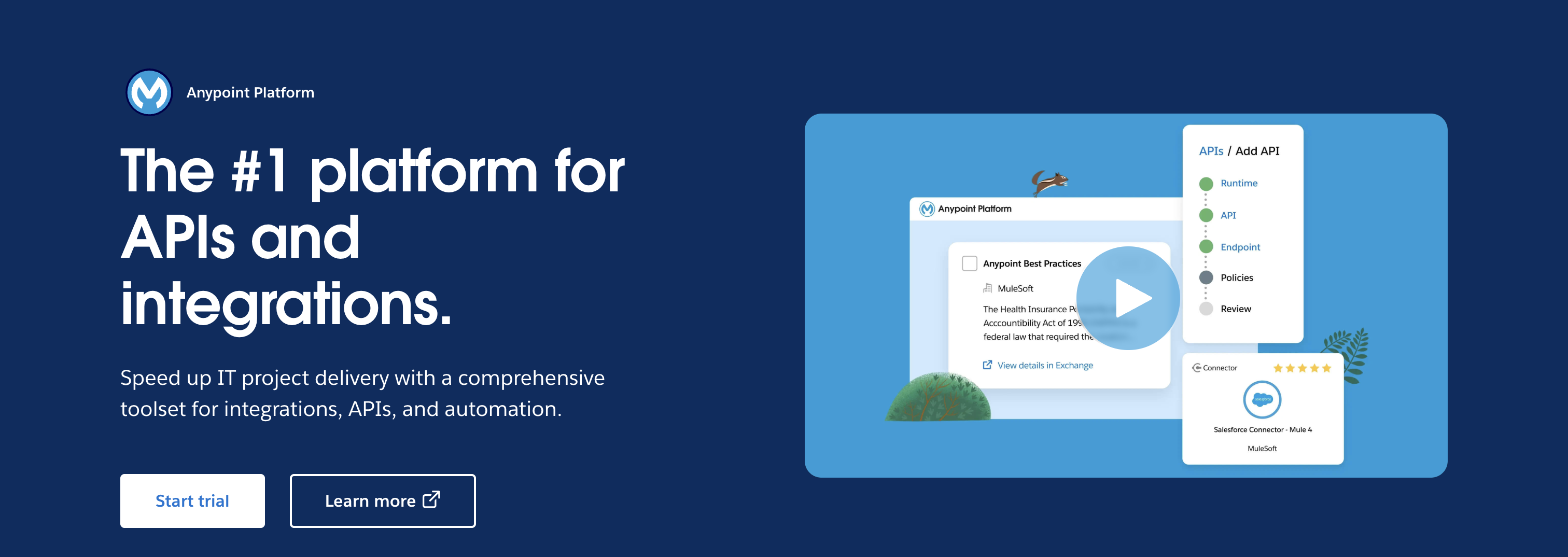
MuleSoft's Anypoint Platform is a comprehensive integration platform as a service (iPaaS) that enables organizations to design, build, deploy, manage, and govern APIs and integrations. It's renowned for its API-led connectivity approach, promoting reuse and modularity. The platform includes an API manager, a visual flow designer (Anypoint Studio), a runtime engine (Mule runtime), and various connectors, making it a robust choice for complex enterprise integration scenarios.
Key Features
- API Lifecycle Management: Design, build, publish, secure, monitor, and retire APIs from a single console.
- API-Led Connectivity: Reuse APIs and streamline integration flows with layered API architecture.
- Visual Flow Designer: Drag-and-drop design via Anypoint Studio, with real-time testing.
- Pre-Built Connectors: Hundreds of connectors to SaaS, on-prem, mainframes, databases, messaging systems.
- Hybrid Deployment: Deploy on-premises, in private cloud, or across public clouds.
- Monitoring & Analytics: Real-time dashboards and alerts with SLA tracking.
- Policy Enforcement: Built-in security policies for authentication, rate limiting, and threat protection.
Pros
- Extremely comprehensive enterprise feature set
- Excellent governance and API lifecycle tooling
- Supports hybrid and multi-cloud environments
- Mature ecosystem with strong vendor support
Cons
- High licensing costs relative to peers
- Complexity can be overwhelming for small teams
- Requires significant training to maximize value
Ideal For
Large enterprises with complex, cross-system orchestration needs and formal governance standards.
3. Apache Camel
Apache Camel is an open-source integration framework that implements various Enterprise Integration Patterns (EIPs). It allows developers to define routing and mediation rules using a domain-specific language (DSL) within Java, Scala, or XML. Camel provides over 300 connectors to different systems and technologies, making it highly versatile for building custom integration solutions. It's a lightweight and powerful tool for developers who prefer code-driven integration.
Key Features
- Enterprise Integration Patterns: Built-in support for patterns like content-based routing, splitter, aggregator.
- Component Library: 300+ components (JDBC, JMS, HTTP, Kafka, AWS, FTP, etc.).
- Multiple DSLs: Configure routes in Java, XML, Kotlin, Groovy, or YAML.
- Lightweight Runtime: Embeddable in microservices, Spring Boot, Quarkus, or standalone.
- Error Handling: Advanced retry, dead-letter channels, and error redelivery strategies.
- Testing Framework: First-class support for unit and integration testing.
- Cloud-Native Support: Integrates well with Kubernetes and container orchestrators.
Pros
- Free and open source
- High flexibility for custom logic
- Excellent integration pattern support
- Fits microservices and cloud-native architectures
Cons
- No native visual designer
- Minimal out-of-the-box API governance
- Requires strong developer skills
Ideal For
Developer-centric teams building custom API orchestration and routing logic in code.
4. Boomi
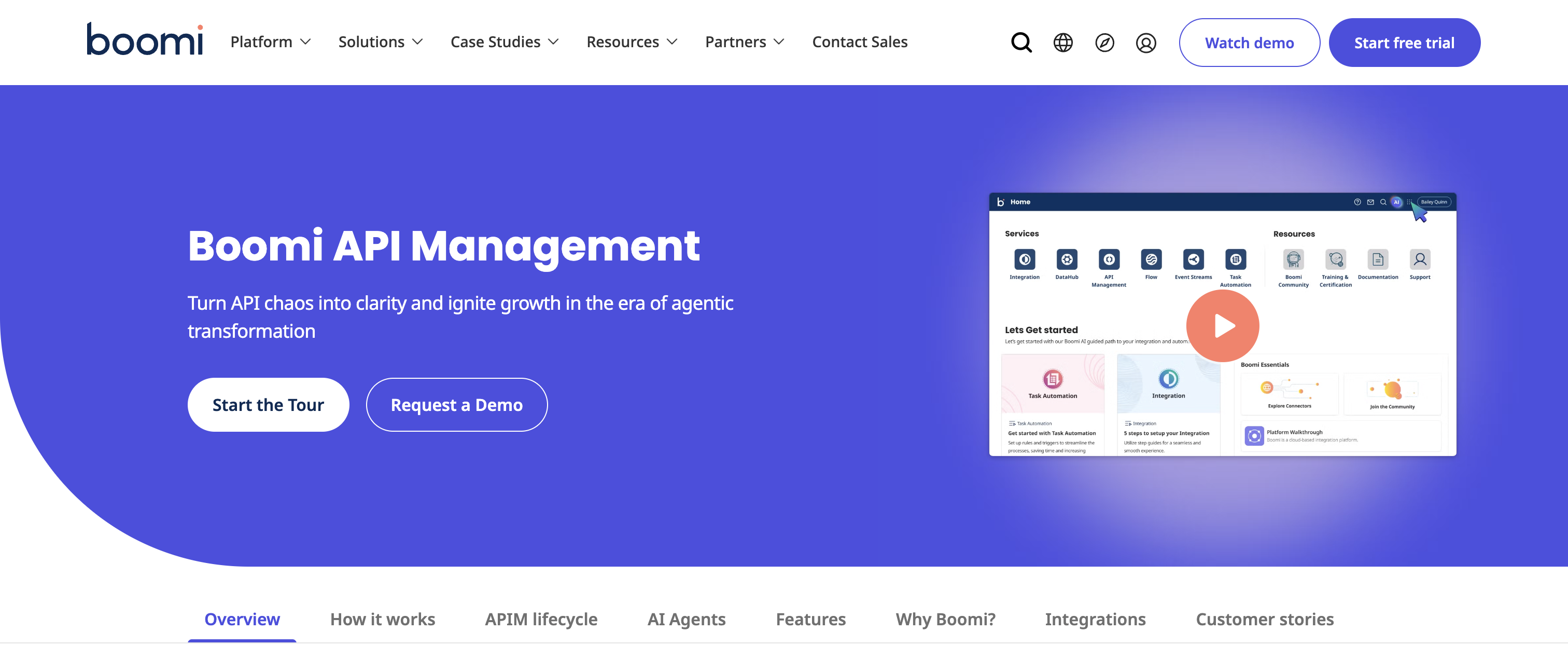
Boomi is a cloud-native, low-code integration platform as a service (iPaaS) that simplifies connecting applications, data, and devices across hybrid IT environments. Its drag-and-drop interface, extensive library of connectors, and focus on citizen integrators make it popular for businesses looking to accelerate integration projects without extensive coding. Boomi also offers capabilities for API management, data master, workflow automation, and EDI.
Key Features
- Low-Code Visual Designer: Drag-and-drop UI for building integrations and API flows.
- Extensive Connector Library: Pre-built connectors for ERP, CRM, SaaS, databases, messaging.
- API Lifecycle Tools: Design, publish, secure, and manage APIs.
- Data Mapping & Transformation: Visual mapping with automatic type inference.
- Master Data Hub: Centralised data model for consistency across systems.
- Workflow Automation: Event-triggered orchestration and business process automation.
- Monitoring & Alerts: Health dashboards with execution logs and error notifications.
Pros
- Rapid time-to-value
- Accessible to technical and semi-technical users
- Strong connector ecosystem
- Cloud native, scalable platform
Cons
- Pricing can scale quickly with usage
- Less suited for highly bespoke logic
- UI can feel abstract for developers accustomed to code
Ideal For
Organisations seeking fast, low-code API orchestration without heavy coding.
5. SnapLogic
SnapLogic is an AI-powered integration platform that offers a visual, low-code approach to connecting applications, data, and APIs. It uses "Snaps" (pre-built connectors) and "Pipelines" (visual workflows) to design complex integrations. SnapLogic's Iris AI assists in building integrations by suggesting connections and transformations, accelerating development. It's designed for both IT professionals and citizen integrators to handle data integration, application integration, and API management.

Key Features
- Visual Pipeline Builder: Create data and API workflows with drag-and-drop.
- AI-Assisted Development: Iris AI suggests connections and transformations.
- Pre-Built Snaps: Hundreds of connectors to common cloud and enterprise systems.
- Real-Time & Batch Support: Orchestrate both streaming and scheduled flows.
- Data Quality & Profiling: Built-in tools to analyze and validate data in transit.
- API Management Features: Governance, versioning, and security policies.
- Performance Monitoring: Execution analytics and bottleneck insights.
Pros
- Intuitive visual interface
- AI suggestions speed up development
- Handles both data and API orchestration
- Suited to hybrid environments
Cons
- Enterprise pricing tier
- Complexity can grow with advanced use cases
- Learning curve for non-technical users
Ideal For
Enterprises that want AI-assisted, visual API and data workflow automation.
6. Workato
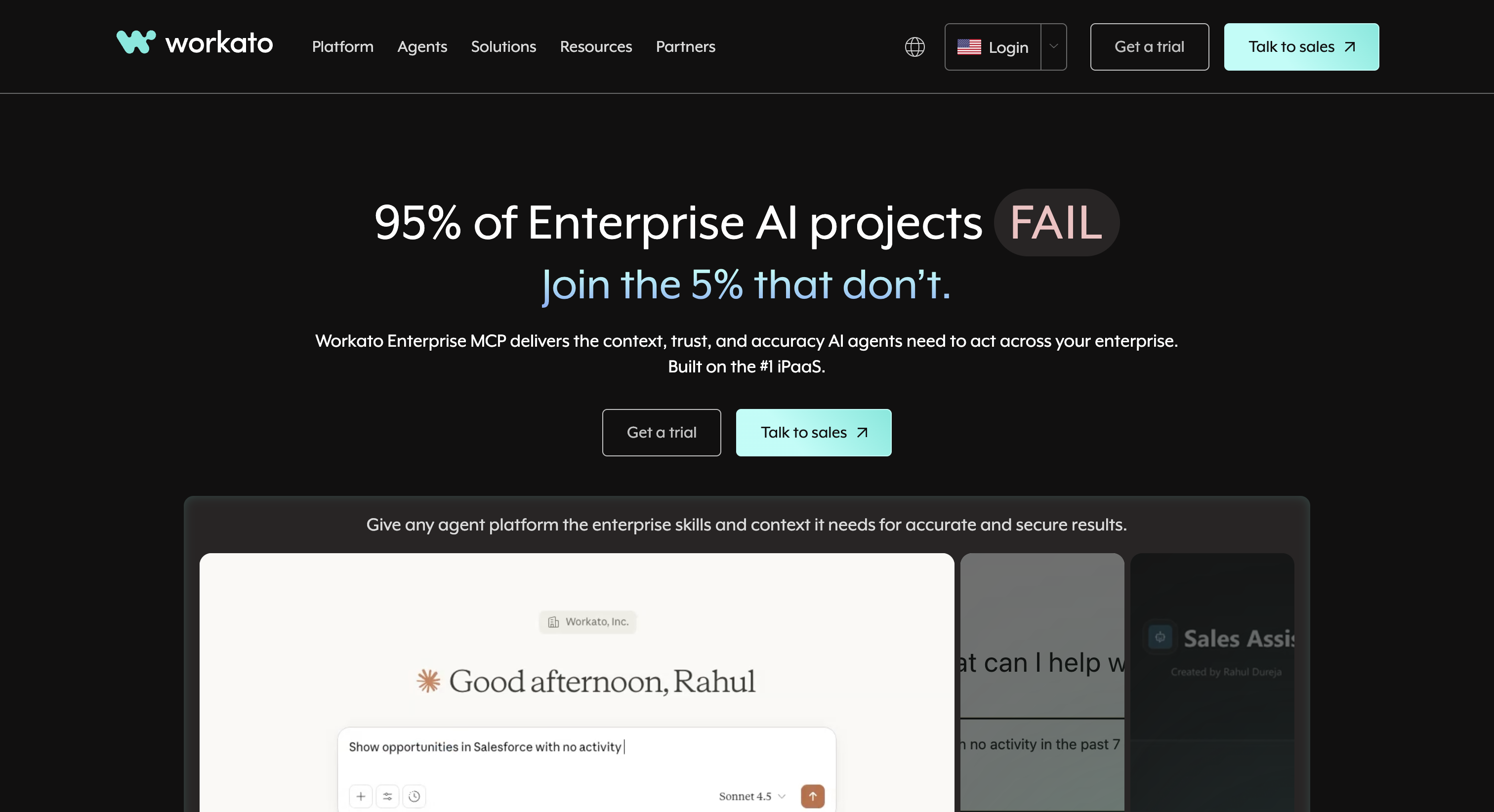
Workato is a leading enterprise automation platform that combines iPaaS, RPA (Robotic Process Automation), and business process automation into a single, low-code/no-code environment. It focuses on empowering business users and IT teams to automate workflows across various applications, data, and APIs. With its extensive library of "recipes" (pre-built integrations) and connectors, Workato is excellent for automating end-to-end business processes.
Key Features
- Recipe Library: Thousands of pre-built automation templates (“recipes”).
- Low-Code Workflow Designer: Build multi-step API orchestrations visually.
- RPA Integration: Blend API and robotic automation where needed.
- Conditional Logic & Branching: Complex business flows with IF/ELSE branches.
- Event Triggers & Schedules: Start workflows on triggers or cron-style schedules.
- Enterprise-Grade Security: SSO, RBAC, audit trails, encryption.
- Monitoring & Logging: Detailed run history and alerting capabilities.
Pros
- Very easy for business users to adopt
- Excellent library of pre-built integrations
- Mixes API orchestration with RPA and business logic
- Strong support and community
Cons
- Pricing scales with connected endpoints
- Not ideal for highly custom technical integration logic
- Some advanced features require additional setup
Ideal For
Organisations automating business-centric workflows and cross-application processes.
7. TIBCO Cloud Integration
TIBCO Cloud Integration (formerly TIBCO Cloud Integration and TIBCO BusinessWorks) provides a hybrid integration platform that supports connecting various applications, data sources, and APIs, whether on-premises or in the cloud. It offers both a low-code visual designer for rapid development and advanced capabilities for complex enterprise integrations. TIBCO is known for its real-time analytics and event-driven architecture support, making it suitable for demanding, high-throughput environments.
Key Features
- Visual Integration Designer: Drag-and-drop orchestration canvas.
- API Creation & Management: Design, deploy, monitor REST and SOAP APIs.
- Real-Time Event Processing: Support for streaming and event-driven patterns.
- Hybrid Deployment: On-premises, cloud, or hybrid runtimes.
- Pre-Built Connectors: Connectivity to enterprise and cloud systems.
- BusinessWorks Runtime: High-performance execution engine.
- Monitoring & SLA Tracking: Real-time dashboards and alerts.
Pros
- Strong for real-time, event-driven workflows
- Hybrid deployment flexibility
- Enterprise-grade scalability
- Good tool stability
Cons
- UI and experiences feel dated compared to newer platforms
- Licensing complexity
- Requires training to leverage full power
Ideal For
Enterprises needing hybrid API orchestration with support for streams and events.
8. Microsoft Azure Logic Apps
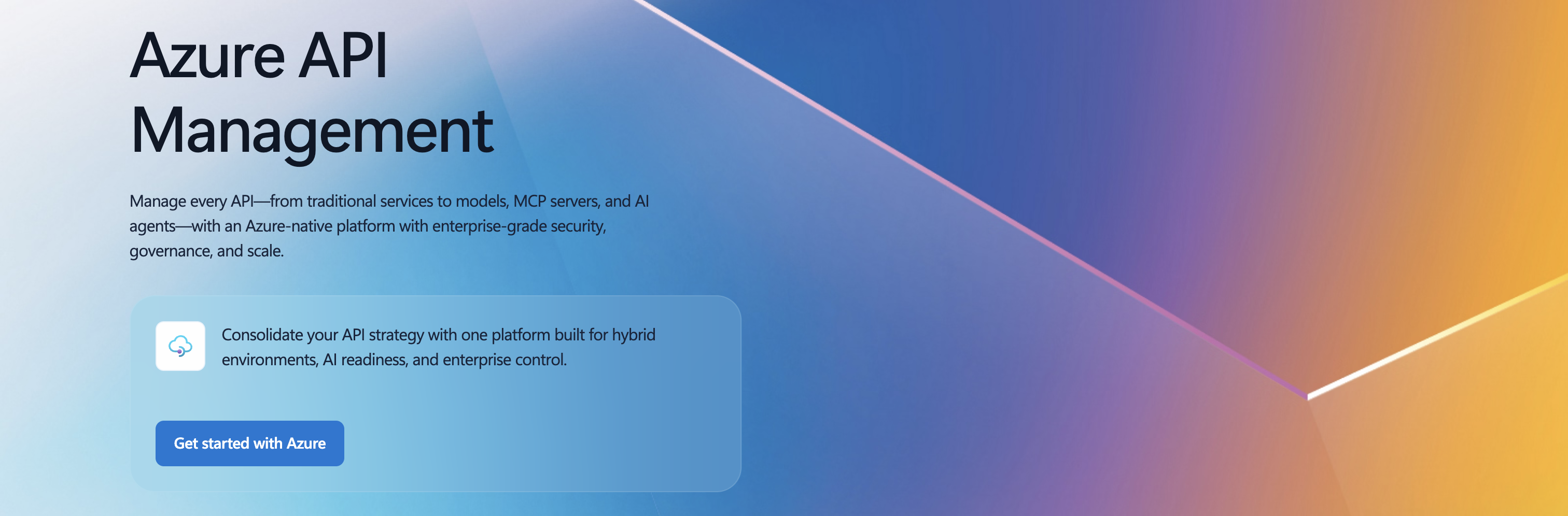
Azure Logic Apps is a cloud-based serverless workflow service provided by Microsoft Azure. It allows users to create automated workflows that integrate apps, data, services, and systems across enterprises or organizations. With a visual designer and hundreds of connectors, Logic Apps enables users to define complex workflows with triggers, actions, and control flow constructs. It's fully managed, allowing developers to focus on logic rather than infrastructure.
Key Features
- Serverless Workflow Engine: Pay-as-you-go, fully managed execution.
- Hundreds of Connectors: Native connectors for Microsoft stack and third-party services.
- Visual Designer in Azure Portal: Build flows with triggers, actions, and conditions.
- Inline Code Options: Add Azure Functions or custom APIs where needed.
- Integration with Azure Services: Easily tie into Event Grid, Service Bus, Functions.
- Monitoring & Diagnostics: Azure Monitor, logs, and alerts.
- Enterprise Security & Compliance: RBAC, policy enforcement, MFA.
Pros
- Strong alignment with Azure ecosystem
- Serverless reduces infrastructure overhead
- Easy to extend with Functions or Logic App Standard
Cons
- Pricing needs careful optimization
- Complexity grows with enterprise workflows
- Logic can become hard to debug at scale
Ideal For
Microsoft-centric teams building cloud-native orchestration with existing Azure investment.
9. AWS Step Functions
AWS Step Functions is a serverless workflow service that makes it easy to coordinate the components of distributed applications and microservices using visual workflows. It allows developers to define state machines to sequence AWS Lambda functions, EC2 instances, or other AWS services into robust, event-driven applications. Step Functions automatically handles the state, retries, and error handling, abstracting complex orchestrations.
Key Features
- Visual State Machine Designer: Sequence, parallel, and conditional steps.
- Automatic State Management: Handles retries, errors, and timeouts.
- Integrates with AWS Services: AWS Lambda, Batch, EC2, SNS, SQS, API Gateway.
- Standard & Express Workflows: Choose cost/performance model per use case.
- Execution History & Tracing: View step transitions and diagnostics.
- Error Catch & Retry Policies: Built-in fault-tolerance patterns.
- Service Integrations: Invoke other AWS services without middleware.
Pros
- Deep AWS ecosystem integration
- Handles long-running and complex orchestrations
- No servers to provision or manage
- Scales automatically
Cons
- AWS lock-in risk
- Cost can grow with high throughput
- Not ideal for non-AWS environments
Ideal For
Teams building event-driven orchestrations within AWS heavy workloads.
10. Celigo Integrator.io
Celigo Integrator.io is an iPaaS designed to connect various business applications, primarily focusing on ERPs (like NetSuite), CRMs (like Salesforce), e-commerce platforms, and other SaaS tools. It offers pre-built integration "templates" or "flows" for common business processes, allowing for rapid deployment. Its low-code interface caters to both IT professionals and business users, aiming to automate end-to-end business operations.

Key Features
- Pre-Built Integration Templates: Accelerators for ERP, CRM, e-commerce.
- Low-Code Visual Designer: Build flows with drag-and-drop.
- Data Mapping & Transformations: Complex data shaping without code.
- Real-Time & Scheduled Sync: Near-real-time automation options.
- API Connectivity: Wrap and manage APIs within flows.
- Error Handling & Alerts: Workflow checkpoints and notifications.
- Admin Console & Logs: Centralised management and activity logs.
Pros
- Fast implementation with templates
- Easy for business and IT alike
- Good for ERP and SaaS ecosystem
Cons
- Can be less flexible than code-centric tools
- API governance is basic
- Licensing tied to volume/connectivity tiers
Ideal For
Mid-market and small enterprises connecting SaaS and ERP systems with API flows.
Choosing the Right API Orchestration Tool
The selection of an API orchestration tool is a long-term decision that shapes how easily your systems integrate and scale. Keep these factors in mind:
- Workflow Complexity: Simple API chaining needs lightweight tools, while long-running, event-driven workflows require more advanced orchestration.
- Deployment Model: Choose between cloud-native, serverless, hybrid, or self-hosted based on compliance and infrastructure needs.
- User Fit: Low-code platforms suit business users; code-first tools give developers greater control.
- Governance & Security: Authentication, rate limits, audit logs, and access controls become essential as usage grows.
- Scalability & Cost: Evaluate how performance and pricing behave under high volume and bursty workloads.
- Ecosystem & Future Readiness: Strong integrations and support for automation, events, and AI-driven consumption reduce future rework.
Conclusion
API orchestration is more than just connecting dots; it's about intelligently sequencing digital interactions to create cohesive, efficient, and resilient business processes. From robust enterprise iPaaS solutions like MuleSoft and Boomi to flexible open-source frameworks like Apache Camel and n8n, the landscape of tools is rich and diverse. By carefully evaluating your organization's unique requirements, technical capabilities, and strategic goals against the strengths and weaknesses of these top orchestration tools, you can select the platform that best empowers your journey towards seamless integration and automated operational excellence. Embracing the right API orchestration strategy is fundamental to unlocking agility and driving innovation in the interconnected enterprise.
FAQs
1. What is the difference between API integration and API orchestration?
API integration refers to the process of making two or more APIs work together, usually by mapping data between them. API orchestration, however, goes a step further by defining a sequence of API calls to achieve a larger business process. It manages the flow, state, error handling, and data transformations across multiple integrated APIs, making them act as a single, coordinated unit.
2. Why is API orchestration important for microservices architectures?
In microservices architectures, applications are broken down into small, independent services. While this offers flexibility, it also creates complexity when a business process requires interactions across multiple services. API orchestration is crucial here to manage these inter-service communications, sequence operations, ensure data consistency, and handle errors, enabling complex workflows to function reliably despite the distributed nature of microservices.
3. Can I perform API orchestration without a dedicated tool?
Yes, it's possible to perform basic API orchestration by writing custom code that sequences API calls. However, this approach quickly becomes complex to manage, maintain, scale, and secure as the number of integrations and the complexity of workflows grow. Dedicated API orchestration tools provide features like visual designers, pre-built connectors, error handling, monitoring, and governance, which significantly reduce development time and increase reliability for enterprise-grade solutions.
4. What are the benefits of using a low-code/no-code API orchestration tool?
Low-code/no-code API orchestration tools offer several benefits, including faster development and deployment cycles, reduced reliance on specialized developers, and empowerment of citizen integrators (business users) to build their own automations. They typically feature intuitive visual interfaces, drag-and-drop functionality, and pre-built templates, making complex integrations more accessible and accelerating digital transformation initiatives.
5. How do I ensure security in API orchestration?
Security in API orchestration requires multiple layers of protection. This includes using secure communication protocols (HTTPS/TLS), implementing robust authentication (OAuth, API keys) and authorization mechanisms, encrypting sensitive data at rest and in transit, and regularly auditing access logs. Many orchestration tools come with built-in security features and compliance certifications to help manage these aspects effectively. It's also vital to follow the principle of least privilege for all API access.
Dhayalan Subramanian is Associate Director, Product Growth at DigitalAPI, where he leads go-to-market and product growth for the company’s multi-gateway API management platform. His work focuses on helping large enterprises and mid-market cloud companies consolidate APIs across AWS, Azure, Apigee, Kong, MuleSoft, and other gateways into a single control plane for governance, discovery, monetization, and agent consumption.
Dhayalan brings 14+ years of experience across product strategy, enterprise architecture, and engineering leadership. Earlier in his career, he held senior roles at Encora (as Associate Architect and Technical Manager), Mindtree (Technology Lead), Tech Mahindra (Technical Lead), and Primus Analytics, where he designed integration frameworks and delivered enterprise-grade digital platforms for global customers.
At DigitalAPI, he works directly with platform, integration, and developer experience leaders at Fortune 500 organizations to operationalize unified API catalogs, developer portals, and MCP-ready APIs. He writes regularly on API developer experience, API governance, and AI agent architectures.
One email a fortnight. Worth opening.
A short digest of what we're writing, what we're learning from customers, and the handful of links you'd actually want from us. No tracking pixels.

.avif)