



Top 7 API Design Platforms & Tools: Future-Proof Your Stack (2026)
By 2026, the strategic importance of well-designed APIs will be paramount, moving beyond mere technical implementation to a core business driver.

TL;DR
1. In 2026, robust API design platforms are indispensable for navigating complex digital ecosystems, ensuring agility, consistency, and future scalability.
2. Expect platforms to lean heavily into AI-driven assistance, hyper-automation, support for event-driven architectures, and advanced governance features.
3. When evaluating tools, prioritize visual design capabilities, comprehensive OpenAPI/AsyncAPI support, integrated mock servers, collaboration features, and seamless integration with existing CI/CD pipelines.
4. The top API design platforms and tools shaping 2026 include powerhouses like SwaggerHub, Postman, Stoplight Studio, Apigee, MuleSoft Anypoint Platform, Apollo GraphQL (for Supergraphs), and Kong Insomnia.
5. Selecting the right platform hinges on your organization's API volume, team size, architectural style (REST, GraphQL, Event-driven), and long-term strategic goals.
6. Future-proof your API strategy by embracing a design-first methodology, leveraging automation and AI throughout the lifecycle, and fostering a culture of API-as-a-product development.
As digital services become increasingly interwoven into every facet of business operations, the underlying APIs powering these interactions have grown exponentially in complexity and volume. Crafting effective APIs isn't just about functionality anymore; it's about delivering intuitive, reliable, and secure interfaces that accelerate innovation and foster seamless digital experiences. In this landscape, the tools and platforms developers leverage for API design are not mere utilities but strategic assets, dictating the pace, quality, and adaptability of an entire enterprise. The year 2026 promises even more sophisticated challenges and solutions, making the choice of an API design platform a critical decision for future-proofing your technical stack.
Why API Design Is Critical in 2026: Beyond Just Code
In the rapidly evolving digital arena, APIs are the foundational currency of interconnected systems, facilitating everything from mobile applications to advanced AI models. By 2026, the strategic importance of well-designed APIs will be paramount, moving beyond mere technical implementation to a core business driver. A thoughtful API design process ensures consistency across services, reduces development friction, and enhances developer experience, both internally and for external partners. Poor design, conversely, leads to technical debt, security vulnerabilities, and stunted innovation.
The future sees an even greater demand for APIs that are not only functional but also discoverable, usable, and scalable. With the proliferation of microservices, serverless functions, and event-driven architectures, APIs act as the glue. Effective design tools empower teams to enforce standards, manage versions, and simulate interactions before a single line of backend code is written, drastically cutting down on costly rework and accelerating time-to-market. This proactive approach to design transforms potential chaos into a cohesive, manageable ecosystem.
Top 7 API Design Platforms & Tools in 2026: Future-Proof Your Stack
Here are the top API design platforms and tools that are set to dominate the landscape in 2026, offering robust features and catering to diverse organizational needs.
1. DigitalAPI (DigitalAPI.ai)
DigitalAPI is an enterprise platform designed to unify and govern APIs spread across multiple gateways, teams, and environments. It positions itself as a centralized intelligence layer that sits above existing API gateways rather than replacing them. It brings together API discovery, documentation, governance, analytics, and access management into a single, searchable API estate. DigitalAPI is particularly relevant for large organizations dealing with API sprawl and preparing their APIs for broader consumption by developers, partners, and AI-driven systems.
- Pros: Deep multi-gateway API discovery across Apigee, Kong, AWS, MuleSoft, and more; centralized governance and policy enforcement without gateway lock-in; unified analytics and API Ops visibility across the entire API estate; strong developer and consumer experience through a single portal; designed to support large-scale, distributed API programs.
- Cons: May be more than what small teams with a single gateway require.
- Ideal Use Case: Enterprises with fragmented API landscapes that need a single source of truth for API discovery, governance, analytics, and consumption, without disrupting existing gateway investments.
.png)
2. SwaggerHub (SmartBear)
SwaggerHub, from SmartBear, remains a cornerstone for organizations embracing a design-first approach with OpenAPI Specification (OAS). By 2026, its evolution will solidify its position as a central hub for collaborative API design and governance. It provides a centralized platform for designing, documenting, and standardizing REST APIs using the OpenAPI standard. Its web-based editor supports real-time validation and offers a powerful environment for teams to co-create and evolve API definitions. With its focus on OpenAPI, SwaggerHub is a natural fit for organizations heavily invested in RESTful architectures.
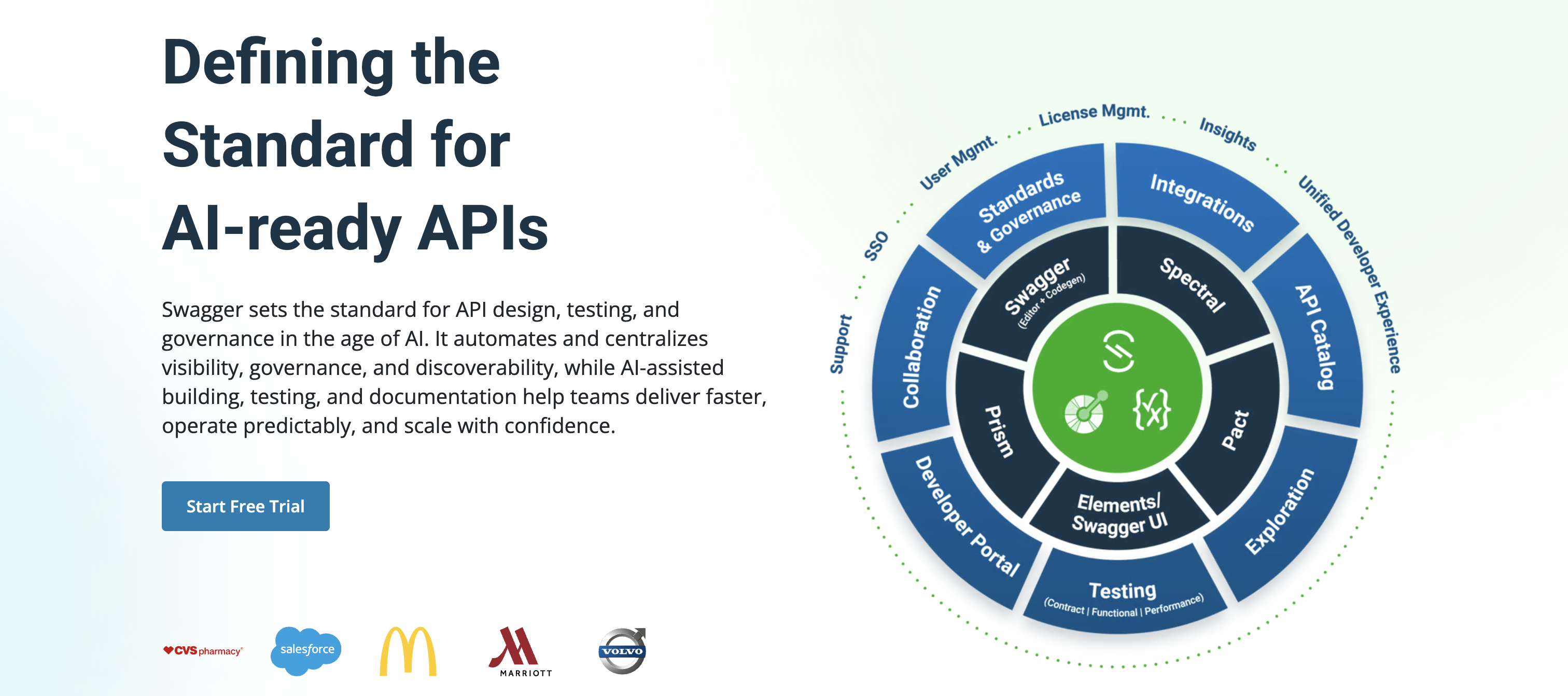
- Pros: Deep integration with OpenAPI Specification; strong governance capabilities for enforcing style guides; excellent collaboration features for distributed teams; auto-generation of server stubs and client SDKs; comprehensive documentation.
- Cons: Primarily focused on OpenAPI (REST); may require additional tooling for a complete lifecycle management of other API types (e.g., GraphQL, AsyncAPI); can be a significant investment for smaller teams.
- Ideal Use Case: Enterprises and large development teams building and managing a multitude of RESTful APIs, where strict adherence to OpenAPI standards, robust governance, and collaborative design are paramount.
3. Postman
Postman has transcended its origins as a simple API testing tool to become a comprehensive API development platform. By 2026, its integrated environment will be a go-to for designing, testing, documenting, and monitoring APIs across the entire lifecycle. Its user-friendly interface makes it accessible to a broad audience, from individual developers to large enterprise teams. Postman Collections provide a powerful way to organize API requests, document endpoints, and automate workflows, making it a versatile tool for both design validation and ongoing API management.
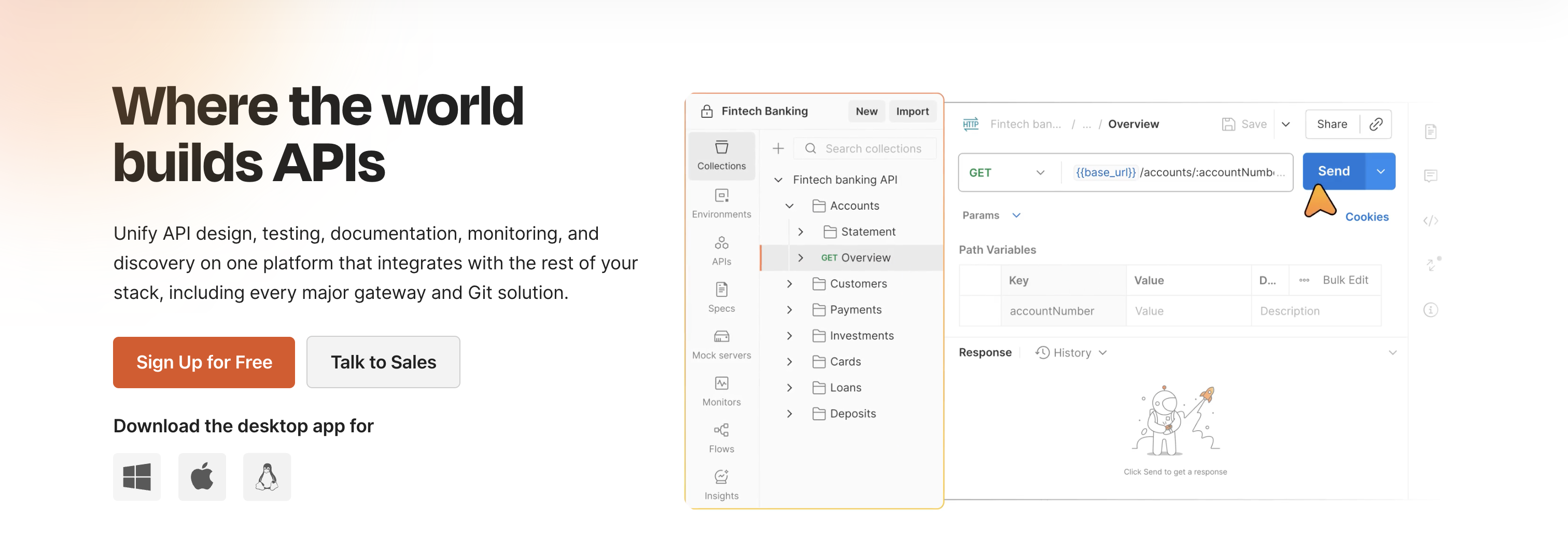
- Pros: All-in-one platform covering design, testing, documentation, and monitoring; highly intuitive and user-friendly interface; extensive community support and resources; supports various API types (REST, GraphQL); robust collaboration features with workspaces.
- Cons: While its design features are maturing, it may not offer the same depth of visual design or governance enforcement as specialized design-first platforms; can become complex to manage large API estates without strict organization.
- Ideal Use Case: Development teams of all sizes looking for a single, integrated platform for end-to-end API lifecycle management, especially those prioritizing ease of use, extensive testing capabilities, and collaborative development.
4. Stoplight Studio
Stoplight Studio champions a design-first approach, offering a powerful and visually intuitive platform for creating, documenting, and governing APIs. In 2026, it will stand out for its ability to transform complex API specifications into easily digestible visual models, fostering better communication and accelerating the design process. It supports OpenAPI, JSON Schema, and Markdown, allowing for comprehensive API descriptions and documentation. Its integrated mock servers and automated style guide enforcement make it an excellent choice for organizations serious about API consistency and quality from the outset.
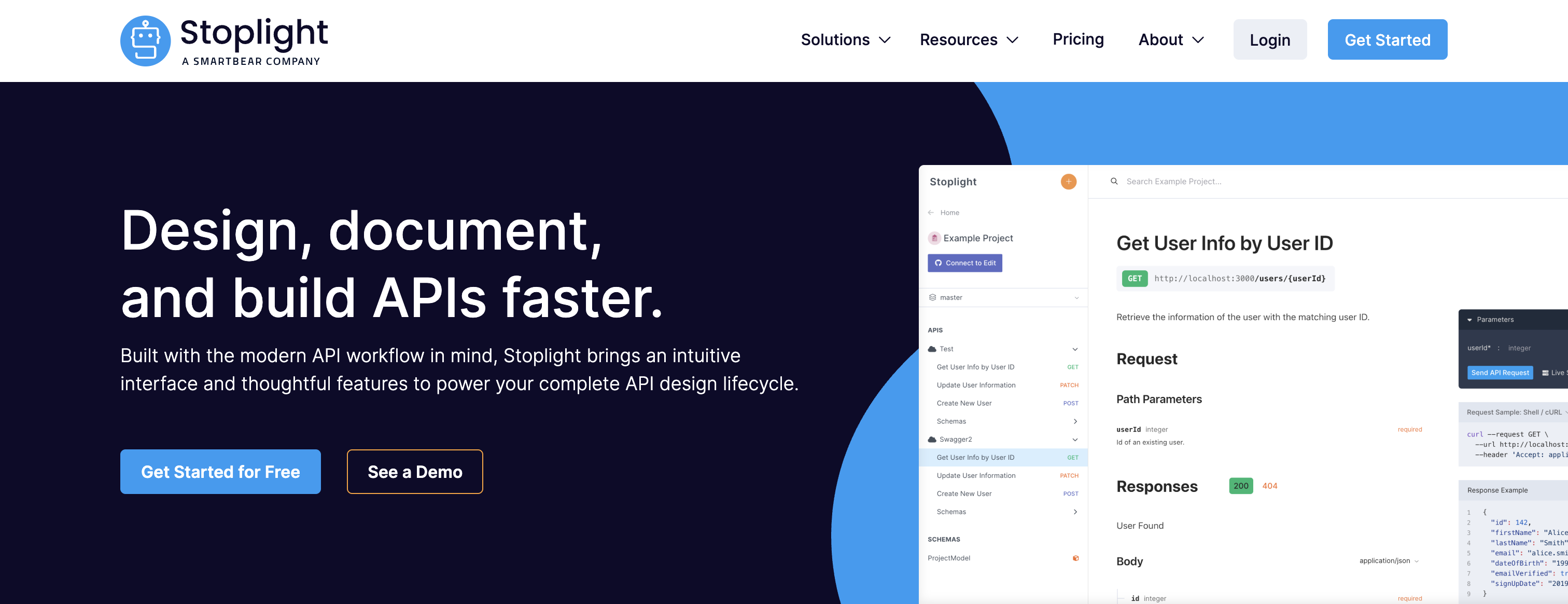
- Pros: Excellent visual API design editor; strong focus on API governance and style guide enforcement; integrated mock servers for rapid prototyping; robust documentation generation; supports both OpenAPI and JSON Schema.
- Cons: Primarily focused on the design and documentation phases, requiring integration with other tools for deployment and monitoring; may have a steeper learning curve for users accustomed to code-first approaches.
- Ideal Use Case: Teams and organizations committed to a design-first API strategy, prioritizing visual clarity, strong governance, and automated documentation across their API initiatives.
5. Apigee (Google Cloud)
While primarily known as an API management platform, Apigee, part of Google Cloud, offers significant capabilities for API design and governance, especially for large enterprises. By 2026, Apigee will continue to be a powerhouse for managing the full API lifecycle at scale, with its design tools deeply integrated into its broader API management ecosystem. It provides robust tools for defining API proxies, applying policies, and ensuring security, all of which indirectly influence and enforce API design best practices. Its enterprise-grade features include advanced analytics, monetization, and developer portal capabilities, making it a comprehensive solution.
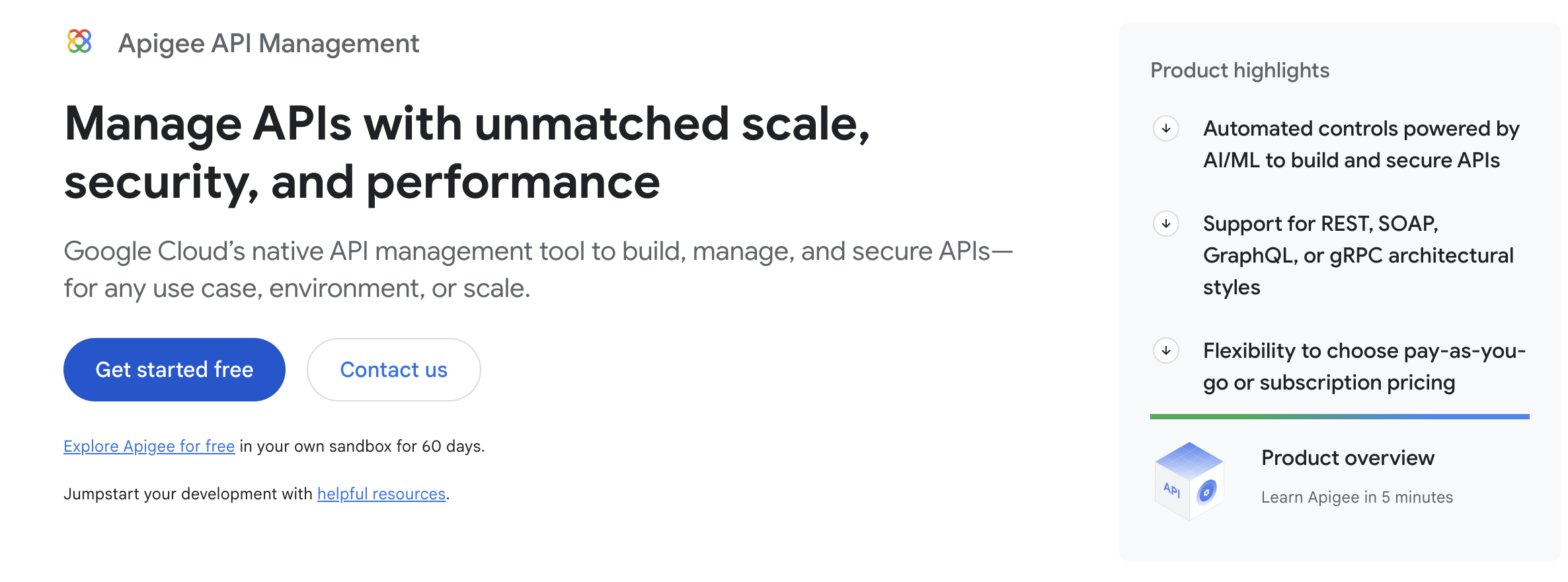
- Pros: Enterprise-grade API management platform with integrated design and governance features; strong security and policy enforcement; advanced analytics and monitoring; excellent for scaling and managing a large number of APIs across complex environments; robust developer portal.
- Cons: Can be very complex and expensive for smaller organizations or projects; learning curve associated with its extensive feature set; its design capabilities are more about defining and managing proxies rather than granular API resource design.
- Ideal Use Case: Large enterprises requiring a comprehensive, highly scalable API management solution that includes robust design governance, security, and lifecycle management for a vast and critical API estate.
6. MuleSoft Anypoint Platform (Salesforce)
MuleSoft's Anypoint Platform offers a complete solution for API design, development, and integration, tightly coupled with its renowned enterprise integration capabilities. In 2026, it will be a leading choice for organizations that need to connect diverse systems and applications, providing a seamless experience from API design to integration and deployment. Anypoint Platform emphasizes an "API-led connectivity" approach, where APIs are designed for reuse and composability. Its Anypoint Design Center offers visual tools for API specification (RAML, OpenAPI), mocking, and generating fragments, along with comprehensive testing and lifecycle management.
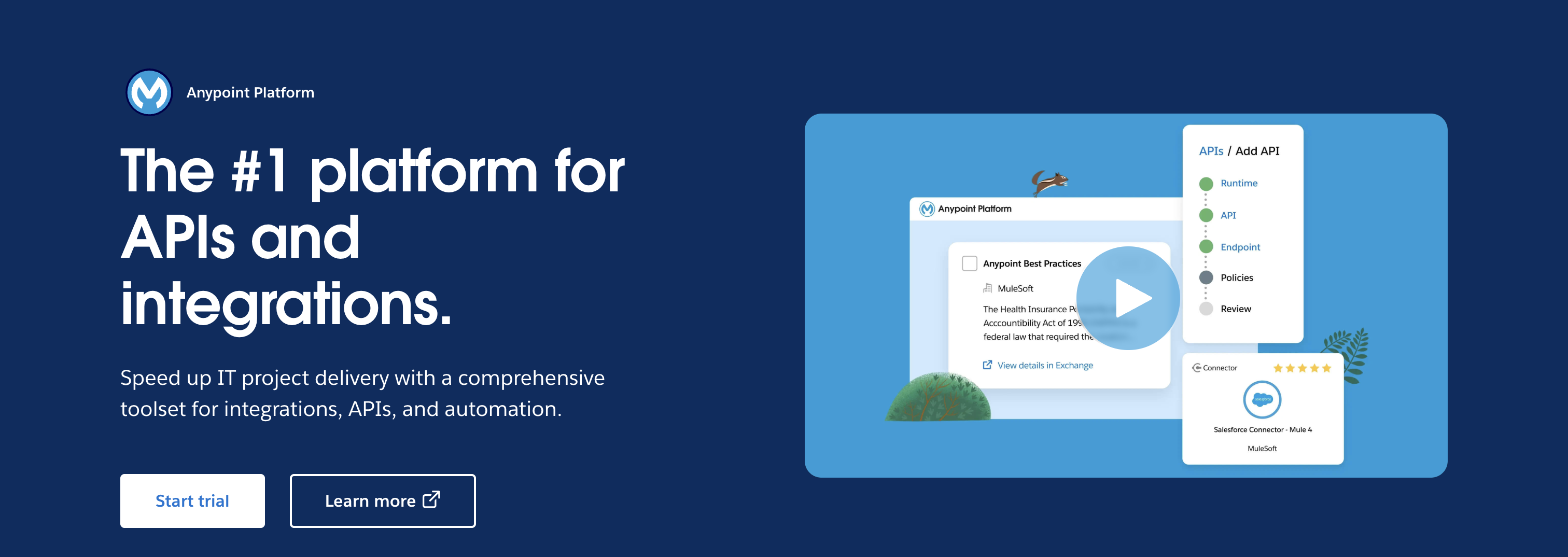
- Pros: Comprehensive platform for API design, integration, and management; strong focus on API-led connectivity and reusability; visual design tools with Anypoint Design Center; excellent for complex enterprise integration scenarios; robust governance and security features.
- Cons: Can be expensive and resource-intensive, particularly for organizations not leveraging its full integration capabilities; learning curve for new users due to its extensive ecosystem; not as lightweight as some standalone design tools.
- Ideal Use Case: Enterprises with complex integration needs that require a unified platform for designing, building, managing, and securing APIs, especially those looking to foster API reuse and composability across a diverse application landscape.
7. Kong Insomnia
Kong Insomnia, a powerful API client and design platform, will gain further traction in 2026 for its developer-centric approach and deep integration with the Kong ecosystem. Insomnia focuses on a unified experience for designing, debugging, and testing APIs. Its features extend to defining OpenAPI specifications, managing environments, and even generating code snippets. As part of the Kong suite, it offers a natural bridge from API design to API gateway configuration and runtime management, making it an attractive option for developers who prefer a streamlined workflow from development to deployment.
- Pros: Excellent API client for testing and debugging; robust OpenAPI design capabilities; strong support for environment management and variable injection; seamless integration with Kong API Gateway; open-source core with enterprise features.
- Cons: Design features are more code-oriented than visual-first; may require additional tooling for advanced governance enforcement across an entire API portfolio; less emphasis on high-level architecture planning compared to enterprise platforms.
- Ideal Use Case: Developers and teams utilizing Kong API Gateway, or those seeking a powerful, developer-friendly API client with integrated design and testing capabilities for REST and GraphQL APIs.
Key Features to Look for in API Design Platforms in 2026
To effectively navigate the demands of modern API development, API design platforms in 2026 should offer a robust and practical set of capabilities that extend beyond specification authoring into governance, visibility, and lifecycle coordination:
- Comprehensive Specification Support: Strong support for industry-standard API description formats such as OpenAPI (for REST/HTTP APIs), AsyncAPI (for event-driven APIs), and GraphQL Schema Definition Language (SDL) is essential to ensure consistency, interoperability, and long-term maintainability across teams.
- Visual & Structured Design Experiences: Clear, intuitive interfaces, whether visual editors, structured forms, or guided workflows, should make it easy to define endpoints, operations, schemas, and metadata, while remaining accessible to both technical and non-technical stakeholders.
- Mock Server Generation: The ability to generate mock endpoints from API specifications enables frontend, partner, and consumer teams to begin integration early, reducing dependencies and accelerating delivery timelines.
- Code Generation (SDKs & Stubs): Automated generation of client SDKs and server stubs helps teams move from design to implementation faster, while ensuring alignment between API definitions and runtime behavior.
- Collaboration & Version Control: Support for team-based collaboration, including comments, reviews, change history, and integration with Git-based workflows is critical for managing APIs at scale across distributed teams.
- API Governance & Standards Enforcement: Platforms should provide mechanisms to define, apply, and validate APIs against organizational standards, security guidelines, and design best practices, ideally in a way that scales across multiple teams and environments.
- Validation & Quality Checks: Built-in validation, linting, and consistency checks help catch errors early and ensure API designs remain reliable, predictable, and compliant as they evolve.
- Documentation Automation: Automatically generated, interactive documentation ensures that API consumers always have accurate, up-to-date reference material without relying on manual updates.
- Lifecycle Visibility & Management: Support for tracking APIs across their lifecycle, from design and onboarding to versioning, usage, and eventual deprecation, helps organizations maintain control as their API estate grows.
- Integration with the Broader API Ecosystem: Seamless integration with API gateways, developer portals, CI/CD pipelines, analytics tools, and source code repositories is increasingly important to ensure design decisions translate smoothly into governed, observable, and consumable APIs.
FAQs
1. What is an API design platform?
An API design platform is a specialized software tool or suite that provides capabilities for creating, defining, documenting, and managing the design of Application Programming Interfaces (APIs). These platforms help developers and architects specify API operations, data models, authentication mechanisms, and other critical aspects before or during the development process, often using standards like OpenAPI or AsyncAPI.
2. Why is API design important for businesses in 2026?
In 2026, API design is crucial because APIs are the backbone of digital transformation, connecting applications, services, and data across disparate systems and partners. Good design ensures APIs are consistent, secure, reliable, and easy to consume, leading to faster development cycles, reduced costs, enhanced innovation, and a superior developer experience. It directly impacts an organization's agility and competitive edge.
3. What are the key trends in API design for 2026?
Key trends for API design in 2026 include widespread adoption of AI-assisted design and documentation, hyper-automation throughout the API lifecycle, increased focus on event-driven API design (AsyncAPI), sophisticated API governance as a core platform feature, more intuitive visual and collaborative design interfaces, and an emphasis on API-as-a-product with excellent developer experience.
4. How do I choose the best API design platform for my organization?
To choose the best platform, consider your organization's primary API protocols (REST, GraphQL, Event-driven), team size and collaboration requirements, governance and standardization needs, existing technology stack and integration ecosystem, desired lifecycle coverage (design-only vs. full lifecycle), budget, and the importance of developer experience. Evaluate platforms against these criteria to find the best fit.
5. Can I use an API gateway for API design?
While API gateways often provide some design-related features (e.g., defining routes, applying policies), they are primarily focused on runtime management, security, and traffic control. Dedicated API design platforms offer more comprehensive tools for specification creation, visual design, mocking, code generation, and advanced governance. For a robust design-first approach, a specialized design platform is typically recommended alongside an API gateway.
Dhayalan Subramanian is Associate Director, Product Growth at DigitalAPI, where he leads go-to-market and product growth for the company’s multi-gateway API management platform. His work focuses on helping large enterprises and mid-market cloud companies consolidate APIs across AWS, Azure, Apigee, Kong, MuleSoft, and other gateways into a single control plane for governance, discovery, monetization, and agent consumption.
Dhayalan brings 14+ years of experience across product strategy, enterprise architecture, and engineering leadership. Earlier in his career, he held senior roles at Encora (as Associate Architect and Technical Manager), Mindtree (Technology Lead), Tech Mahindra (Technical Lead), and Primus Analytics, where he designed integration frameworks and delivered enterprise-grade digital platforms for global customers.
At DigitalAPI, he works directly with platform, integration, and developer experience leaders at Fortune 500 organizations to operationalize unified API catalogs, developer portals, and MCP-ready APIs. He writes regularly on API developer experience, API governance, and AI agent architectures.
One email a fortnight. Worth opening.
A short digest of what we're writing, what we're learning from customers, and the handful of links you'd actually want from us. No tracking pixels.

.avif)