



Tyk Pricing Guide: Beyond the Open Source Label
Open source software reshaped enterprise infrastructure by removing vendor lock-in and exposing code.

TL;DR
1. Open Source isn't free: The Tyk binary is free, but the management layer (Dashboard, Portal) costs money.
2. Hidden infrastructure costs: Running Tyk often requires managing both Redis and MongoDB clusters.
3. Enterprise pricing is steep: Self-managed enterprise licenses can be expensive for full lifecycle management.
4. DigitalAPI is the fix: You can use the free Tyk runtime and manage it with DigitalAPI to save costs.
5. Unified control: DigitalAPI provides a single pane of glass for governance, analytics, and monetization.
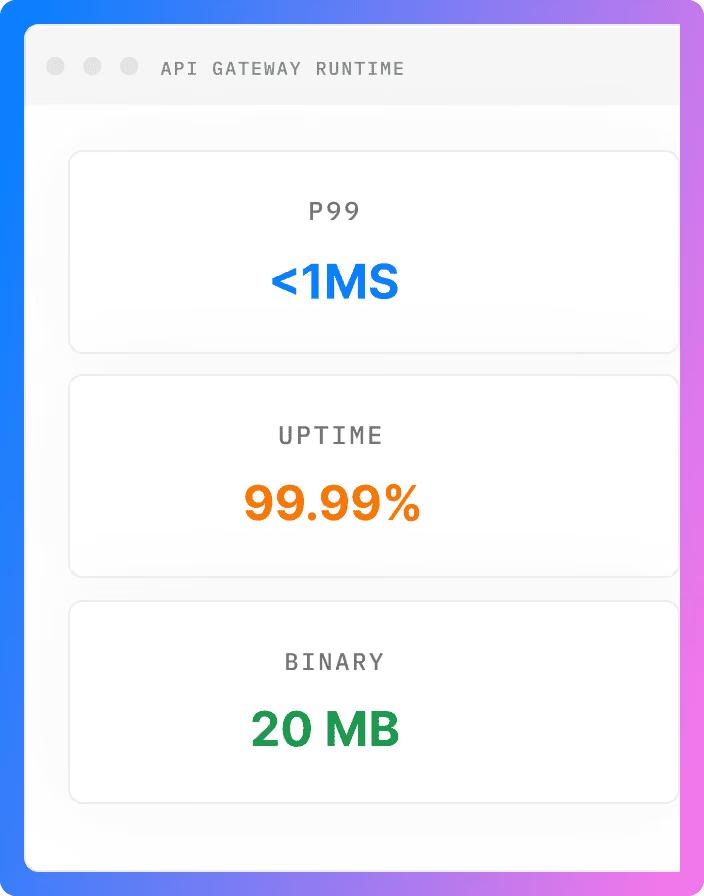
Open source software reshaped enterprise infrastructure by removing vendor lock-in and exposing code. Tyk appears attractive with its fast, lightweight gateway and strong performance. Many teams adopt it quickly, assuming the open source label protects them from long-term cost surprises during growth across real enterprise production environments worldwide today too.
Enterprise reality tells another story. Tyk’s management layer, infrastructure dependencies, and operational effort quietly change the pricing equation. This guide breaks down those hidden costs, explains where budgets actually go, and shows how teams can keep the free runtime while choosing a smarter, affordable control plane for long term sustainability.
1. Tyk pricing: what you actually pay for
Tyk has established itself as a leading Go-based API Gateway by offering superior performance metrics compared to older, heavier Java-based alternatives. Developers deeply value its raw speed and native extensibility. It fits naturally into modern cloud-native microservices environments where operational efficiency and ease of integration are paramount for long-term success.
Tyk core capabilities & architecture
| Feature Category | Capability | Business Benefit |
|---|---|---|
| Core Runtime | Go-based Single Binary | Zero external dependencies for the gateway proxy itself. |
| Performance | High Throughput / Low Latency | Handles massive traffic spikes with minimal CPU footprint. |
| Extensibility | Plugin Architecture | Supports custom logic in Go, Python, Lua, and gRPC. |
| Deployment | Native Kubernetes Support | Deploys easily via Helm charts or Tyk Operator. |
| Licensing | MPL 2.0 (Gateway Only) | Permissive open-source license for the runtime component. |
The reality of "free" features
Tyk offers extensive capabilities within its open-source gateway. You can enforce rate limits and validate tokens without paying a cent. The distinction lies in the management layer. Enforcing a policy is free, but visualizing analytics or managing partners via a GUI requires the paid Dashboard and Developer Portal.
2. Tyk pricing models: core, professional, and enterprise
Tyk moved beyond simple cloud or on premise pricing toward a consumption driven model built for scale. The Core, Professional, and Enterprise tiers shape more than license cost. They define infrastructure ownership, operational burden, and risk exposure. Choosing the wrong tier can increase long term spend while limiting architectural flexibility.
| Criteria | Core Plan | Professional Plan | Enterprise Plan |
|---|---|---|---|
| Pricing Model | Usage-Based (Pay-as-you-go) | Flat-Rate (No limits) | Custom Custom Pricing |
| Deployment | Cloud, Hybrid, or Self-Managed | Cloud, Hybrid, or Self-Managed | Multi-Cloud / Multi-Region |
| API Gateways | Unlimited | Unlimited | Unlimited |
| Developer Portal | Included | Included | Included (Advanced) |
| Support Level | Community / Basic | Enhanced Success Plan | Premium SLA / 24x7 |
| Ideal Team Profile | Startups & Scale-ups | Growth-stage Companies | Regulated Enterprises |
| Primary Cost Risk | Overage Fees (Traffic spikes) | Higher Base License Fee | Infrastructure Complexity |
1. Open source (free)
This is the starting point for most teams. You download the open source Tyk Gateway binary and deploy it in production without license fees. You receive the same high performance runtime used in paid tiers, but you manage everything through files, APIs, and scripts instead of dashboards or management tools.
- The Deal: You get the full enterprise-grade gateway runtime. There are no artificial limits on throughput or request volume. You gain access to the full plugin architecture which allows you to write custom middleware in Go, Python, or Lua. This is the exact same high-performance binary that powers their paid tiers.
- The Catch: You operate in a "Headless" environment. There is no visual dashboard to click through. You must configure every API definition, security policy, and rate limit using raw JSON files or direct Admin API calls. You cannot log in to see a graph of your traffic. You must build your own monitoring stack using tools like Prometheus and Grafana to gain visibility. This setup makes it difficult for non-technical stakeholders to manage or view API performance.
- Who It Is For: This edition is ideal for engineering teams that practice strict GitOps. If you prefer managing infrastructure as code and do not need a UI for product managers or partners, the OSS version is a powerful tool.
2. The core plan (usage-based)
The Core plan is Tyk’s entry point into commercial functionality. It works for teams that prefer Tyk Cloud as well as those running self-managed deployments. You get access to the full management layer while keeping pricing tied to actual usage, making it easier to start without committing to long-term enterprise contracts.
- The Deal: You get the full Management Control Plane (Dashboard, Developer Portal, Analytics) with a lower barrier to entry. It is designed to grow with you, offering predictable consumption-based pricing.
- The Catch: "Usage-based" means variable costs. If your API traffic spikes unexpectedly due to a marketing campaign or a viral event, your bill scales up with it. For self-managed users, you still bear the burden of hosting the underlying Redis and MongoDB databases, meaning your infrastructure bill grows alongside your Tyk license bill.
- Who It Is For: Ideally suited for startups and scale-ups with predictable traffic patterns who need the commercial features (GUI, Portal) but aren't ready to commit to a large annual contract.
3. The professional plan (flat-rate)
This tier suits teams that outgrew usage based billing and want predictable budgets. A flat rate removes overage anxiety, simplifies forecasting, and supports rapid API growth. You still keep the full management layer, stronger success coverage, and enterprise grade controls while avoiding traffic driven surprises during launches, migrations, peak spikes.
- The Deal: You pay a flat rate for unlimited API requests. This removes the anxiety of overage charges. It includes everything in Core but is optimized for teams scaling up API adoption who need "Enhanced" success plans.
- The Catch: The base entry cost is higher than Core. Furthermore, if you choose the "Self-Managed" option to keep data on-premise, you are still responsible for the high-availability architecture of the database layer.
Tyk self-managed means your team owns ops is that in the budget?
Self-hosted Tyk adds engineering hours for upgrades, security patches, and scaling. DigitalAPI is fully managed — no infra ownership.
4. The enterprise plan
This is the standard model for large banks, government agencies, and enterprises with strict compliance requirements. It is designed for high-scale, multi-cloud, and multi-region systems.
- The Deal: Maximum flexibility. You get custom SLAs, premium support, and architectures that support active-active global redundancy. It allows for complete control over data sovereignty and security.
- The Catch: This is a "Contact Sales" engagement with a significant price tag. Beyond the license, you inherit the full operational burden of managing complex, multi-region database clusters to support the gateway's global footprint.
3. The hidden costs: infrastructure dependencies
You must carefully look at the heavy architectural dependencies when evaluating API Management Platforms for your stack. Tyk has specific infrastructure requirements compared to lighter, more modern alternatives like Arelio API Gateway which can significantly impact your monthly cloud bill and maintenance hours.
Infrastructure cost & complexity analysis
| Component | Role in Tyk Stack | Operational Requirement | Cost Implication |
|---|---|---|---|
| Tyk Gateway | Traffic Proxy | CPU/RAM Scaling | Standard compute costs. |
| Redis Cluster | Rate Limiting & Tokens | High Availability (Cluster Mode) | Expensive memory-optimized instances. |
| MongoDB Cluster | Analytics & Config | Sharding & Replica Sets | High storage costs for analytics data. |
| Tyk Pump | Data ETL | Dedicated Service | Additional compute to move data. |
| Load Balancers | Traffic Routing | Cloud Ingress/Egress | Standard networking fees. |
Operational maintenance checklist
Your DevOps team must be prepared to handle specific, ongoing maintenance tasks to keep the entire Tyk ecosystem healthy. This involves regular patching, scaling complex database clusters, and ensuring synchronization between the gateway and the dashboard to prevent critical visibility gaps during high traffic events.
| Task | Complexity | Risk Factor |
|---|---|---|
| Gateway Upgrades | Low | Low (Binary replacement) |
| Redis Patching | Medium | Medium (Potential cache loss) |
| MongoDB Scaling | High | High (Data corruption/Downtime) |
| Dashboard Sync | Medium | Medium (Version compatibility) |
| Analytics Pruning | Medium | Low (Loss of historical data) |
Tyk OSS needs Redis, MongoDB and Tyk Pump just to run.
See How DigitalAPI Manages Tyk
Additional hidden cost factors
Beyond hardware, soft costs quietly grow. Hiring Go specialists, relying on community support, handling outages, and building custom tooling consume time and budgets. These invisible expenses rarely appear in pricing pages, yet they shape reliability, delivery speed, long term ownership.
- The "Go Developer" Premium: Tyk is written in Go. If you need to write custom plugins that aren't standard, you need Golang developers. Go developers are currently some of the most expensive hires in the market compared to Lua (Kong) or Java (MuleSoft) developers.
- Multi-Data Center (MDC) Licensing: While the gateway is free, true Global High Availability (MDC-CBQ) is often treated as an Enterprise feature. Achieving active-active replication across regions in the OSS version requires massive custom engineering.
- The Support Void: In the OSS version, you rely solely on community forums. If production goes down due to a Redis sync issue, the "cost" is your downtime. Paid "Engineer-to-Engineer" support is excellent but expensive.
4. Tyk vs. the market: a cost comparison
You should view Tyk against the broader competitive landscape to determine if it is priced correctly for your specific business needs. Understanding how it stacks up against rivals like Kong or Gravitee reveals whether you are paying for value or just funding unnecessary infrastructure complexity.
Tyk vs. Kong: head-to-head
| Feature | Tyk | Kong | Bottom Line |
|---|---|---|---|
| Language | Go (Golang) | Lua / Nginx | Tyk wins for Go shops. |
| Database | MongoDB + Redis | PostgreSQL or DB-less | Kong is cheaper to host. |
| Architecture | Centralized Dashboard | Decentralized / Hybrid | Kong suits mesh better. |
| Plugins | Native Go Support | Lua or external Go | Tyk is easier for Go devs. |
| Free Features | Rate Limiting, Auth | Rate Limiting, Auth | Comparable OSS feature sets. |
Both Tyk and Kong cover core gateway needs, but their tradeoffs differ. Tyk favors Go teams with native plugins and centralized management. Kong lowers hosting costs with simpler storage and flexible deployment. Your choice depends on developer skills, operating model, and tolerance for infrastructure complexity at scale today for teams.
Tyk vs. Gravitee: head-to-head
| Feature | Tyk | Gravitee | Bottom Line |
|---|---|---|---|
| Focus | API Management | Event-Native Management | Gravitee wins for Kafka/Events. |
| Alerting | Enterprise Feature | Included in Lower Tiers | Gravitee offers better monitoring value. |
| Protocol Support | REST, GraphQL | REST, GraphQL, Kafka, MQTT | Gravitee is truly multi-protocol. |
| Marketplace | Standard Portal | Advanced Curated Mesh | Gravitee has stronger event discovery. |
Tyk and Gravitee target different priorities. Tyk stays focused on traditional API management with strong Go extensibility. Gravitee extends into event and streaming ecosystems with broader protocol support. Teams choosing Gravitee value multi-protocol governance, while Tyk appeals to API-first platforms seeking tighter runtime control and simpler operational boundaries.
5. Decision framework: Is Tyk cost-effective?
Use this strategic framework to decide your architectural direction before signing a binding contract with any vendor. Evaluating your team's capabilities and your actual business requirements will help you choose the most cost-effective path for your API management journey while avoiding common procurement pitfalls.
Strategic decision matrix
| Organization Scenario | Recommended Path | Primary Rationale |
|---|---|---|
| "We are a Go shop with strong DevOps" | Tyk OSS | Manage config via code; avoid paid UI costs. |
| "We need a Dev Portal but have no Ops team" | Tyk Cloud | Offload infrastructure; pay for convenience. |
| "We require strict On-Premises Data Sovereignty" | Tyk Enterprise | Compliance justifies the high license cost. |
| "We need 'Enterprise' features on a budget" | DigitalAPI + Tyk OSS | Get GUI and Governance without the heavy license. |
| "We need a lightweight sidecar only" | Arelio API Gateway | Tyk is too heavy (Redis dependency) for sidecars. |
Cost effectiveness depends less on product labels and more on team structure, compliance needs, and operational maturity. This framework helps map real business scenarios to practical choices. It focuses on ownership effort, governance needs, and budget tolerance so teams avoid buying complexity they do not truly require.
6. The solution: DigitalAPI.ai
You can bridge this gap by utilizing a hybrid approach that leverages the best of both worlds. Utilize the high-performance Tyk Gateway as your reliable runtime traffic proxy while decoupling the expensive management layer to maintain control without the high enterprise price tag.
ROI comparison: Tyk enterprise vs. DigitalAPI overlay
| Cost Factor | Tyk Enterprise (Self-Managed) | DigitalAPI + Tyk OSS |
|---|---|---|
| Runtime License | Paid per Node | Free (Open Source) |
| Management Plane | Included in License | Subscription (Predictable) |
| Database Cost | High (Redis + Mongo Clusters) | Zero (SaaS Managed) |
| Analytics | Self-Hosted Storage | Included in SaaS |
| AI Readiness | Manual Integration | Native (MCP Support) |
This comparison highlights where enterprise spending actually shifts. Tyk Enterprise bundles control with high infrastructure ownership, while DigitalAPI keeps the runtime free and moves management into a predictable SaaS layer. The result is lower database burden, built-in analytics, and faster AI readiness without expanding operational complexity.
The management gap
Tyk functions as an excellent traffic cop for your APIs but can become an incredibly expensive manager when you scale. DigitalAPI.ai acts as the unified control plane that sits above your gateways, providing the visibility you need without the significant infrastructure overhead typically associated with enterprise management.
- Strategy: Deploy the free Tyk OSS Gateway to handle your traffic.
- The Fix: Connect it to the DigitalAPI Platform for your Dashboard and Analytics.
- The Win: You gain a GUI and granular governance for your Tyk gateways. You avoid paying Tyk Enterprise license fees or managing a MongoDB cluster.
AI Agents and MCP readiness
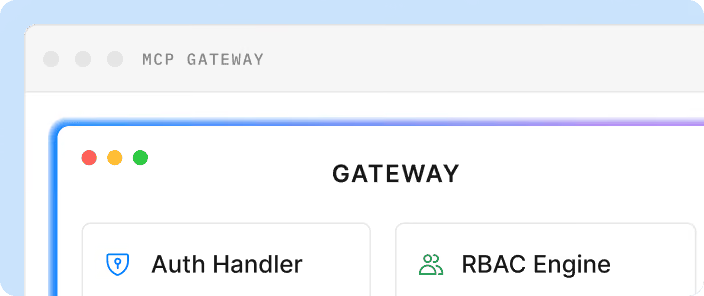
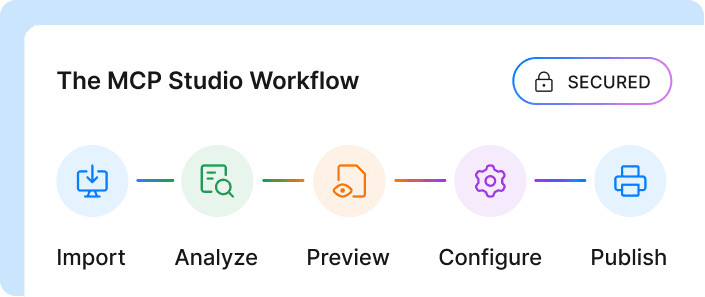
DigitalAPI instantly upgrades your existing Tyk APIs to be AI-ready without requiring code changes. DigitalAPI transforms standard REST endpoints on your Tyk gateway into intelligent agents using the Model Context Protocol (MCP). This advanced capability is not natively offered in standard Tyk packages and future-proofs your stack.
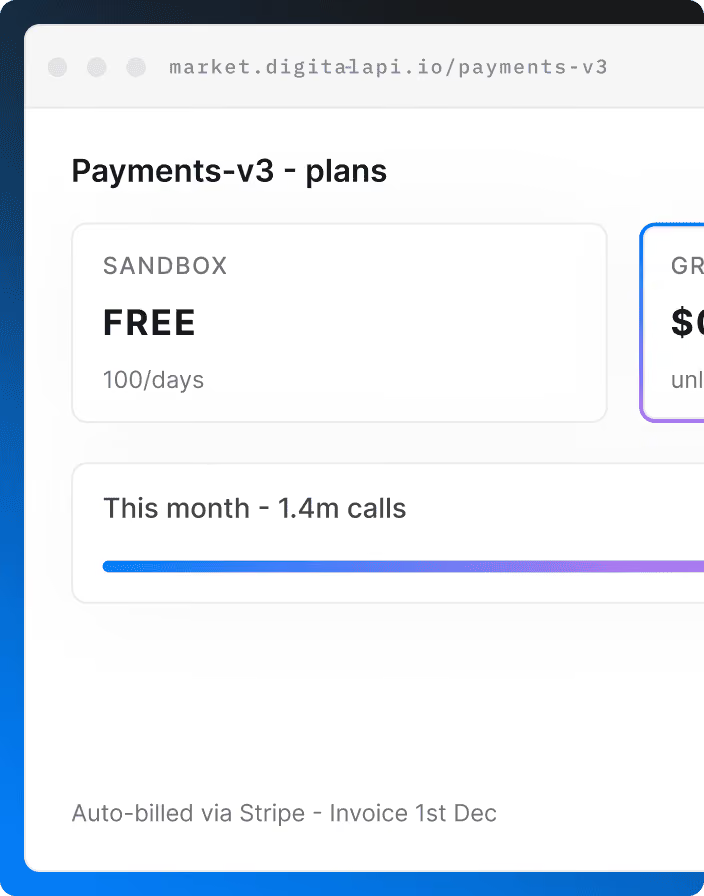
Using DigitalAPI as your manager reduces TCO significantly. You gain a White-labelled Developer Portal that works across Tyk and other gateways simultaneously.
Ready to lower your Tyk TCO? Schedule a Demo
Frequently asked questions
1. Is Tyk really free?
The core Tyk Gateway binary is completely open source and free to use for any volume of traffic. But the visual Dashboard, the Developer Portal, and the proprietary GUI management tools are closed-source commercial products that require a paid enterprise license to access and operate.
2. Why does Tyk need redis?
Tyk utilizes Redis as a high-speed storage mechanism for handling hot data in real-time. It stores temporary data such as API keys, OAuth tokens, and rate-limiting counters to ensure low-latency access and high performance during request processing across the gateway nodes.
3. Can I use Tyk without MongoDB?
You can technically run the headless Gateway without MongoDB if you use declarative configuration files. But you absolutely need MongoDB if you want to use the Tyk Dashboard for analytics, policy management, and user administration, as it serves as the persistent storage layer.
4. Is Tyk cheaper than Apigee?
Tyk is generally more affordable than the heavyweight Apigee platform regarding licensing costs. But Tyk requires significantly more infrastructure management from your team compared to Apigee’s fully managed cloud options, which can increase your total cost of ownership when factoring in engineering hours.
5. Does DigitalAPI replace Tyk?
DigitalAPI does not replace the Tyk Gateway but rather manages it more efficiently. You keep the high-performance Tyk gateway for runtime traffic and use DigitalAPI for unified governance, analytics, and monetization, allowing you to bypass the expensive Tyk management components.
Dhayalan Subramanian is Associate Director, Product Growth at DigitalAPI, where he leads go-to-market and product growth for the company’s multi-gateway API management platform. His work focuses on helping large enterprises and mid-market cloud companies consolidate APIs across AWS, Azure, Apigee, Kong, MuleSoft, and other gateways into a single control plane for governance, discovery, monetization, and agent consumption.
Dhayalan brings 14+ years of experience across product strategy, enterprise architecture, and engineering leadership. Earlier in his career, he held senior roles at Encora (as Associate Architect and Technical Manager), Mindtree (Technology Lead), Tech Mahindra (Technical Lead), and Primus Analytics, where he designed integration frameworks and delivered enterprise-grade digital platforms for global customers.
At DigitalAPI, he works directly with platform, integration, and developer experience leaders at Fortune 500 organizations to operationalize unified API catalogs, developer portals, and MCP-ready APIs. He writes regularly on API developer experience, API governance, and AI agent architectures.
One email a fortnight. Worth opening.
A short digest of what we're writing, what we're learning from customers, and the handful of links you'd actually want from us. No tracking pixels.

.avif)