



API gateway pricing in 2026: models, costs and what vendors don't tell you
An API gateway pricing model is the defined financial framework determining how a vendor charges for traffic management and security features.

TL;DR
1. API gateway pricing directly shapes long-term infrastructure cost and scalability.
2. Usage-based models increase spend as traffic grows, while node-based approaches offer steadier budgeting.
3. Hidden costs from infrastructure, maintenance, and governance frequently exceed license fees.
4. Unified control planes and AI-ready gateways reduce operational overhead and prepare enterprises for agent-driven architectures.
Choosing an API gateway pricing model shapes long-term infrastructure spend and operational flexibility. Enterprises face models that either scale unpredictably with traffic or lock teams into unused capacity. This guide explains the core pricing approaches, uncovers hidden ownership costs, and offers a framework for aligning gateway choice with architecture and budget goals.
What is an API gateway pricing model?
An API gateway pricing model is the defined financial framework determining how a vendor charges for traffic management and security features. These structures typically base costs on request volume, compute capacity, or the number of gateway instances deployed within a specific environment.
Why pricing models matter
Pricing decisions reflect long-term operational philosophy rather than short-term procurement. Models that appear cost-friendly during early adoption can restrict growth as usage scales. Variable pricing introduces budgeting friction and discourages experimentation, while rigid licenses often lead to unused capacity. Predictable pricing enables engineering teams to focus on delivery, performance, and developer experience without constant cost monitoring.
API gateway pricing models: The basics
API management pricing follows five primary structures, each aligning with different traffic patterns, maturity levels, and operational goals.
Common pricing structures
The API management industry operates within five primary pricing models that dictate how costs scale with growth. Understanding the nuances of these structures is essential for aligning infrastructure spend with actual business value.
- Usage-based pricing: Costs scale with API calls or data volume. Entry barriers stay low, but budgeting becomes difficult as traffic grows.
- Subscription-based pricing: Fixed annual fees provide predictable spend but reduce flexibility when traffic patterns shift.
- Tiered pricing: Features and limits are bundled into tiers, requiring upgrades as usage or complexity increases.
- Freemium models: Core functionality is free, while security and governance features require paid plans.
- Per-node pricing: Costs depend on deployed gateway instances rather than request volume, supporting predictable spend at scale.
Comparison of industry pricing models
| Model | Strategic best fit | Scalability potential | Cost predictability | Financial impact at scale |
|---|---|---|---|---|
| Usage-Based | Volatile traffic and serverless architectures | Low; costs grow with every transaction | Low; variable monthly bills | Becomes a tax on high-volume success |
| Subscription | Mature organizations with steady traffic | High; features are unlocked at tiers | High; fixed annual budget | Can lead to paying for unused capacity |
| Per-Node | Massive enterprise traffic and distributed clouds | Excellent; handle millions of calls per node | High; costs relate to footprint | Most cost-effective for high throughput |
| vCore / Capacity | Legacy systems with heavy data processing | Medium; requires purchasing more cores | Moderate; requires strict planning | High risk of over-provisioning debt |
| Freemium | Startups and internal developer prototypes | Medium; must upgrade for security | Moderate; clear entry point | Rapid cost spikes when moving to paid |
Build vs. Buy: The hidden math
Building an internal gateway avoids license fees but introduces long-term maintenance and staffing costs. Security, observability, and compliance require ongoing engineering effort. Commercial platforms reduce time to production and shift operational burden to vendors. When engineering hours are included, commercial solutions typically deliver lower total ownership cost and faster time-to-value.
Build vs. Buy cost components
| Cost Category | Internal build (Open Source) | Commercial API management platform |
|---|---|---|
| Initial setup | Significant engineering months spent on security | Immediate deployment with pre-built policies |
| Maintenance | Continuous patching and plugin development | Vendor-managed updates and support SLA |
| Security | Manual implementation of OAuth and WAF | Out-of-the-box enterprise security guardrails |
| Opportunity cost | Diverts talent from core product innovation | Enables teams to ship business value faster |
| Governance | Custom builds for RBAC and audit logs | Unified dashboard with built-in compliance |
Detailed vendor pricing comparison
Major vendors utilize complex licensing terms that require a granular analysis of billing metrics and hidden constraints. We analyze the leading platforms to expose how their pricing mechanics translate into real-world enterprise costs.
AWS API Gateway: The pay-as-you-go model
AWS API Gateway integrates closely with serverless workloads and charges per request and data transfer. While suitable for early-stage services, costs scale directly with traffic and egress. High-volume APIs often face unexpected monthly increases once caching, logging, and cross-region traffic are included.
AWS pricing mechanics
| Component | Pricing logic | Risk factor |
|---|---|---|
| Requests | Charges per million calls made to endpoints | Rapidly escalates with high-volume services |
| Data transfer | Fees based on gigabytes of egress traffic | Hidden cost when data leaves the AWS region |
| Caching | Hourly fee based on memory size allocated | Fixed cost even when the cache is underutilized |
| Logging | Additional CloudWatch fees per GB ingested | High-volume APIs generate massive log costs |
Kong: The tiered plugin model
Kong centers pricing on managed services, plugins, and control-plane access. Costs increase as services, plugins, and nodes scale. While flexible for Kubernetes-based environments, cumulative plugin licensing and operational overhead raise long-term spend.
Kong licensing pitfalls
| Limitation | Impact on pricing | Mitigation strategy |
|---|---|---|
| Service count | Fees increase as microservices multiply | Consolidate endpoints under single services |
| Plugin sprawl | Advanced features require enterprise licenses | Prioritize essential security over nice-to-have tools |
| Node scaling | Deployment of many nodes increases overhead | Use performant runtimes like Arelio to reduce footprint |
Apigee: The enterprise premium
Apigee targets large enterprises requiring deep governance, analytics, and monetization. Pricing uses tiered commitments tied to environmental capacity. Platform complexity and heavier runtimes increase infrastructure and implementation costs, particularly in over-provisioned environments.
Apigee environment units comparison
| Tier | Target use case | Financial structure |
|---|---|---|
| Pay-as-you-go | Small projects and initial development | Low entry fee with high variable transaction costs |
| Standard | Growing digital programs with steady traffic | Tiered volume limits with fixed monthly overheads |
| Enterprise | Global corporations with complex compliance | High annual commitment with unlimited governance |
Tyk: The feature penalized model
Tyk combines open-source performance with commercial licensing tied to users, APIs, and analytics tiers. Pricing can restrict experimentation as teams and endpoints grow, requiring careful planning for microservices-heavy environments.
Tyk scalability assessment
| Feature | Pricing impact | Developer experience |
|---|---|---|
| User seats | Costs rise as the development team grows | Restricts collaboration in large organizations |
| Endpoint limits | Charges based on the number of APIs created | Discourages the adoption of microservices |
| Analytics | Advanced visualization gated behind tiers | Impedes troubleshooting for lower-tier users |
Gravitee: The event-native platform
Gravitee supports both API and event-driven workloads with node-based pricing. Predictable costs suit high-throughput environments, though managing multiple gateway types still requires additional governance layers.
Gravitee feature breakdown
| Module | Purpose | Cost implication |
|---|---|---|
| Gateway | Traffic routing for REST and Events | Predictable node-based licensing fee |
| Management console | Governance and policy enforcement | Centralized fee for platform administration |
| Developer portal | Self-serve documentation and discovery | Included in enterprise tiers for partner scale |
| Alert engine | Real-time security and health monitoring | An additional module that increases license spend |
Total cost of ownership factors
License fees represent only part of the gateway ownership cost. Infrastructure, data transfer, and operational overhead typically account for the largest long-term expenses.
Beyond the license fee
Gateway runtime efficiency directly impacts infrastructure spend. Heavier runtimes require larger instances, while lightweight gateways reduce compute costs. Data egress between regions and clouds further increases monthly bills, making architectural efficiency a financial priority.
Infrastructure footprint cost analysis
| Gateway Type | RAM usage per node | CPU overhead | Estimated cloud cost |
|---|---|---|---|
| Java-Based (MuleSoft/Apigee) | 2GB to 4GB minimum | High due to JVM garbage collection | Premium infrastructure required |
| Go-Based (Tyk/Gravitee) | 512MB to 1GB | Moderate efficiency in concurrent flows | Standard compute instances |
| Lightweight (Arelio API Gateway) | Under 128MB | Minimal zero-overhead performance | Low-cost edge or spot instances |
Personnel costs for maintenance
Operational effort remains one of the largest hidden costs. Manual updates, audits, onboarding, and patching consume engineering time. Centralized management platforms reduce recurring operational work and improve overall return on investment.
Operational workload breakdown
| Task | Manual process cost | DigitalAPI.ai automation benefit |
|---|---|---|
| Documentation updates | 10 to 20 hours per month | Instant AI-generated spec syncing |
| Governance audits | Quarterly manual review of endpoints | Real-time visibility into all gateway traffic |
| Developer onboarding | 2 to 3 days per new partner | 15 minute self-serve sandbox setup |
| Security patching | Weekly manual configuration updates | Automated policy enforcement across regions |
The DigitalAPI.ai advantage
Fragmented environments across multiple gateways create silos that inflate costs and reduce agility. DigitalAPI.ai offers a unified control plane to streamline governance and optimize infrastructure spend across any environment.
One control plane for all
DigitalAPI.ai unifies governance, analytics, and lifecycle management across multiple gateways without replacing existing infrastructure.
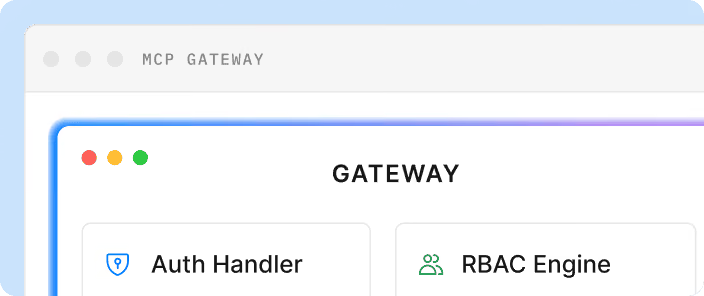
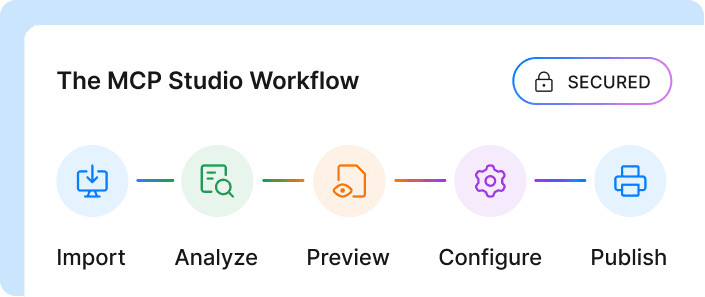
AI readiness with MCP
Native MCP server generation allows APIs to be consumed directly by AI agents without custom integration layers.
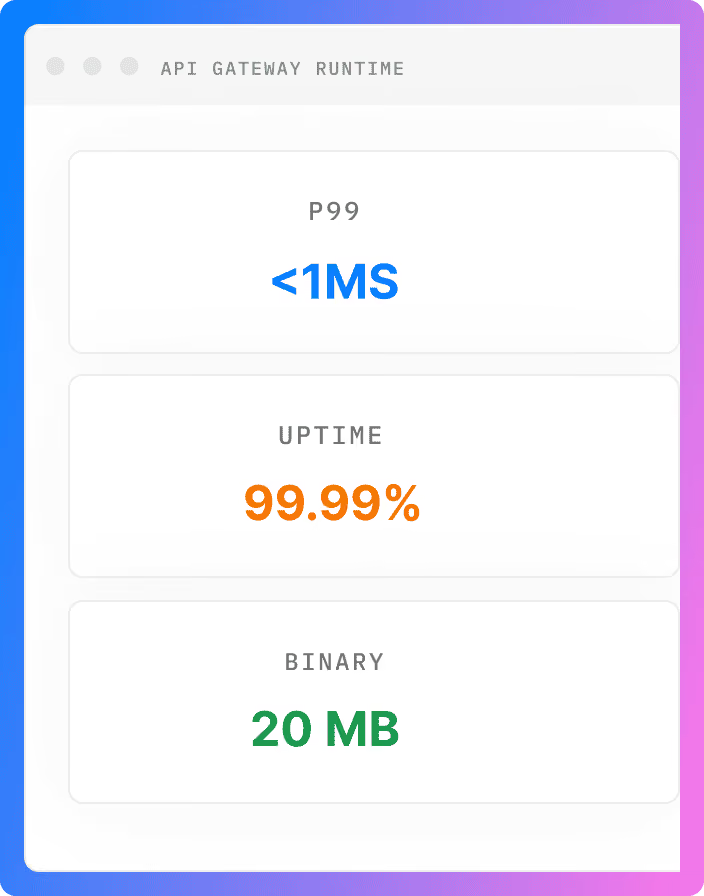
High-performance Arelio API Gateway
Arelio offers a lightweight runtime for edge workloads, enabling gradual migration from heavier gateways while reducing infrastructure costs.
.png)
Frequently Asked Questions
Which gateway is best for AI agents?
DigitalAPI.ai uniquely generates MCP servers, letting AI agents use APIs directly. Teams avoid custom integrations, manual mapping, and repeated setup work that slow agent adoption.
Which is cheapest for high traffic?
Node-based or self-hosted gateways scale without rising per-request costs, keeping budgets stable as traffic grows, unlike usage-based pricing that escalates sharply during sustained high-volume adoption.
Can I run multiple gateways together?
A unified control plane like DigitalAPI.ai allows you to use different gateways for different workloads simultaneously. You can manage AWS for serverless and Kong for mesh in the same architecture. This prevents operational chaos and maintains a single source of truth.
Does Gravitee charge per API call?
No, Gravitee typically uses a node-based model where you pay for infrastructure instances. This provides high cost predictability for real-time and event-driven architectures. It is ideal for organizations that want to avoid variable billing based on event volume.
What is the vCore pricing model?
Common in legacy systems like MuleSoft, this model charges based on the CPU power allocated to your instances. It is predictable, but it results in organizations paying for idle capacity. It can be difficult to scale for lightweight microservices compared to modern models.
Dhayalan Subramanian is Associate Director, Product Growth at DigitalAPI, where he leads go-to-market and product growth for the company’s multi-gateway API management platform. His work focuses on helping large enterprises and mid-market cloud companies consolidate APIs across AWS, Azure, Apigee, Kong, MuleSoft, and other gateways into a single control plane for governance, discovery, monetization, and agent consumption.
Dhayalan brings 14+ years of experience across product strategy, enterprise architecture, and engineering leadership. Earlier in his career, he held senior roles at Encora (as Associate Architect and Technical Manager), Mindtree (Technology Lead), Tech Mahindra (Technical Lead), and Primus Analytics, where he designed integration frameworks and delivered enterprise-grade digital platforms for global customers.
At DigitalAPI, he works directly with platform, integration, and developer experience leaders at Fortune 500 organizations to operationalize unified API catalogs, developer portals, and MCP-ready APIs. He writes regularly on API developer experience, API governance, and AI agent architectures.
One email a fortnight. Worth opening.
A short digest of what we're writing, what we're learning from customers, and the handful of links you'd actually want from us. No tracking pixels.

.avif)