



API documentation
API Documentation Tool
Auto-generate accurate, interactive API documentation from every gateway and repo you run across Apigee, Kong, AWS, Azure, Git, and Postman, in one catalog. DigitalAPI keeps every doc in sync with what is actually deployed, and publishes it so both developers and AI agents can read it.
ISO 27001 certified
MCP-native, powered by API-GPT



Trusted by 240+ API teams
From cloud-first banks to global telcos







Definition
What is API documentation?
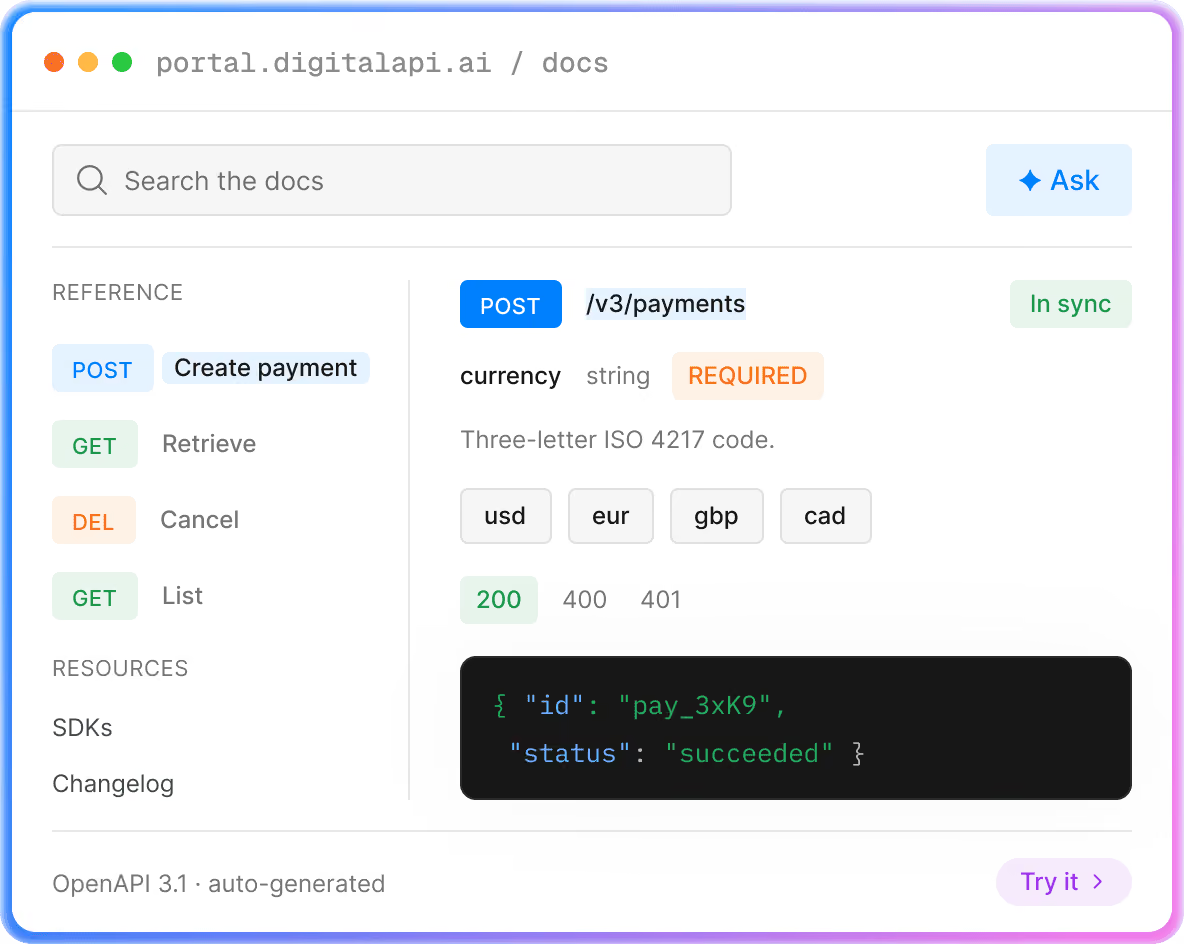
API documentation is the set of human and machine-readable references that explain what an API does, how to authenticate, which endpoints exist, and what each request and response looks like.
An API documentation tool is the software that generates, hosts, and maintains these references. It turns an OpenAPI spec or a live API into an interactive, searchable site with endpoints, schemas, authentication rules, and try-it consoles. The best tools auto-sync with your APIs so docs never drift, and they publish in a machine-readable form that AI coding agents can read too.
%20(1).png)
How it works
How does DigitalAPI document your APIs?
You go from scattered specs to one always-current documentation catalog in four steps, with no manual writing and no migration.
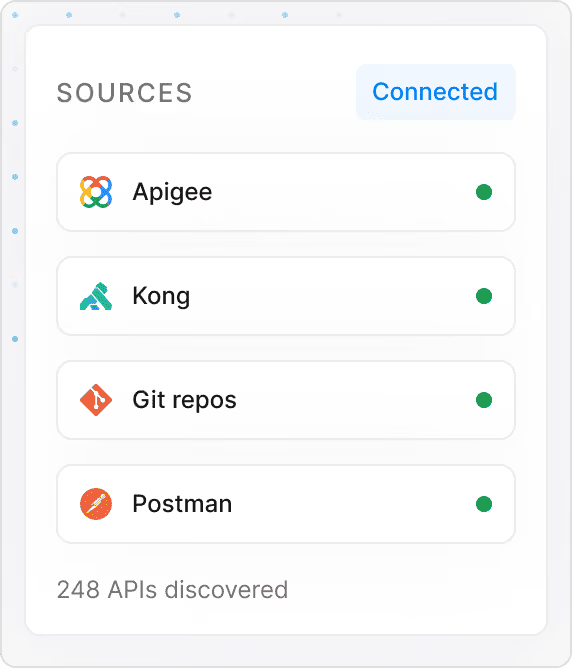
Connect your gateways and repos
Link Apigee, Kong, AWS, Azure and other gateways, plus Git repos and Postman collections. Every API across your estate gets cataloged instantly.
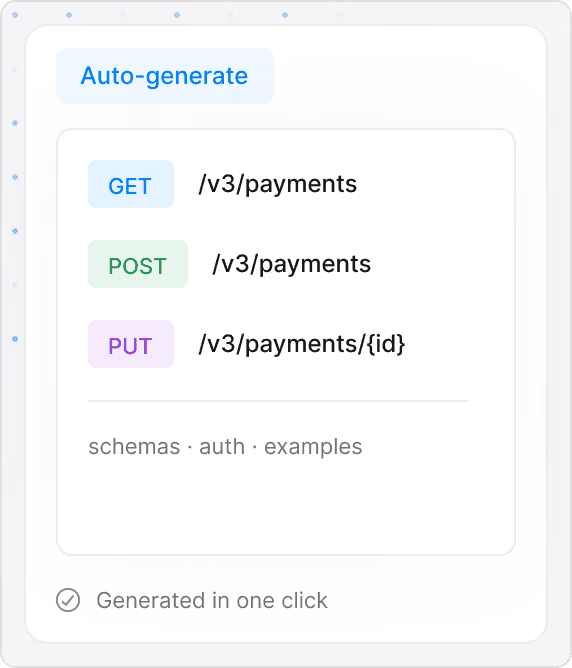
Auto-generate docs in one click
Generate rich, accurate documentation from OpenAPI specs and source automatically, with endpoints, schemas, authentication, sample payloads, and rate limits.
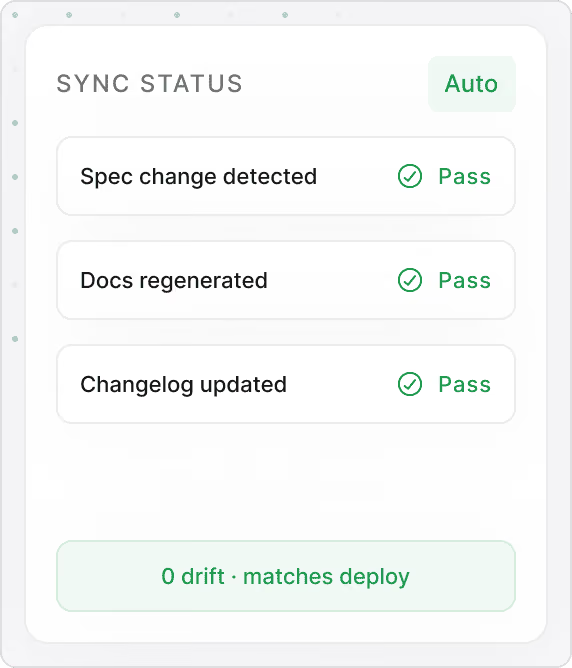
Keep everything in sync
Every change in a spec, repo, or gateway updates the docs automatically, so they always match what is deployed. No drift, no manual edits, no broken references.
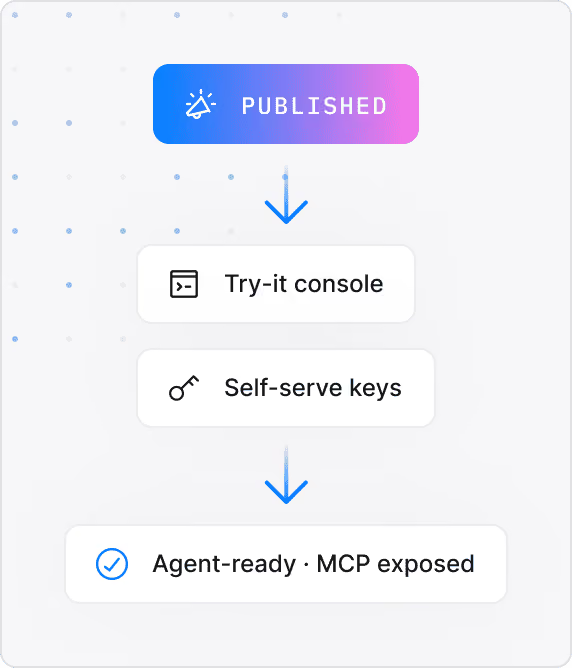
Publish for developers and AI agents
Developers search the catalog, test live, and self-serve keys, while machine-readable, agent-ready output lets AI tools read and call your APIs correctly.
What’s included
What does great
API documentation include?
Great documentation follows clear, consistent standards that make APIs easy to understand, test, and integrate at scale. DigitalAPI builds all of these in by default, across every API in your catalog.

OpenAPI (OAS) spec
The machine-readable standard for endpoints, schemas, auth, and responses.

Authentication docs
Clear OAuth 2.0, API key, and token scope rules, consistent across every API.

Endpoint reference
Every path, method, parameter, and response documented and searchable.

Error dictionary
Unified error codes, causes, and fixes so developers troubleshoot without tickets.

Request & response examples
Real sample payloads for every endpoint, the part agents copy most reliably.

Code samples & SDKs
Language-ready snippets in JavaScript, Python, Java, Go, and more.

Versioning & changelog
Clear versions, deprecation policies, and migration paths, never a surprise.

Interactive testing
A built-in try-it console with live or mock responses, baseline not bonus.
Why DigitalAPI
Why choose DigitalAPI for API documentation?
Most documentation tools polish the docs for one API or one repo. DigitalAPI documents your entire estate, across every gateway, keeps it accurate automatically, and makes it readable by AI agents as well as developers.
.svg)
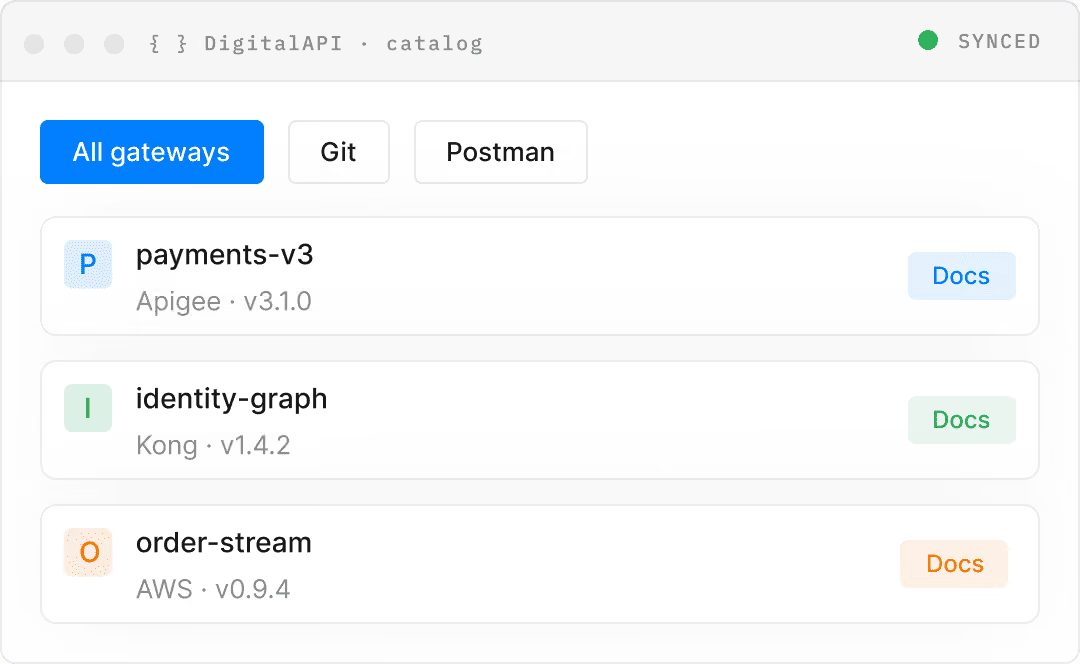
One catalog across every gateway and repo
Auto-generate and unify docs from Apigee, Kong, AWS, Azure, Git, and Postman in a single place, instead of a separate docs site per source.
See the catalog →
.svg)
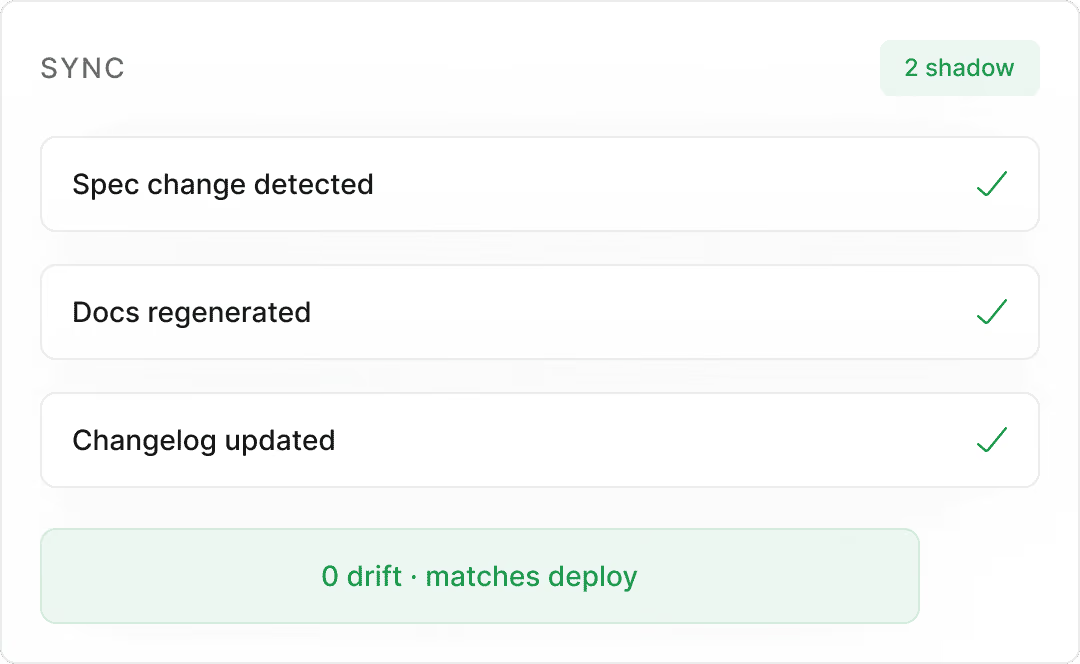
Always in sync, zero drift
Docs update automatically with every spec, repo, or gateway change, so they always match what is deployed. No manual edits, no broken references.
.avif)
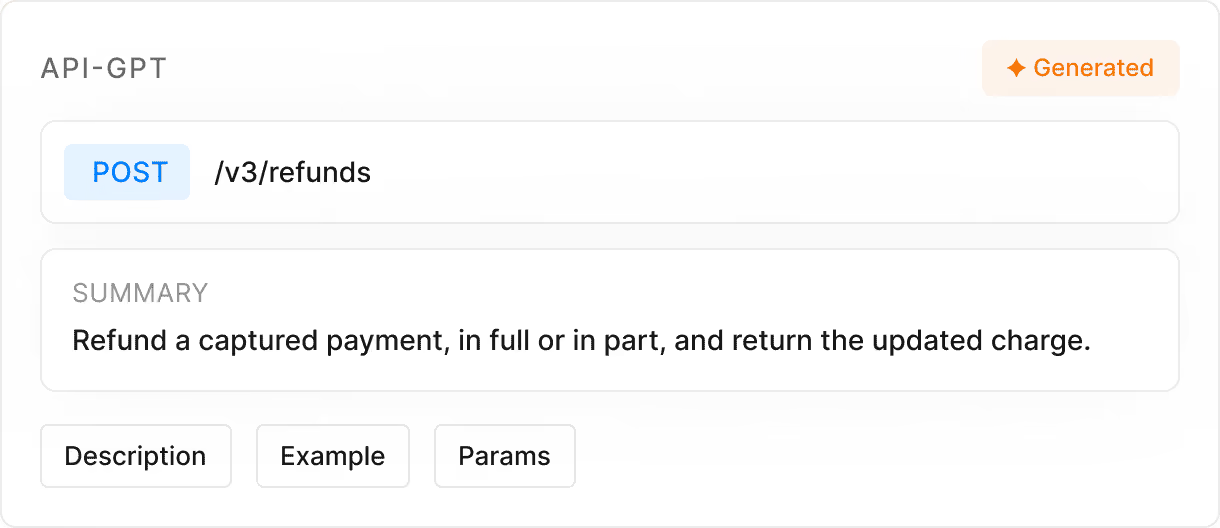
AI-generated OpenAPI documentation
API-GPT writes clear summaries, descriptions, and examples for every endpoint and parameter, enriching your OpenAPI spec so even sparse APIs get complete docs without manual writing.
.svg)
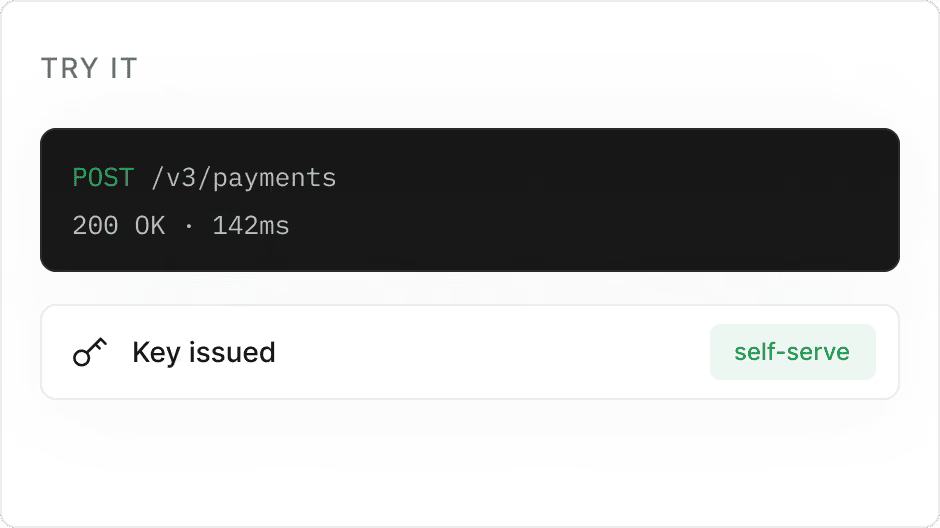
Interactive testing and self-serve keys
Try-it consoles, real or mock responses, and self-serve credentials take developers from landing on the docs to a working call without a ticket.
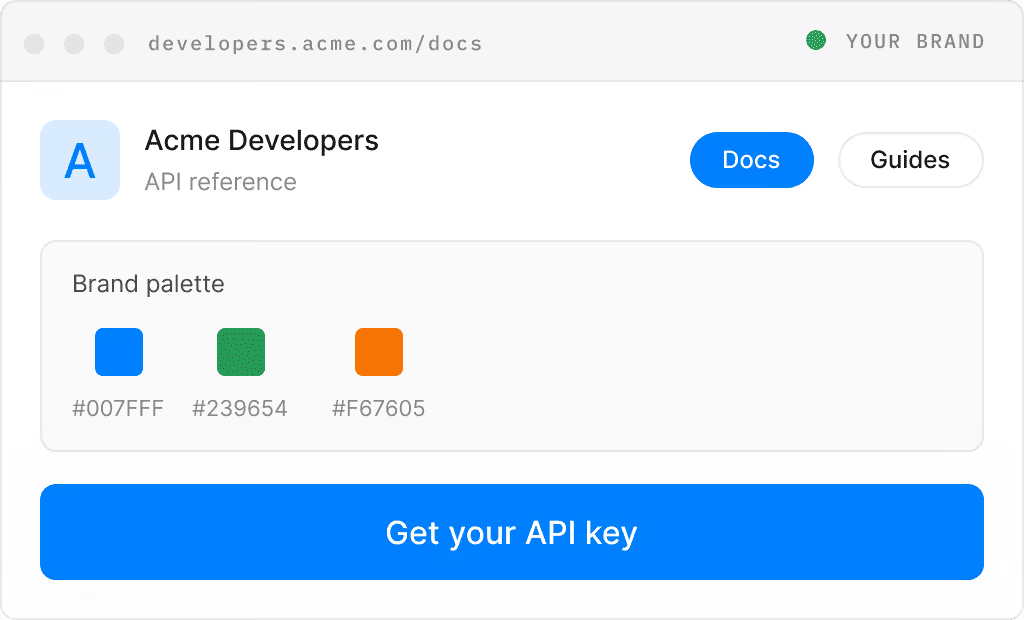
Branded, developer-ready portal
Publish docs on your own domain, look, and feel, so the developer experience feels native to your brand, not a generic third-party site.
Explore white-labelling →
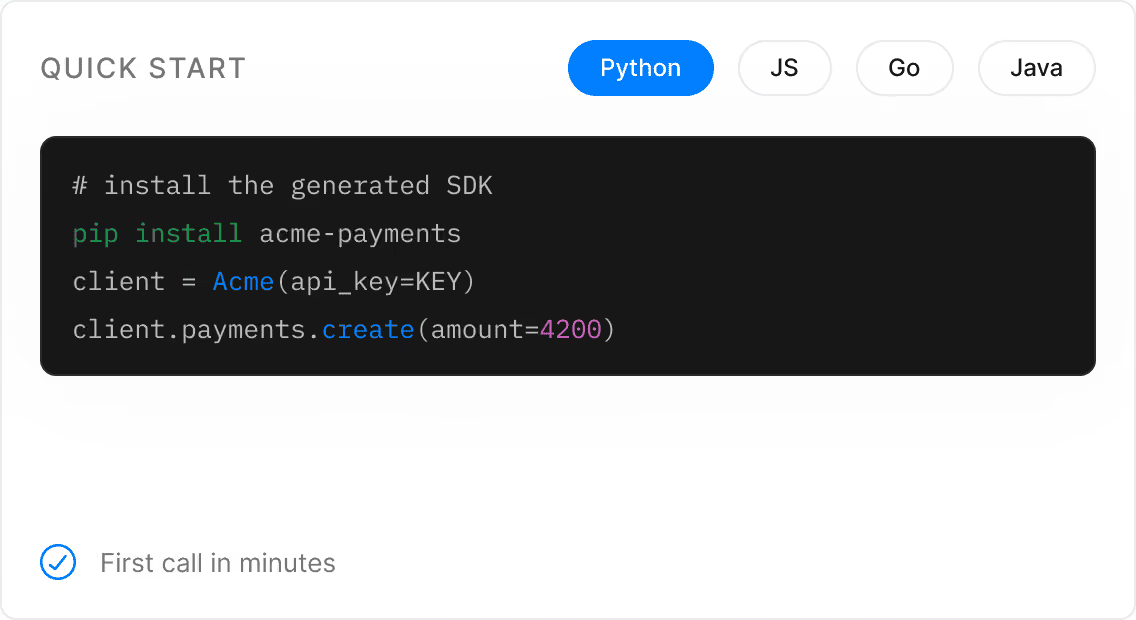
SDKs and quick starts in multiple languages
Auto-generate client SDKs and copy-paste quick starts in any language from your OpenAPI spec, so developers go from docs to a working call in minutes.
Agent-era documentation
New
Documentation AI agents can actually use
In 2026, AI assistants read your docs and write the integration for developers. DigitalAPI publishes a stable machine-readable spec, an llms.txt index, and tool-shaped, MCP-native docs, so agents parse, cite, and call your APIs correctly, not just render them.
Stable machine-readable spec and llms.txt at fixed URLs
Per-operation pages and examples agents copy reliably
One publish step ships tool-shaped, MCP-native docs
.avif)
How we compare
How does DigitalAPI compare to other API documentation tools?
Most documentation tools fall into two camps: docs-as-code generators and hosted doc portals. Both produce a polished docs site for a single API or repo. DigitalAPI documents a multi-gateway enterprise estate, keeps it in sync automatically, and makes it AI-agent ready.
Capability
%20(1).svg)
Docs-as-code generator
Hosted doc portal
Auto-generate from OpenAPI
Document APIs across multiple gateways
Yes, unified catalog
No, single source
No, single source
Auto-sync with deployed APIs (no drift)
Continuous sync
One-time import, then manual
Varies
Interactive try-it console
Add-on
Semantic search across the whole estate
Yes, API-GPT
Basic
AI-agent-ready / MCP output
MCP-native
llms.txt at best
Emerging
Self-serve key management
Governance and RBAC across gateways
Limited
Auto-generate from OpenAPI
Docs-as-code generator
Hosted doc portal
Document APIs across multiple gateways
Yes, unified catalog
Docs-as-code generator
No, single source
Hosted doc portal
No, single source
Auto-sync with deployed APIs (no drift)
Continuous sync
Docs-as-code generator
One-time import, then manual
Hosted doc portal
Varies
Interactive try-it console
Docs-as-code generator
Add-on
Hosted doc portal
Semantic search across the whole estate
Yes, API-GPT
Docs-as-code generator
Hosted doc portal
Basic
AI-agent-ready / MCP output
MCP-native
Docs-as-code generator
llms.txt at best
Hosted doc portal
Emerging
Self-serve key management
Docs-as-code generator
Hosted doc portal
Governance and RBAC across gateways
Docs-as-code generator
Hosted doc portal
Limited
Outcomes
What results can you expect?
%20(1).avif)
%20(1).avif)
1-click
Generate full docs from any OpenAPI spec or repo.
0
Manual doc edits, and zero drift from what is deployed.
100%
Of your catalog is documented and agent-readable.
<24h
To index and document every API across your gateways.
Frequently asked questions
API documentation FAQs
What is an API documentation tool?
An API documentation tool generates, hosts, and maintains the reference docs, code samples, and guides developers use to integrate your APIs. It turns OpenAPI specs or live APIs into interactive, searchable docs and keeps them in sync as the APIs change.
How do you keep API documentation from going out of date?
Connect your gateways and repos once, and DigitalAPI regenerates the docs automatically whenever a spec, repo, or gateway changes. Because the docs are generated from the source of truth rather than written by hand, they do not drift from what is deployed.
Can you document APIs across multiple gateways in one place?
Yes. DigitalAPI unifies documentation from Apigee, Kong, AWS Gateway, Azure APIM, Git repositories, and Postman collections into a single catalog, which standalone doc tools tied to one source cannot do.
What is the difference between an API documentation tool and a developer portal?
A documentation tool produces and hosts the reference docs. A developer portal wraps those docs with discovery, self-serve key management, testing, and access control. DigitalAPI provides the documentation and the portal together, across every gateway.
What makes API documentation AI-ready or agent-ready?
Agent-ready docs publish a stable, machine-readable spec, give every endpoint examples and clear auth and error details, and expose the API in a form AI tools can call. DigitalAPI is MCP-native, so your APIs become tool-shaped and usable by AI coding agents, not just readable in a browser.
Which API types does DigitalAPI document?
REST, GraphQL, event-driven and async APIs, and internal services, all in one consistent format with schemas, examples, and interactive testing.

.avif)